 info@labtron.com

| Impact Speed Range | 1.0 to 2.5m/s |
| Speed Error | Less than or equal to ±5% |
| Angle Adjustment Range | 0° to 10° (±1°) |
| Air compressor | 6kgf/cm² , more than 60L |
| Control System | LCD Touch Screen |
| Maximum effective slide length | 2000 to 4500 or specify |
| Power consumption | 3KW |
| Power Supply | Three-phase 380V, 50/60Hz |
| Trolley table Dimensions | 2000 x 2000 mm |
| Impact plate Dimensions (W x H) | 2500 x 2500 mm |
| Allow max sample Dimensions | 1400 x1400 x 2000 mm |
| Test Sample Dimensions (Max) | 2000 × 2000 × 2000 mm |
| Dimensions (L×W×H) | 4500 × 1500 × 2000 mm |
| Maximum Test Load | 600 Kg |
Our Incline Impact Tester is ideal for evaluating the impact resistance of boxed goods subjected to sliding, tilting, and abrupt movements during loading and unloading operations in industrial settings.

Labtron Incline Impact Tester is a high-quality machine that assesses packaging resistance during transport, handling, and storage. They feature adjustable angles to simulate real-world inclined collisions. Their touch-screen controls, flexible operation modes, and compliance with international standards ensure reliable performance. These systems improve packaging durability by recreating critical impact conditions. Our testers are ideal for quality control, research labs, and packaging development.


The Incline Impact Tester LIIT-A11 plays a vital role in improving packaging quality by accurately simulating the mechanical stress that packaged goods undergo during real-world handling, shipping, and unloading. By replicating conditions such as sliding, abrupt stopping, and tilting, the tester allows manufacturers to evaluate the structural integrity and cushioning capacity of their packaging. This process helps identify weak points in the packaging design that may cause product damage. Manufacturers can then redesign or reinforce packaging based on test results, leading to stronger, more efficient packaging solutions that reduce damage rates and returns during transit.
Absolutely. The Incline Impact Tester LIIT-A11 is built for durability and consistent performance in demanding industrial settings. With a maximum load capacity of 600 kg, robust construction, and compatibility with high-volume testing requirements, it withstands the rigors of daily use. Its adjustable slide length (2000 to 4500 mm) and versatile setup also allow it to accommodate varied product sizes and testing conditions, making it ideal for logistics companies, packaging manufacturers, and third-party testing labs.
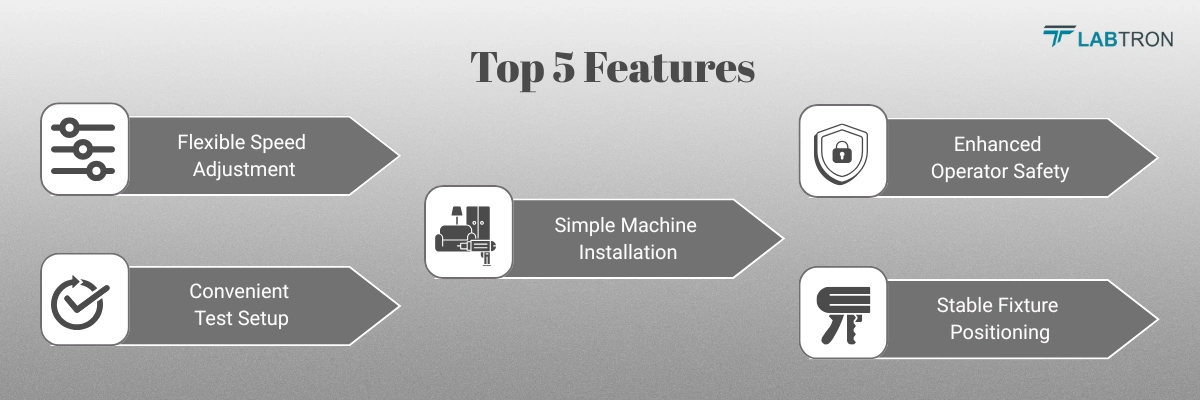
The Incline Impact Tester LIIT-A11 is designed for straightforward installation with minimal infrastructure requirements. It only needs to be securely fixed to the ground, eliminating the need for complex foundation work, frames, or platforms. This makes it easy to integrate into most quality control or testing facilities without significant downtime or renovation. Its compact and stable frame ensures safety during high-impact tests, while the system’s adjustable components make it adaptable to a variety of product and packaging sizes. These user-friendly installation features reduce setup costs and enhance operational efficiency.
The adjustable impact block on the Incline Impact Tester LIIT-A11 is one of its key features that enhances testing versatility. By allowing users to change the block's height on the impact plate, the tester can accommodate different test conditions and simulate various types of impacts. This adaptability is useful for testing both small and large packaging items under customized scenarios. Whether it's a low-profile carton or a tall industrial crate, the height-adjustable block ensures proper alignment with the test sample, allowing accurate reproduction of real-world stress events during sliding or collision.
The Incline Impact Tester LIIT-A11 is a valuable tool for companies seeking to meet national and international packaging safety standards. Many regulatory bodies and logistics companies require proof of packaging performance under dynamic conditions to ensure goods are delivered safely. With its precise impact speed range of 1.0 to 2.5 m/s and flexible test configurations, the LIIT-A11 provides the accuracy and repeatability needed for certification and compliance. By using this tester, companies can validate their packaging solutions, reduce liability for in-transit damages, and demonstrate their commitment to quality assurance and customer satisfaction.
Incline Impact Testers are designed to simulate the mechanical shocks and collisions that packaged products may experience during real-world transport, handling, and storage. By recreating scenarios such as sliding, tilting, or sudden stops on an inclined plane, these testers help evaluate how well packaging protects the contents. This type of testing is essential for identifying weaknesses in packaging design, ensuring compliance with safety standards, and preventing product damage during logistics operations.
While both testers assess packaging durability, Incline Impact Testers simulate horizontal impacts caused by sliding or collisions on an incline, which are more representative of damage during transport. In contrast, vertical drop testers simulate free-fall drops from various heights. Incline testing is better suited for evaluating how products behave during truck loading, warehouse handling, or sudden braking events. This distinction makes incline testers a crucial tool for more comprehensive packaging evaluation.
Incline Impact Testers are widely used across logistics, packaging manufacturing, consumer electronics, food and beverage, pharmaceuticals, and research institutions. Any industry that ships products in boxes, crates, or containers benefits from understanding how their packaging performs under impact stress. These testers help reduce damage-related costs, improve packaging designs, and ensure compliance with standards such as ASTM, ISTA, and GB/T. They are especially valuable for export-focused industries where transit conditions can vary significantly.
Most high-quality Incline Impact Testers comply with international testing standards such as ASTM D880, ISTA 3A, and GB/T 4857. These standards outline procedures for simulating impact during handling and transportation. Compliance ensures that test results are accurate, repeatable, and globally accepted. Manufacturers use these tests to verify packaging performance, meet client specifications, and support regulatory documentation for product safety and shipping reliability.
When selecting an Incline Impact Tester, important features to consider include the impact speed range, angle adjustment capability, maximum load capacity, and control system type. A wide speed range allows for versatile testing, while adjustable angles ensure accurate simulation of various transport scenarios. Touch-screen controls offer ease of use and precise parameter setting. Durable construction and remote operation features also enhance safety and reliability during testing, especially in high-volume industrial environments.
Post your question?
Our experts are here to help!
Labtron Equipment Ltd., Quatro House, Lyon Way, Camberley, Surrey GU16 7ER United Kingdom
Email: info@labtron.com Whatsapp: +44 73 4441 2688 Phone: +44 2080 043608