info@labtron.com


| Range | 40.2KU to 141.0 KU (27 to 5250 Cp) |
| Accuracy | ±1.0% |
| Repeatability | ± 0.5% |
| Paddle Speed | 200r / min ± 0.1 r / min |
| Dimension (L × W × H) | 210 × 180 × 500 mm |
| Package Size | 560 × 450 × 280 mm |
| Package Weight | 9.2 kg |
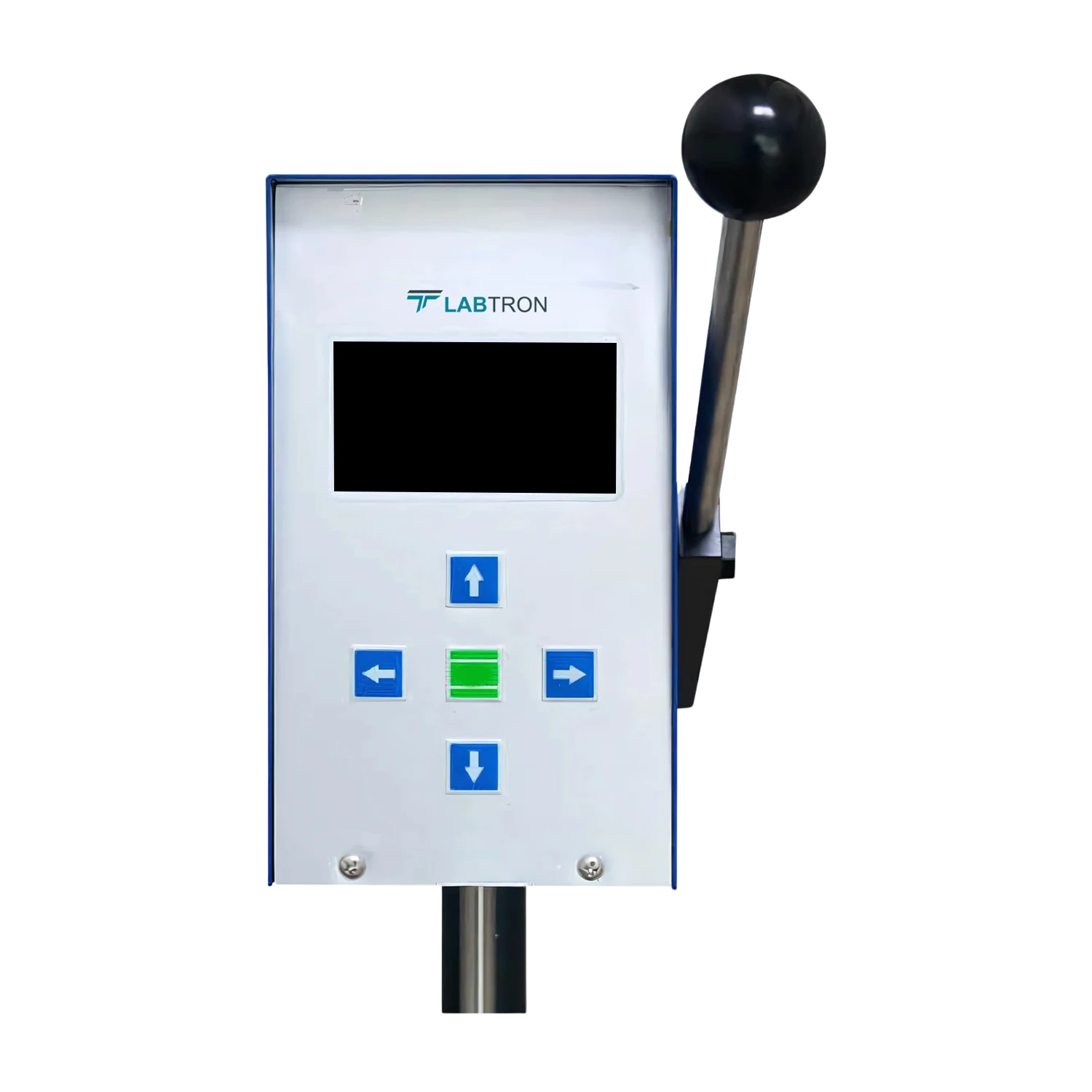
LCD Screen Display
Integrated Magnetic Rotor
Infrared Thermometer Sensor
Low Noise Operation
Corrosion-Resistant Construction
Krebs Stormer Viscometer LKSV-A11 is a laboratory device designed to measure the viscosity of Newtonian and non- Newtonian fluids. It plays a key role in adhesive, sealants and chemicals for determining the viscosity of products.
Download catalog for
Krebs Stormer Viscometer LKSV-A11 Catalog
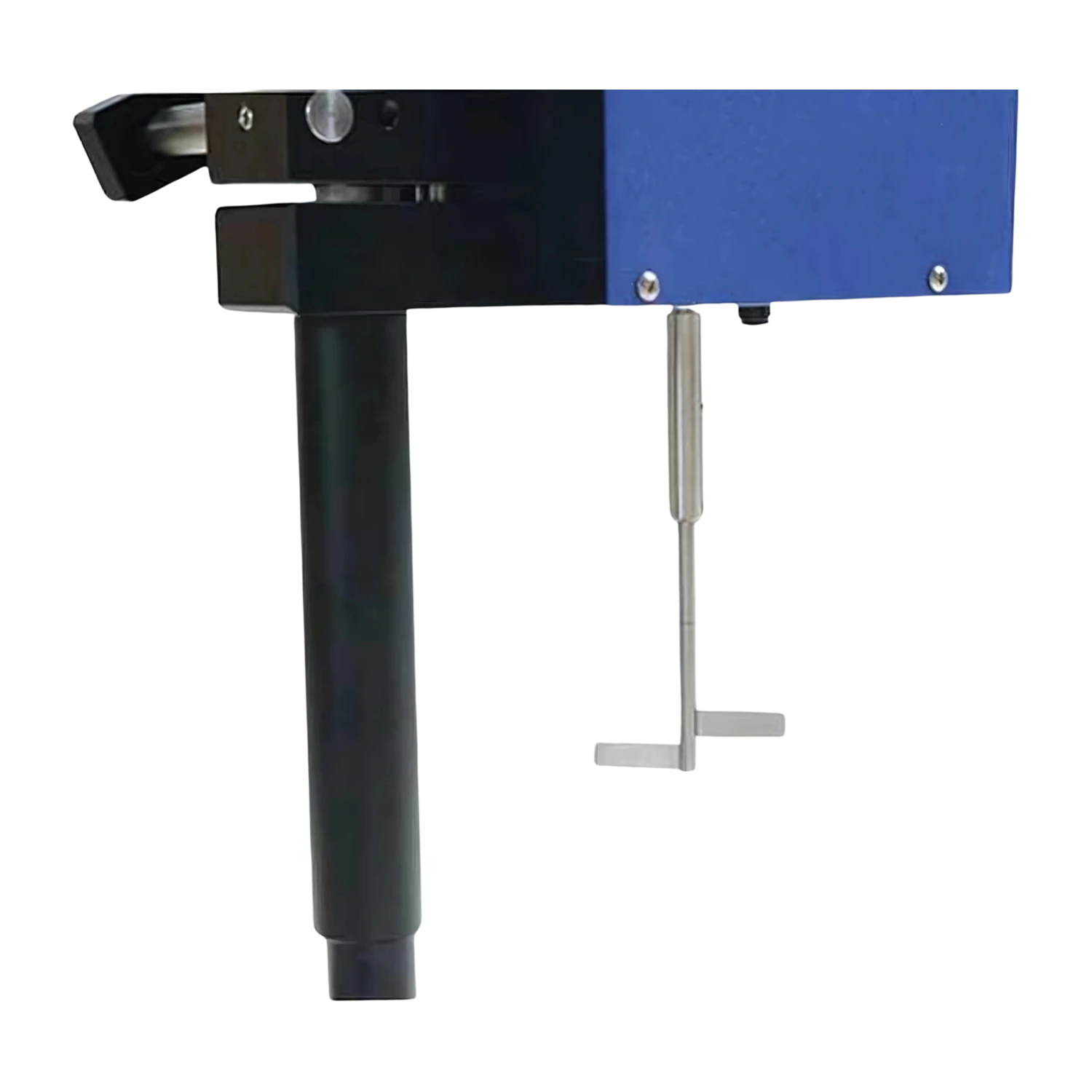
Labtron Krebs Stormer Viscometer effectively measures the viscosity of Newtonian and non-Newtonian fluids. These include automated motor operation, eliminating the need for weights and pulleys for direct reading in KU. This viscometer is made from high-quality aluminum alloy and a durable glass base plate. Our Krebs Stormer Viscometer features a built-in infrared thermometer sensor for non-contact temperature measurement of test samples.


Labtron’s krebs stormer Viscometer ensures measurement accuracy through standardized operating conditions and built-in compensation mechanisms. It typically operates at a fixed speed of 200 rpm using a paddle spindle designed to simulate realistic shear conditions encountered during application. To account for temperature variations, many models offer temperature monitoring or compatibility with controlled environments. Since viscosity is highly temperature-dependent, measurements should ideally be taken in a temperature-controlled room or using a thermostatic jacket. Humidity, while less impactful, can affect solvent-based paints and coatings. Proper sample preparation and environmental stabilization before testing help mitigate these effects. The instrument’s design minimizes vibration and airflow interference. Adherence to ASTM D562 standards also ensures repeatability and reliability across varied conditions.
Labtron supplies premium viscometers. Calibration of the Krebs Stormer Viscometer is essential to maintain measurement integrity and typically involves the use of certified viscosity standards or oils traceable to NIST standards. The instrument should be calibrated at multiple viscosity points across its measurement range (40–141 KU) to verify linearity. Calibration is generally recommended every 6 to 12 months depending on usage frequency, environmental conditions, and regulatory requirements. Instruments used in regulated industries or for critical production control might require more frequent checks. Digital viscometers often come with internal calibration verification functions, but manual calibration using standard oils is still the gold standard. The spindle and drive motor should also be checked for wear or drift. A calibration log should be maintained to document all procedures and results for compliance and traceability.
Labtron’s krebs stormer viscometer have advanced features. Sample preparation is critical to obtaining repeatable and accurate viscosity measurements with the Krebs-Stormer Viscometer. Samples must be homogeneous, free of bubbles, and at a consistent, known temperature. Stirring or mixing should be gentle to avoid air entrapment, which can falsely increase viscosity readings. The sample container should be filled to the correct level (typically ensuring that the spindle is immersed to the specified depth) to prevent errors due to incorrect fluid dynamics around the spindle. For thixotropic materials, a resting period before testing may be necessary to allow the structure to rebuild. Additionally, contamination from cleaning solvents or previous samples must be completely eliminated, as residual chemicals can drastically affect results. Consistency in sample handling and preparation across all tests ensures better comparative and trend analysis.
Labtron’s krebs stormer viscometer uses a standardized paddle spindle operating at a constant 200 rpm, which is critical for consistency across viscosity measurements. The paddle’s geometry is designed to create uniform shear within the fluid, simulating real-world application forces such as brushing or rolling. Any variation in paddle dimensions, wear, or misalignment can significantly affect readings by altering the hydrodynamic flow and shear stress distribution. Unlike variable-speed viscometers, the fixed geometry and speed here offer simplicity and repeatability but limit the ability to probe viscosity under different shear rates. Therefore, ensuring that the paddle is undamaged and precisely mounted is essential for reliable results. Regular inspection, cleaning, and replacement of the spindle when signs of wear appear help maintain accuracy. Deviations in spindle immersion depth can also skew the torque readings and lead to faulty KU values.
Labtron’s supplies advanced models of krebs stormer viscometer. When testing high-viscosity or heavily filled materials (e.g., textured paints, adhesives, or mastics), it’s critical to assess whether the Krebs-Stormer Viscometer’s range and design are suitable. These materials may exceed the upper measurement range or contain particles that disrupt flow patterns around the paddle. In such cases, readings can become erratic or falsely high due to drag from solid content. Ensure that the sample is adequately mixed yet free from entrapped air and large agglomerates. The paddle must rotate freely and not stall under the material’s load. If torque consistently exceeds instrument capacity, a higher-torque or cone-and-plate viscometer may be more appropriate. Cleaning is also more demanding after testing such materials, so thorough removal of residues is essential to prevent cross-contamination. Always consult product-specific guidelines to confirm suitability for this viscometer type.
Post your question?
Our experts are here to help!
Labtron Equipment Ltd., Quatro House, Lyon Way, Camberley, Surrey GU16 7ER United Kingdom
Email: info@labtron.com Whatsapp: +44 73 4441 2688 Phone: +44 2080 043608