info@labtron.com

| Measuring Range | Chlorophyll: 0.0 to 99.9 SPAD Leaf Surface Temperature: 10℃ to 99.9℃ Nitrogen Content: 0.0 to 99.9 mg/g Leaf Surface Humidity: 0.0 to 99.9 %RH |
| Measurement Accuracy | Chlorophyll: ±1.0 SPAD (SPAD values range 0 to 50 at room temperature) Leaf Surface Temperature: ±0.5℃ Nitrogen Content: ±5% Leaf Surface Humidity: ±5% |
| Repeatability | Chlorophyll: ±0.3 SPAD (SPAD values range 0 to 50) Leaf Surface Temperature: ±0.2℃ Nitrogen Content: ±0.5 units Leaf Surface Humidity: ±0.5% |
| Maximum Measured Thickness | 1.2 mm |
| Measurement Time Interval | 2 seconds |
| Measurement Area | 2 mm × 2 mm |
| Power Supply | 2 × 1.5V dry batteries |
| Dimension (W×D×H) | 340mm×300mm×150mm |
| Gross Weight | 1.8kg |
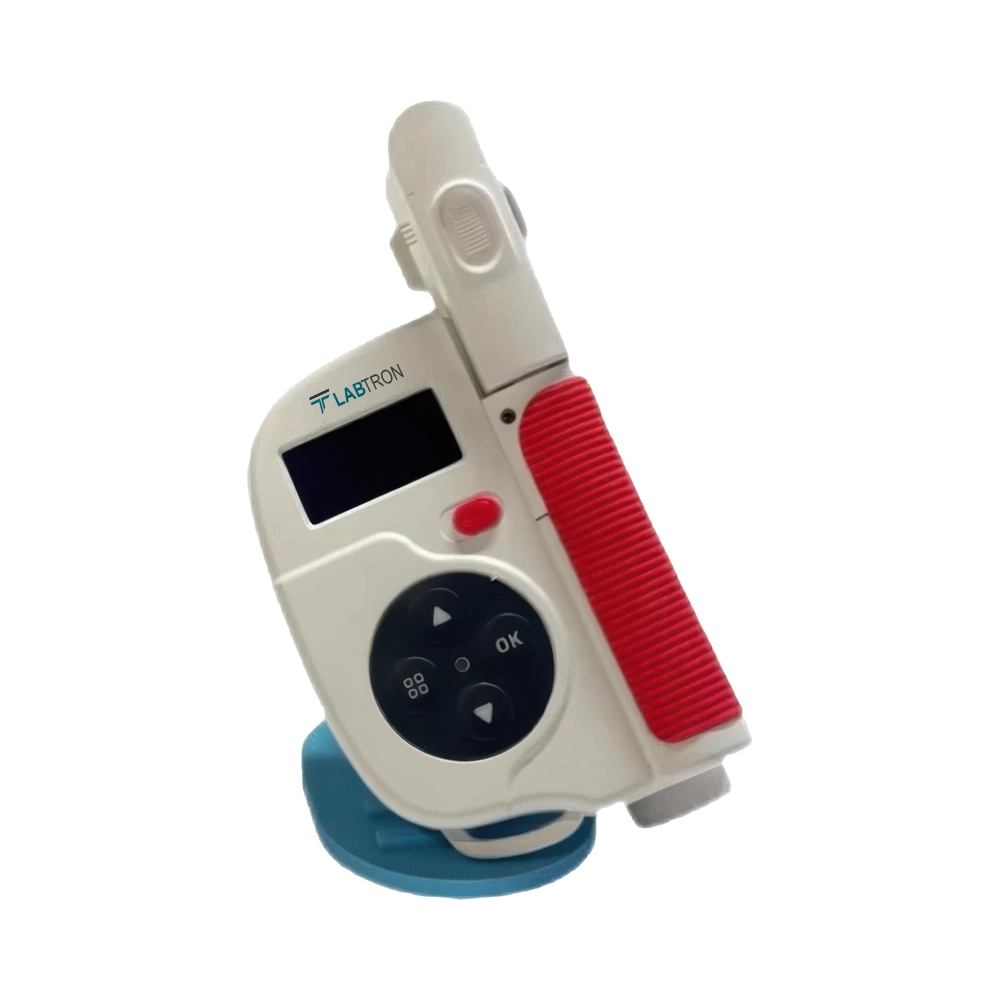
Plant Nutrition Analyzer LPNA-A10 accurately assesses plant macro and micro-nutrients, aiding precision agriculture, crop yield optimization, and eco-friendly nutrient management practices in farming and research.
Download catalog for
Plant Nutrition Analyzer LPNA-A10 Catalog
Labtron Plant Nutrition Analyzer feature advanced sensors for measurement of macro and micronutrient levels in plants. They are equipped with high-resolution display screen for clear data visualization during analysis. Their rapid testing capabilities provide results in minimal time, optimizing analysis efficiency. They include customizable settings to adapt to specific plant species and nutrient requirements. Our Plant Nutrition Analyzer provides precise nutrient analysis for improved crop health and agricultural practices.
Labtron’s Plant Nutrient Analyzer LPNA-A10 works on the principle of spectrophotometric colorimetry. Plant tissues or soil extracts are treated with chemical reagents that react with nutrients such as nitrogen, phosphorus, or potassium to produce a measurable color intensity. The analyzer uses specific wavelengths of light to detect this color change and translates the absorbance values into quantitative nutrient concentrations. This enables researchers, agronomists, and farmers to accurately determine nutrient status in plants and soils, which is critical for optimizing fertilization strategies, improving crop yields, and ensuring sustainable nutrient management.
Labtron’s LPNA-A10 is designed to detect macronutrients like nitrogen (N), phosphorus (P), and potassium (K), along with secondary elements such as calcium (Ca), magnesium (Mg), and sulfur (S). In some applications, it may also detect micronutrients depending on reagent compatibility. Its detection precision is generally within ±2–3%, ensuring reliable results for both research and field applications. The accuracy is enhanced by its closed optical system and stable light source, which minimize interference. As a result, users can confidently interpret data for precise fertilizer recommendation, nutrient balance assessment, and corrective actions in crop management.
Labtron’s Plant Nutrient Analyzer LPNA-A10 is versatile and supports a wide range of sample types, including fresh plant leaves, crop stems, fruits, and even soil extracts when prepared with appropriate reagents. Typically, plant samples are homogenized or digested in specific chemical solutions before analysis. Soil samples require extraction using standard agronomic protocols to release nutrients into a measurable solution. The analyzer’s design ensures that both solid plant tissue digests and liquid soil extracts can be processed with minimal interference, making it suitable for agricultural extension labs, research institutes, and progressive farms practicing precision agriculture.
Labtron’s Plant Nutrient Analyzer LPNA-A10 offers rapid and accurate results, it has certain limitations. Its accuracy depends on proper sample preparation—errors in digestion or reagent handling can lead to inconsistent readings. The instrument may also have limited sensitivity for trace micronutrients unless paired with specialized reagents. Additionally, while portable, it still requires chemical reagents that must be stored and handled carefully. Another limitation is that the analyzer provides nutrient concentration but not nutrient availability in soil, which depends on other agronomic factors. Understanding these limitations ensures users interpret results correctly and complement them with agronomic expertise.
Yes, the Plant Nutrient Analyzer LPNA-A10 comes with an inbuilt battery backup, making it highly suitable for fieldwork and outdoor agricultural applications. The battery is designed for long-lasting performance and can typically operate continuously for 3 to 5 days on a single charge, depending on usage. This ensures uninterrupted nutrient testing even in remote areas without stable electricity access, allowing farmers and researchers to conduct reliable on-site analyses with convenience and flexibility.
Post your question?
Our experts are here to help!
Labtron Equipment Ltd., Quatro House, Lyon Way, Camberley, Surrey GU16 7ER United Kingdom
Email: info@labtron.com Whatsapp: +44 73 4441 2688 Phone: +44 2080 043608