info@labtron.com

| Glass Vessel Volume | 100 L ball shaped |
| Glass Vessel Diameter | Φ 610 mm |
| Temperature Range | -80 to 250 ℃ |
| Bath Temperature | RT to 180 ℃ |
| Temperature Measurement Accuracy | +/-1℃ |
| Heating Power | 15000 W |
| Stirring Speed | 0 to 450 rpm |
| Vacuum Degree | 0.0098 Mpa |
| Dropping Funnel | 2000 ml |
| Power Consumption | 200 W |
| Power Supply Stirrer | 220V/50Hz |
| Power Supply Heating Bath | 380V/50 Hz |
| Dimensions (W×D×H) | 880×800×1850 mm |
| Weight | 108 kg |
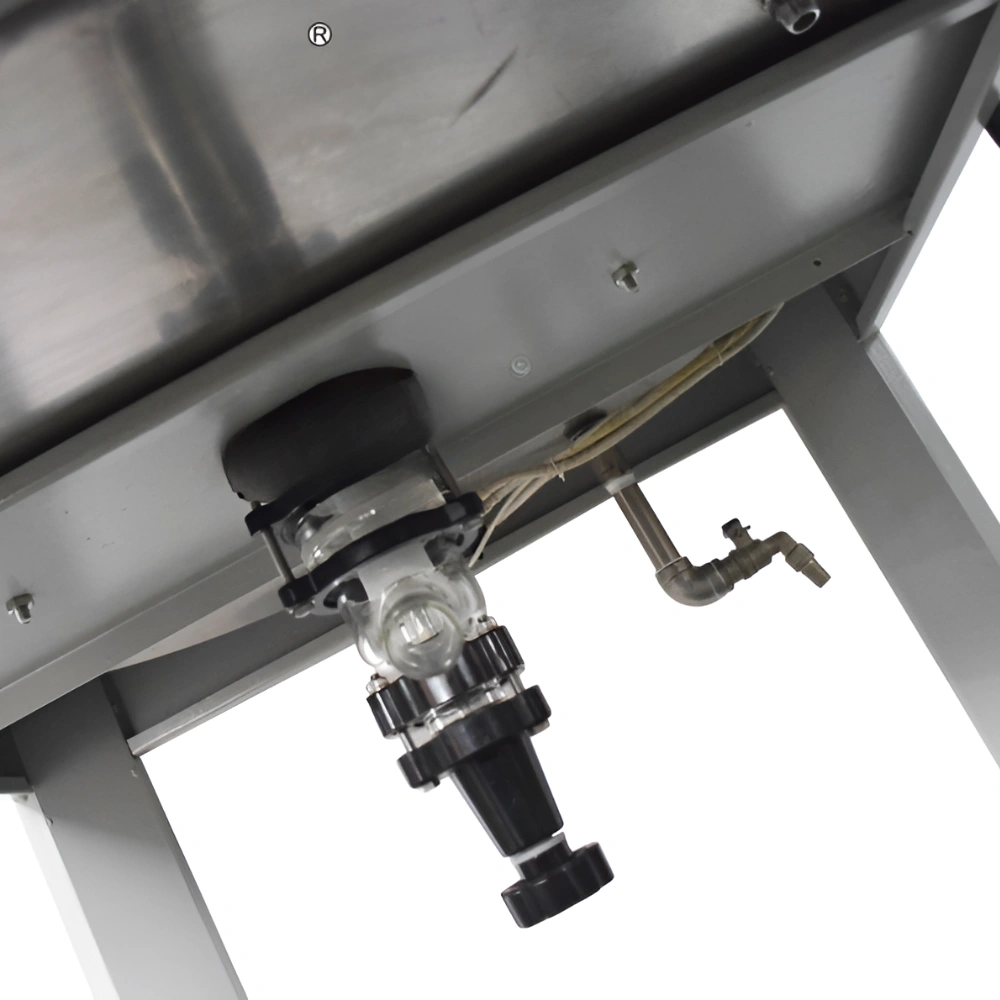
Shock-absorbent base mount
Heavy-duty caster wheels
Borosilicate glass visibility
Overheat protection circuit
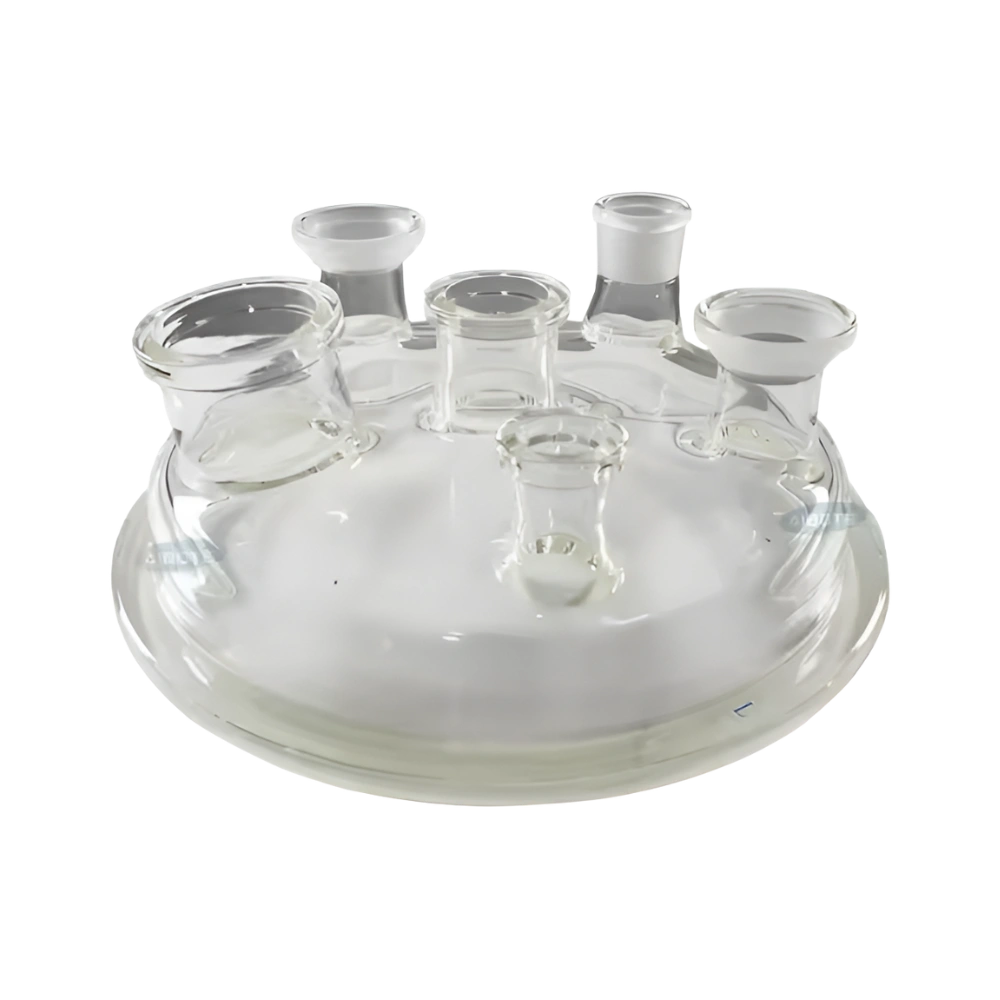
Wide-neck vessel opening
Single Layer Glass Reactor LSGR-A18 supports large-scale chemical processing with controlled mixing and temperature regulation under vacuum conditions. That allows researchers and industries to conduct complex reactions in fields like pharmaceuticals, petrochemicals, and biotechnology.
Download catalog for
Single Layer Glass Reactor LSGR-A18 Catalog
Available Range :
Single Layer Glass Reactor LSGR-A14 : 10 L Single Layer Glass Reactor LSGR-A18 : 100 L ball shaped Single Layer Glass Reactor LSGR-A19 : 100 L Cylindrical Single Layer Glass Reactor LSGR-A10 : 1L Single Layer Glass Reactor LSGR-A11 : 2 L Single Layer Glass Reactor LSGR-A15 : 20 L Single Layer Glass Reactor LSGR-A20 : 200 L Cylindrical Single Layer Glass Reactor LSGR-A12 : 3 L Single Layer Glass Reactor LSGR-A16 : 30 L Single Layer Glass Reactor LSGR-A13 : 5 L Single Layer Glass Reactor LSGR-A17 : 50 LLabtron Single Layer Glass Reactor operates across a wide temperature range, supporting controlled heating and cooling for evaporation and reaction tasks. They include a vacuum pressure gauge that allows users to monitor internal pressure in real time. Their stepless speed control enables smooth and adjustable stirring across a range of viscosities. These reactors operate with minimal noise, making them suitable for quiet lab environments. Our Single Layer Glass Reactor supports applications in pharmaceuticals, chemical research, metallurgy, aerospace, and academic laboratories.


The Single Layer Glass Reactor features separate input channels designed for stepwise or delayed reagent feeding during ongoing reactions. These inlets enable researchers to control the introduction of reactive or unstable substances without interrupting the main process. Staggered addition helps avoid unwanted side reactions or thermal spikes. The setup maintains an enclosed system while reagents are introduced, minimizing contamination risks. Flow rates can be adjusted externally depending on reaction sensitivity. Input points are reinforced to prevent leaks or pressure inconsistencies. This is especially valuable in synthesis procedures that require stage-wise additions. Users can manage complex multi-stage workflows with minimal manual interference.
Our Single Layer Glass Reactor is built to handle extended operating hours, making it ideal for experiments that need to run continuously over long durations. Once configured, the system maintains stable thermal and mixing conditions without manual adjustment. The components are thermally balanced to avoid overheating or wear over time. Operators can leave the reactor unattended overnight or during multi-day trials. The reactor’s insulation and thermal flow remain steady throughout prolonged use. Integrated safety controls prevent process disruptions during lengthy runs. Consistency is preserved across heating cycles and material agitation. This allows researchers to focus on data collection rather than constant oversight.
The Single Layer Glass Reactor is fully compatible with vacuum setups and can be connected to external vacuum pumps or filtration assemblies without additional reconfiguration. This design supports low-pressure environments for evaporation, solvent recovery, or air-sensitive reactions. The sealing mechanisms are structured to maintain vacuum integrity during dynamic conditions. It helps speed up distillation or drying steps without exposure to ambient conditions. Vapor exits are positioned for easy hose attachment and safe venting. Material inside the vessel remains undisturbed during pressure adjustments. The structure stays thermally stable even under low pressure. This makes it ideal for controlled atmosphere applications.
Labtron’s single Layer Glass Reactor is constructed with clear borosilicate glass that offers high transparency for visual inspection during operation. The vessel curvature is designed to reduce distortion and allow multiple-angle viewing. Users can monitor color change, phase separation, and reaction clarity in real time. There’s no need to open the reactor for visual checks, reducing exposure risk. Observation ports remain fog-free during both heating and cooling. This improves decision-making during process stages. Visual access helps fine-tune reagent timing and heating profiles. The design is highly useful for academic, formulation, and pilot-scale work where constant monitoring is critical.
Our Single Layer Glass Reactor is capable of operating effectively with both low-viscosity and thick, slurry-like reaction mixtures. The stirrer system compensates for resistance changes and maintains uniform mixing throughout. This avoids stagnation or buildup near the reactor walls. It allows users to work with diverse substances including gels, polymer solutions, or multi-phase mixtures. Stirring intensity is maintained even when the load becomes denser. The reactor doesn't require equipment change for different viscosity levels. Material homogeneity is preserved even during thermal variation. The result is consistent product quality across a wide viscosity range.
The Single Layer Glass Reactor is designed with an open-top configuration and minimal internal obstructions, which makes post-reaction cleanup easier and faster. Inner surfaces are smooth and reduce the chances of leftover residue. Components in contact with chemicals are widely spaced for better accessibility. The reactor does not require disassembly for basic rinsing and drying. Residues can be flushed out using standard lab-grade solvents. There are no tight corners that trap compounds or deposits. All parts that require attention are accessible without the need for realignment. This helps reduce turnaround time between experimental runs.
Post your question?
Our experts are here to help!
Labtron Equipment Ltd., Quatro House, Lyon Way, Camberley, Surrey GU16 7ER United Kingdom
Email: info@labtron.com Whatsapp: +44 73 4441 2688 Phone: +44 2080 043608