info@labtron.com

| Material Passing Time | ≤3 |
| Bacterial Efficiency | ≥99.9% |
| Spore Killing Efficiency | ≥99.9% |
| External Dimensions | 860 × 690 × 100 |
| Internal Dimensions | 600 × 600 × 600 |
| Equipment Power | 600W |
| Weight | 115 kg |
Pulsed Xenon UV Sterilization
Dual HEPA Filtration
Stainless-Steel Construction
Touchscreen Control Panel
Automatic Sensor Activation
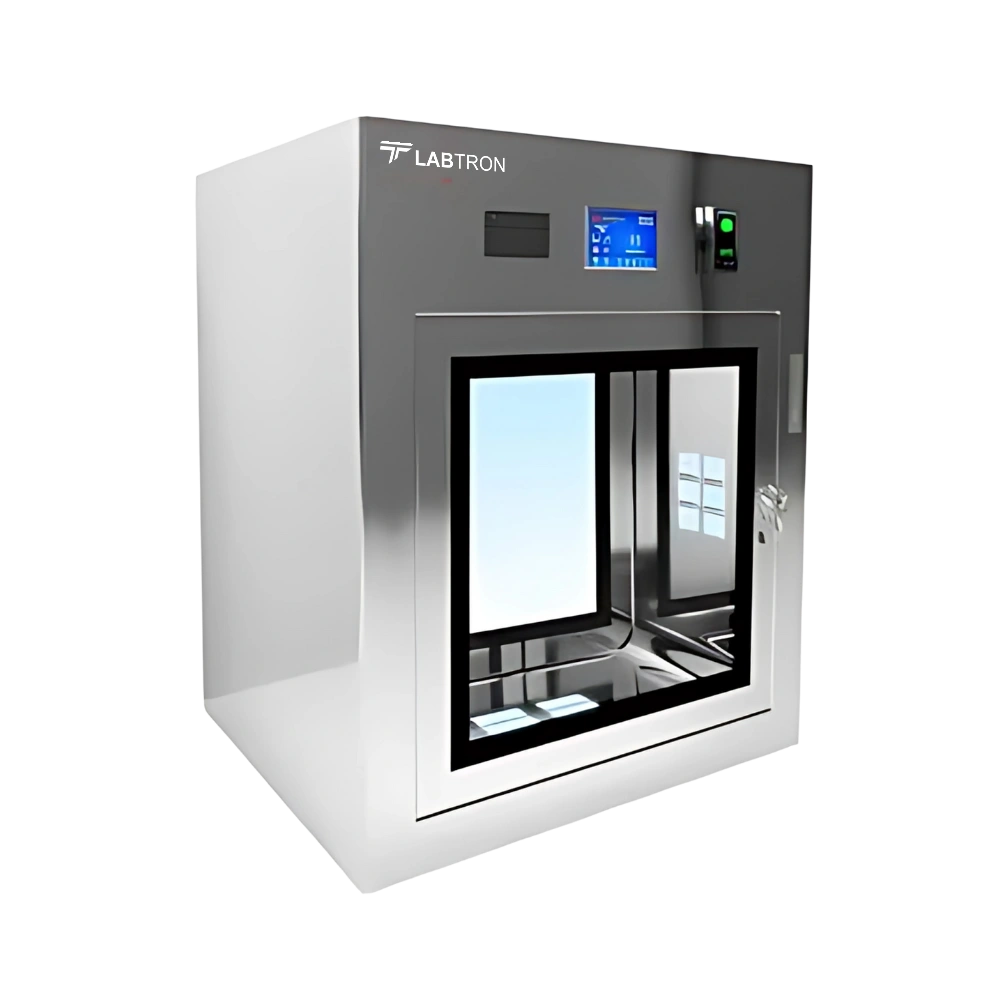
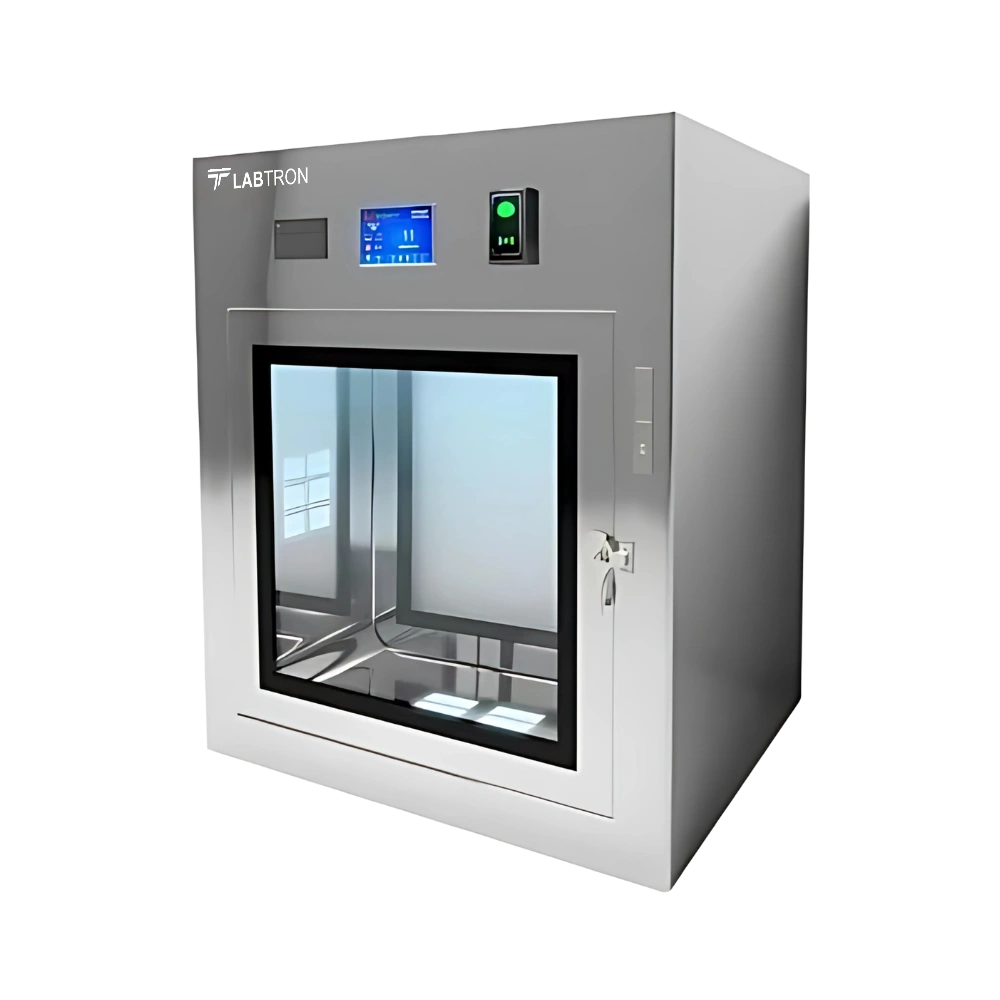
Xenon Light Pass Box LXLP-A10 uses high-intensity pulsed xenon UV light to prevent cross-contamination during material handling. It plays a key role in pharmaceutical, biotech, hospital, electronics, semiconductor, food, and beverage industries for ensuring sterile material transfer.
Download catalog for
Xenon Light Pass Box LXLP-A10 Catalog
Labtron Xenon Light Pass Box utilizes high intensity pulsed xenon lamps to instantly generate UV C light hundreds of times stronger than conventional UV sources. These features a fully mirrored stainless steel interior. They provide built in UV shielding safeguards operators, and the device operates reliably across temperature ranges. Their user-friendly controls include timer settings and automated cycles. Our xenon light pass box is constructed with durable 304 stainless steel for long-term cleanroom operations under a wide temperature and humidity range.

Labtron supplies premium model of Xenon Light Pass Box LXLP-A10.Validation begins with biological indicator (BI) testing, typically using spores like Bacillus subtilis, placed in shadow zones. Quarterly BI testing ensures reduction per cycle Cycle logs record each xenon flash’s energy output and duration, enabling traceability and audit compliance. In dual-mode units, VHP concentration sensors and cycle data are similarly captured via PLC or data loggers. Performance is periodically benchmarked using UV intensity meters or chemical dosimeters, while filter integrity is checked through differential pressure gauges. Comprehensive documentation-encompassing OQ/PQ execution reports, maintenance logs, and lamp replacement records-supports regulatory compliance with ISO 14644 1, EU GMP Annex 1, FDA 21 CFR 211, and others. This structured validation protocol ensures continued efficacy of sterilization and operator confidence.
Labtron’s Xenon Light Pass Box LXLP-A10 Pulsed xenon sterilization uses intense, short flashes that release up to 1?MW peak power, delivering enough energy—300?J per pulse—to achieve a 6-log reduction of microorganisms in under one Inside a mirrored stainless-steel chamber, pulses bounce uniformly, enabling rapid, 360° disinfection with no shadow zones. This process is inherently reproducible: each load receives a monitored, fixed energy dose, critical for validation and quality assurance. It also avoids chemicals and water, making it an eco-friendly alternative to traditional sterilization methods Consequently, cleanrooms achieve fast cycle times <3?min combining efficiency with strong microbial control.
Labtron supplies advanced Xenon Light Pass Box LXLP-A10. Pulsed xenon disinfection stands out by using no chemicals or water, releasing only inert gas, which significantly reduces environmental impact-no toxic residues or emissions. Energy consumption is low compared to VHP or chemical baths, and each discharge is precisely measured for traceability, aiding compliance with ISO?14644 1, EU GMP, and FDA bio validation requirements. Systems feature built-in dose calibration and logging, essential for process validation. The hardware—typically 304/316L stainless steel, sealed interlocks, HEPA filtration—meets industrial cleanroom standards with minimal added infrastructure. Users benefit from faster turnaround, simplified audits, and lower ongoing consumable needs (no reagents, no water), making pulsed xenon a cost-effective sterile solution.
Maintenance of xenon pass boxes revolves around monitoring flash lamp life, energy output, and chamber integrity. Lamps typically yield 20,000–60,000 hours; built-in hour meters and light output sensors notify replacement. Regular calibration with UV intensity meters or chemical indicators supports cycle validation and regulatory audits. Mirrored interiors and seal gaskets are cleaned periodically to maintain reflectivity and interlock performance. Electrical systems, including capacitor banks and control PLCs, are inspected and tested annually. Mandatory biological indicator testing (e.g., B. subtilis spores)—quarterly or per SOP—verifies spore kill and meets validation protocols. Logs and OQ/PQ records retain full traceability, aligning with ISO 14644 1, EU GMP Annex?1, and FDA 21?CFR 211 frameworks.
Labtron manufactures Xenon Light Pass Box LXLP-A10. Xenon arcs generate UV below 200?nm, which can combine with oxygen to form ozone. To prevent ozone accumulation, most pass boxes include ozone removal catalysts or filters, or use quartz lamps with UV-blocking coatings to drastically reduce ozone production. Additionally, well designed units incorporate ventilation or recirculation systems that remove any remaining ozone before permitting door access. These combined safety measures ensure ozone levels remain well within acceptable occupational limits, protecting operators and supporting compliance with cleanroom protocols.
Pulsed xenon UV systems use microsecond bursts of high-intensity, broad-spectrum light—including UV-C, UV-B, and UV-A—to damage microbial DNA/RNA far more powerfully than fixed-wavelength mercury UV lamps. A typical flash can reach up to 1?MW of peak power, delivering a pathogen reduction in under a minute¹. Unlike chemicals, it doesn’t leave residues, and its high penetration enables effective sterilization even in reflections and shadowed areas. Additionally, it consumes low energy per cycle and requires no water use, making it cost-effective and eco-friendly. These flashes are precisely monitored and reproducible, ensuring that each load receives the exact same radiation dose for validation purposes. Finally, it's safer and faster than chemical approaches like VHP when used properly, with built-in safeguards like interlocks, ozone control, and UV shielding.
Xenon Light Pass Boxes incorporate multiple redundant safety protocols. They employ dual electronic and mechanical interlocks to ensure only one door opens at a time, preserving cleanroom integrity. UV-shielded viewing windows, constructed from tempered or quartz glass, block harmful UV while letting users observe cycles. Units only activate xenon lamps when doors are fully closed, preventing accidental exposure. Many models also include ozone removal modules to neutralize any ozone created during UV flashes. Audible and visual indicators signal cycle status, while emergency stop switches immediately halt operation if needed. Regular maintenance guidelines-such as flash lamp replacement and validation testing—further ensure that safety systems remain reliable over time.
Labtron supplies modern Xenon Light Pass Boxes support rigorous validation through integrated logging and monitoring systems. Each pulse is logged—capturing parameters like energy per flash and cycle duration-ensuring reproducibility. Many units include built-in sensors and dose meters to verify UV intensity in real time. User interfaces often display cycle history and printer outputs for audit trails, supporting compliance with ISO 14644 1, EU GMP Annex 1, and FDA regulations. Routine performance checks involve the use of biological indicators and periodic measurement of particle counts or UV output. These documented validation processes help define safe operating limits and guarantee ongoing performance, ensuring validated aseptic transfer between zones.
Yes—many modern pass boxes offer dual-action sterilization, combining pulsed xenon UV with Vaporized Hydrogen Peroxide (VHP). In such systems, the xenon unit delivers rapid surface decontamination, while the VHP module penetrates complex geometries and provides deep microbial control-including spores and viruses—leaving no toxic residues (only H?O and O?) This synergy supports flexible, validation-approved modes (UV-only, VHP-only, or combined), all controlled via PLC touchscreen interfaces. Real-time sensors continuously monitor H?O? levels, UV intensity, and temperature. Double-door interlocks, HEPA filtration, and leak-proof design ensure robust compliance with ISO 14644 1, BSL, and GMP standards. These units are ideal for high-risk transfers—like BSL-3/4 labs, vaccine production, or semiconductor cleanrooms—where rapid cycle times and maximum assurance are essential
Xenon pass boxes deploy multiple redundant safety systems. Door interlocks (electronic and mechanical) block xenon activation unless doors are closed, and disable lamp firing if opened mid-cycle. UV blocking tempered/quartz viewing windows allow observation without exposure. Crucially, properly designed xenon systems produce minimal ozone, and integrate catalysts or filters to break down residual ozone below safe ambient levels. Other safeguards include audible/visual cycle alerts, emergency stop buttons, and failure interlocks tied to PLC controllers, shutting down upon lamp faults or door malfunctions. Operators are advised to avoid bypassing interlocks and to follow routine maintenance—like flash lamp replacement after 1 2 million pulses and weekly interior cleaning—to ensure consistent safety performance
Post your question?
Our experts are here to help!
Labtron Equipment Ltd., Quatro House, Lyon Way, Camberley, Surrey GU16 7ER United Kingdom
Email: info@labtron.com Whatsapp: +44 73 4441 2688 Phone: +44 2080 043608