info@labtron.com

| Air Volume (m³/h) | 600 |
| Fan Model | 400 |
| Average Wind Speeding (m/s) | 0.3 to 0.5 |
| External Static Pressure | 190 (10mm Aq) |
| Noise (dB) | 55 to 63 |
| Efficiency | 99.99% at 0.3µm |
| Frame | High quality aluminium |
| Initial Pressure Loss | 110 Pa at 0.45 m/s |
| Type | Aluminium turbofan |
| Vibration Coefficient (mm/s) | 0.2 to 0.5 |
| Material of Static Pressure Box | A3 cold plate spraying / galvanized steel plate / stainless steel |
| Power Supply | 220 / 50 V/Hz |
| Power Consumption | 100 to 300 W |
| Module Size (W×L×H) | 615 × 615 × 230mm |
| Dimension (W×L×H) | 610 × 610 × 69mm |
| Weight | 23.5 kg |
Low Operational Noise
HEPA Filtration System
Digital Speed Regulation
Minimal Vibration Levels
Low Power Consumption
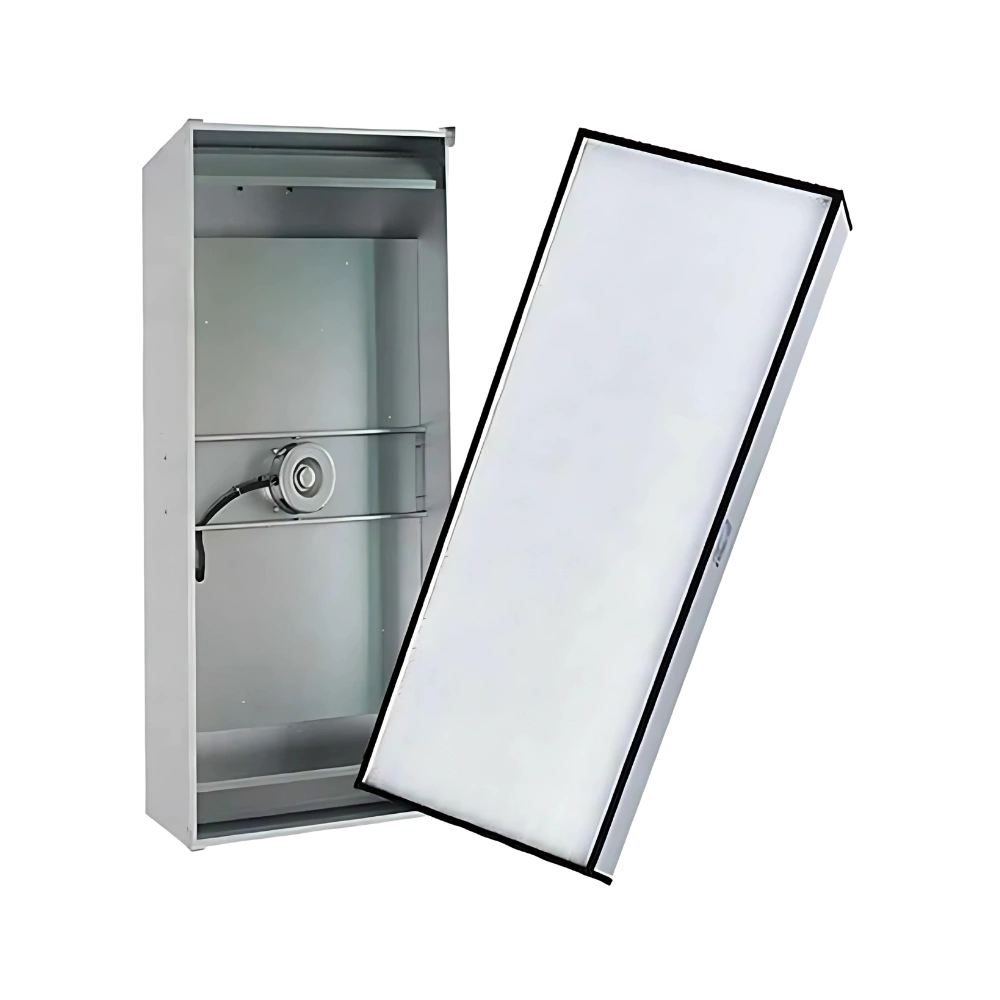
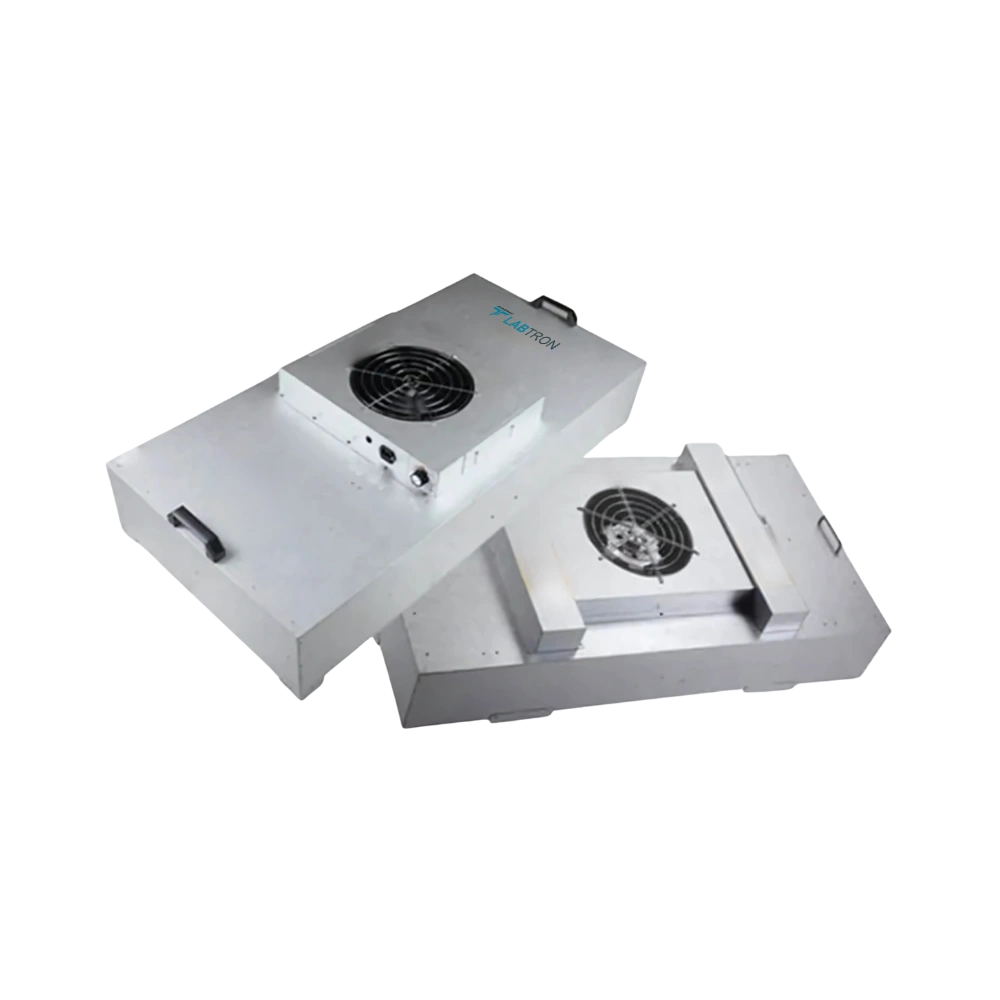
We are the manufacturer of Fan Filter Unit, and our fan filter unit LFFU-A11 has an air volume of 600 m³/h, delivering effective laminar airflow performance by incorporating high-efficiency components and smart airflow management.
Labtron Fan Filter Unit combines a fan and HEPA/ULPA filter to deliver controlled, laminar airflow that removes airborne particles and supports critical contamination control. These include features like variable speed control, low-noise operation, and energy-efficient EC motors. They have optional test ports or indicator lights. Their compact and adjustable FFUs reduce dependence on central HVAC systems, thereby lowering installation costs and time. Our fan filter units are installed in ceiling or floor grids of cleanrooms, laboratories, pharmaceutical facilities, and semiconductor plants.


Labtron Fan Filter Unit LFFU-A11 typically use PSC (fixed or stepped), ECM (variable speed), or no motor (ducted HVAC connection). PSC motors are cost effective but less flexible, while ECM motors enable precise airflow control, energy savings, and integration with digital control systems (e.g., Modbus, BACnet). Motorless FFUs rely on central air handling, reducing weight and noise but lacking independent control.
Labtron’s Fan Filter Unit LFFU-A11 housings are usually stainless steel or powder coated steel; stainless wards off corrosion, resists chemicals, and enables easy cleaning—ideal for biotech and semiconductor use coated units offer a cost effective alternative with good durability and aesthetics. Material choice depends on cleanroom classification, chemical exposure, and budget considerations, with stainless recommended for ISO?3–4 environments
Labtron supplies premium models of Fan Filter Unit LFFU-A11.Manufacturers perform a battery of tests before shipment, including visual inspection, motor functionality, power draw, noise levels, and filter efficiently with leak checks. Many offer built in challenge ports for in situ leak testing to comply with IEST, UL 900, and USP?797/800 standard. Regular semi annual re testing ensures continued compliance and cleanroom integrity—crucial for pharmaceutical and medical device environments
Labtron supplies advanced models of Fan Filter Unit LFFU-A11.Pre filters should be inspected every 2–6 months, especially in gowning areas where contamination rates are higher; replacements at six month intervals or sooner preserve airflow efficiency, HEPA/ULPA filters should be replaced when their pressure drop doubles from baseline, as clogged filters force fans to work harder, increasing energy costs and reducing system performance. While medical or pharmaceutical deep clean environments may let HEPA filters last five or more years, proactive replacements minimize long term maintenance and energy overheads
Labtron supplies advanced models of Fan Filter Unit LFFU-A11.Simulations like CFD help strategically locate FFUs to reduce dead zones and ensure uniform vertical airflow in critical zones. Pre installation planning should assess ceiling structure, airlock configurations, and supports; final placement must align with airflow design and contamination control objectives. Sealing units properly, using appropriate gaskets and sealants, and verifying level and alignment during mounting minimize air leaks and guarantee cleanroom compliance.
Labtron’s Fan Filter Unit (FFU) is a modular air-cleaning system that integrates a fan, pre-filter, and HEPA (or ULPA) filter into a ceiling grid unit. It draws contaminated room air through the pre-filter, then pushes it through the high-efficiency filter, supplying downward laminar or turbulent airflow to maintain ISO-class cleanliness. These units are essential in cleanrooms and microenvironments, enabling precise control of air supply directly above the workspace. FFUs operate either independently or as part of a larger HVAC system, often arranged in arrays to meet air change-per-hour requirements for ISO classes.
Labtron’s FFUs are typically built in standard ceiling grid dimensions such as 2×2?ft, 2×3?ft, and 2×4?ft, though custom sizes are possible. These units come fitted with HEPA filters as standard—with 99.99% efficiency offer ULPA options to achieve up to 99.999% efficiency for ultra-critical applications Prefilter stages, extend the life of the primary filters. Some FFUs feature advanced designs like knife-edge filters or PTFE media to meet tight sealing and contamination control needs.
Labtron’s Fan Filter Units use either PSC (permanent split capacitor) or ECM (electronically commutated) motors. PSC motors offer fixed or stepped speed control, providing reliable airflow at lower cost. ECM motors, in contrast, enable variable-speed control, smoother airflow, more precise pressure maintenance, and significant energy reductions—often 30–50% savings over PSC units. This not only reduces long-term operational costs but also mitigates noise and extends motor lifespan.
The number of FFUs needed depends on room size, desired air changes per hour (ACH), and ISO cleanroom class. For example, ISO 5 often requires hundreds of units operating together to maintain 500–750 ACH, while lower classes need fewer. Each FFU typically delivers 600–1,000 CFM, so designers calculate unit count based on airflow volume and room volume. This ensures uniform air velocity across the ceiling to sustain laminar flow and positive pressure.
Yes—advanced FFUs, especially ECM models, support integration with building management systems (BMS) and can be controlled via protocols like Modbus or BACnet. They can feature auto-control cards and sensors to modulate fan speed and airflow in real time, based on pressure or particulate readings. This networked capability allows centralized monitoring and optimization of hundreds of units across cleanrooms, improving energy efficiency and ensuring environmental compliance.
Post your question?
Our experts are here to help!
Labtron Equipment Ltd., Quatro House, Lyon Way, Camberley, Surrey GU16 7ER United Kingdom
Email: info@labtron.com Whatsapp: +44 73 4441 2688 Phone: +44 2080 043608