 info@labtron.com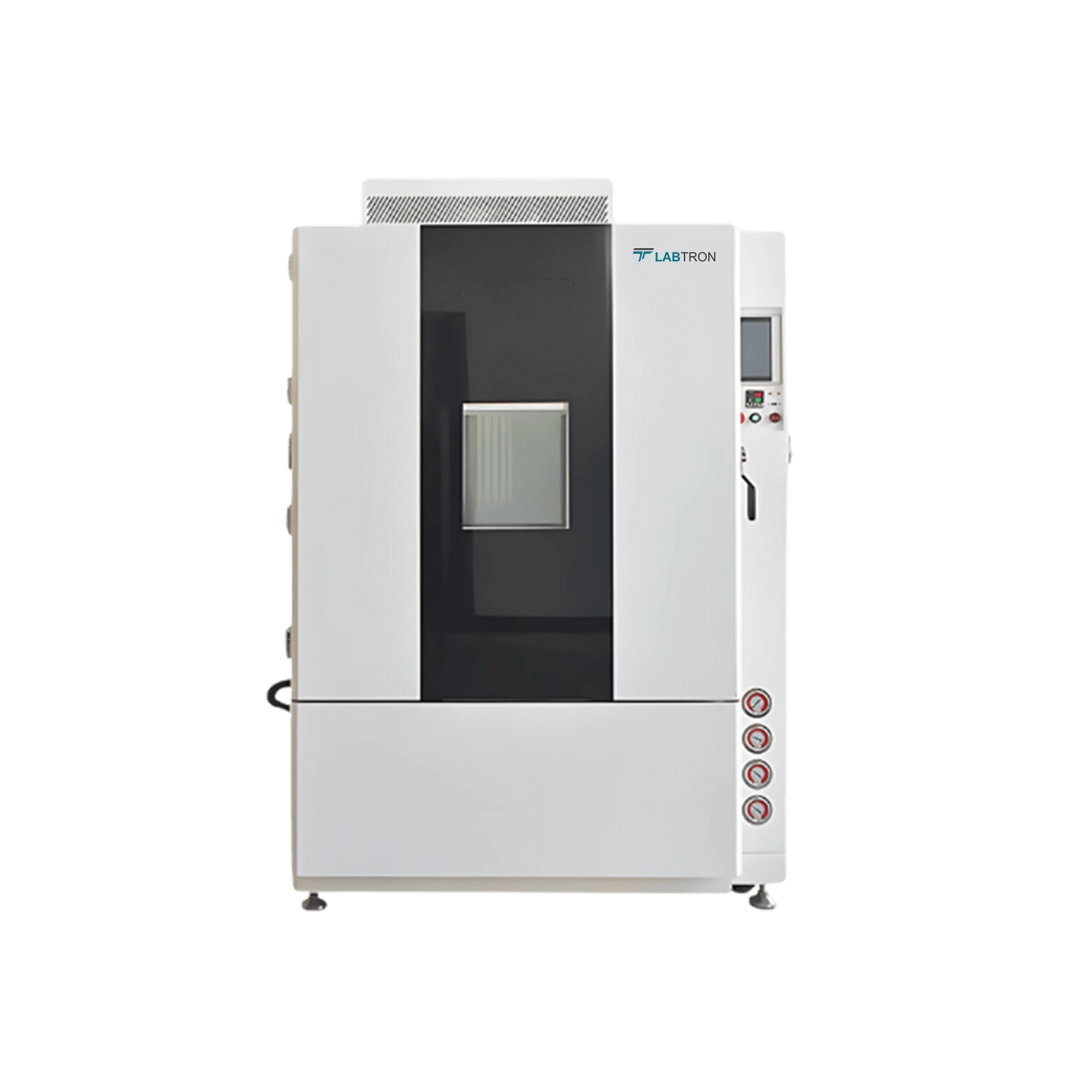

| Capacity | 1000 L |
| Temperature Range | -20°C/-40°C/-70°C to +150°C |
| Temperature Fluctuation | ±0.5°C |
| Temperature Uniformity | ±2.0°C |
| Temperature Deviation | ±2.0°C |
| Fast Temperature Change Range | -20°C/-40°C/-55°C to +85°C |
| Fast Temperature Change Rate | 5°C/min, 10°C/min, 15°C/min (Average change) |
| Humidity Range | 20 %RH to 98 %RH |
| Humidity Fluctuation | ±2.0 %RH |
| Humidity Uniformity | ±3.0 %RH |
| Humidity Deviation | ±3.0 %RH (>75%RH), ±5.0 %RH (≤75%RH) |
| Noise Level | ≤78 dB |
| Voltage Fluctuation | ≦±10 % |
| Power Supply | AC 3 ψ 4 W 380 V 50 Hz |
| Internal Dimensions (W × H × D) | 1000 × 1000 × 1000 mm |
| External Dimensions (W × H × D) | 1750 × 2030 × 2900 mm |
Touch screen control panel
Overheat protection system
Advanced mist control technology
Customizable chamber size options
Compatible with multiple industries
Humidity Test Chamber LHMTC-A16 is a testing device that simulates varying humidity and temperature conditions to assess material performance and durability. It is used in electronics, automotive, pharmaceuticals, and aerospace industries to test corrosion resistance.
Accessories Name | Quantity |
Transparent Electrothermal Film Double Layer Glass Observation Window | 1 |
Lead Holes | 2 |
Lighting Lamp | 1 |
Casters | 4 |
Stainless Steel Sample Trays | 2 |
Cable | 1 |
Download catalog for
Humidity Test Chamber LHMTC-A16 Catalog
Labtron Humidity Test Chamber has an adjustable temperature range, allows precise control, making it suitable for different testing and environmental conditions. These reliable long-term performances ensure stable and efficient operation, even during extended use. Their advanced humidity sensors continuously monitor and regulate moisture levels for accurate and consistent results. They feature uniform airflow circulation that maintains even temperature and humidity throughout the chamber, preventing fluctuations. Our humidity test chamber has a high-capacity water tank that supports continuous operation with fewer refills, reducing the need for frequent maintenance.
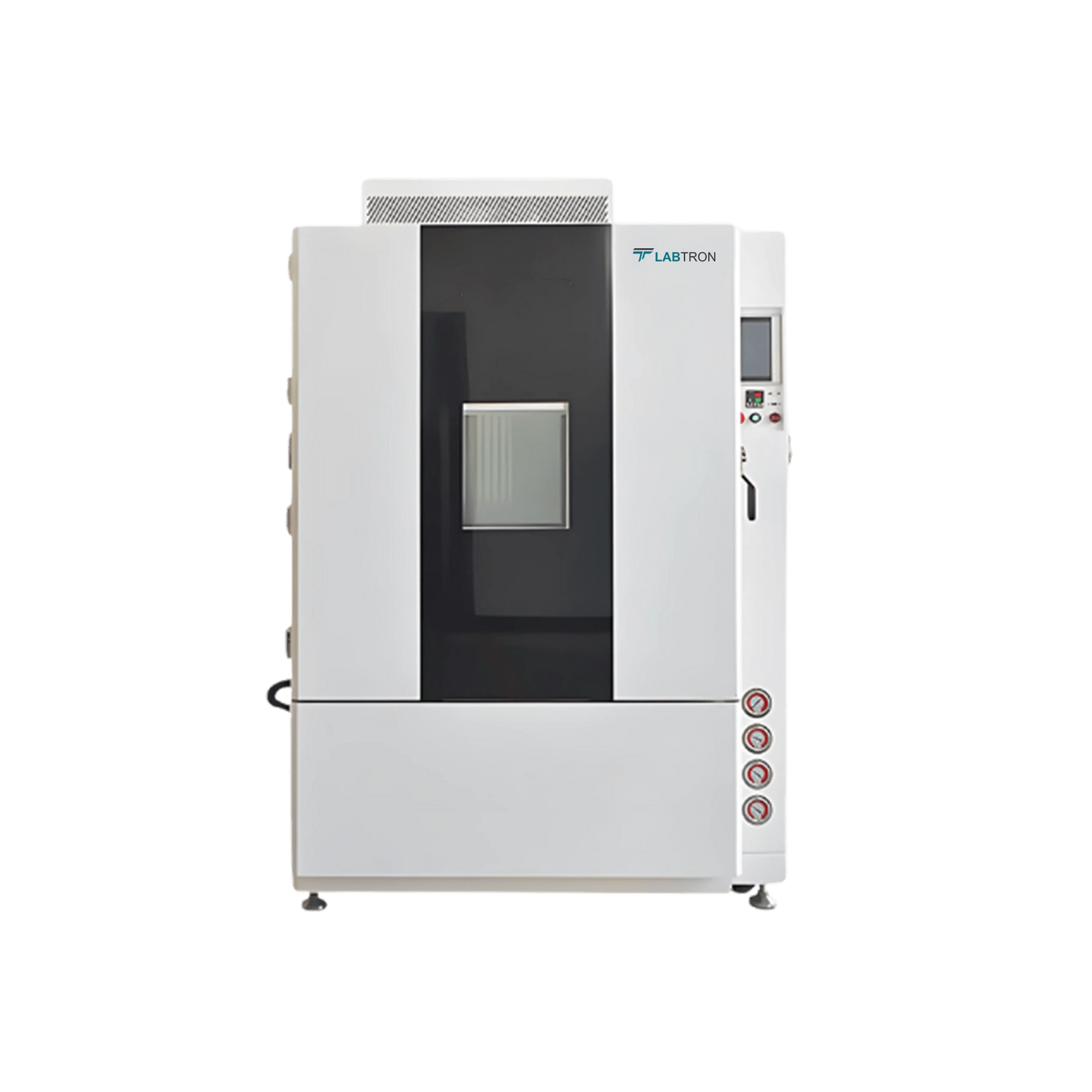


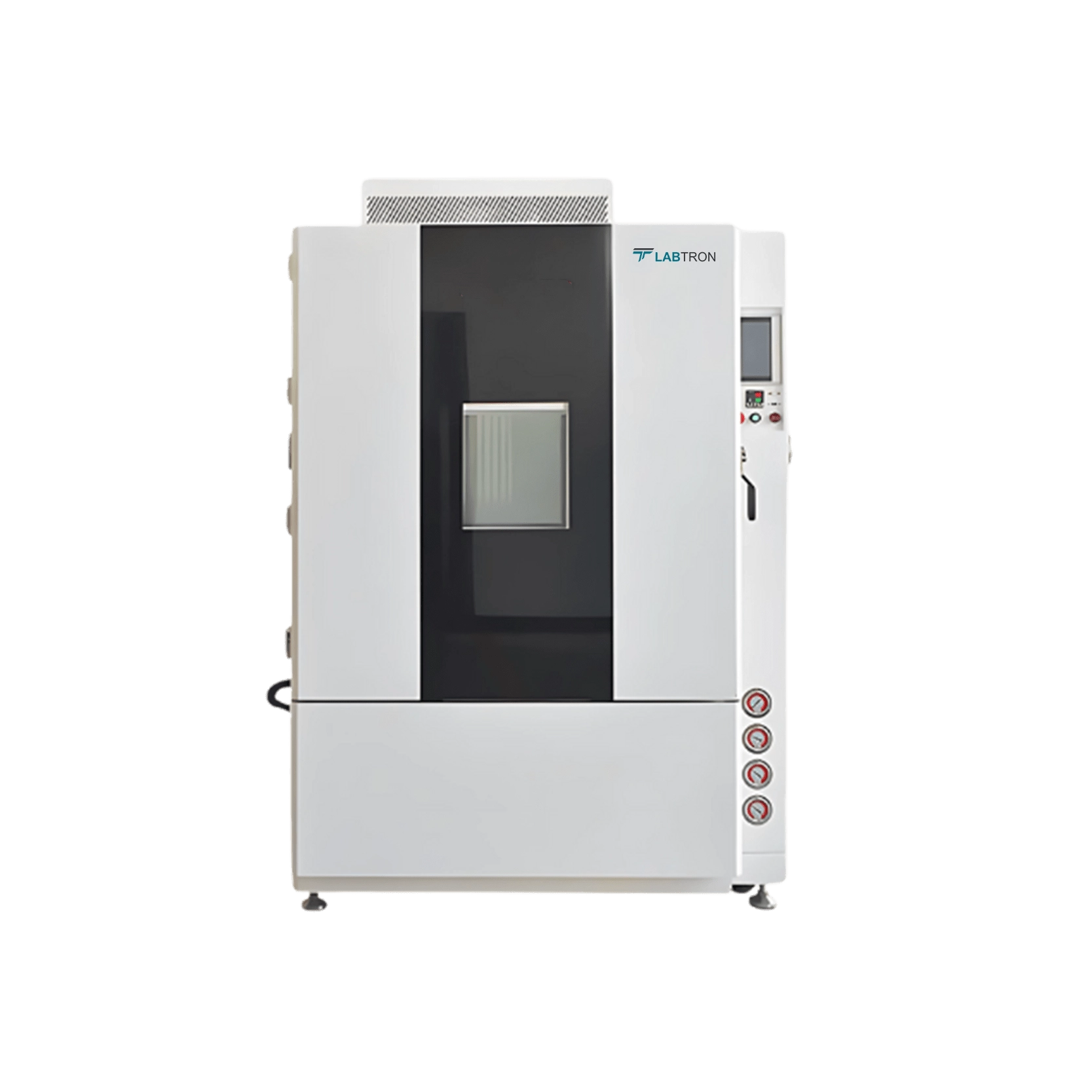
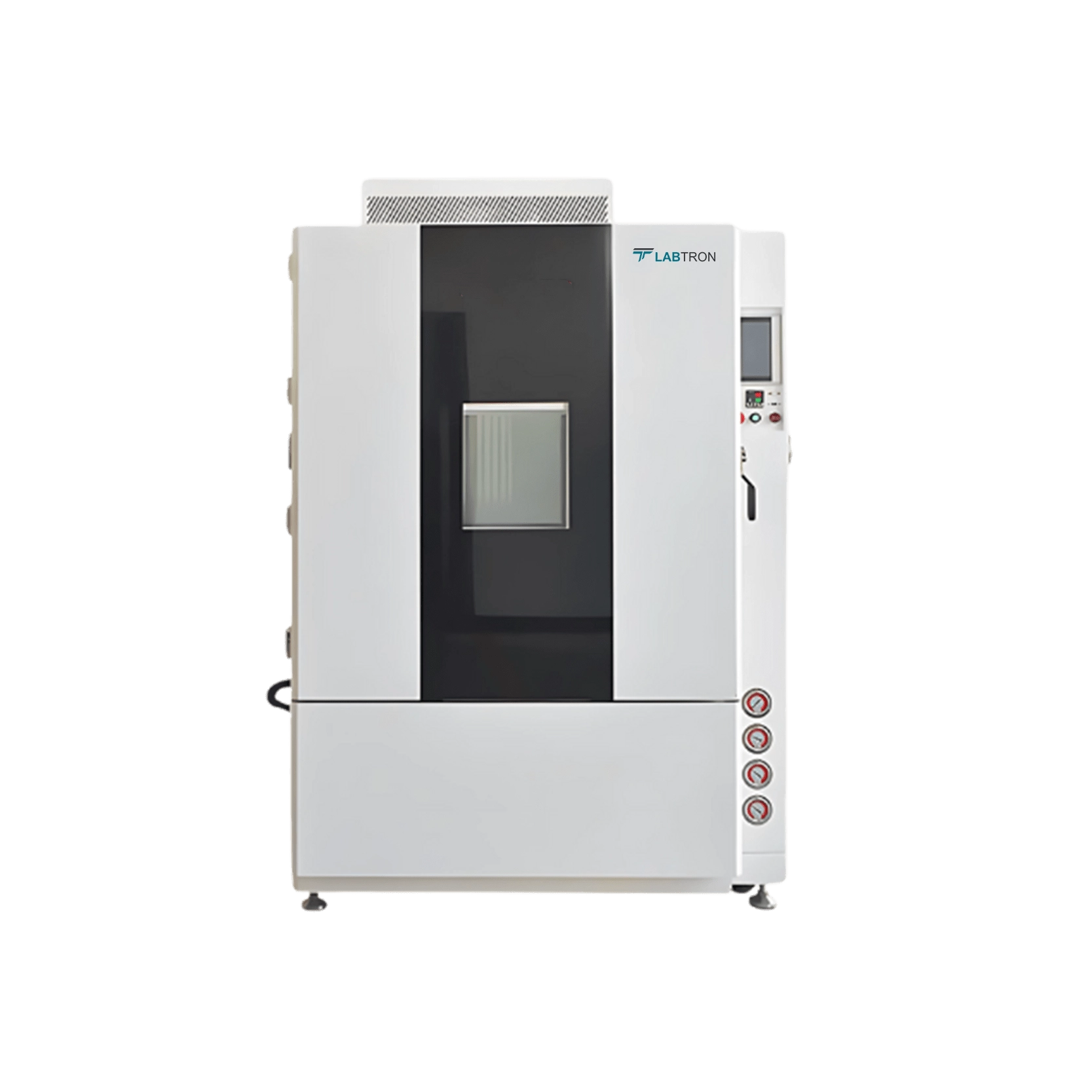

Labtron’s Humidity Test Chamber focuses on controlling temperature and humidity to evaluate how materials and products respond to prolonged exposure to moisture. It simulates conditions that help assess the stability and durability of products in high-humidity environments. On the other hand, a Climatic Test Chamber provides a broader range of environmental simulations, including temperature variations, humidity, thermal cycling, UV exposure, and sometimes vibration.
Humidity Test Chambers can be used to test a wide range of products, including electronics, pharmaceuticals, automotive components, textiles, and packaging materials. Labtron’s Electronic devices and circuit boards are tested to assess their resistance to humidity-induced corrosion. Pharmaceuticals and medical devices undergo stability testing to ensure their safety and effectiveness under high humidity.
Labtron’s Humidity testing is essential for product validation because prolonged exposure to moisture can cause corrosion, degradation, changes in mechanical properties, and loss of structural integrity. In industries like electronics, even minor moisture penetration can cause circuit malfunctions. Similarly, pharmaceuticals and medical devices must remain effective and safe under fluctuating humidity conditions.
The dew point is the temperature at which air becomes saturated with moisture, leading to condensation. In labtron’s humidity testing, maintaining conditions near or below the dew point is essential because condensation can negatively impact product performance. For example, in electronic devices, condensation can lead to short circuits, while in packaging materials, it may weaken the structure. Monitoring the dew point helps manufacturers assess the likelihood of condensation and determine how materials respond to moisture-laden environments.
Relative Humidity (RH) is the percentage of moisture in the air compared to the maximum amount the air can hold at a specific temperature, while absolute humidity is the actual amount of moisture present in the air, typically measured in grams per cubic meter. RH is commonly used in environmental testing because it reflects how humidity affects product performance. Since RH depends on temperature, fluctuations in temperature can change the RH level.
Humidity Test Chambers manage rapid changes through advanced heating, cooling, and humidification systems that quickly adjust environmental conditions. The labtron’s chamber heating and refrigeration systems work simultaneously to achieve the desired temperature, while steam injection or ultrasonic humidifiers regulate humidity levels. PID (Proportional-Integral-Derivative) controllers ensure smooth transitions by minimizing overshoot and undershoot during changes in test conditions.
Inaccurate humidity levels can lead to inconsistent test results and unreliable product performance data. If the labtron’s chamber humidity deviates from the set point, products may not undergo the intended stress conditions, affecting their reliability assessment. To restore accuracy, it is essential to recalibrate the sensors periodically, inspect the humidification system for blockages, and ensure uniform airflow within the chamber.
To prevent condensation buildup, it is important to maintain precise control over the dew point, ensure proper airflow, and manage drainage effectively. Labtron’s condensation can occur when the surface temperature of the chamber or test samples drops below the dew point, leading to water droplets forming inside the chamber. Optimizing airflow patterns prevents localized cooling, while routine inspection of the humidification system helps ensure that excess moisture is removed efficiently.
Post your question?
Our experts are here to help!
Labtron Equipment Ltd., Quatro House, Lyon Way, Camberley, Surrey GU16 7ER United Kingdom
Email: info@labtron.com Whatsapp: +44 73 4441 2688 Phone: +44 2080 043608