info@labtron.com

| Number of Slides | 10 pcs |
| Maximum Buffer Volume | 400 ml |
| Sample Throughput | 25 to 104 |
| Dimension (L × W × H) | 365 × 165 × 55 mm |
| Weight | 1.2 kg |
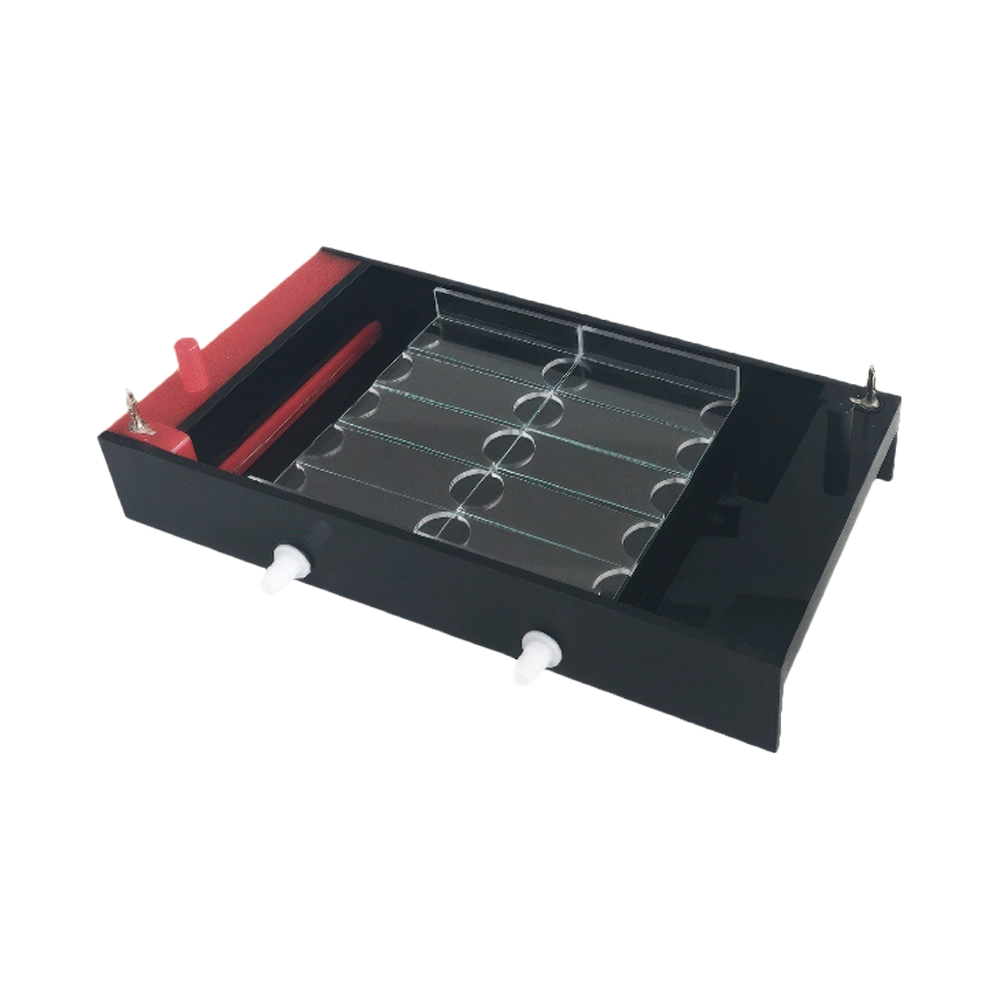
Optional cooling circulator
Easy electrode maintenance
Slide rack prevents contamination
UV-protected buffer tank
Consistent temperature control
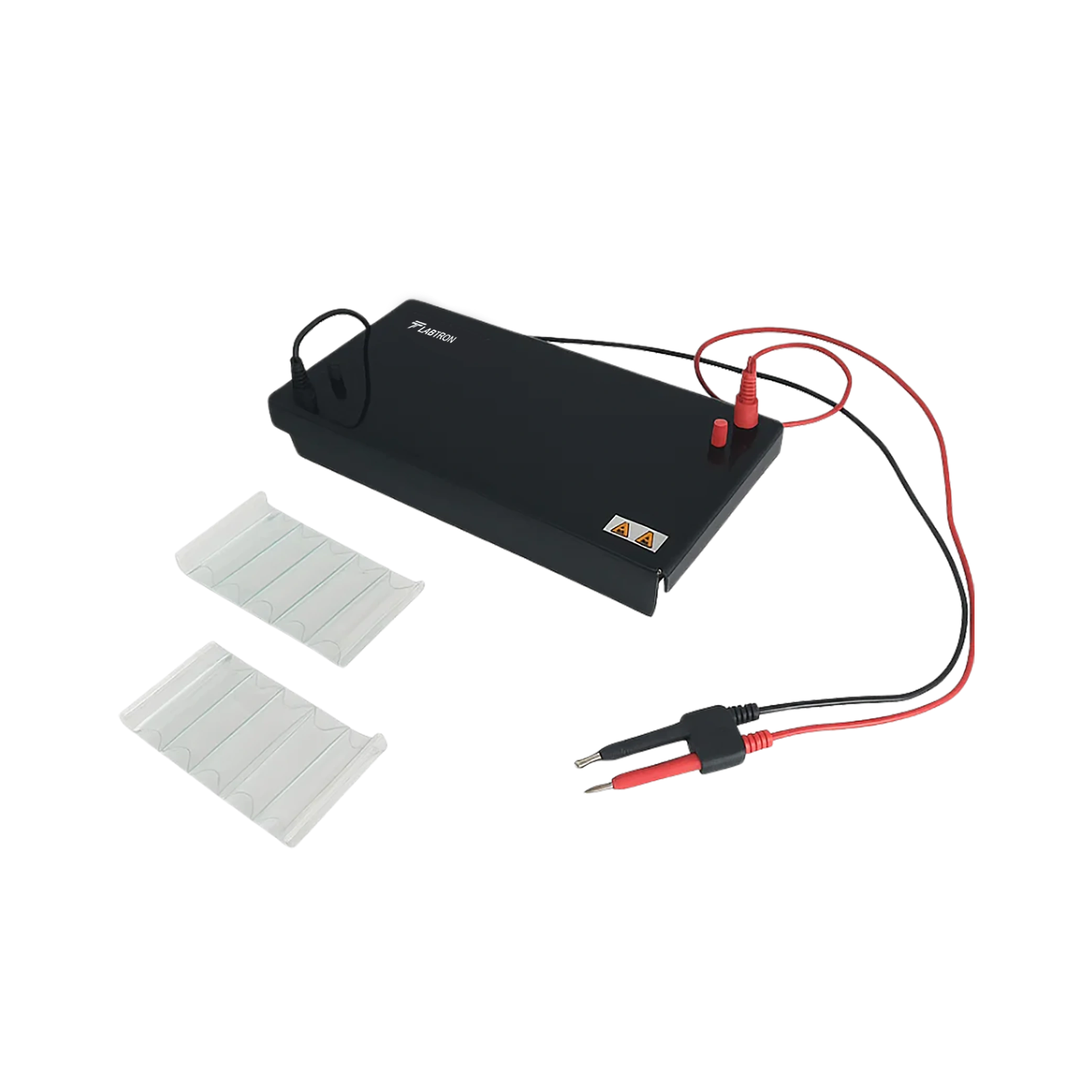
Single Cell Gel Electrophoresis LSCGE-A10 is a sensitive technique for detecting DNA damage and repair at the single-cell level. It is widely used in genotoxicity testing, cancer research, and environmental monitoring to assess DNA integrity and cellular response.
Download catalog for
Single Cell Gel Electrophoresis LSCGE-A10 Catalog
Labtron Single Cell Gel Electrophoresis has an advanced high-resolution DNA analysis system that ensures precise and accurate results, enabling detailed examination of genetic material. These systems are designed to minimize sample degradation, preserving the integrity of DNA throughout the analysis process. Their efficient electrophoresis workflow, researchers can achieve faster processing times and improved productivity. They feature consistent experimental outcomes, ensuring reproducibility and reliability in every experiment. Our single cell gel electrophoresis is enhanced with superior sample protection, safeguards the DNA, and maintains quality from start to finish.

Single Cell Gel Electrophoresis, commonly known as the Comet Assay, is a highly sensitive technique used to evaluate DNA damage and repair at the individual cell level. It is extensively used in genotoxicity testing, environmental biomonitoring, pharmaceutical research, and cancer studies to assess DNA strand breaks, oxidative damage, and apoptosis. Labtron offers state-of-the-art Single Cell Gel Electrophoresis systems designed to provide high-throughput analysis with reproducible results. These systems ensure optimal performance for detecting DNA damage in various cell types, making them ideal for research laboratories and industrial applications.
The Comet Assay can detect a wide range of DNA damage, including single-strand breaks (SSBs), double-strand breaks (DSBs), and alkali-labile sites, which can result from exposure to genotoxic agents such as radiation, chemicals, or environmental toxins. It is also highly effective in identifying oxidative DNA damage induced by reactive oxygen species (ROS) and evaluating the efficiency of DNA repair after various treatments. Labtron’s Comet Assay systems provide exceptional sensitivity and precision, allowing researchers to accurately assess different types of DNA damage across multiple sample types, including mammalian, bacterial, and plant cells.
The alkaline Comet Assay (pH > 13) is the most commonly used protocol and is capable of detecting single-strand breaks, alkali-labile sites, and oxidative DNA damage. In contrast, the neutral Comet Assay (pH 7–8) primarily detects double-strand breaks, making it suitable for studies involving ionizing radiation or chemotherapy agents. Labtron’s Comet Assay systems are designed to support both protocols, providing researchers with the flexibility to choose the most appropriate method based on their research goals. The systems maintain precise control over pH levels and electrophoresis conditions, ensuring consistent and accurate detection of DNA damage.
The lysis step is critical because it breaks down the cellular and nuclear membranes, releasing the DNA and preparing it for electrophoresis. This step is typically performed in a high-salt lysis buffer containing detergents and proteinase K to remove proteins and membranes while preserving the integrity of the DNA. Labtron’s Comet Assay systems include optimized lysis protocols that ensure complete and uniform lysis of cells, preventing incomplete or uneven DNA migration. Consistent lysis conditions enhance the reproducibility of results, making Labtron’s systems highly reliable for genotoxicity and DNA repair studies.
Air bubbles trapped during the embedding process can create irregularities in the gel, affecting DNA migration and compromising assay results. To prevent air bubbles, Labtron’s Comet Assay systems provide optimized protocols for embedding cells in agarose gel at the right temperature. The systems ensure that the agarose is cooled to a temperature that prevents premature solidification while maintaining a viscosity that facilitates smooth spreading over the slides. Additionally, Labtron’s systems include guidelines for gentle pipetting and proper positioning of slides to minimize bubble formation, ensuring uniform and reliable results.
Visualization of DNA migration requires the use of fluorescent DNA-intercalating dyes such as ethidium bromide, SYBR Green, or propidium iodide. Labtron’s Comet Assay systems are compatible with a wide range of DNA stains and offer high-resolution fluorescence imaging systems to ensure effective visualization. The advanced imaging capabilities allow researchers to clearly observe the comet-like structures formed by DNA migration and analyze the extent of DNA damage with high sensitivity and precision. Labtron’s imaging systems provide consistent and accurate results, making them ideal for quantitative analysis.
Post your question?
Our experts are here to help!
Labtron Equipment Ltd., Quatro House, Lyon Way, Camberley, Surrey GU16 7ER United Kingdom
Email: info@labtron.com Whatsapp: +44 73 4441 2688 Phone: +44 2080 043608