info@labtron.com

| Number of Slides | 20 pcs |
| Maximum Buffer Volume | 1000 ml |
| Sample Throughput | 25 to 104 |
| Dimension (L × W × H) | 470 × 165 × 70 mm |
| Weight | 2.5 kg |
Efficient DNA damage analysis
Minimal sample contamination risk
Enhanced UV protection design
Precise temperature regulation
High-performance electrophoresis system
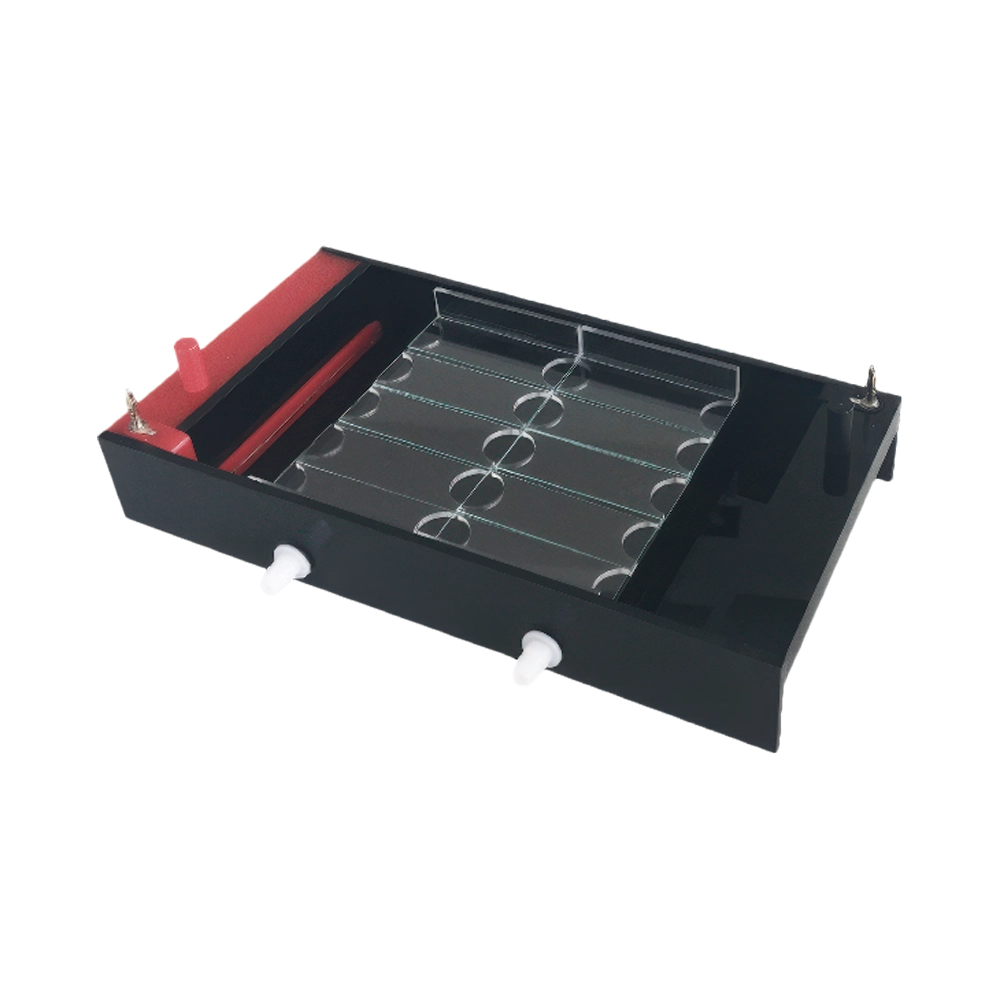
Single Cell Gel Electrophoresis LSCGE-A11 is a sensitive technique for detecting DNA damage and repair at the single-cell level. It is widely used in genotoxicity testing, cancer research, and environmental monitoring to assess DNA integrity and cellular response.
Download catalog for
Single Cell Gel Electrophoresis LSCGE-A11 Catalog
Labtron Single Cell Gel Electrophoresis has an advanced high-resolution DNA analysis system that ensures precise and accurate results, enabling detailed examination of genetic material. These systems are designed to minimize sample degradation, preserving the integrity of DNA throughout the analysis process. Their efficient electrophoresis workflow, researchers can achieve faster processing times and improved productivity. They feature consistent experimental outcomes, ensuring reproducibility and reliability in every experiment. Our single cell gel electrophoresis is enhanced with superior sample protection, safeguards the DNA, and maintains quality from start to finish.

Overheating during electrophoresis can compromise assay results by causing excessive diffusion of DNA and distorted comet patterns. Labtron’s Comet Assay systems are equipped with built-in cooling systems that regulate the temperature throughout the electrophoresis process, preventing overheating. These systems also allow for adjustable voltage settings and continuous monitoring of buffer temperature, ensuring that DNA migration occurs under optimal conditions. By maintaining a stable temperature, Labtron’s systems ensure the accuracy and reproducibility of results.
Proper handling of slides after electrophoresis is essential to preserve the integrity of the results. Labtron’s Comet Assay systems provide detailed protocols for rinsing slides with neutralizing buffer to remove residual electrophoresis buffer, followed by careful drying or immediate staining for visualization. The slides should be stored in a dust-free environment at appropriate temperatures to prevent degradation. Labtron’s systems include guidelines for post-electrophoresis handling, ensuring that the slides remain suitable for future analysis or re-evaluation.
Yes, the Comet Assay is an effective tool for evaluating DNA repair by comparing the extent of DNA damage before and after allowing cells time to repair. Labtron’s Comet Assay systems facilitate DNA damage and repair studies by providing real-time monitoring and analysis of DNA damage at different time intervals. These systems offer automated analysis features that allow researchers to measure the rate and efficiency of DNA repair with high accuracy and reproducibility. Labtron’s systems are widely used in genotoxicity and pharmaceutical research for assessing the effectiveness of DNA repair mechanisms.
Reproducibility in the Comet Assay can be influenced by several factors, including agarose concentration, electrophoresis duration, buffer pH, voltage settings, and lysis conditions. Labtron’s Comet Assay systems are designed to minimize variability by providing standardized protocols, high-quality reagents, and automated analysis software. These systems ensure precise control over all critical parameters, reducing the likelihood of inconsistencies and improving the reproducibility of results. With Labtron’s systems, researchers can achieve consistent, high-quality outcomes even in high-throughput experiments.
Quantification of DNA damage in a Comet Assay is achieved by measuring various parameters such as tail length, tail moment, and % DNA in the tail. Labtron’s Comet Assay systems offer advanced image analysis software that automates the quantification process, ensuring high precision and reproducibility. These systems allow researchers to analyze large datasets efficiently and generate statistically reliable data for genotoxicity and DNA repair studies. Labtron’s automated quantification reduces human error and enhances the overall accuracy of the assay.
Yes, the Comet Assay can be performed using a variety of cell types, including mammalian cells, bacterial cells, plant cells, and even yeast cells. The choice of cell type depends on the research objective, whether it’s genotoxicity testing, environmental monitoring, or studying DNA repair mechanisms. Labtron’s Comet Assay systems are highly versatile and compatible with multiple cell types, ensuring efficient lysis and electrophoresis conditions to preserve DNA integrity. These systems provide optimized protocols for different sample types, allowing researchers to conduct reliable and reproducible assays with various biological specimens.
Post your question?
Our experts are here to help!
Labtron Equipment Ltd., Quatro House, Lyon Way, Camberley, Surrey GU16 7ER United Kingdom
Email: info@labtron.com Whatsapp: +44 73 4441 2688 Phone: +44 2080 043608