 info@labtron.com

| External Dimension | 1480 × 740 × 1700 mm |
| Internal Dimension | 1320 × 680 × 520 mm |
| Airflow Velocity | 0.3 to 0.5m/s |
| HEPA Filter | > 99.999% efficiency at 0.3 µm |
| Cleanliness Grade | ISO Class 5, Class 100 (Fed 209E) |
| Noise | ≤65 dB(A) |
| RMS | ≤4 μm |
| Power Consumption | ≤0.5 Kw |
| Power Supply | AC220±10%, 50 HZ |
| Net Weight | 80 Kg |
Chemical-Resistant Body Coating
Vibration-Free Design
Airflow Monitoring Indicator
Smooth Cornered Interior
Lockable Castor Wheels
Our Vertical Laminar Flow Clean Bench supports food pathogen testing, sterile packaging, and precise powder weighing, offering consistent airflow, contamination control, and ergonomic design for clean, efficient laboratory operations.
Accessory Name | Quantity |
Electric Socket | 1 pc |
Floor Stand | 1 pc |
Illumination Bulb | 1 pc |
Accessory Name | Quantity |
UV Light | 1 pc |
Gas Valve | 1 pc |
Water Valve | 1 pc |
Download catalog for
Vertical Laminar Flow Clean Bench LVCB-C11 Catalog
Labtron Clean Benches are specialized for controlling and cleaning air at certain level ensuring minimal contamination. Their surface is made from non-porous materials that are easy to sanitize and resistant to microbes. They are featured with sash shields and alarms to prevent accidental exposure from hazardous agents. Their adjustable airflow system allows to set both rate and direction according to requirement. Our Clean Benches are versatile for cosmetic manufacturing, Aerospace industry, Biomedical engineering and medical research.

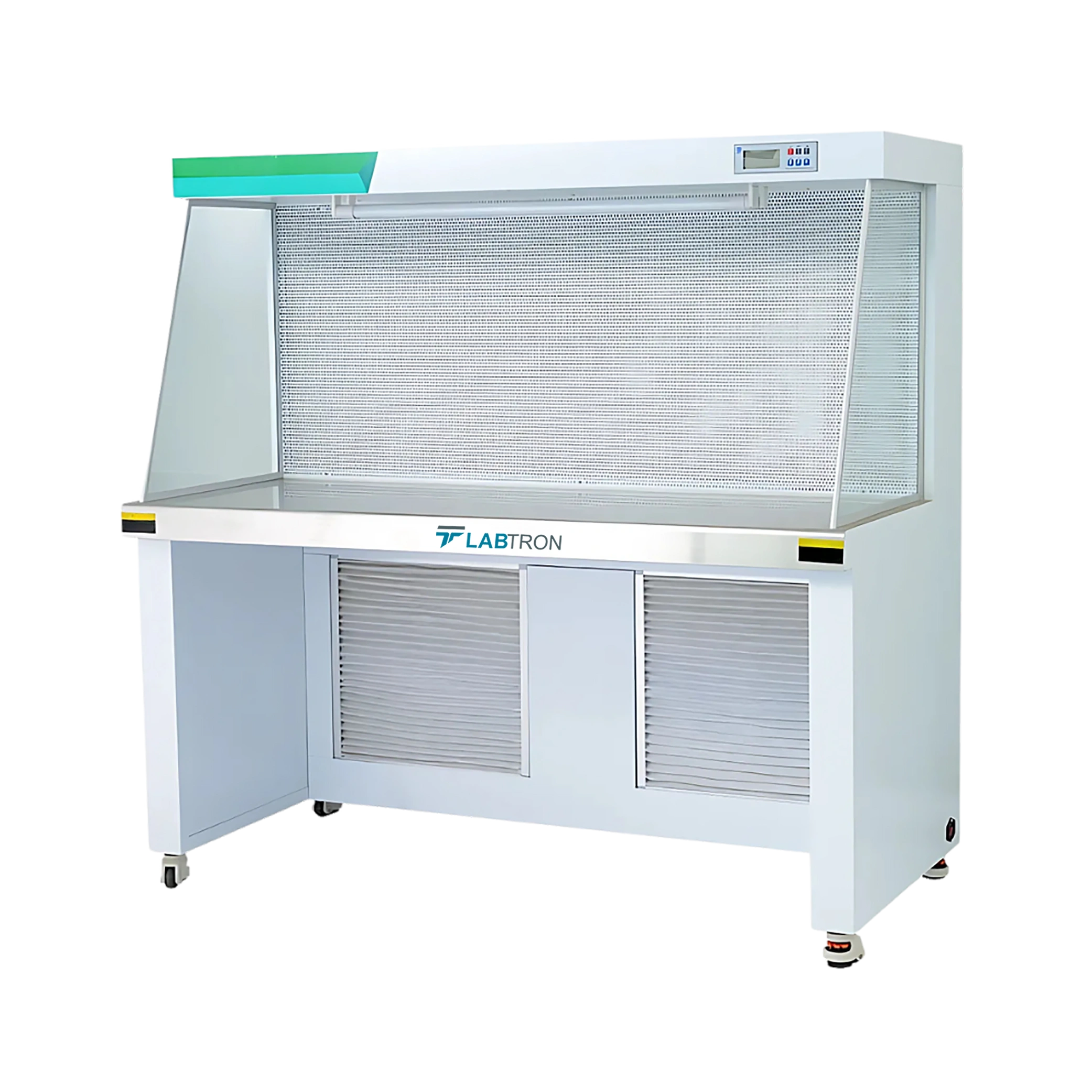


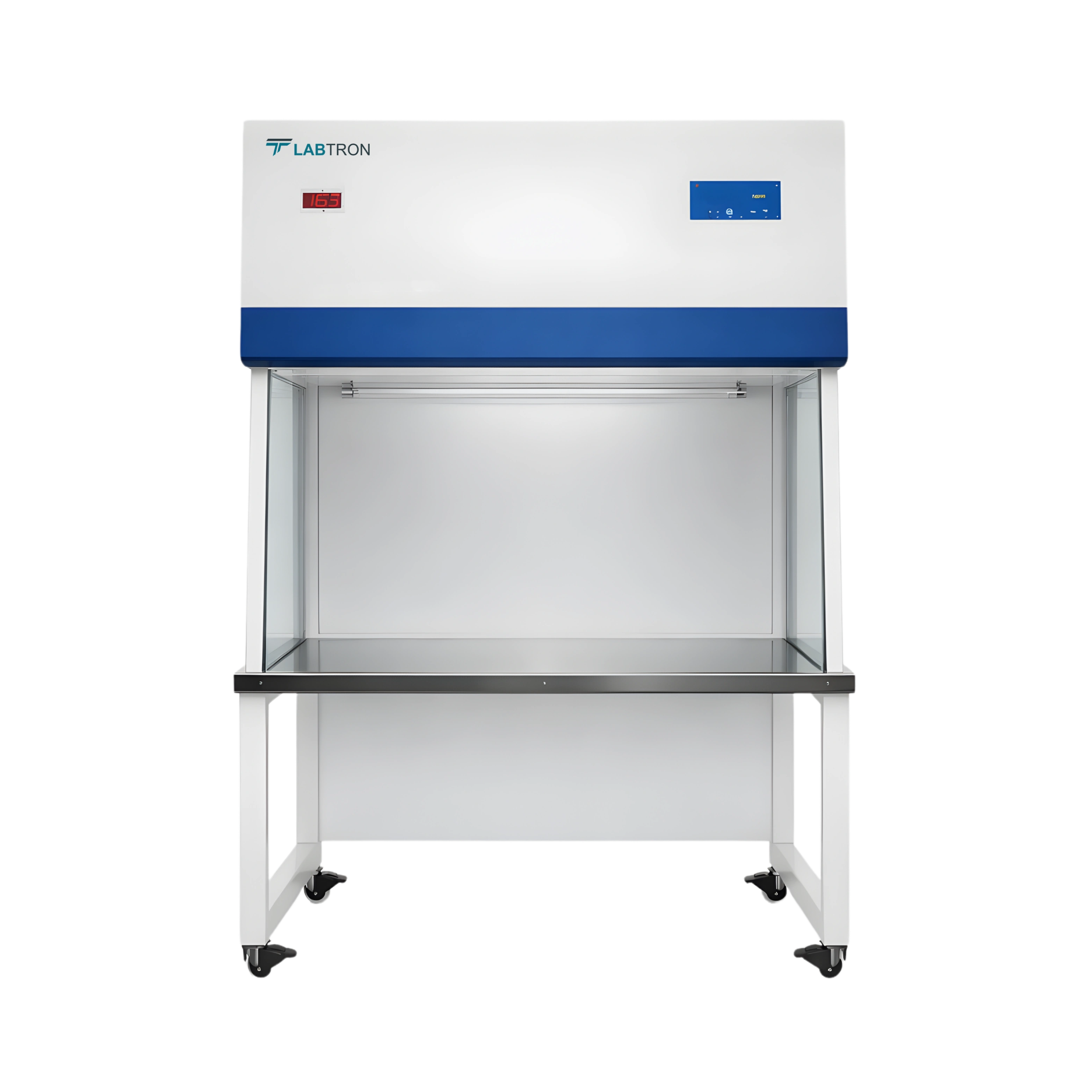

Vertical Laminar Flow Clean Bench LVCB-C11 operate on standard electrical power, typically requiring 220V or 110V depending on regional specifications. They are designed to be energy-efficient, with low-power consumption fans and LED lighting used in many newer models. Some systems offer energy-saving modes that reduce power usage during idle periods without compromising sterility. The motor and airflow system are optimized to run continuously for extended hours without overheating or creating high energy bills. Proper installation in a well-ventilated space contributes to efficient heat dissipation. Power surge protectors are recommended to protect sensitive components. Users should also ensure stable voltage supply to maintain consistent airflow performance.
Vertical Laminar Flow Clean Bench LVCB-C11 typically come equipped with built-in fluorescent or LED lighting to provide uniform illumination across the work surface. Good lighting is essential for precise work, such as inspecting samples, performing delicate procedures, or identifying microbial colonies. LED lights are often preferred due to their low heat emission, longer lifespan, and energy efficiency. Some models may also include UV germicidal lamps, which can be activated after use to disinfect the internal workspace. However, UV lights should never be used while the bench is occupied due to safety risks. The lighting is usually installed in a recessed manner to prevent airflow disruption. Reliable lighting contributes to operator accuracy and safety during laboratory procedures.
Yes, many manufacturers offer customizable options for Vertical Laminar Flow Clean Bench LVCB-C11 to suit specific lab or facility needs. Customizations can include dimensions, material finishes (such as stainless-steel grade), number of electrical outlets, or type of airflow monitoring systems. Some models allow for additional accessories like gas taps, vacuum valves, or anti-vibration platforms for sensitive instruments. Users may also request features like adjustable height stands, footrests, or caster wheels for mobility. Touchscreen controls, airflow alarms, and remote operation capabilities are increasingly available in advanced models. These customization options help labs tailor the clean bench to fit both workflow and ergonomic preferences.
Regular cleaning of a Vertical Laminar Flow Clean Bench LVCB-C11 is crucial to preserve sterility and airflow efficiency. The bench should be wiped down daily using lint-free cloths and appropriate disinfectants that do not damage the surface material. Special attention must be given to corners, edges, and under equipment where particles can accumulate. UV lamps, if present, should be used periodically after cleaning to further reduce microbial load. Periodic maintenance includes checking airflow velocity, testing HEPA filter integrity, and ensuring that pre-filters are not clogged. All maintenance should be performed with the system powered off, following safety protocols. Documenting cleaning and maintenance schedules supports regulatory compliance and operational consistency.
Contamination is prevented through a combination of a pre-filter and a HEPA filter, which together remove 99.97% of airborne particles measuring 0.3 microns or larger. The filtered air is directed downward in a uniform laminar flow, continuously sweeping away particulates from the work surface. Maintaining this contamination-free environment requires regular filter checks, routine cleaning, and proper handling of all materials. Operators should wear gloves and lab coats and minimize unnecessary movements that may disturb the airflow. It's also recommended to organize tasks from clean to dirty to prevent recontamination of sterile items. Adhering to these best practices ensures consistent protection of sensitive work.
Post your question?
Our experts are here to help!
Labtron Equipment Ltd., Quatro House, Lyon Way, Camberley, Surrey GU16 7ER United Kingdom
Email: info@labtron.com Whatsapp: +44 73 4441 2688 Phone: +44 2080 043608