info@labtron.com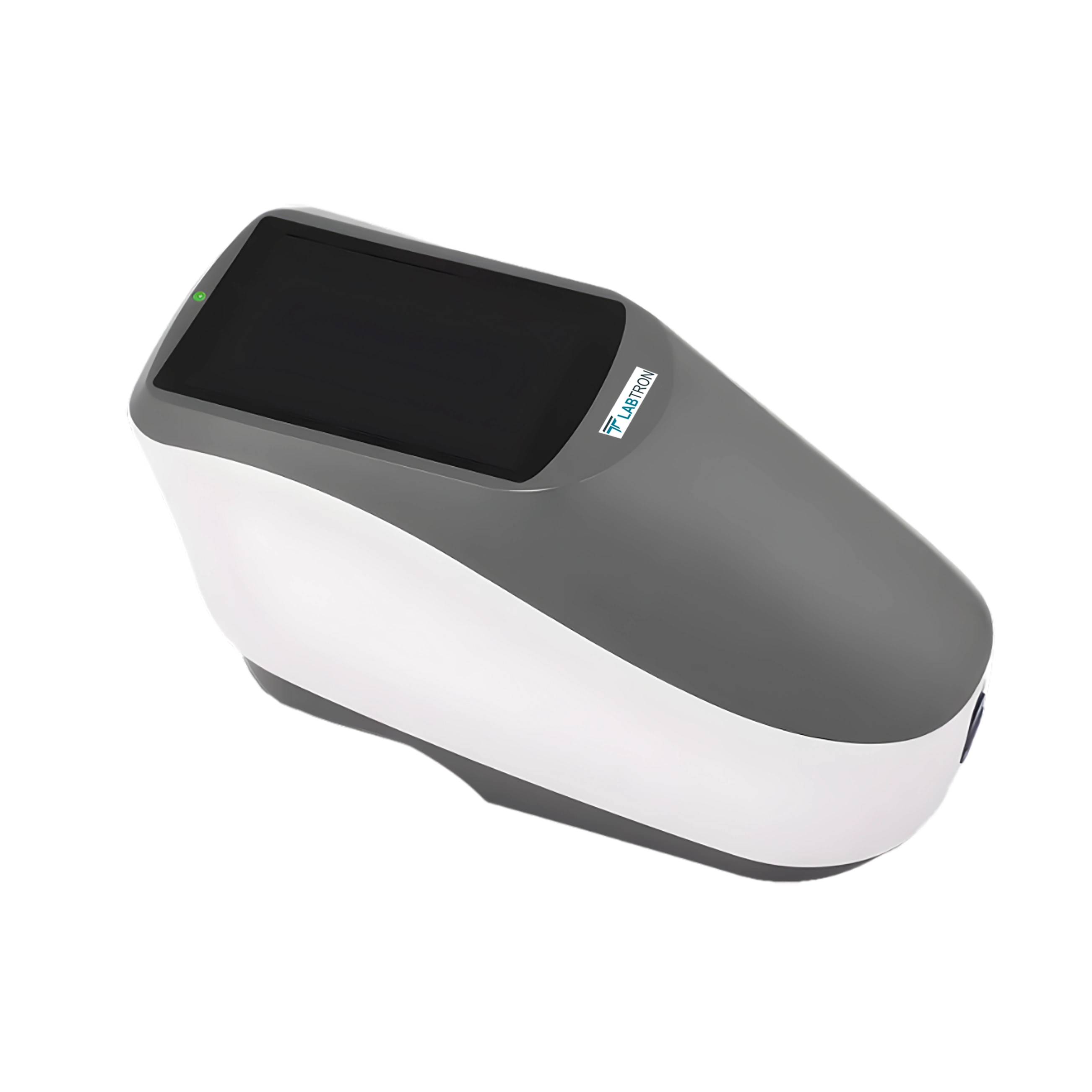

| Wavelength Pitch | 10nm |
| Optical Geometry | 45/0 |
| Detector | 256 Image Element Double Array CMOS Image Sensor |
| Wavelength Range | 400 to 700 nm |
| Half Bandwidth | 10nm |
| Measurement Aperture | Φ2mm, Φ4mm, Φ8mm |
| Color Spaces | CIE LAB, XYZ, Yxy, LCh, CIE LUV, Hunter LAB |
| Color Difference Formula | ΔE × ab, ΔE × 94, ΔE × 00, ΔE × uv, ΔE × cmc (2:1), ΔE × cmc (1:1), ΔE (Hunter) |
| Other Calorimetric Index | WI (ASTM E313, CIE/ ISO, AATCC, Hunter) YI (ASTM D1925, ASTM 313) MI |
| Measurement Conditions | M0 (CIE Light Source A) M1 (CIE Light Source D50) M2 (Excluding UV Light Source) M3 (M2 + Polarized Light Filter) |
| Viewing Angle | 2 °/10° |
| Illuminant | A, C, D50, D55, D65, D75, F2(CWF), F7(DLP), F11(TL84), F12(TL83/U30), F1, F3, F4, F5, F6, F8, F9, F10(TLP5) |
| Measurement Time | 1.5s |
| Repeatability | Density: Within 0.01 D Chromaticity Value: Within ΔE× ab 0.03 |
| Inter- Instrument Error | Within ΔE× ab 0.18 |
| Measurement Mode | 2 to 99 times |
| Storage | 20000 Pcs |
| Working Environment | Temperature: 0° C to 40° C Humidity: 0 to 85% Altitude: Less than 2000m |
| Storage Environment | Temperature: -20°C to 50° C Humidity: 0 to 85% |
| Dimension | 184 × 77 × 105mm |
| Weight | 600g |
High Resolution Sensor
Advanced Grating Optics
Multi-Aperture Modes
Repeatable Color Accuracy
Spectral Reflectance Measurement
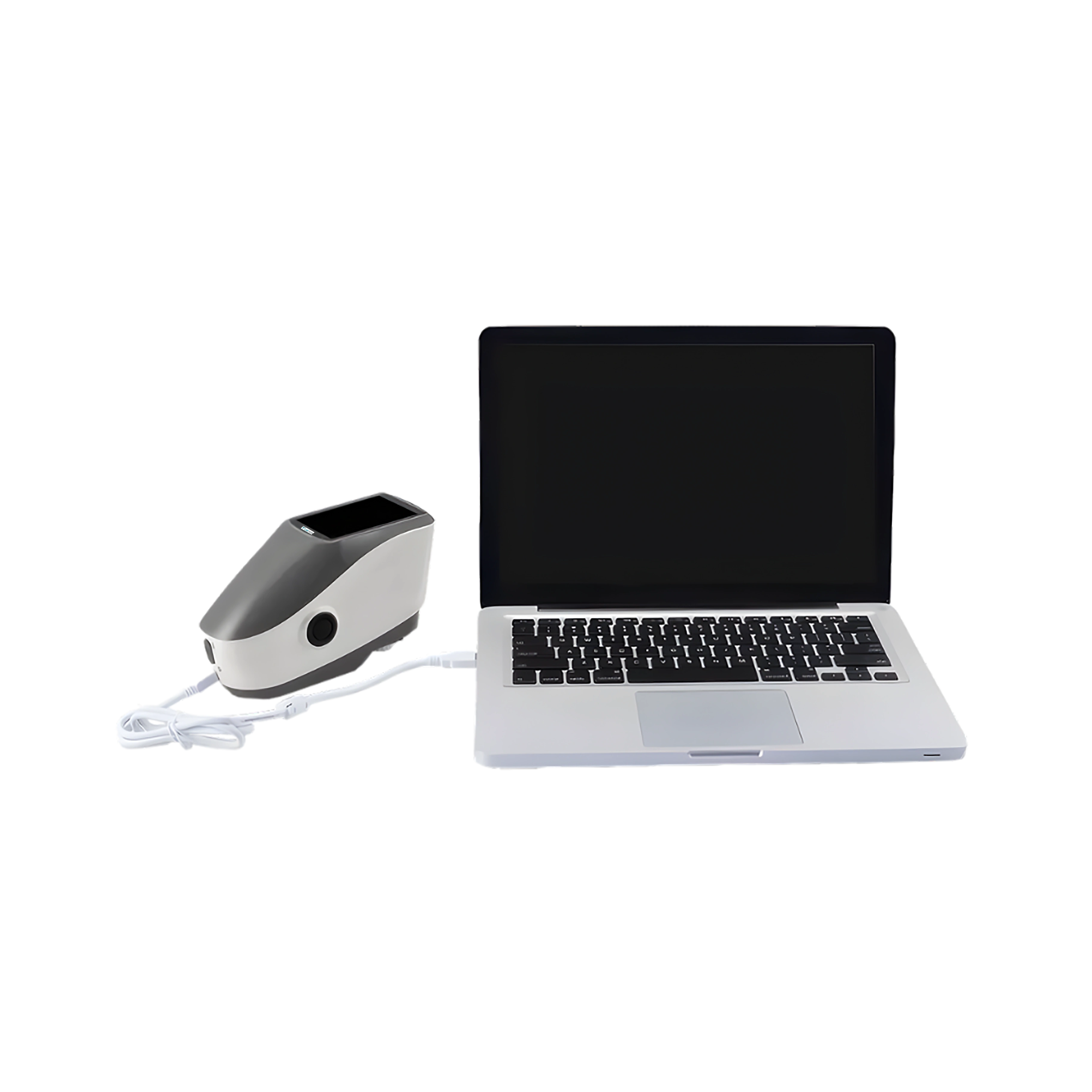
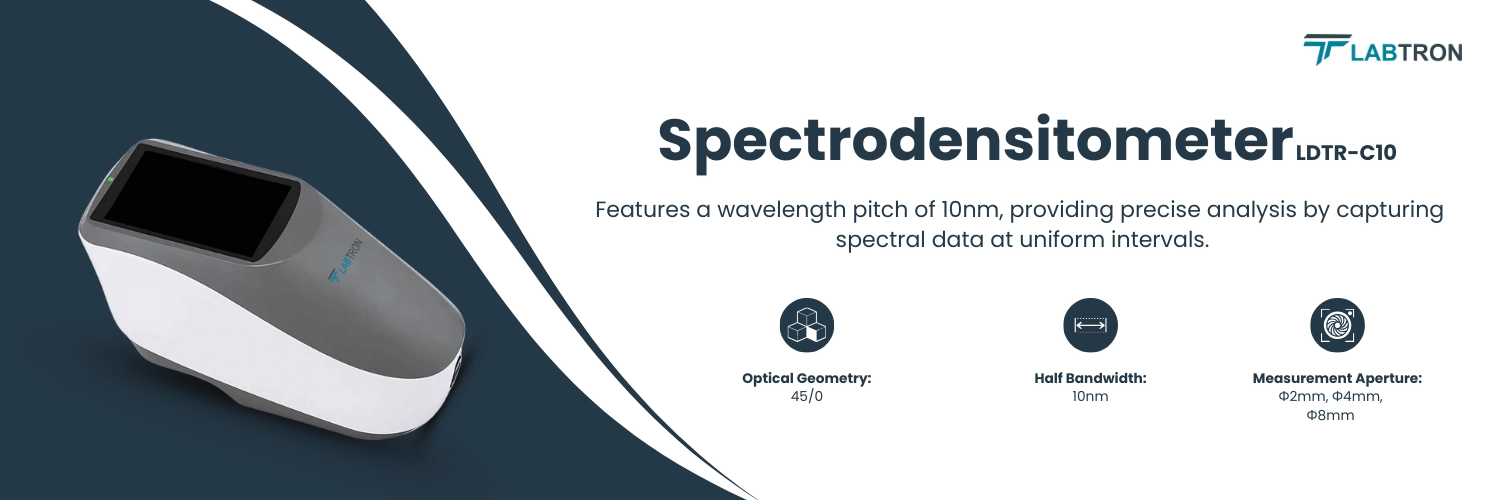
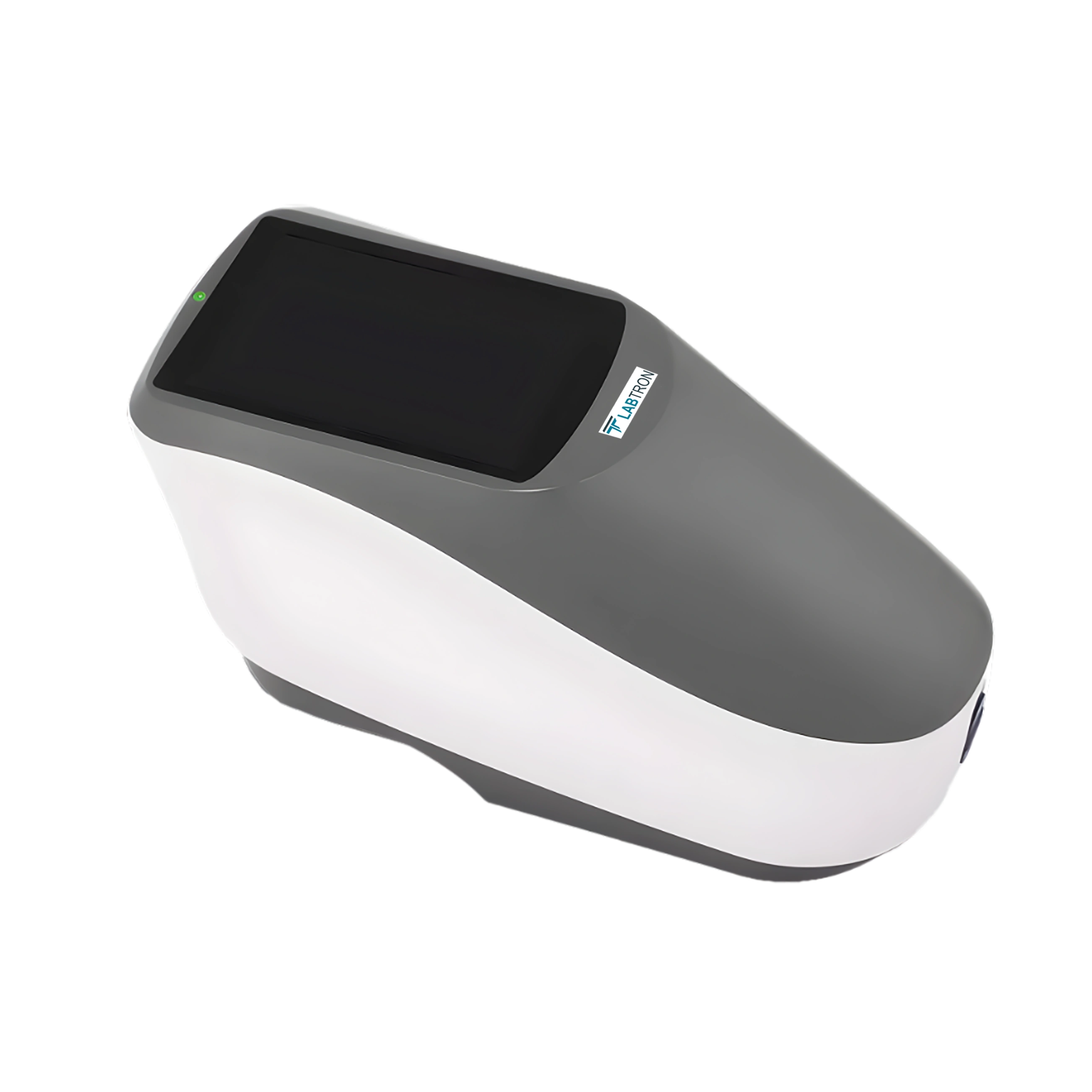
Spectrodensitometer LDTR-C10 is an instrument that measures the color and optical density of materials by analyzing their spectral reflectance. It is widely used in textile and dyeing industry for color matching and quality control of fabric and dyed products.
Accessories Name | Quantity |
Power Adapter | 1 |
USB Cable | 1 |
Built-in li-ion Battery | 1 |
Software | 1 |
White and Black Calibration Board | 1 |
Protective Cover | 1 |
Polarization Filter Box | 1 |
Locating Plate | 1 |
Download catalog for
Spectrodensitometer LDTR-C10 Catalog

Labtron Densitometer are designed with diverse measurement ranges. They can accommodate various material densities, from gases and liquids to solids. They are integrated with a digital temperature sensor to reduce measurement variability due to temperature changes. Made from robust materials that offer enhanced durability. They feature user-friendly controls and a clear display for easy operation. Our densitometer is used primarily for measuring optical density across several fields, such as photography, printing, radiology, and material science.
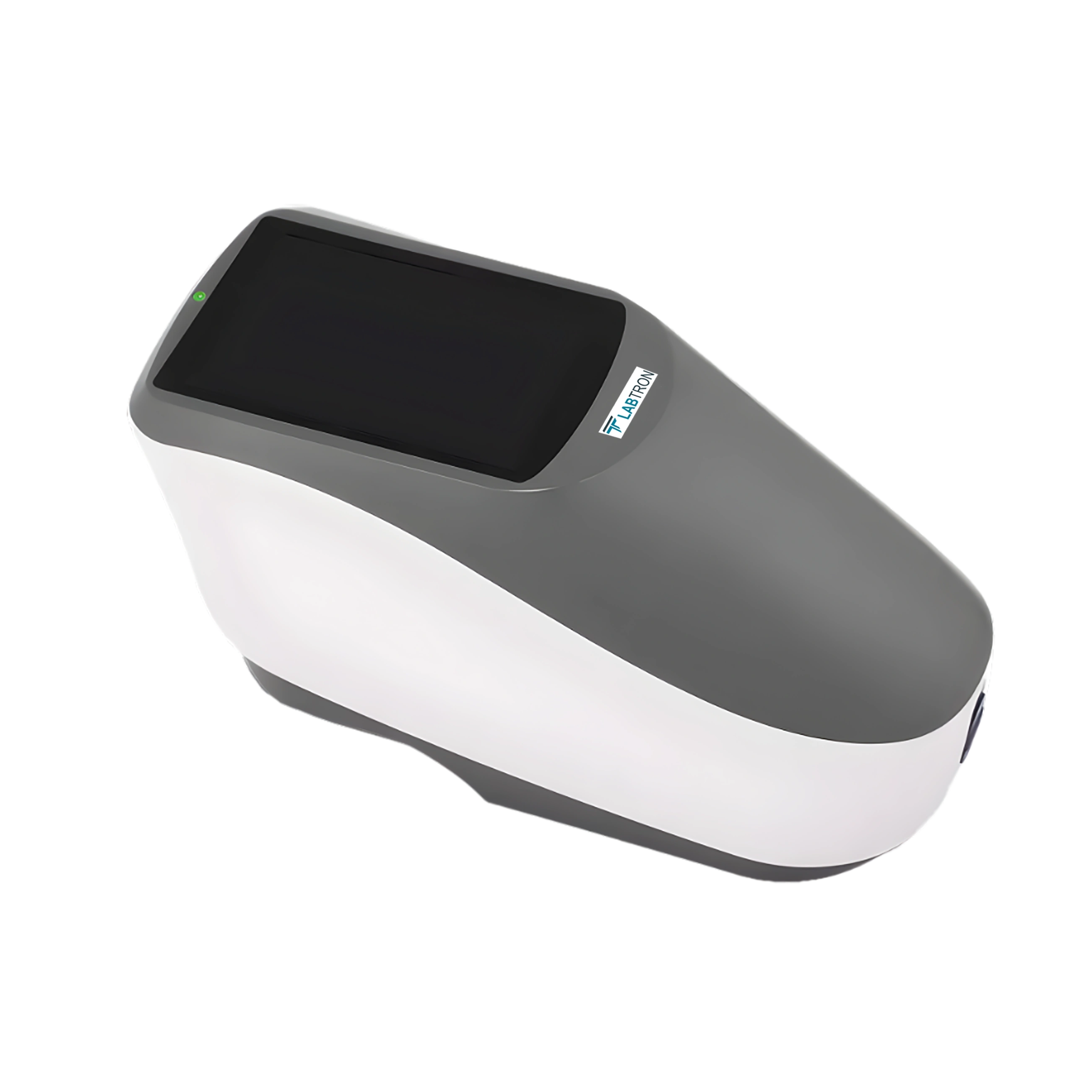
Labtron supplies premium spectrodensitometer. Daily calibration is recommended for spectrodensitometers, especially in high-precision environments like printing or quality control. Most devices provide a white calibration tile or a black trap to ensure reflectance readings remain accurate over time. Factors such as temperature changes, ambient light, and aging light sources can cause drift in measurements, which calibration corrects. Some advanced models offer automatic reminders or even self-calibration features to streamline this process. Regular calibration ensures repeatable and traceable data and minimizes color variation or during critical decisions. Neglecting calibration can lead to color inconsistencies that may not be immediately visible but affect long-term reliability.
Labtron’s spectrodensitometer have various aperture size which determines the area of the sample that the spectrodensitometer analyzes. Smaller apertures (e.g., 2mm) are used for measuring fine details, small patches, or highly patterned materials. Larger apertures (e.g., 6mm or 8mm) average out surface variations and are better for textured or uneven substrates. Selecting the correct aperture is essential for consistent readings, particularly when measuring spot colors, gradients, or fabrics. Inconsistent aperture use can lead to color mismatches or inaccurate quality assessments. Some devices offer interchangeable apertures to accommodate different applications, which adds versatility for users working across varied materials or print formats.
Labtron’s advanced spectrodensitometers are used to verify that printed or manufactured products meet predefined color specifications. By comparing measured values against target standards, they help identify deviations early in the production process. Measurements may be taken at key stages-such as during prepress proofing, on-press sampling, or final product inspection. Tolerances are typically set using ?E or density thresholds, and any deviation can trigger corrective action. This data-driven approach ensures consistency across batches, minimizes rework, and maintains customer satisfaction. Spectrodensitometers are thus critical for enforcing quality standards in color-critical industries like packaging, fashion, and labeling.
Yes, Labtron’s certain spectrodensitometers are integrated into automated systems for real-time process control on production lines. Inline or on-press spectrodensitometers continuously monitor printed output, detect color shifts, and feed data to control systems that adjust ink flow or press settings. This minimizes downtime and material waste while ensuring consistent output. Real-time systems are especially valuable in high-volume operations like newspaper printing, flexible packaging, or textiles, where manual sampling would be too slow. Integration with closed-loop color control ensures that color remains within tolerance throughout the print run, enhancing efficiency and reducing the need for manual correction.
Labtron supplies advanced spectrodensitometers. Ambient light can significantly interfere with spectrodensitometer measurements if the device is not properly shielded. Stray light entering the measurement aperture can skew reflectance or density values, leading to inaccurate color readings. Most devices include light-blocking features and recommend use in controlled lighting environments. Some portable models may offer dark enclosures or light traps to minimize these effects. However, consistent lighting conditions and sample handling practices are still crucial. For critical applications, using spectrodensitometers in a light-controlled room or enclosure ensures the most accurate and repeatable results, especially when comparing measurements across different time points or operators.
Labtron’s Spectrodensitometers are widely used across industries where color precision and quality control are critical. The printing and packaging industry relies heavily on them to ensure color consistency and alignment with brand standards. In textiles, they help match fabric colors during dyeing and finishing. The automotive and plastics industries use them to verify paint and coating colors. Cosmetics, pharmaceuticals, and food packaging benefit from accurate labeling and visual branding. Even museums and conservation labs use spectrodensitometers to monitor pigment fading and perform archival quality assessments. Their versatility makes them invaluable across any field where accurate, repeatable color evaluation is essential.
Post your question?
Our experts are here to help!
Labtron Equipment Ltd., Quatro House, Lyon Way, Camberley, Surrey GU16 7ER United Kingdom
Email: info@labtron.com Whatsapp: +44 73 4441 2688 Phone: +44 2080 043608