info@labtron.com


| Volume | 10 L |
| Vacuum Degree | 0.098 MPa |
| Stirring Speed | 0 to 450 rpm |
| Stirring Motor Power | 120W1/3 |
| Power Supply | 220V/50 Hz |
| Dimensions (W×D×H) | 530 × 440 × 1550 mm |
| Net Weight | 30 kg |
Clear phase separation visibility
Stable electric stirring system
Reliable vacuum sealing capability
Supports controlled layer discharge
Smooth continuous stirring performance
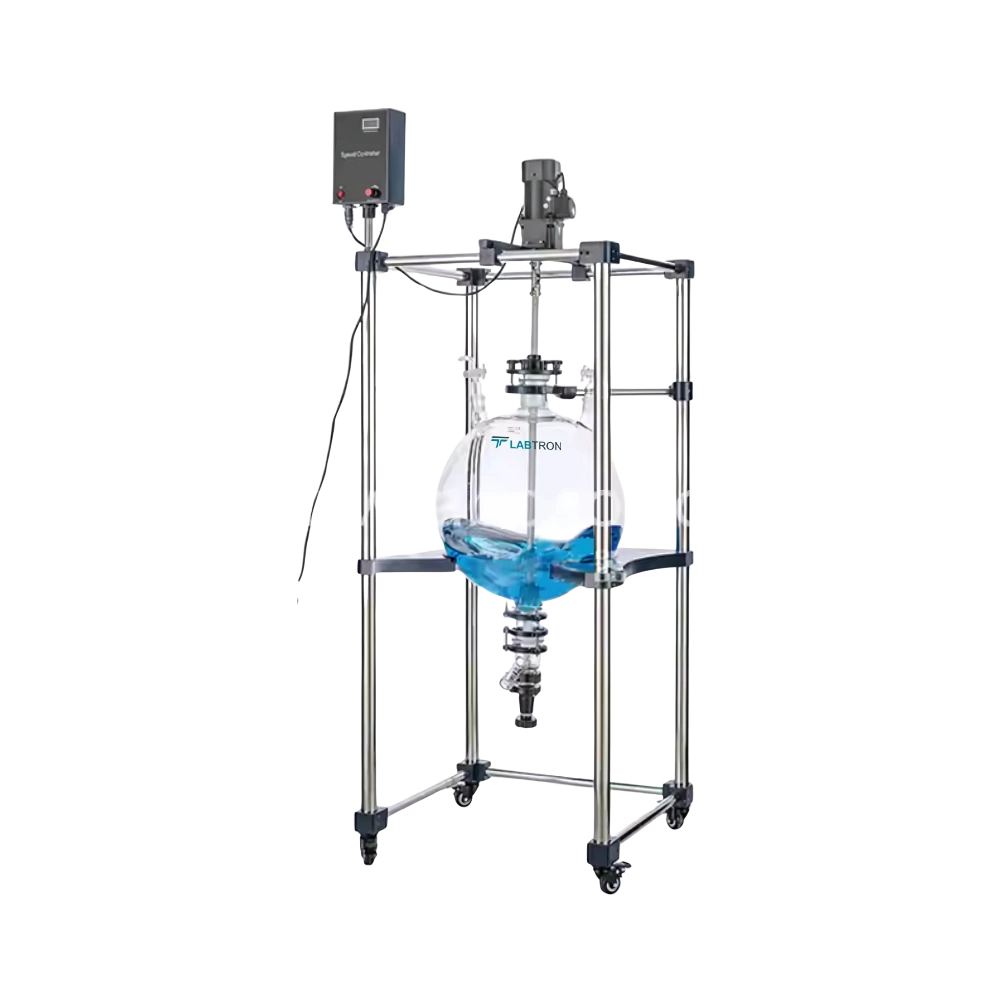
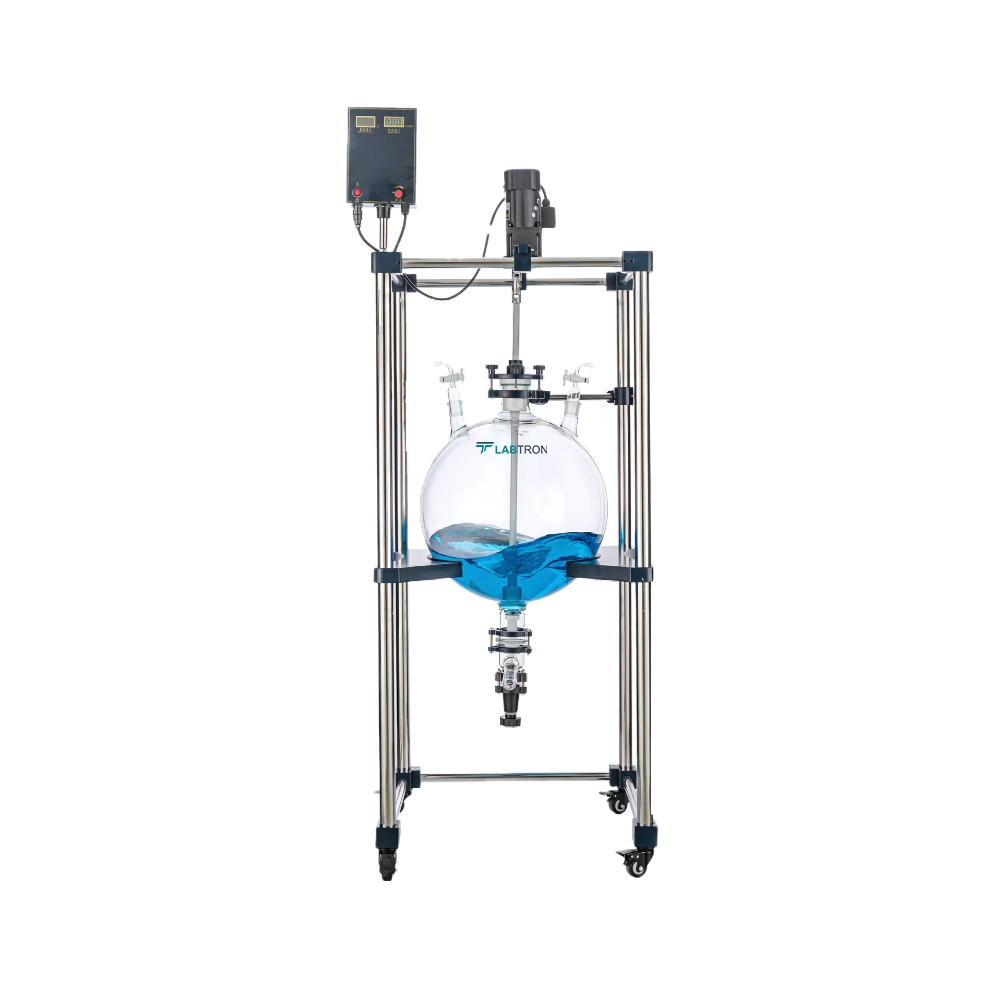
Glass Liquid Separator LGLS-A10 is used for extracting and separating immiscible liquid phases in chemical, pharmaceutical, and laboratory applications. This allows for controlled discharge of each clarified layer after reaction and phase settling.
Glass Liquid Separator features high borosilicate glass construction for strong resistance to temperature shifts and chemical reactions. They use a frequency-controlled motor for steady stirring, enhancing liquid-liquid separation and mixing. Their Teflon and rubber discharge valve ensures controlled outflow and chemical compatibility. These separators include ceramic bearings and mechanical seals that perform reliably under high-temperature use. Our Glass Liquid Separator supports liquid-liquid extraction in chemical research, pharmaceuticals, and academic labs.


The Glass Liquid Separator LGLS-A10 is built to resist damage from reactive organic and inorganic solvents. Its contact materials remain stable under prolonged chemical exposure. The sealing and joint interfaces are designed to prevent corrosion-based leaks or degradation. This helps maintain solvent purity during extended extractions. Even under repeated thermal cycling, the components do not warp or degrade. The unit is ideal for use in chemical research, pharmaceuticals, and industrial QA labs. It enables worry-free operation with acids, bases, and mixed-phase solvents. Operators can rely on consistent performance without replacing components prematurely.
The system maintains clearly defined liquid layers even when agitation is temporarily stopped. This allows the user to perform observations, adjustments, or partial sampling without remixing the phases. Once resumed, the stirring function returns to the previous setting without disruption. This function is useful in multistep protocols requiring intermittent checks. Visual clarity and fluid position remain unaffected during pauses. It helps improve efficiency in workflows involving frequent monitoring. There’s no loss of separation quality during hold periods. Operators retain full control at every stage of the process.
Its transparent borosilicate chamber offers uninterrupted visibility of fluid levels and interface boundaries. This enables real-time evaluation of layer stability and reaction clarity. Operators can time the drainage process without halting operation or using external lighting. It helps researchers make informed decisions during complex separation workflows. Even small changes in phase thickness can be observed without additional tools. This is especially useful during educational demonstrations or sensitive research procedures. The visibility supports safe and informed control. No separate probes are needed to verify separation progress.
Its bottom valve mechanism is designed for selective phase drainage without mixing. The operator can isolate and remove denser or immiscible liquids by adjusting the flow gently. This setup eliminates the need for external pipetting or transferring. The valve's positioning ensures that upper layers remain undisturbed during lower layer discharge. It simplifies the process of handling emulsions or complex mixtures. Sampling accuracy improves, especially in repetitive extraction cycles. This feature reduces material loss and increases procedural consistency. Each layer is released with clarity and control.
Glass Liquid Separator LGLS-A10 includes protective housing around moving components to prevent accidental contact. Its stable base minimizes vibration, reducing the chance of spills during operation. The layout ensures that the valve and connectors are safely positioned to avoid hand exposure. Vapor control reduces inhalation risks when working with volatile liquids. Stirring settings are fixed securely to prevent unexpected speed shifts. These safety aspects are crucial for training labs and shared research spaces. It supports safe use across various skill levels. Each use cycle reduces exposure risks without compromising access.
Its smooth internal glass surface prevents residue accumulation, making rinsing and drying straightforward. Users can disassemble the unit without tools for quick access to all wetted areas. This speeds up changeover between incompatible liquids or solvents. The material resists staining from dyes, pigments, or strong acids. It is compatible with basic lab cleaning agents and neutralizing washes. This enables faster reuse in time-sensitive lab environments. Maintenance time is reduced significantly between sessions. Consistent cleanliness supports high sample integrity throughout usage cycles.
Post your question?
Our experts are here to help!
Labtron Equipment Ltd., Quatro House, Lyon Way, Camberley, Surrey GU16 7ER United Kingdom
Email: info@labtron.com Whatsapp: +44 73 4441 2688 Phone: +44 2080 043608