info@labtron.com

| Volume | 20 L |
| Vacuum Degree | 0.098 MPa |
| Stirring Speed | 0 to 450 rpm |
| Stirring Motor Power | 120W1/3 |
| Power Supply | 220V/50 Hz |
| Dimensions (W×D×H) | 530 × 440 × 1580 mm |
| Weight | 33 kg |
Leak-resistant connection joints
Flexible tube mounting ports
Noise-dampened motor base
Balanced load stir control
Anti-slip support framework
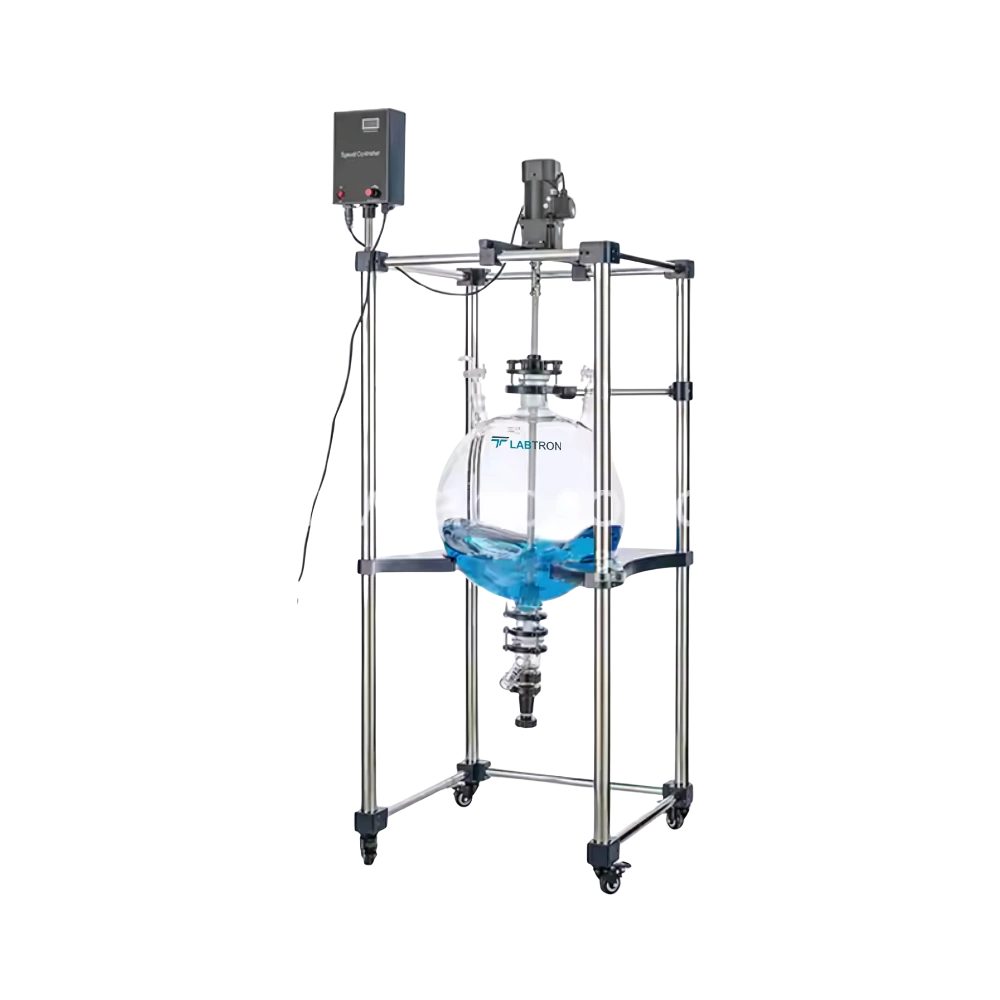
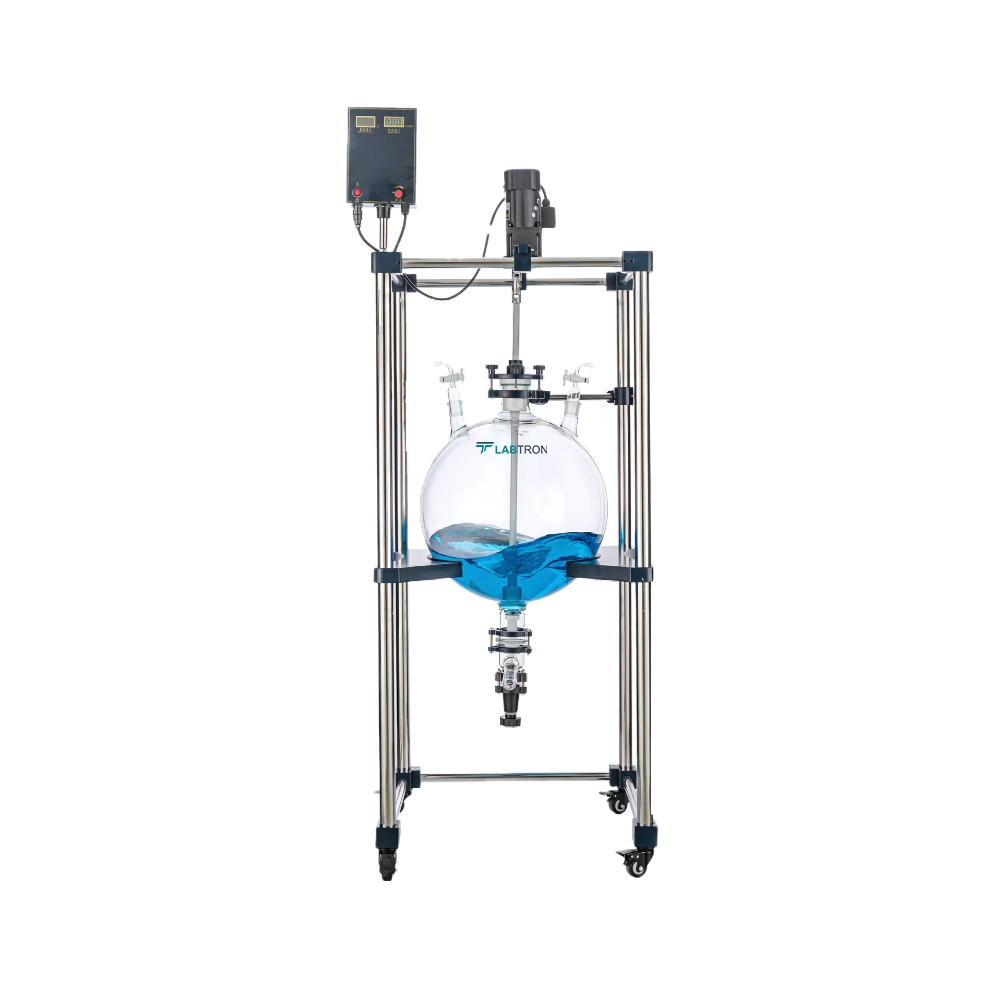
Glass Liquid Separator LGLS-A11 is designed for conducting liquid-liquid extraction and handling room-temperature reactions with controlled mixing. This supports selective separation of immiscible phases and aids in reaction monitoring within a unified vessel system.
Glass Liquid Separator features high borosilicate glass construction for strong resistance to temperature shifts and chemical reactions. They use a frequency-controlled motor for steady stirring, enhancing liquid-liquid separation and mixing. Their Teflon and rubber discharge valve ensures controlled outflow and chemical compatibility. These separators include ceramic bearings and mechanical seals that perform reliably under high-temperature use. Our Glass Liquid Separator supports liquid-liquid extraction in chemical research, pharmaceuticals, and academic labs.
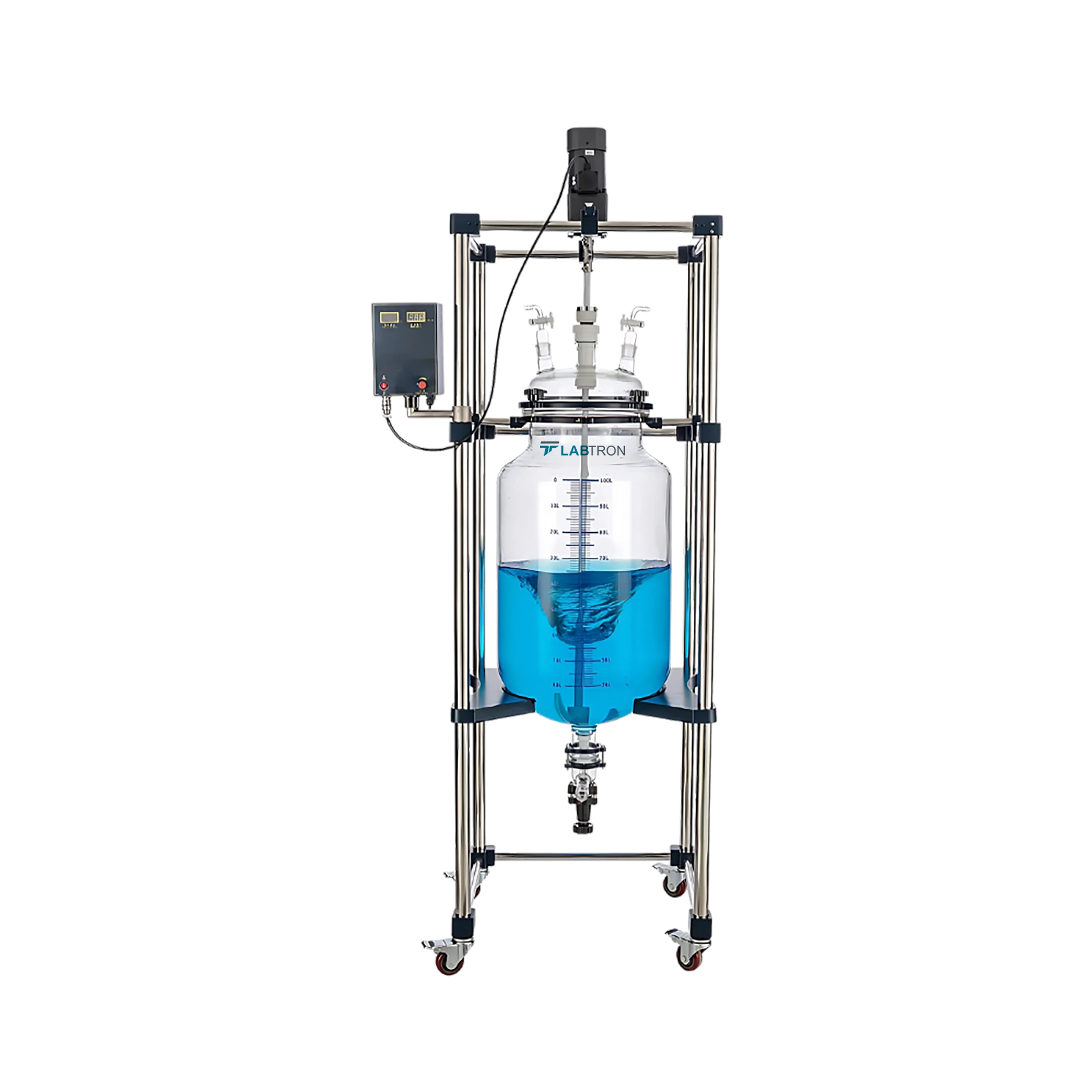


Our Glass Liquid Separator LGLS-A11 incorporates borosilicate 3.3 construction, known for its resilience to thermal variation, ensuring material properties remain stable during extraction. This allows the product to handle compounds that are sensitive to ambient or fluctuating temperatures without compromising results. The glass composition resists thermal cracking, supporting uninterrupted reactions. Additionally, high heat endurance enables extended use in thermally dynamic processes. Its transparency also allows visual assessment without exposing contents. The temperature handling helps prevent undesired cross-reactions. Our separator is therefore suitable for labs dealing with temperature-volatile solvents or reagents.
The Glass Liquid Separator LGLS-A11 is designed with a cock made from Teflon and FV rubber, enabling controlled outflow without abrupt shifts in pressure or flow rate. This structure maintains stability at the separation interface, preventing mixing of distinct liquid layers. Its adjustability supports a gradual release, especially useful when dealing with fine boundaries in biphasic mixtures. The angled valve construction assists in smooth evacuation while minimizing the turbulence in the lower phase. Our system supports consistent repeatability, critical in research processes. This enhances clarity during liquid-liquid phase separations in pharmaceutical and chemical setups.
Labtron's Glass Liquid Separator LGLS-A11 uses a combination of borosilicate glass, a stainless-steel frame, and corrosion-resistant discharge materials, making it ideal for handling corrosive agents. The structural design prevents degradation from strong acids, bases, or oxidizing agents typically used in organic or inorganic syntheses. Its durability allows safe, prolonged exposure to aggressive solvents without compromising structural integrity. This offers labs peace of mind when scaling up extractions or conducting repeated cycles. The reinforced frame maintains mechanical stability, even when interacting with strong reactants or variable environmental conditions, making it robust for demanding settings.
The Glass Liquid Separator LGLS-A11 integrates frequency-controlled mixing, allowing users to fine-tune agitation speeds to suit liquids with different flow characteristics. This adaptability ensures that both low- and high-viscosity liquids undergo even distribution during extraction. Such tuning minimizes localized concentration zones, leading to improved mass transfer. The adjustable stirring avoids shearing sensitive compounds while still promoting interfacial contact. It proves especially useful in extracting compounds from dense or syrupy matrices. The uniform mixing function enhances efficiency during solvent-based separation techniques in pharmaceutical, chemical, or academic settings.
Our Glass Liquid Separator LGLS-A11 combines ceramic bearings with a mechanical seal system that reduces operational wear during extended use. This design sustains performance stability across long cycles without requiring frequent part replacements. The sealing mechanism also limits leakage risk, maintaining vacuum conditions when needed. Its resistance to frictional heat buildup makes it compatible with uninterrupted stirring protocols. The separator's support for long-duration workflows benefits batch operations or time-dependent reactions. Users conducting time-sensitive phase separations or repetitive trials can depend on it for uninterrupted functionality.
The Glass Liquid Separator LGLS-A11 features a fully transparent body that gives users an unobstructed view of the separation process in real-time. This visibility is especially useful in multistep extractions where visual monitoring of phase boundaries, emulsification, or reaction clarity is essential. It allows prompt identification of layering completion or reaction endpoint without disturbing the contents. Operators can take timely actions based on what they observe, streamlining decisions during processing. This reduces guesswork and improves reproducibility, a key requirement in regulated lab environments or academic validations.
Post your question?
Our experts are here to help!
Labtron Equipment Ltd., Quatro House, Lyon Way, Camberley, Surrey GU16 7ER United Kingdom
Email: info@labtron.com Whatsapp: +44 73 4441 2688 Phone: +44 2080 043608