 info@labtron.com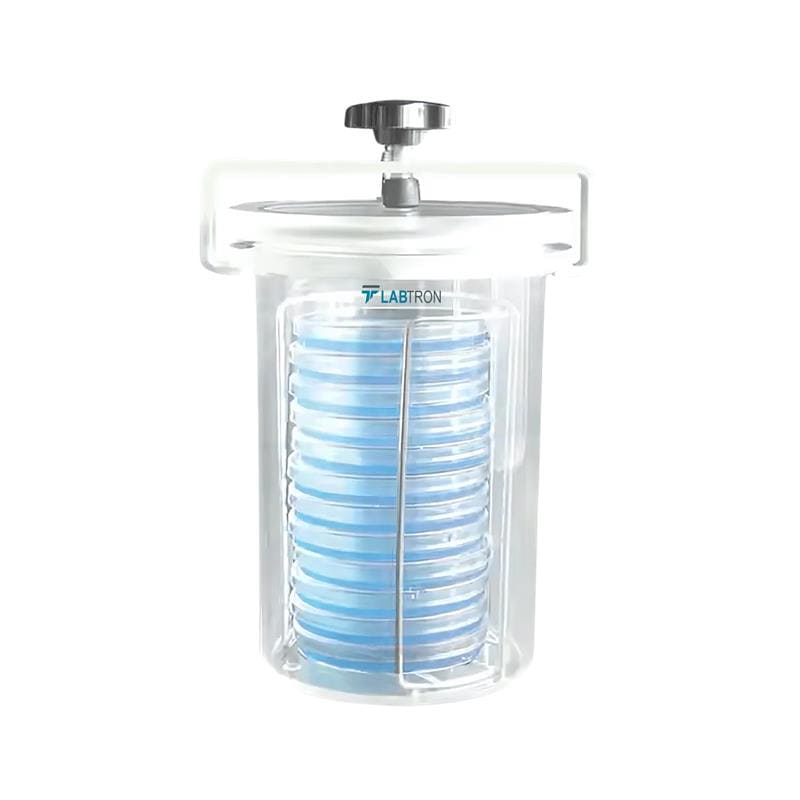

| Type | Culture Jar |
| Capacity | 6L |
| Material | PMMA |
| Contents | 1 stack of 12 dishes or 4 300 ml conical flask |
| Dish Size | Ф=180, h=240 |
| Dimensions | 370mm × 370mm × 320mm |
| Net Weight | 4 kgs |
| Gross Weight | 6 kgs |
Our Anaerobic Jar is used for growing anaerobic microorganisms in microbiological research, clinical settings, and laboratory testing, providing a controlled environment for culture development and studies involving oxygen-sensitive organisms.
| Accessory Name | Quantity |
| Jar Body | 1pc |
| Petri Dish Holder | 1pc |
| Connectors (i.e., Gas Inlet/Outlet Valves) | 2pcs |
| Pressure Gauge | 1pc |
| Box of Catalyst | 1pc |
| Gas Tubings | 2pcs |
| Accessory Name | Quantity |
| Indicator C-22 | 10pcs |
| Gas-Generating Pack C-1 | 10 pcs |
| Sealing Ring | 1pc |
| Spare Valve | 1pc |
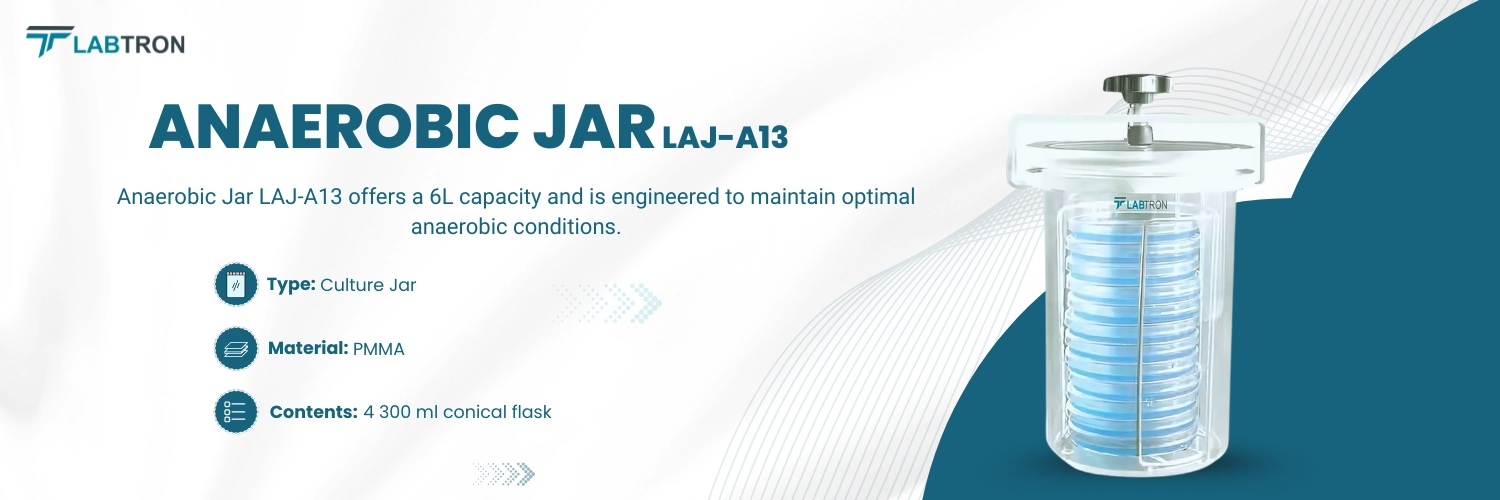

Labtron Anaerobic Jar are available in various sizes with spacious capacity. Our Anaerobic Jar accommodates a wide range of experiments. These offer precise control over anaerobic conditions through their efficient pumping mechanism. They are crafted from premium transparent materials that guarantee both durability and optimal visibility. These jar feature a screw clamp mechanism, that maintains anaerobic conditions securely. Our anaerobic jar excels in gas management.
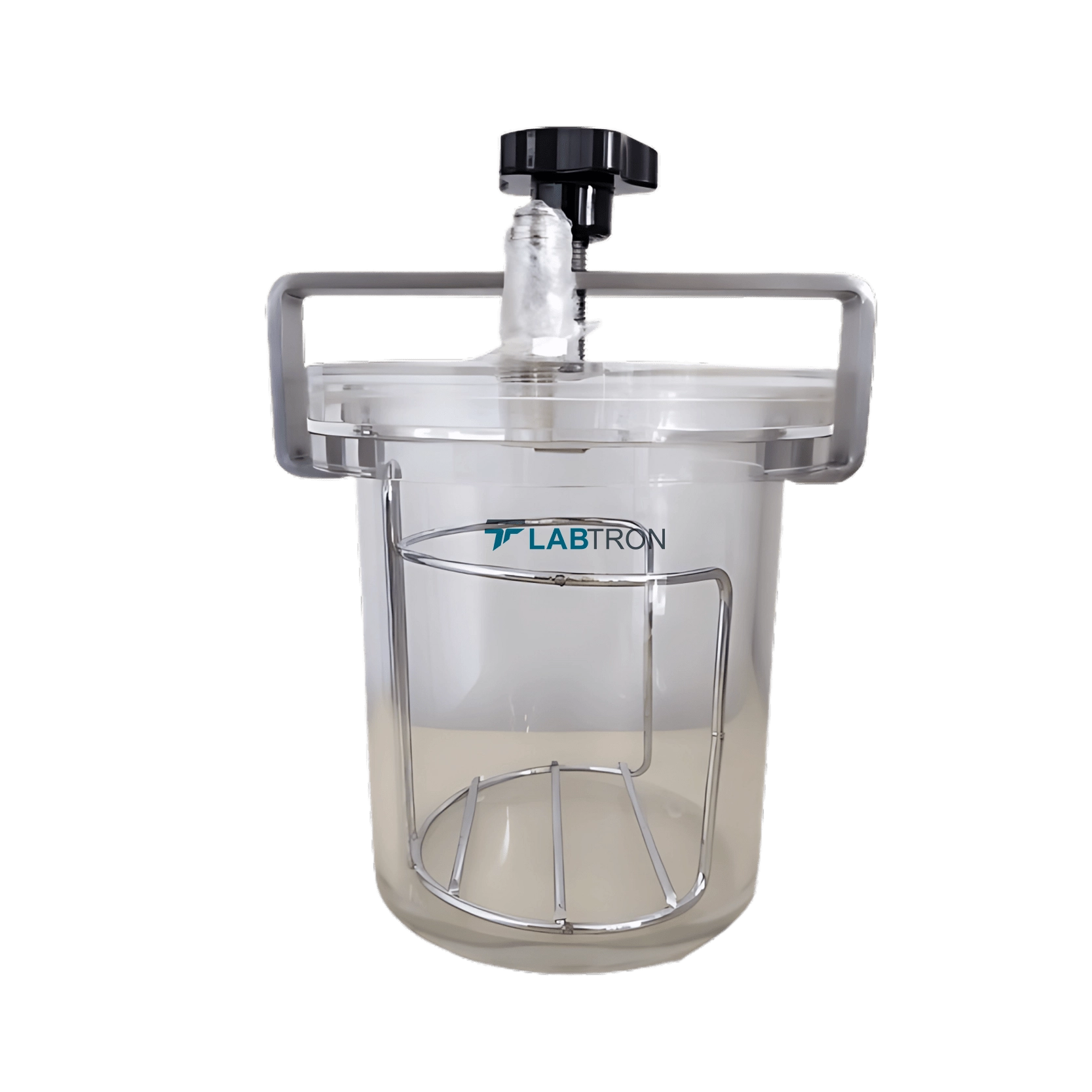
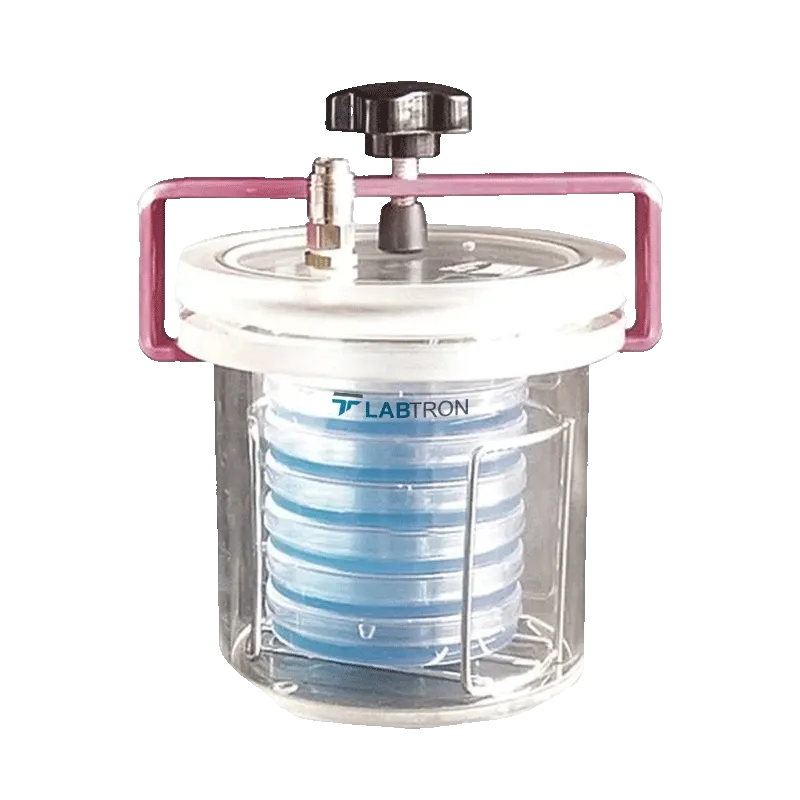
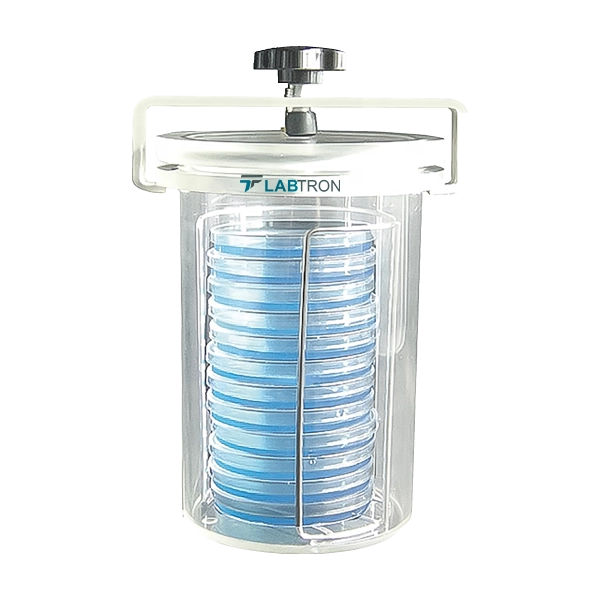
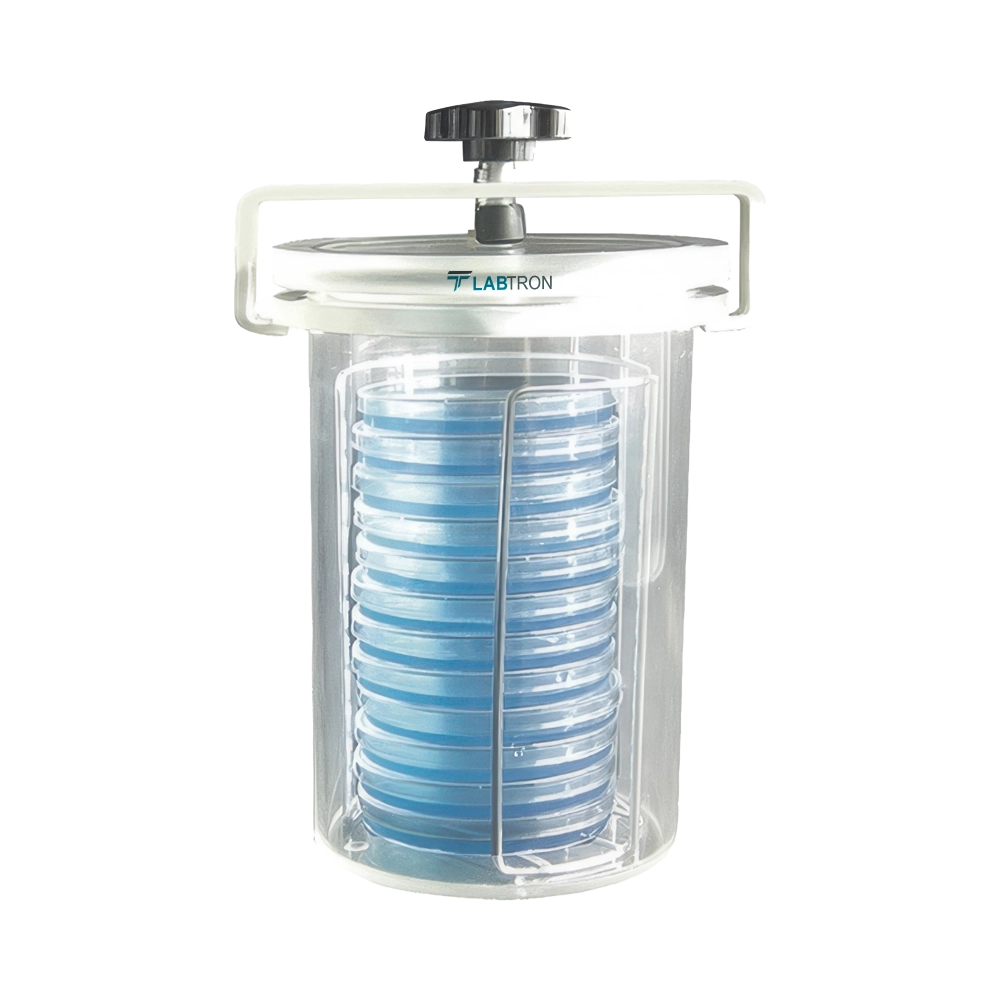
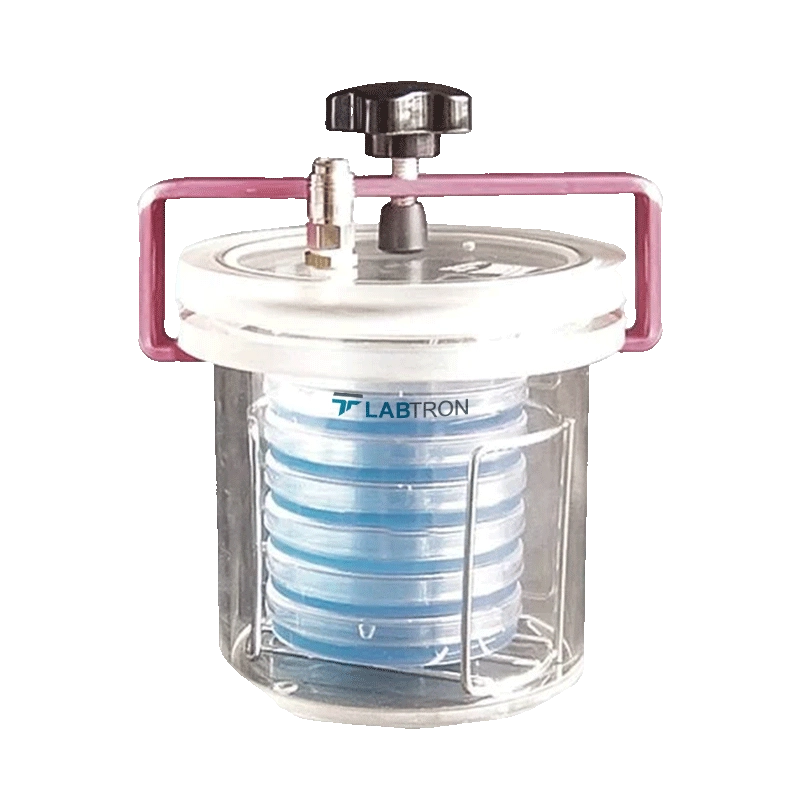

The jar features an airtight sealing system that prevents oxygen from entering, ensuring a controlled environment ideal for anaerobic microorganism growth. This system helps maintain a stable, oxygen-free atmosphere inside. The jar is designed to keep external contaminants and oxygen exposure at bay, allowing for reliable and consistent growth conditions. It is essential for research involving oxygen-sensitive organisms, ensuring that the environment remains stable throughout the culture development process.
The Anaerobic Jar is constructed from durable materials designed to resist physical impacts and temperature changes, making it suitable for long-term storage and transport. The robust design ensures longevity even in demanding environments. Its high-quality construction allows for repeated use without compromising performance. Additionally, the materials used in the jar are easy to clean, minimizing contamination risks during use in microbiological research and clinical settings.
Yes, the Anaerobic Jar is ideal for microbiological research, clinical settings, and laboratory testing, providing a stable environment for anaerobic culture development. It supports studies involving oxygen-sensitive microorganisms and ensures reliable results in both research and clinical environments. The jar's airtight seal and robust design make it suitable for repeated use in different settings, offering a versatile solution for growing anaerobic microorganisms. Whether used in research labs or clinical diagnostics, it ensures precise and controlled conditions.
An anaerobic jar is a specialized container used in laboratories to create an oxygen-free environment for culturing anaerobic bacteria. It typically consists of a sealed jar with a catalyst that removes oxygen by catalysing its reaction with hydrogen to form water. Additionally, our anaerobic jar has a gas-generating sachet containing a mixture of chemicals is often placed inside the jar to produce carbon-dioxide and hydrogen, further depleting oxygen levels.
Essential components for the operation of an anaerobic jar include an air-tight jar, lid with a gas-tight seal, gas-generating sachet, a palladium catalyst, an indicator strip such as methylene blue to confirm the absence of oxygen.
The time needed to create an anaerobic environment in an anaerobic jar depends on the type of gas-generating system used. Generally, it takes about 30 minutes to a few hours to completely remove oxygen and create the anaerobic conditions. This can be verified by checking the indicator strip inside the jar.
Maintenance of anaerobic jar includes inspecting and replacing gaskets regularly, cleaning the jar and lid after each use, verifying the palladium catalyst, and storing jars in a cool, dry locations for optimal performance and durability.
When using anaerobic jars, handle them carefully, seal them tightly after creating an oxygen-free environment, wear appropriate gloves and goggles, and follow proper gas handling procedures. Regularly inspect equipment, monitor gas levels, and train personnel in safety protocols to minimize risks.
Post your question?
Our experts are here to help!
Labtron Equipment Ltd., Quatro House, Lyon Way, Camberley, Surrey GU16 7ER United Kingdom
Email: info@labtron.com Whatsapp: +44 73 4441 2688 Phone: +44 2080 043608