 info@labtron.com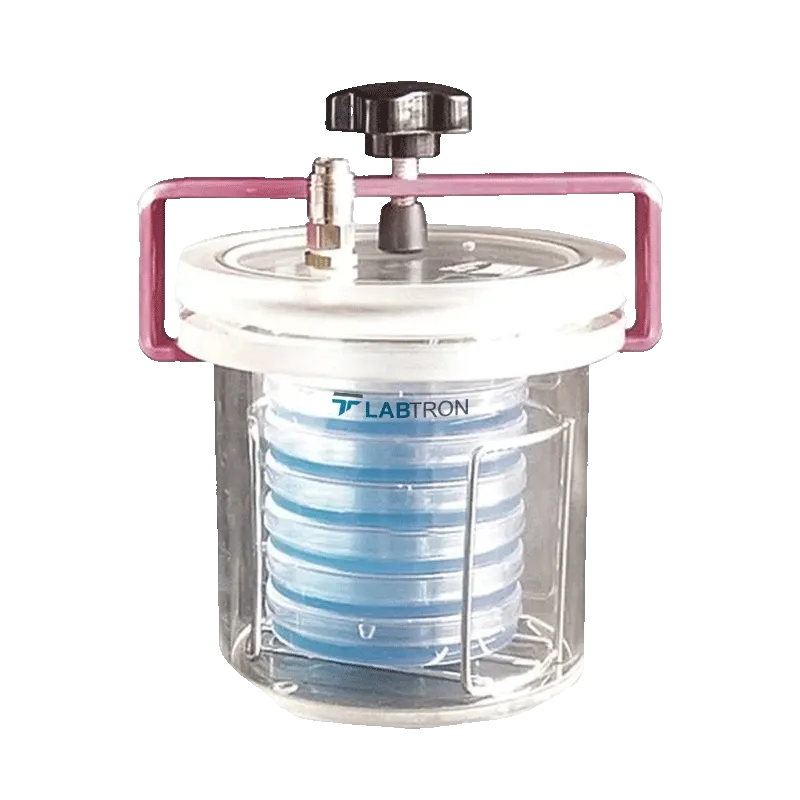

| Type | Pumping type |
| Time taken (to attain anaerobic condition) | 3 to 5 mins |
| O-ring | Yes |
| Contents | 3 stacks of 08 dishes (ф9-10 cm) |
| Petri dish holder | 3/25 R |
| Material | PMMA material |
| Clamp | Colored stainless steel clamp |
| Quick snap-shut coupling | Yes |
| Packaging dimensions (L×W×H) | 370×370×370 mm |
| Gross weight | 6.3 kg |
Snap-shut gas coupling connection
Inbuilt optional racks with holders
Integrated with transparent lid and jar
Convenient, lightweight, portable design
Durable electrostatic paint coating
Anaerobic Jar LAJ-B10 is used to create an oxygen-free (anaerobic) environment for growing and cultivating anaerobic bacteria and is commonly used in Microbiological Research, Clinical Laboratories, Food and Beverage Industry, Environmental Microbiology, Pharmaceutical and Biotechnology, and Industrial Fermentation.
Labtron Anaerobic Jar are available in various sizes with spacious capacity. Our Anaerobic Jar accommodates a wide range of experiments. These offer precise control over anaerobic conditions through their efficient pumping mechanism. They are crafted from premium transparent materials that guarantee both durability and optimal visibility. These jar feature a screw clamp mechanism, that maintains anaerobic conditions securely. Our anaerobic jar excels in gas management.
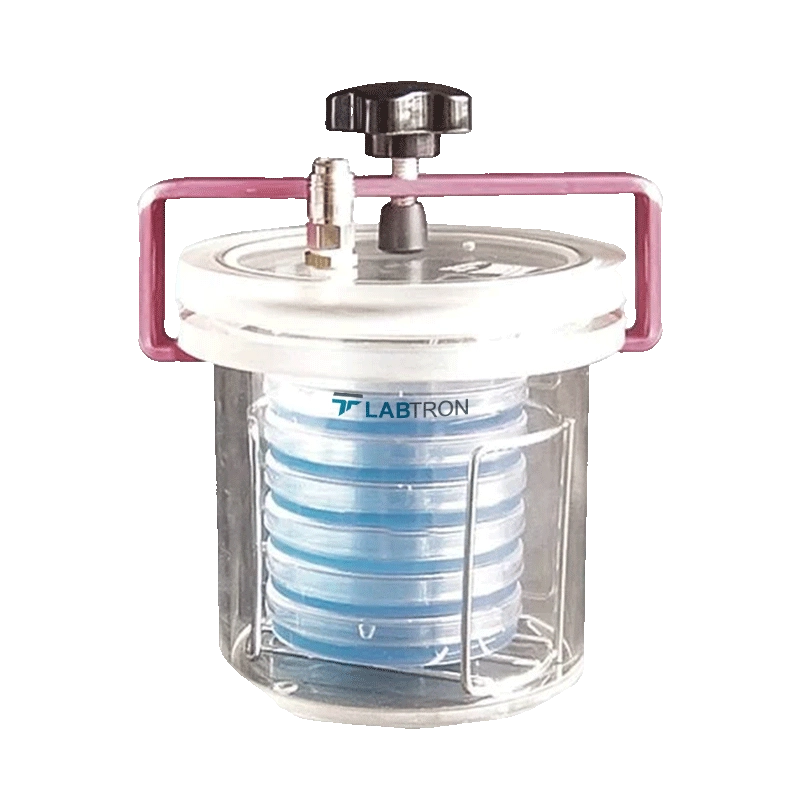
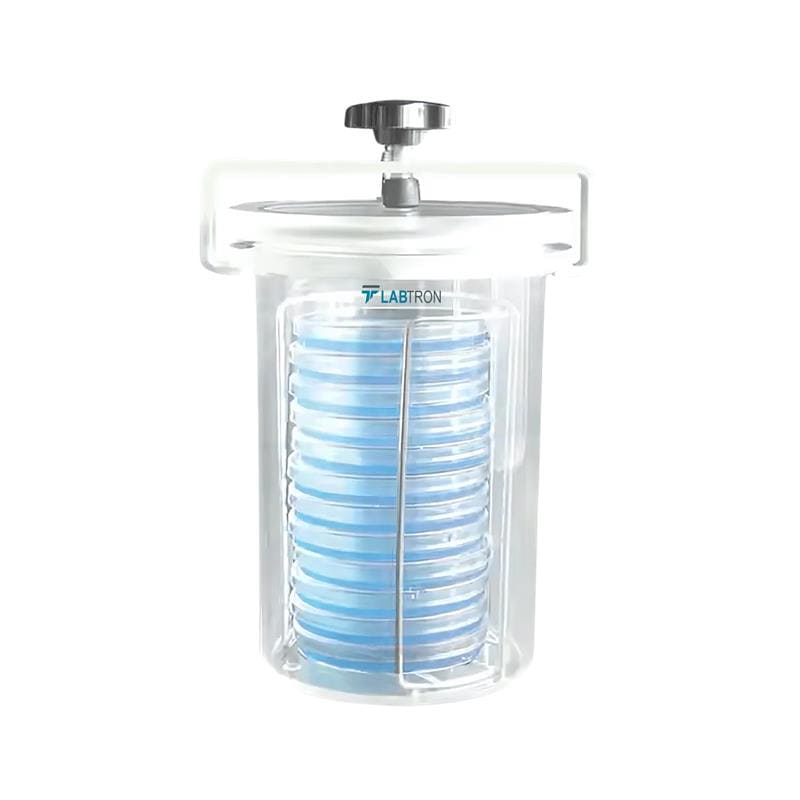
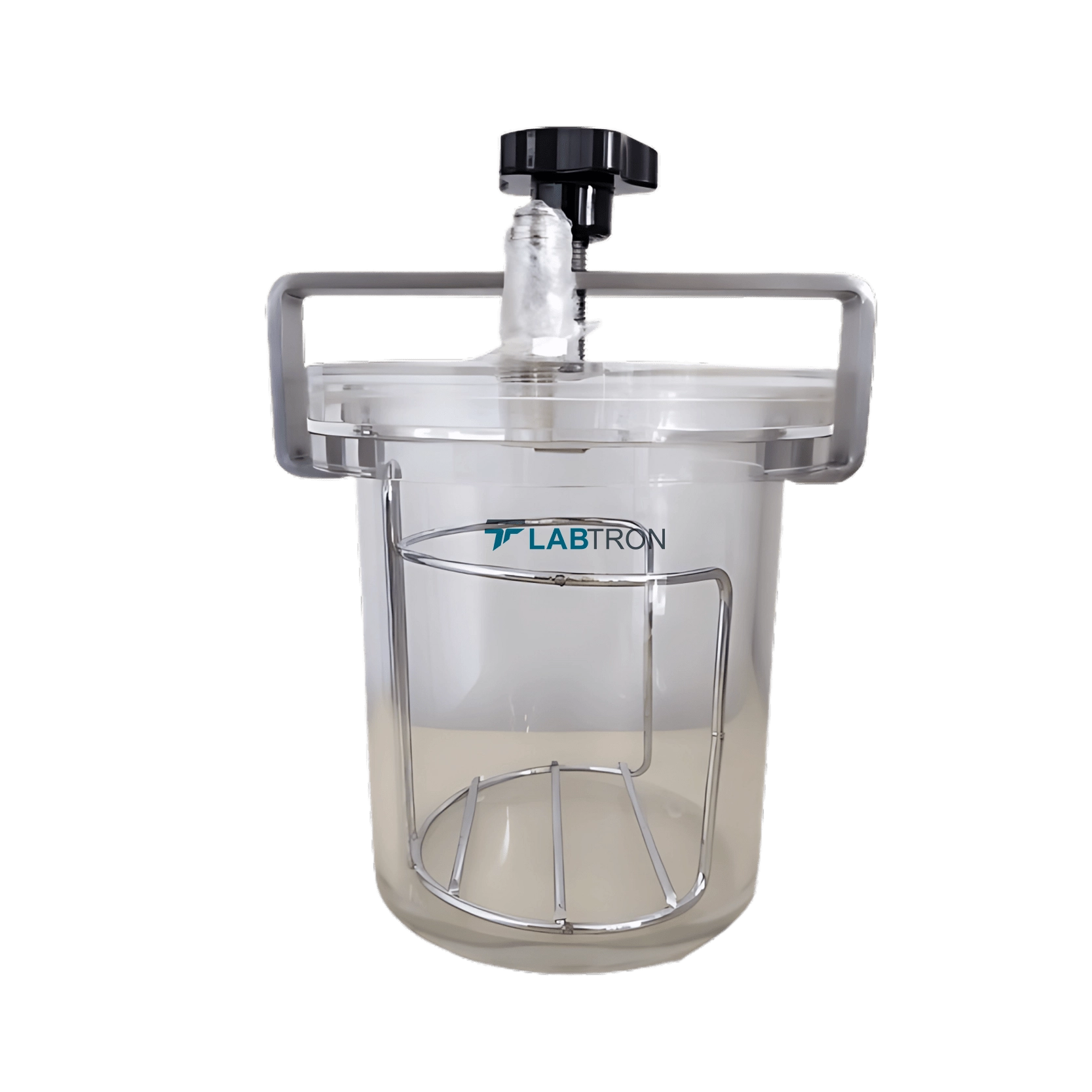
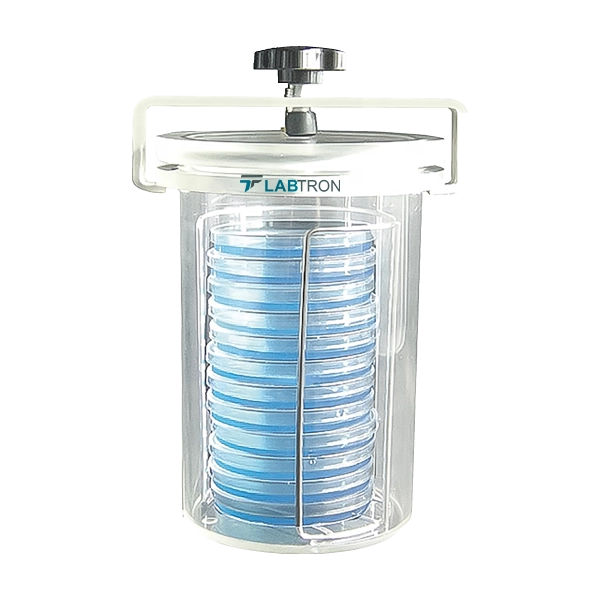
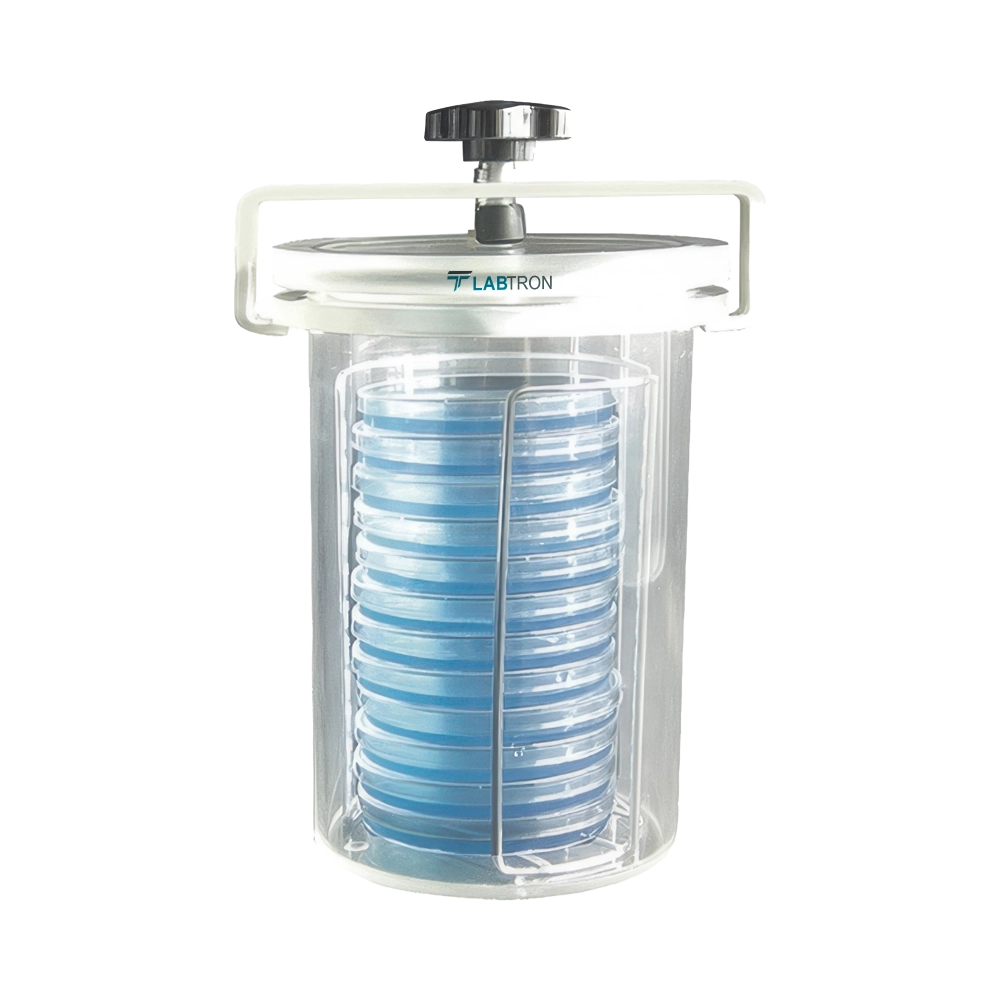

Anaerobic jar LAJ-B10 can hold up to 25 petri dishes at once, arranged in 3 stacks of 8 dishes with diameters ranging from 9-10 cm.
The anaerobic jar LAJ-B10 is essential for experimenting anaerobic conditions and bacteria. It creates oxygen-free environments, thereby facilitating the study and cultivation of anaerobic bacteria like Clostridium species. It also helps imitate natural anaerobic conditions and enables research on fermentation, anaerobic respiration and methane production. In clinical microbiology, it is used to identify anaerobic pathogens in infections.
Researchers should keep the jar tightly sealed, monitor gas and moisture levels, control temperature, follow gas generator instructions, handle microorganisms safely, and be aware of limitations such as capacity and monitoring needs.
An anaerobic jar is a specialized container used in laboratories to create an oxygen-free environment for culturing anaerobic bacteria. It typically consists of a sealed jar with a catalyst that removes oxygen by catalysing its reaction with hydrogen to form water. Additionally, our anaerobic jar has a gas-generating sachet containing a mixture of chemicals is often placed inside the jar to produce carbon-dioxide and hydrogen, further depleting oxygen levels.
Essential components for the operation of an anaerobic jar include an air-tight jar, lid with a gas-tight seal, gas-generating sachet, a palladium catalyst, an indicator strip such as methylene blue to confirm the absence of oxygen.
The time needed to create an anaerobic environment in an anaerobic jar depends on the type of gas-generating system used. Generally, it takes about 30 minutes to a few hours to completely remove oxygen and create the anaerobic conditions. This can be verified by checking the indicator strip inside the jar.
Maintenance of anaerobic jar includes inspecting and replacing gaskets regularly, cleaning the jar and lid after each use, verifying the palladium catalyst, and storing jars in a cool, dry locations for optimal performance and durability.
When using anaerobic jars, handle them carefully, seal them tightly after creating an oxygen-free environment, wear appropriate gloves and goggles, and follow proper gas handling procedures. Regularly inspect equipment, monitor gas levels, and train personnel in safety protocols to minimize risks.
Post your question?
Our experts are here to help!
Labtron Equipment Ltd., Quatro House, Lyon Way, Camberley, Surrey GU16 7ER United Kingdom
Email: info@labtron.com Whatsapp: +44 73 4441 2688 Phone: +44 2080 043608