 info@labtron.com


| Dispersion Type | Wet / Dry Dispersion (automated circulation) |
| Measuring Range | 0.1µm to 750 µm |
| Repeatability | < 1 % |
| Detection Channel | 49 |
| Measurement Channel | 1 to 2 min |
| Light Source | He- Ne Laser |
| Wavelength | 0.6328 µm |
| Environmental Requirement | Temperature: 5 to 35° C Humidity: < 85% |
| Power Supply | 200 to 240 V 50Hz 80 VA |
| Dimension ( L × W× H ) | 838 mm × 265 mm × 295 mm |
He-Ne Lazer Light Source
Moderate Detector Count
Enhanced Electrical Stability
Standard Measurement Range
Refractive Index Analysis
Laser Particle Size Analyzer LLPA-D11 measures particle sizes by projecting a laser beam through a sample. It is widely utilized in cosmetics, mining, construction, food and beverages for ensuring uniform particle sizes.
Download catalog for
Laser Particle Size Analyzer LLPA-D11 Catalog
Labtron Laser Particle Size Analyzer offers advanced, fully automatic solutions for both wet and dry particle size analysis. They utilize MIE scattering principles and high-sensitive detectors. They provide particle size distribution measurements across various ranges from 0.01 µm to 2000 µm. Test speeds of less than 2 minutes for wet dispersion and under 1 minute for dry dispersion ensure rapid results. Their SOP operation mode, alongside various analysis modes and statistical methods, facilitates comprehensive data processing and analysis. Our Laser Particle Size Analyzer supports both automatic and manual operation modes, offering flexibility and user-friendly functionality.

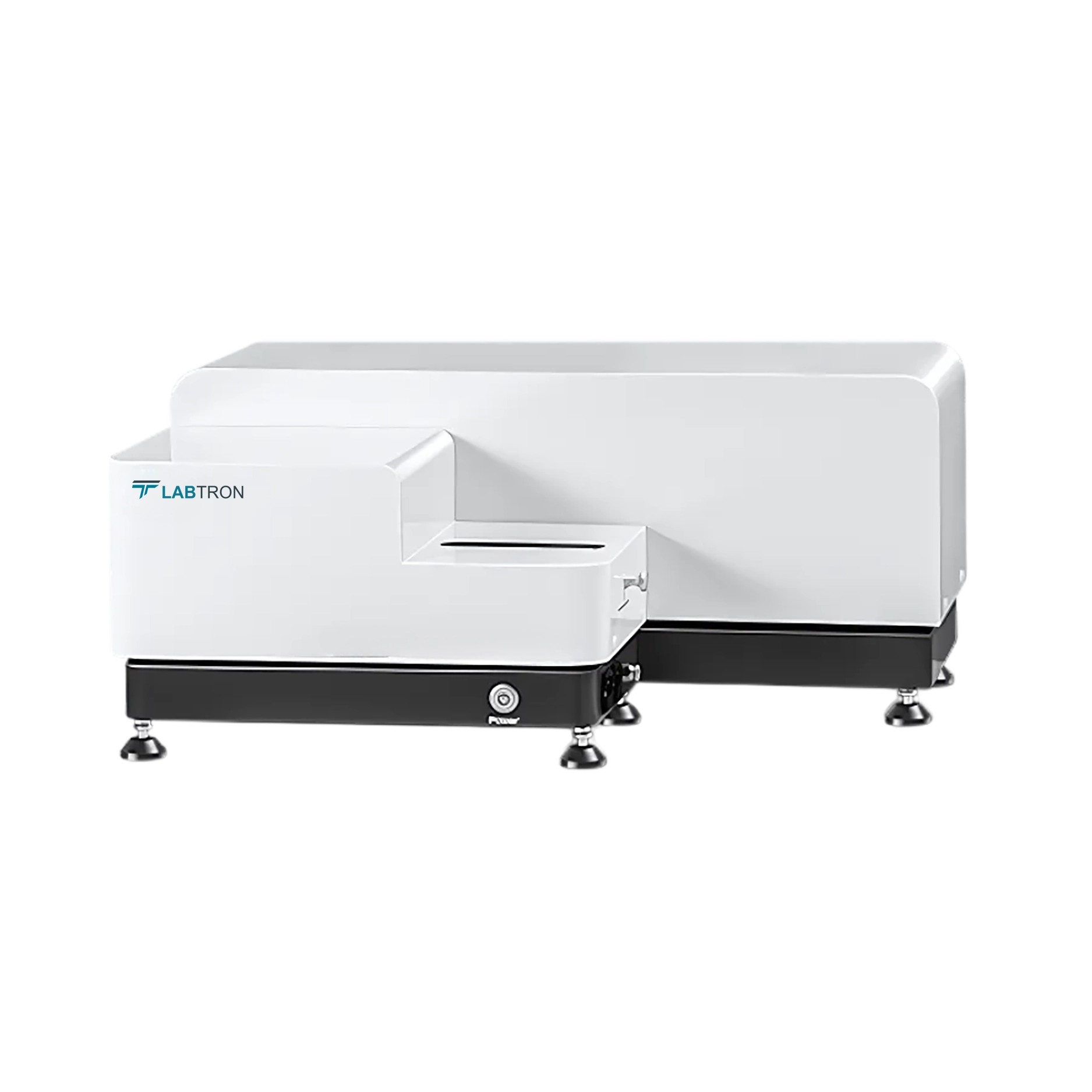

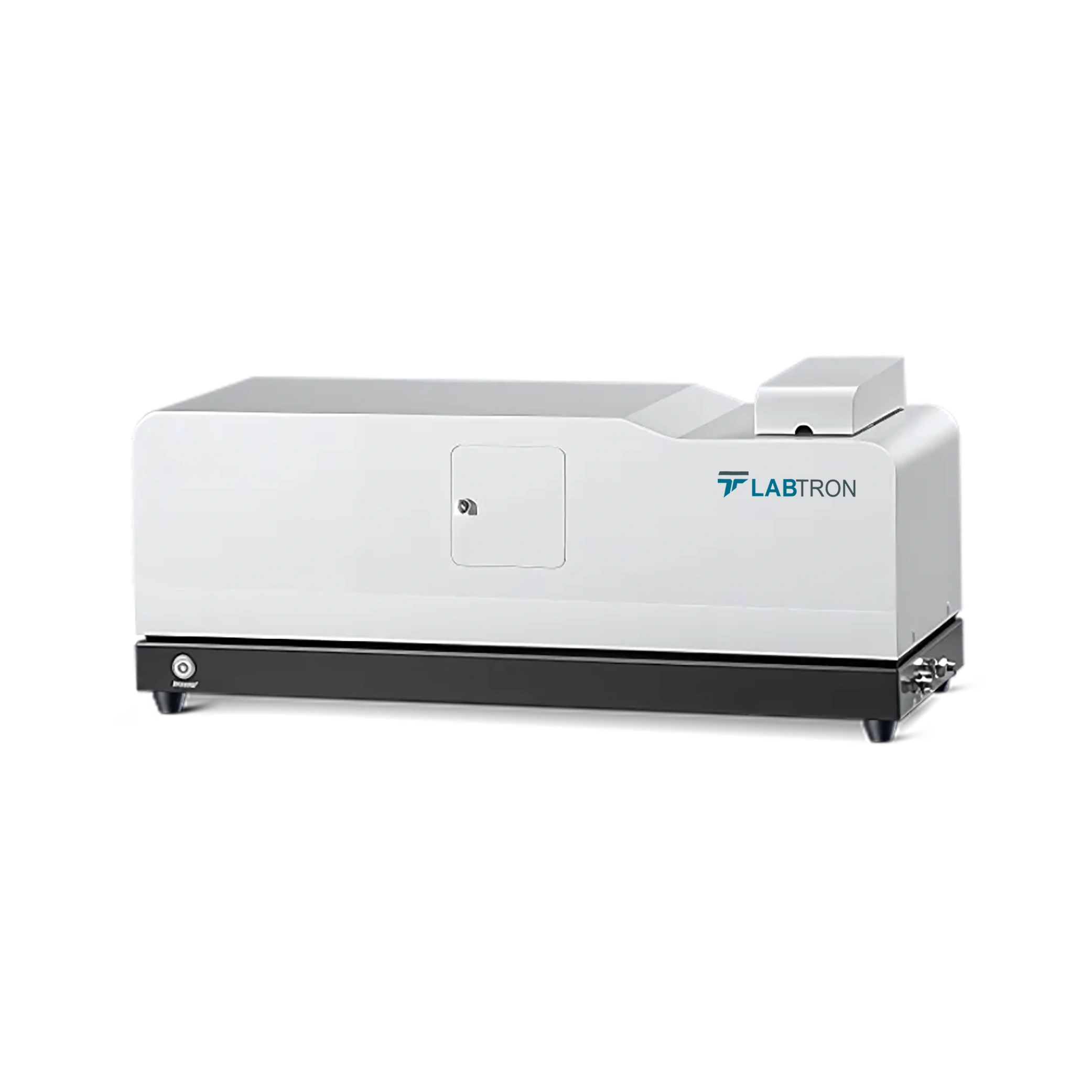


Labtron’s laser particle size analyzer typically uses Class I or II lasers that are enclosed within the instrument, posing minimal risk under normal operation. However, it is still essential to follow basic laser safety protocols. Avoid opening the optical chamber unless instructed by the manufacturer, as direct exposure to laser beams can damage eyesight. Ensure proper grounding and electrical connections to prevent power surges. Handle sample materials with gloves if they are hazardous or reactive. Always follow the user manual for setup and maintenance procedures. Keep the analyzer in a dust-free, vibration-free environment to protect both users and equipment. Periodic inspection ensures ongoing safe operation.
Labtron supplies advanced models of laser particle size analyzer. The background correction plays a vital role in improving measurement accuracy by eliminating noise from ambient light or stray reflections inside the optical chamber. Before each sample run, the system captures a baseline reading without particles—this is the electronic or optical "background." During the actual measurement, the analyzer subtracts this baseline from the detected signal to isolate the true scattering data. This ensures that only light scattered by particles is processed, minimizing artifacts. Advanced analyzer offer automatic background clearing, simplifying workflow and increasing reliability. Regular background correction is especially important when switching between samples with very different optical properties. It ensures reproducibility and cleaner signal processing over time
The dispersion system ensures that particles are evenly separated within the sample medium, preventing clumping or settling that would distort results. In wet systems, this typically includes a circulating pump, ultrasonic disperser, and solvent reservoir. The pump maintains consistent flow through the optical path, while ultrasound breaks apart agglomerates. In dry systems, dispersion units use compressed air or vibration to separate and feed powder samples without damaging fragile particles. Proper dispersion reveals the true size distribution, not oversized clumps. Adjustable dispersion intensity accommodates delicate or cohesive materials. Without effective dispersion, even the best optical system cannot produce reliable size data.
Labtron’s laser particle size analyzer Real-time data acquisition is enabled by high-speed electronics and synchronized detectors that continuously capture scattering signals during a measurement cycle. Advanced systems use 32-bit or higher CPUs with multiple ADC channels to process incoming light intensity at various angles in real time. Sampling rates can exceed 1,000 frames per second, ensuring that even dynamic samples (e.g., flowing suspensions) are measured accurately. The software displays live updates of particle size distribution, stability of the reading, and any anomalies. This helps operators make quick decisions on whether to re-dispersed or re-sample. Real-time analysis is especially useful in continuous production monitoring and process control.
Labtron supplies advanced models of laser particle size analyzer. Temperature can affect both the physical behavior of the sample and the performance of optical components. In wet dispersion systems, high temperatures can change the viscosity of the dispersant, impacting how particles settle or flow. It may also influence the refractive index of both the solvent and the sample, especially in sensitive Mie-based calculations. For the instrument itself, thermal expansion of optical components can slightly alter alignment or laser output if not properly stabilized. High-end analyzer often includes temperature control or compensation features. It is essential to let both the sample and instrument acclimate to room temperature before running tests. This ensures more consistent, reproducible measurements.
Post your question?
Our experts are here to help!
Labtron Equipment Ltd., Quatro House, Lyon Way, Camberley, Surrey GU16 7ER United Kingdom
Email: info@labtron.com Whatsapp: +44 73 4441 2688 Phone: +44 2080 043608