info@labtron.com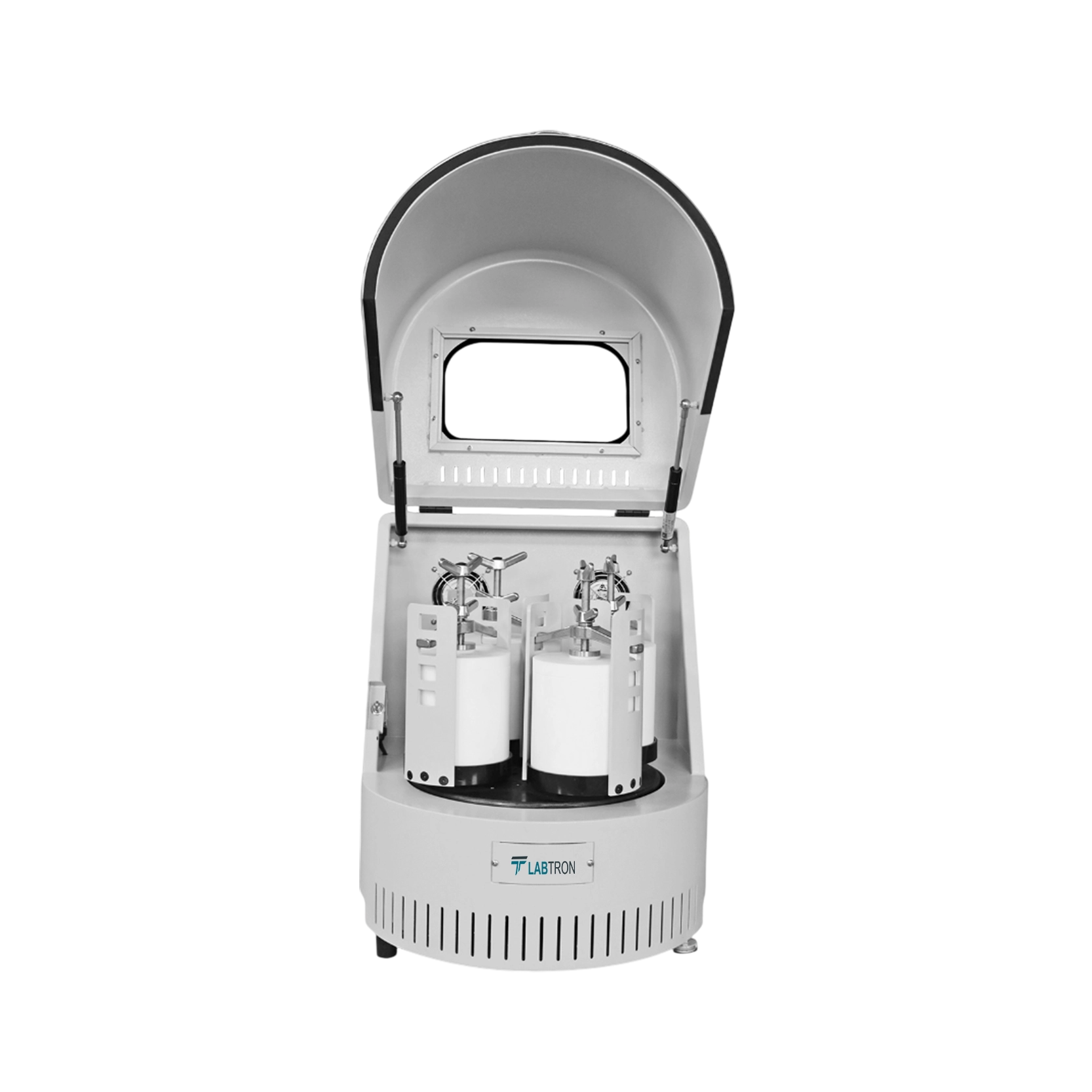

| Jar Capacity | 16 L |
| Number of Jars Accommodated | 4 |
| Mill Jar Compatibility | 2 to 4 L |
| Vacuum Mill Jar Compatibility | 1 to 3 L |
| Revolution Speed | 35 to 255 rpm |
| Rotational Speed | 60 to 510 rpm |
| Revolution: Rotation | 1:2 |
| Speed Regulation | Frequency control |
| Material Capacity | Not more than 2/3 of mill jar volume |
| Work Mode | 2 or 4 jars working together |
| Milling Mode | Dry or wet milling |
| Drive Mode | Gear drive/belt drive |
| Total Timing | 1 to 9999 min |
| Alternate Running Time | 1 to 999 min |
| Feed Size | Soil and crispy materials: Up to 10 mm for soft material Other materials: Up to 3 mm |
| Output Granularity Size | Minimum up to 0.1μm |
| Noise | 60 ± 5 dB |
| Power | 3000 W |
| Power Supply | 220 V, 50 to 60 Hz |
| Dimension | 950 × 600 × 710 mm |
| Weight | 203 kg |
Advanced control interface
Robust construction
Quasi-sealed gear box
Supports vacuum operation
Multiple sample grinding
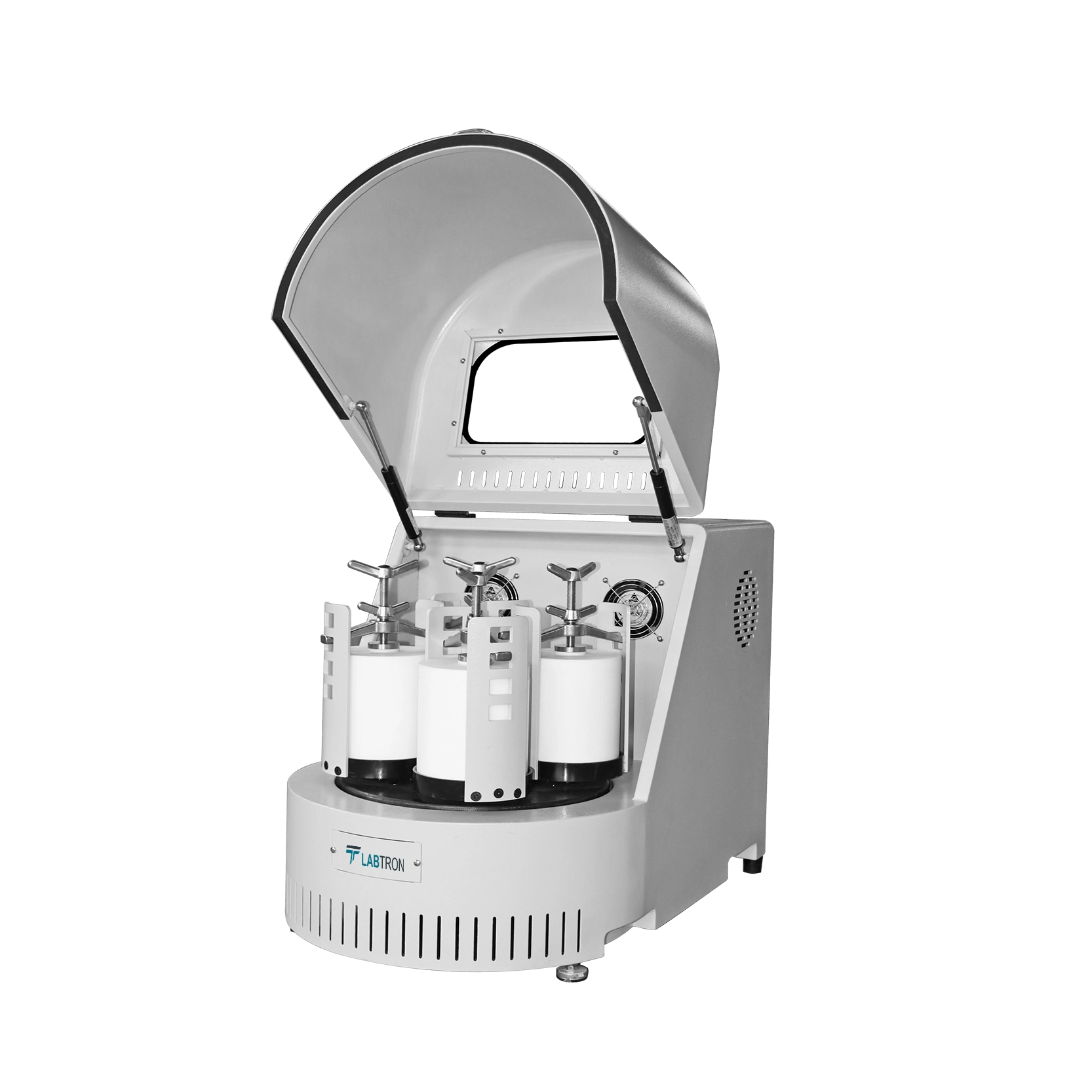
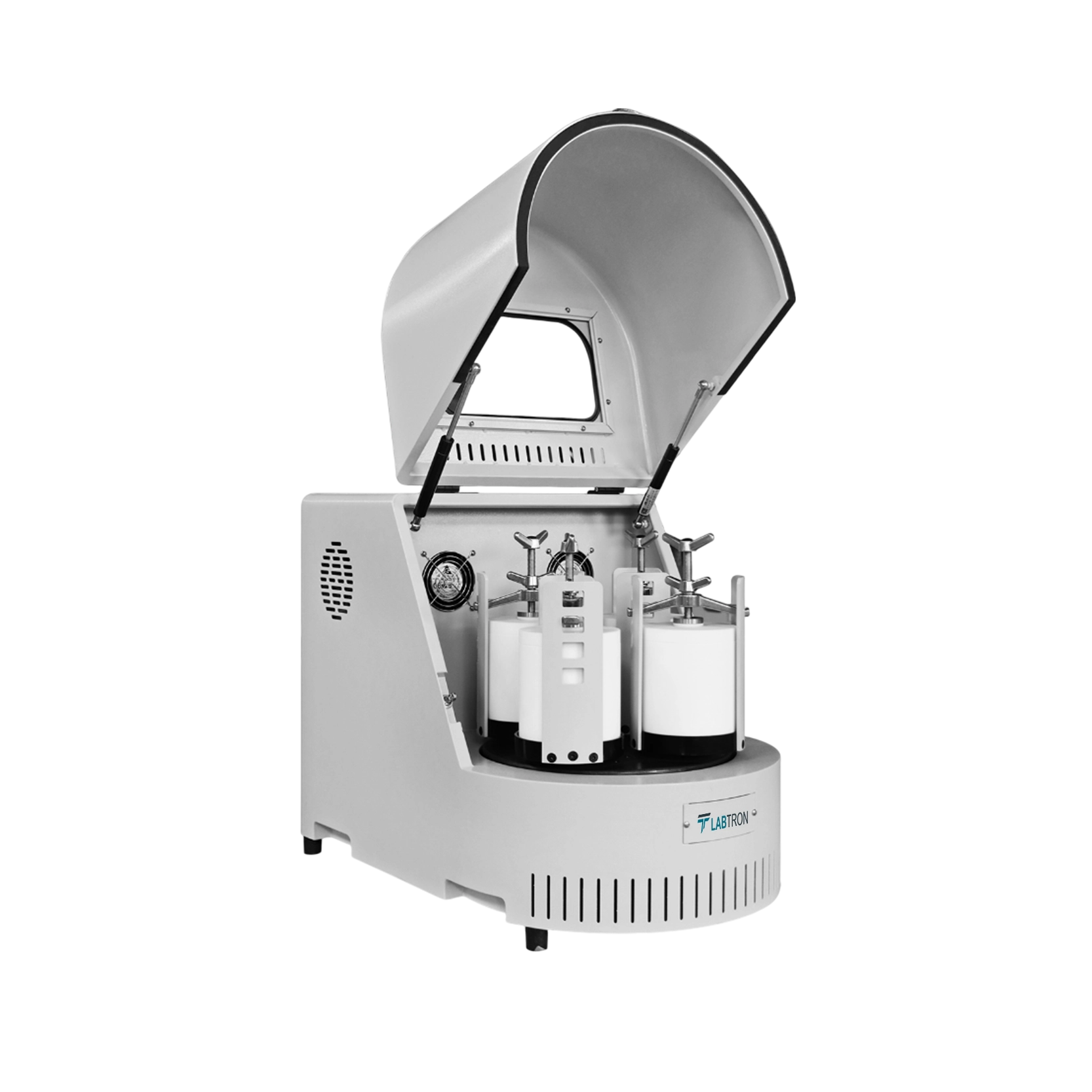
Our Vertical Planetary Ball Mill LPBM-B15 is used for fine grinding, mixing, and preparing small sample batches of materials in laboratories. It is widely applied in fields such as ceramics, metallurgy, electronics, chemistry, and materials research.
Sr.No. | Name |
1 | 2 L Agate grinding jar |
2 | 2 L Zirconia grinding jar |
3 | 2.5 L Zirconia grinding jar |
4 | 3 L Zirconia grinding jar |
5 | 2 L Corundum grinding jar |
6 | 3 L Corundum grinding jar |
7 | 2 L 304 Stainless steel grinding jar |
8 | 2.5 L 304 Stainless steel grinding jar |
9 | 3 L 304 Stainless steel grinding jar |
10 | 2 L Tungsten carbide grinding jar |
11 | 2 L Nylon grinding jar |
12 | 2.5 L Nylon grinding jar |
13 | 3 L Nylon grinding jar |
14 | Agate ball (6 to 10 mm) |
15 | Agate ball (11 to 15 mm) |
16 | Agate ball (16 to 35 mm) |
17 | Agate ball (50 mm) |
18 | Mix Agate ball (5 to 15 mm) |
19 | Aluminum ball (1 to 2 mm) |
20 | Aluminum ball (3 to 15 mm) |
21 | Aluminum ball (20 to 50 mm) |
22 | Zirconia ball (0.1 mm) |
23 | Zirconia ball (0.3 mm) |
24 | Zirconia ball (0.4 mm) |
25 | Zirconia ball (0.5 mm) |
26 | Zirconia ball (1 to 4 mm) |
27 | Zirconia ball (5 to 15 mm) |
28 | Zirconia ball (16 to 30 mm) |
29 | 304 stainless steel ball (1 mm) |
30 | 304 stainless steel ball (2 mm) |
31 | 304 stainless steel ball (3 to 15 mm) |
32 | 304 stainless steel ball (20 to 30 mm) |
33 | Polished Tungsten carbide ball (1 mm) |
34 | Polished Tungsten carbide ball (2 mm) |
35 | Polished Tungsten carbide ball (3 mm) |
36 | Polished Tungsten carbide ball (4 mm) |
37 | Polished Tungsten carbide ball (5 mm) |
38 | Polished Tungsten carbide ball (6 mm) |
39 | Polished Tungsten carbide ball (7 mm) |
40 | Polished Tungsten carbide ball (10 mm) |
Note: The balls come in a pack of 1 kg each except for Agate ball (50 mm).
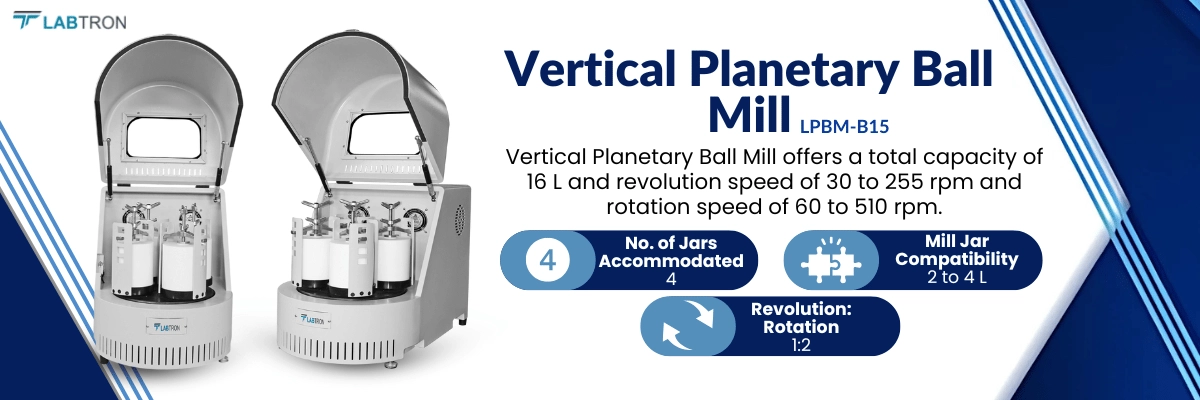
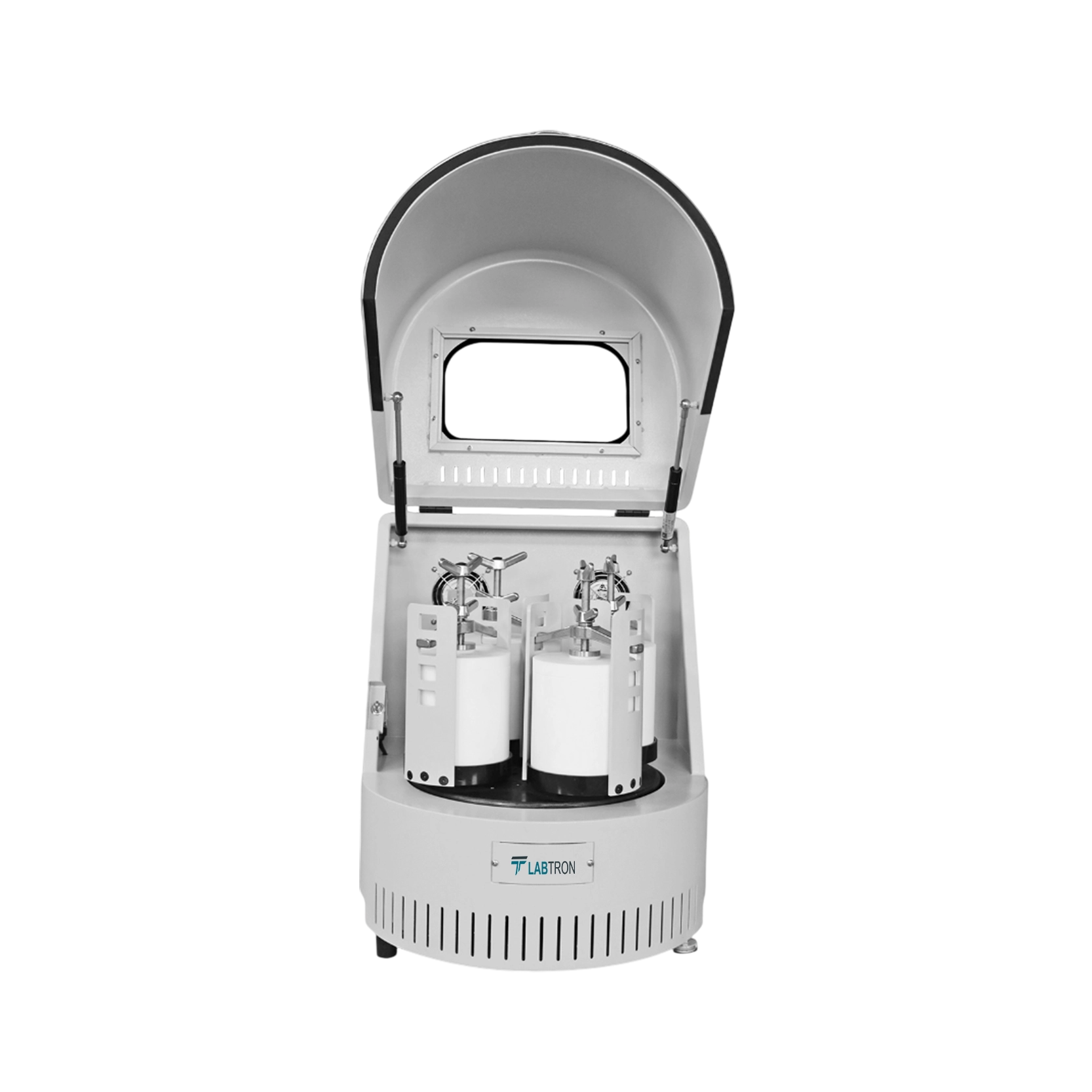
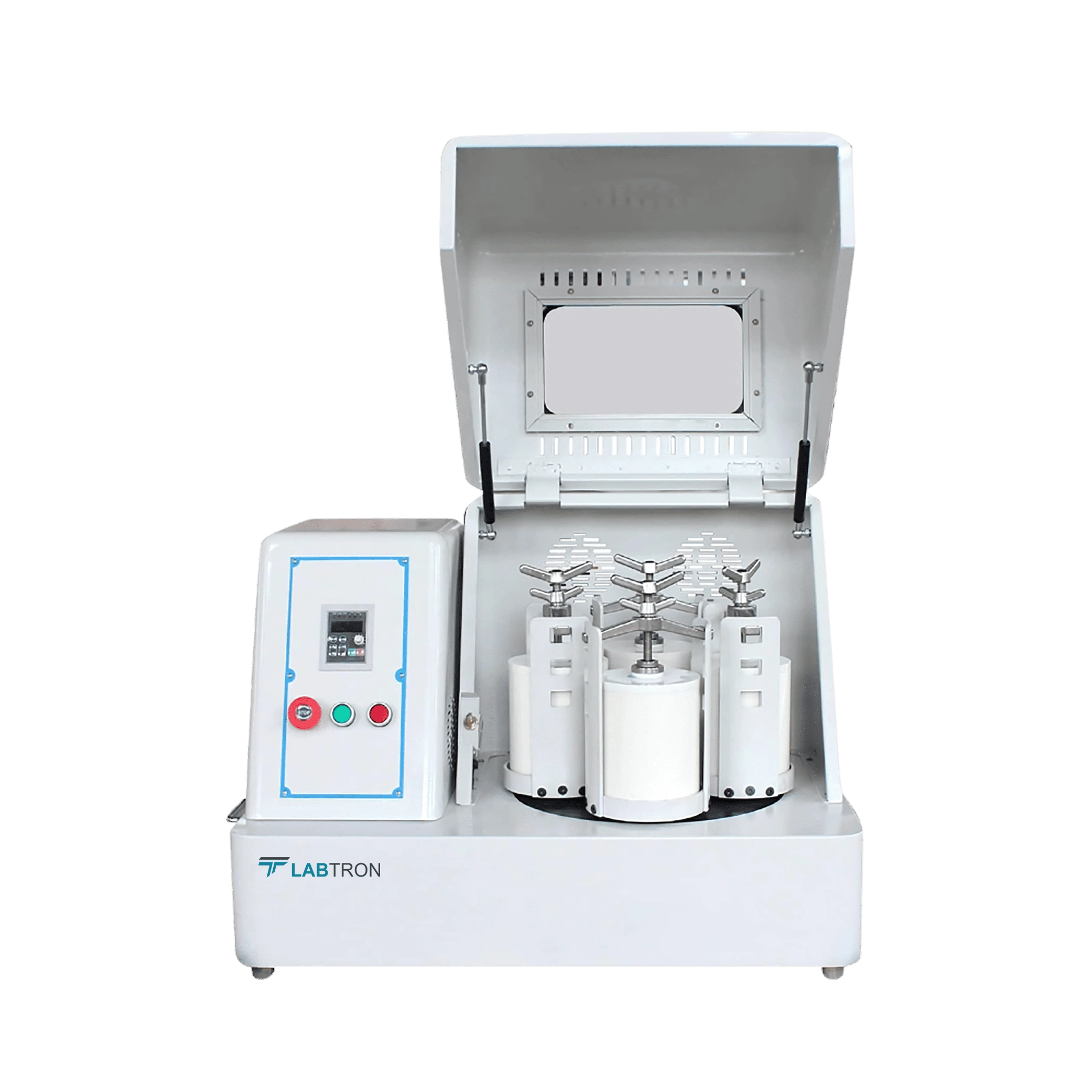
Labtron Planetary Ball Mill provide blending of various ingredients by combining rotating and orbiting motions. They consist of multiple grinding jars mounted on rotating platform, where it rotates in opposite direction to create high-energy impact and shear force. Their cylindrical design allows for uniform motion during milling, enhancing efficiency. They incorporate vacuum options for reactive materials, preventing contamination during process. Our Planetary Ball Mill is versatile for materials science, and nanotechnology for synthesizing various components into fine powders.

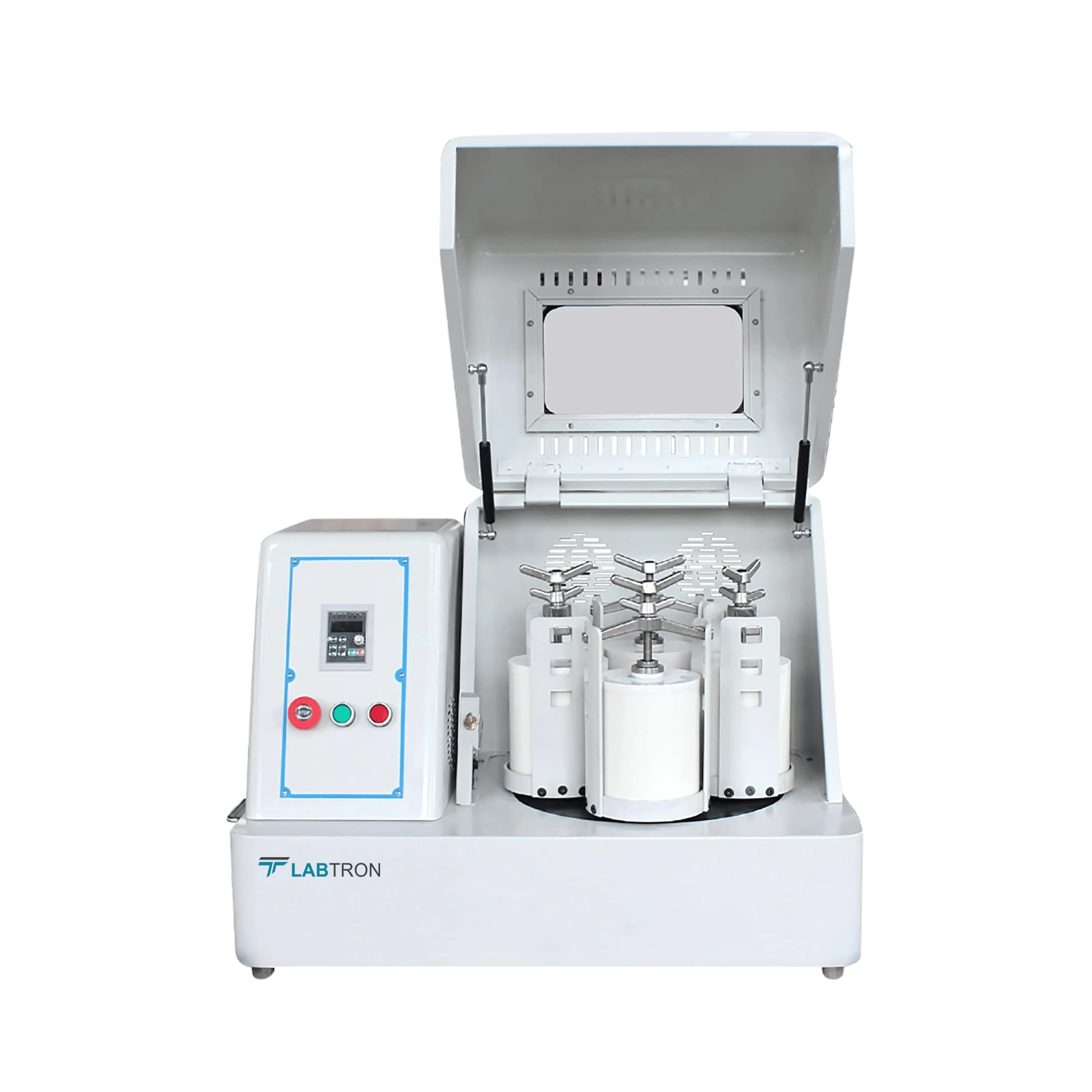

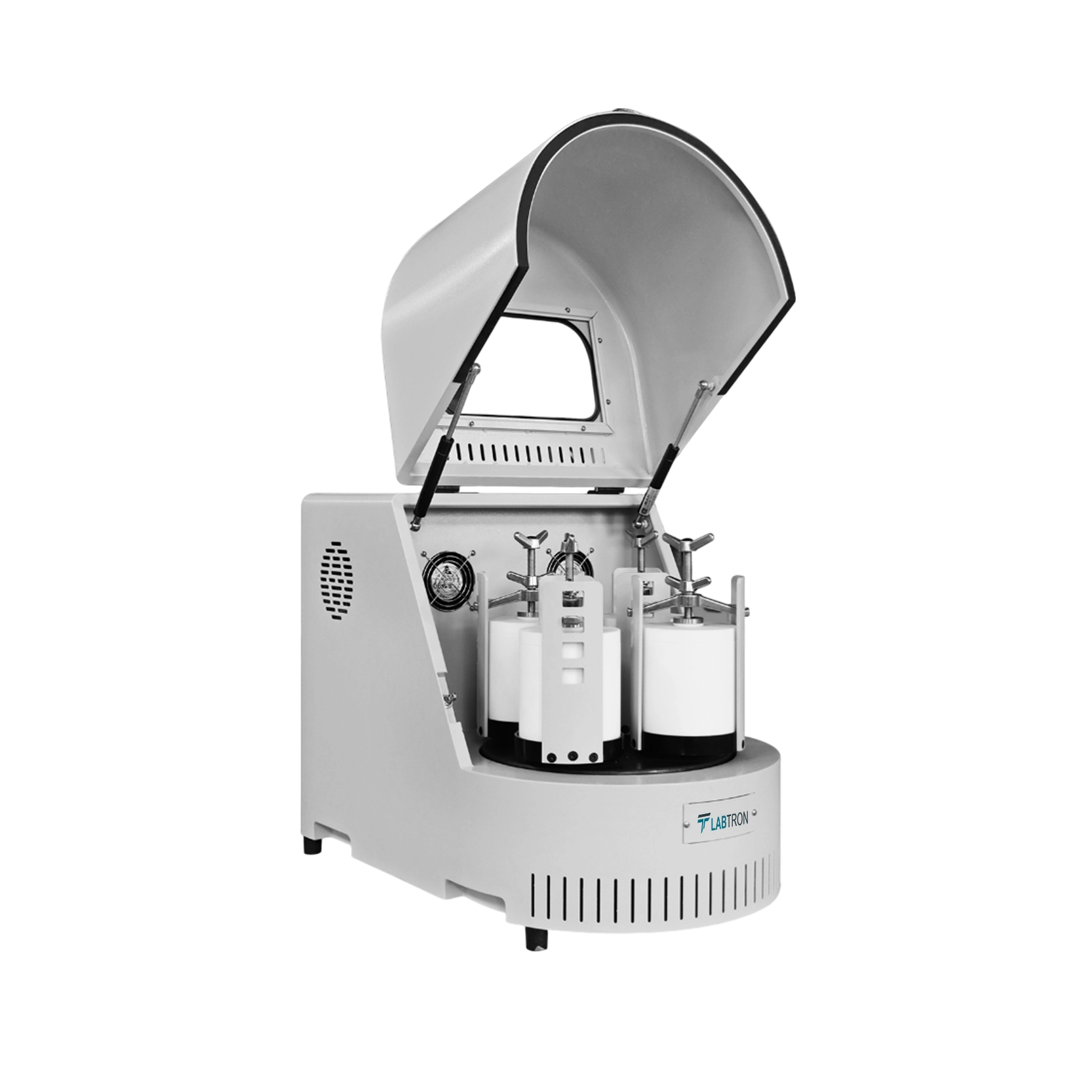
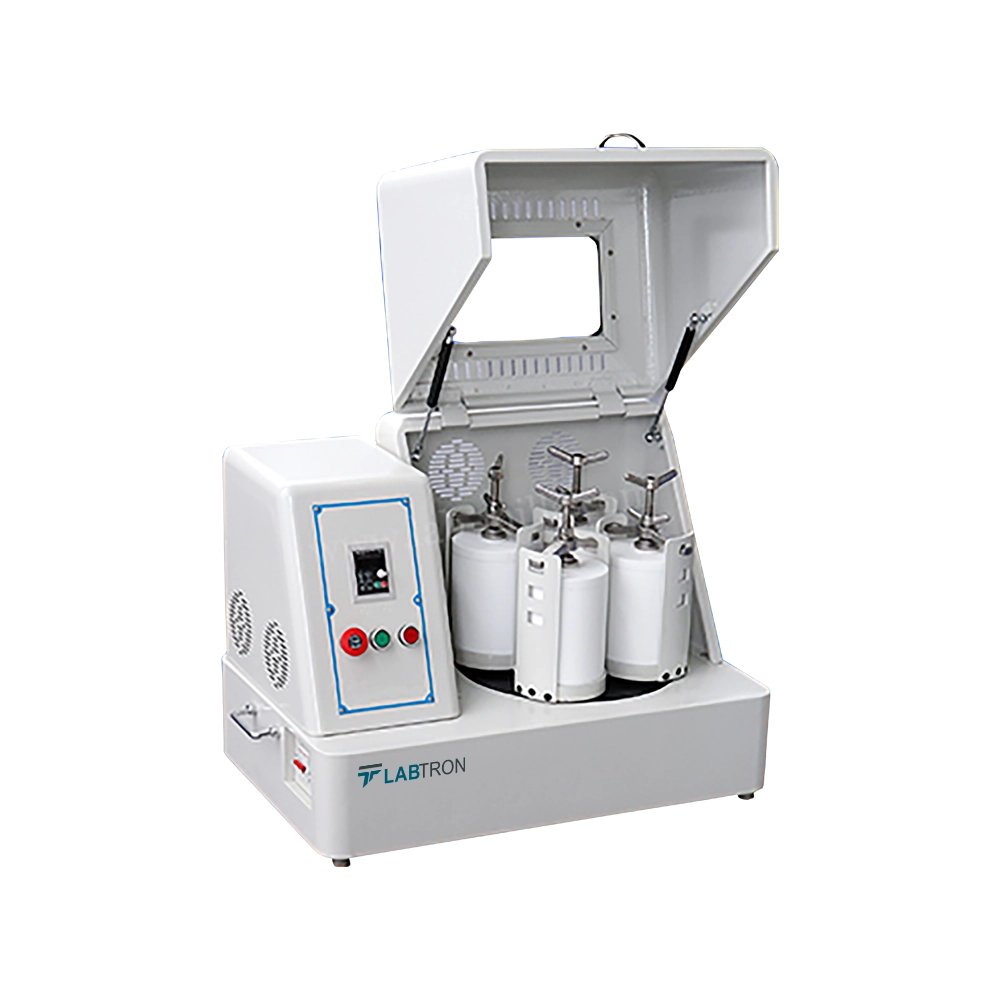

Our Vertical Planetary Ball Mill has an integrated liquid oil self-lubrication system. This reduces the need of manual lubrication and automatic lubrication maintains a low-noise operation. It also features a built-in oil level meter to ensure the level of oil and allowing for easy oil replacement.
Labtron’s Vertical Planetary Ball Mill supports vacuum operation when used with vacuum-compatible tanks, allowing for contamination-free sample processing. It supports vacuum mill jars ranging from 1 L to 3 L, however, the total volume should not exceed more than 16 L.
It is extremely versatile and can process a wide range of materials, including soft, hard, brittle, and fibrous substances. Common materials include metals, ceramics, minerals, ores, glass, polymers, biological tissues, soil, and even pharmaceuticals. Due to the high-impact energy generated, it is particularly effective for materials that are otherwise difficult to grind or homogenize with conventional methods.
Yes, our Vertical Planetary Ball Mills support both wet and dry grinding techniques. Dry grinding is suitable for moisture-sensitive or non-water-soluble materials, while wet grinding is beneficial for achieving finer particle sizes and preventing dust. In wet grinding, liquid (usually water, alcohol, or solvent) is added to aid in dispersing and suspending the sample materials, which helps enhance grinding efficiency and cooling.
Revolution speed refers to the speed at which the turntable (the base holding the grinding tanks) rotates around its axis. Rotation speed refers to the speed at which the individual grinding tanks (or jars) rotate around their own axes while also moving around the turntable's axis (in planetary motion). Their combined effect ensures the efficient grinding and mixing of materials in the ball mill.
Post your question?
Our experts are here to help!
Labtron Equipment Ltd., Quatro House, Lyon Way, Camberley, Surrey GU16 7ER United Kingdom
Email: info@labtron.com Whatsapp: +44 73 4441 2688 Phone: +44 2080 043608