 info@labtron.com

| Measuring Range mPa.s | 50000 to 330000 50 to 3.3M 100 to 6.6M 600 to 26.4M |
| Temperature Control Range | 1°C to 150°C |
| Rotor Speed (RPM) | 0.3 to100 |
| Numbers of Rotors | Four kinds of standard configuration: SC4-21, 27, 28,29. |
| Measurement Accuracy | Optional: SC4-14, 15, 16, 18, 25, 31, 34 |
| Repeatability | ±1.0% (full range) ± 0.2% (full range) |
| Power Supply | AC100-240V 50Hz/60Hz, output DC12V1.5A |
Variable Speed Control
Interchangeable Spindle System
High Measurement Accuracy
Real-Time Viscosity Monitoring
Multiple Unit Display
Rotational Viscometer LVM-B16 measures the viscosity of a fluid by detecting the torque required to rotate a spindle. It is widely utilized in pharmaceuticals, cosmetics, paints, petrochemicals, and polymers to measure and control the viscosity of liquids.
Download catalog for
Rotational Viscometer LVM-B16 Catalog
Labtron Rotational Viscometer are engineered with a robust rotating spindle that interacts with the fluid. They come with multiple spindle options and variable speed settings to fit diverse testing requirements. These have simple calibration procedures and low maintenance needs. Their user-friendly controls guarantee ease of operation. Our rotational viscometer are enhanced by integrated temperature control, ensuring consistent sample conditions.


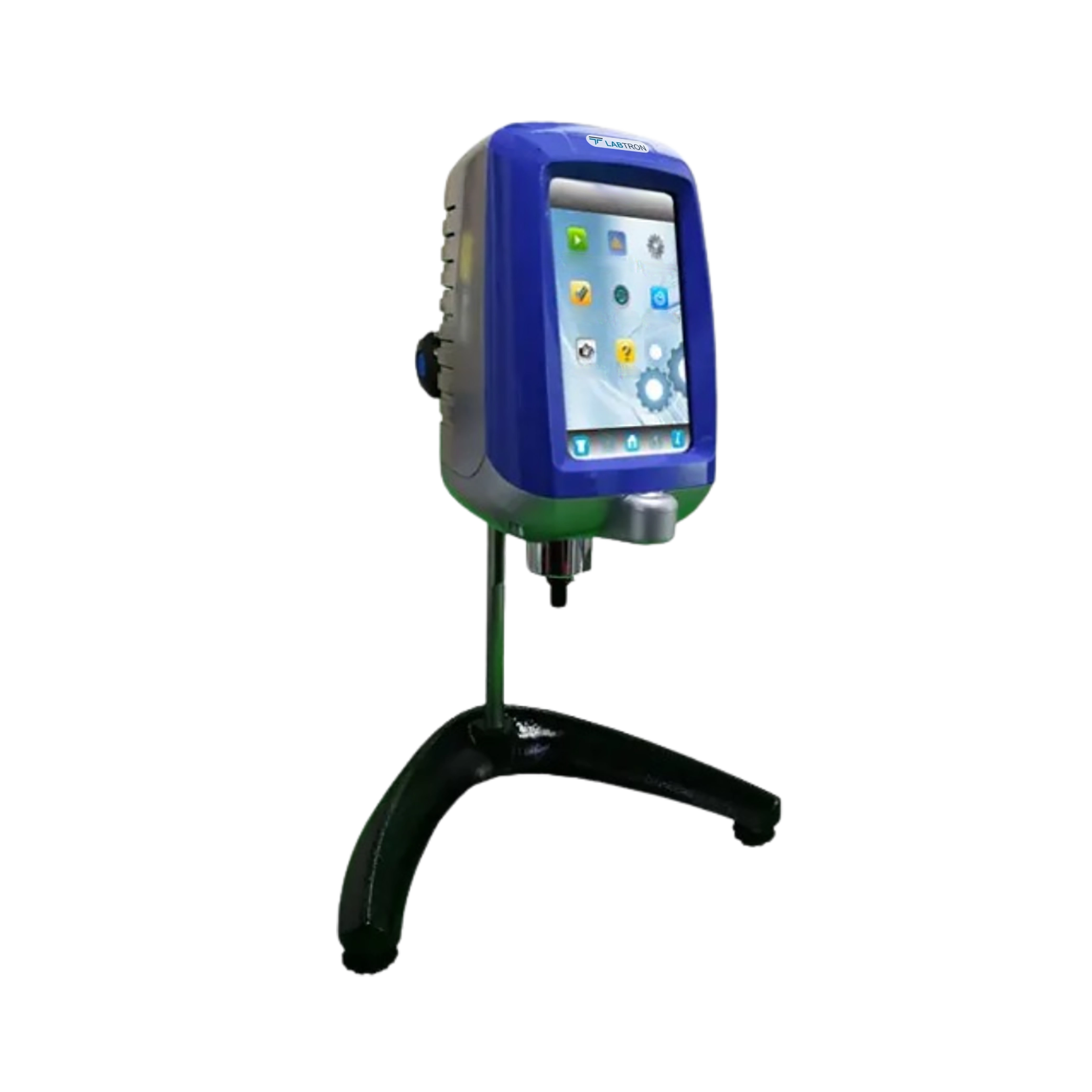


Labtron supplies advanced rotational viscometer LVM-B16. Selecting the correct spindle and speed is crucial for accurate viscosity measurements. Aim for a torque reading between 20% and 90% of the instrument's full scale to ensure optimal performance. If the torque is too low, the measurement may be inaccurate; if it's too high, it can strain the instrument. Start with a spindle that matches the expected viscosity range of your sample. If the reading is below 20%, switch to a larger spindle or increase the speed; if it's above 90%, use a smaller spindle or decrease the speed. For unknown viscosities, begin with a smaller spindle at a lower speed and adjust accordingly. Always refer to the viscometer's manual for specific spindle and speed combinations tailored to your instrument model.
Labtron supplies advanced rotational viscometer LVM-B16. Several variables can influence viscosity readings. Temperature fluctuations are particularly significant; even a 0.5°C deviation can cause a viscosity change of over 5% in some liquids. Ensure consistent sample temperature, ideally within ±0.1°C of the desired point. The choice of container is also vital; using an inappropriate outer cylinder can lead to substantial errors. Additionally, selecting the correct spindle and speed is essential to maintain torque readings within the optimal range. Lastly, ensure the sample is free from air bubbles and contaminants, as these can distort measurements.
Labtron supplies premium rotational viscometer LVM-B16. Consistency in viscosity measurements is achieved by standardizing test conditions. Maintain constant sample volume, temperature, and container type. Use the same spindle and speed settings for each test. Allow the sample to reach thermal equilibrium before testing. Ensure the viscometer is calibrated regularly and that the spindle is clean and free from residues. Perform multiple measurements and average the results to account for any minor inconsistencies. Implementing these practices will enhance the reliability of your viscosity data.
Labtron supplies advanced rotational viscometer LVM-B16. Calibration errors can arise from various sources. Temperature fluctuations during calibration can lead to inaccurate readings; therefore, it's essential to use a stable, temperature-controlled environment. Air bubbles in the sample chamber can interfere with spindle rotation, so ensure thorough degassing of the sample. Spindle contamination from previous samples can affect subsequent measurements; clean the spindle between tests using appropriate solvents. Using an incorrect spindle for the sample's viscosity range can result in erroneous data; always refer to the instrument's manual for guidance. Regular calibration with standard reference materials is also recommended to maintain measurement accuracy.
Labtron supplies advanced rotational viscometer LVM-B16. Proper sample preparation is critical for obtaining accurate viscosity readings. Avoid shaking or stirring the sample prior to measurement, as this can introduce undefined shear forces. Use consistent methods and tools for sample application, such as a spoon or spatula. Ensure the sample is free from air bubbles, as these can simulate non-Newtonian behavior and skew results. Measure the correct volume as specified by the viscometer's guidelines; overfilling or underfilling can lead to errors. Allow the sample to reach thermal equilibrium before testing to minimize temperature-induced viscosity changes. Prevent the sample from drying out, as this can cause an increase in measured viscosity.
Post your question?
Our experts are here to help!
Labtron Equipment Ltd., Quatro House, Lyon Way, Camberley, Surrey GU16 7ER United Kingdom
Email: info@labtron.com Whatsapp: +44 73 4441 2688 Phone: +44 2080 043608