 info@labtron.com

| Temperature Range | RT to 350°C |
| Detection Method | Semi-automatic |
| Processing Capacity | 3 / batch |
| Temperature Resolution | 0.1°C |
| Heat Range | (0.1 to10.0) °C / min |
| Accuracy | ± 0.3°C |
| Repeatability | Temperature Rise Rate 0.1°C at 0.1°C / min |
| Video Function | Take pictures |
| Video Playback | No |
| User Management | No |
| Results Saving | 800 |
| Data Storage | 16 GB |
| Display Mode | TFT HD Color Screen |
| Data Interface | USB RS232 SD Card RJ 45 |
| Open Capillary Size | I.D. 1.0 mm, O.D. 1.4 mm double openings |
| Power Supply | 110 to 220 V 50 Hz / 60 Hz |
| Power Consumption | 120 W |
| Packing Dimension | 410* 300* 360 mm |
| Gross Weight | 7.2 Kg |
Adjustable Heating Ramp Rates
Wide Temperature Range
High-Resolution Display
Sample Chamber Illumination
Built-in Camera
Melting Point Apparatus LDMP-A22 determines the melting point of substances with precision, operated through a touchscreen interface. It plays a key role in the pharmaceutical, chemical, food, and cosmetics industries for analyzing the melting point of different materials.
Download catalog for
Melting Point Apparatus LDMP-A22 Catalog
Available Range :
Melting Point Apparatus LDMP-A31 : 10°C to - 400°C Melting Point Apparatus LDMP-A23 : 10°C to 100°C Melting Point Apparatus LDMP-A20 : Room temperature to 350 ℃ Melting Point Apparatus LDMP-A21 : Room temperature to 360℃ Melting Point Apparatus LDMP-A33 : RT to -400°C Melting Point Apparatus LDMP-A34 : RT to -420°C Melting Point Apparatus LDMP-A12 : RT to 320°C Melting Point Apparatus LDMP-A22 : RT to 350°C Melting Point Apparatus LDMP-A13 : RT to 400°CLabtron Touch Screen Melting Point Apparatus offers temperature upto 420℃ with touch display at which solid turns into liquid. They feature heating block that ensures uniform thermal distribution. Their construction includes capillary tube that holds sample in place for accurate determination. They include optical system to clearly observe transition of sample. Our Touch Screen Melting Point Apparatus is suitable for purity testing, compound characterization, environmental analysis and forensic analysis.


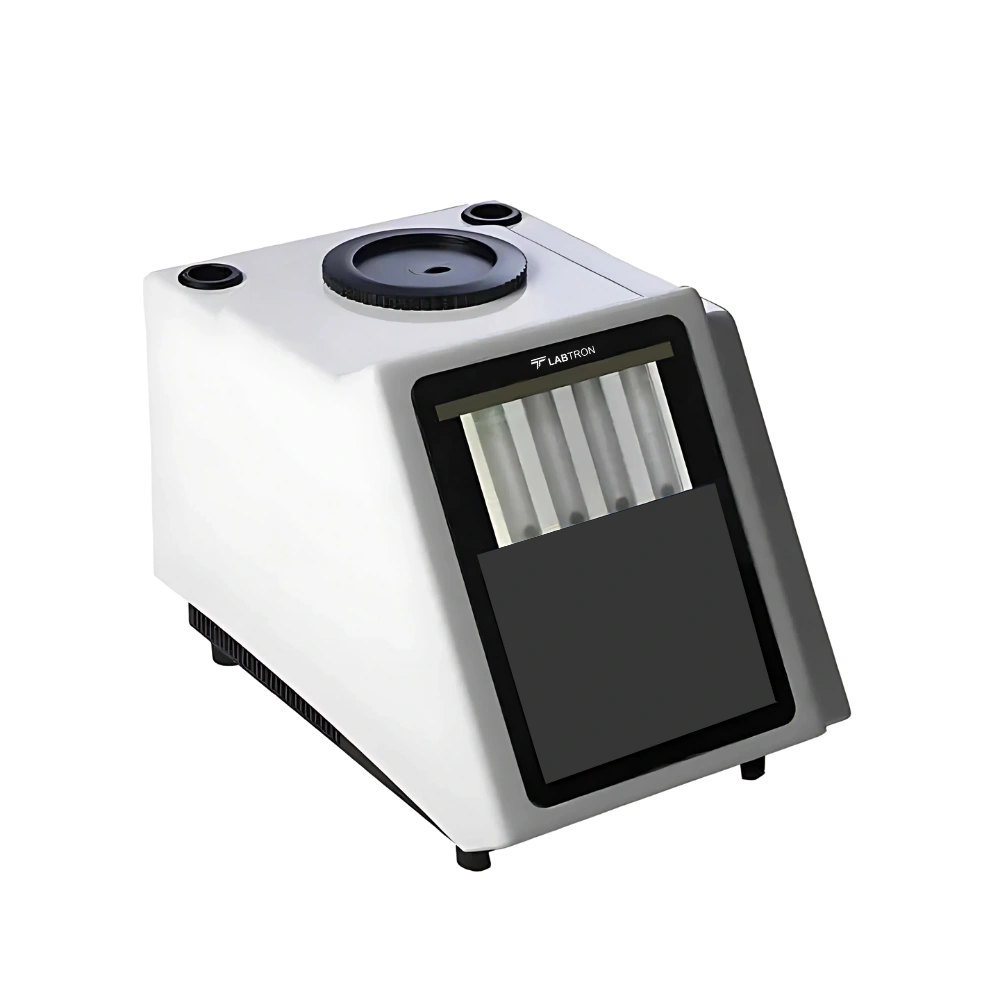

Labtron’s melting point apparatus LDMP-A22 use PID (Proportional Integral Derivative) control, which constantly adjusts heating based on the difference between target and actual temperature. This keeps temperature steady without overshooting or lag. It means your sample warms up smoothly, so you see sharper melting transitions and more reproducible results. PID control also adapts over time, tuning itself for different heating rates or sample masses. Compared to simple on/off heaters, PID gives you tighter accuracy and saves time by avoiding trial-and-error adjustments.
Labtron supplies premium melting point apparatus LDMP-A22. Accurate melting point measurements depend on how the sample is both heated and cooled. Automatic cooling systems-like built-in fans or Peltier modules-bring the apparatus back down to starting temperature quickly and evenly. That way, each new sample starts from the same baseline. Rapid, controlled cooling also preserves the calibration of the heating block by preventing overheating. In contrast, slow or uneven cooling could cause drift, unpredictable heating behavior, and inconsistent results over time.
Labtron supplies premium melting point apparatus LDMP-A22. Overheat protection automatically shuts off the heater if the temperature climbs beyond a safe threshold. This prevents damage to internal parts like thermocouples, heaters, and insulation. It also raises a warning alert to the user. This safety feature is crucial if a sample dries, the block is empty, or there's a malfunction. By avoiding uncontrolled heating, it reduces fire risk and extends the lifespan of your instrument by preventing thermal stress and component failure.
Labtron’s High-end melting point apparatus LDMP-A22 often include onboard data logging—typically with internal storage like 16?GB-to record complete melting profiles. This lets you track not only start and end points, but also the rate of temperature rise, plateau behavior, and any anomalies during heating. Logged data can be exported via USB or Wi Fi to lab software, making it easy to include melting curves in reports or regulatory documentation. Complete traceability also supports audits and quality control, showing exactly how each measurement was conducted.
Regular calibration is essential for accurate results. You should perform a full calibration-using certified standards like benzoic acid or naphthalene-at least once per year, or whenever the unit has been moved or serviced. In between, verify performance monthly or weekly using one-point checks on a known standard. Always record calibration dates and outcomes. Keeping up with this schedule ensures your instrument stays within specification and your data remains reliable—especially important for regulated work or published research.
Post your question?
Our experts are here to help!
Labtron Equipment Ltd., Quatro House, Lyon Way, Camberley, Surrey GU16 7ER United Kingdom
Email: info@labtron.com Whatsapp: +44 73 4441 2688 Phone: +44 2080 043608