 info@labtron.com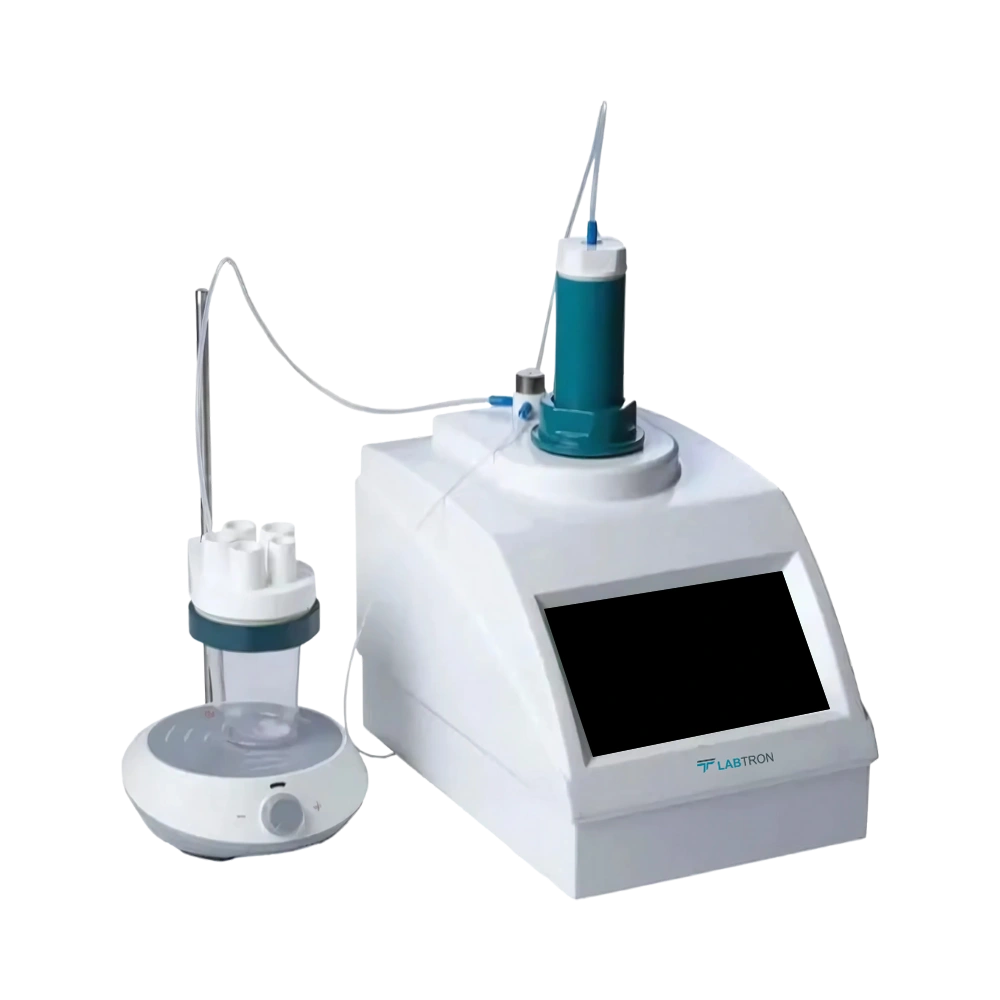

| Measuring Range | ±1,999 mV, 0.00 to14.00 pH |
| Measuring Resolution | 0.1 mV, 0.01 pH |
| Titration Volume Accuracy | 0.01ml |
| Titration Tube Infusion / Rehydration Speed | 10 sec |
| Titration Tube Resolution | 1/20000 |
| Temperature Range | 0 to 80℃ |
| Temperature Resolution | 0.1 ℃ |
| Possible Error | ±0.2 ℃ |
| Titration Cup Capacity | 250 ml |
| Temperature Compensation | Optional |
| 15 mL Burette Capacity Tolerance | ±0.025 ml |
| 25 mL Burette Capacity Tolerance | ±0.035 ml |
| Titration Mode | Acid-base titration, redox titration precipitation, complexation, non-water titration. |
| Micro detection of Electrodes | Domestic brand |
| Microinjection Pump | Domestic brand |
| Repeatability of the Titration Analysis | 0.2% |
| Largest Possible Error | 0.2 mV, 0.02 pH |
| For Mixing Sample | Equipped |
| Method of Stirring | Magnetic Stir |
| Video Display | 7-inch Touch-color TFT display |
| Power Supply | 110 to240V / 60Hz |
| Weight | 8 kg |
High-Power Mixing Table
PTFE Corrosion Resistance Burette
LCD Touch Interface
Automatic Pipeline Cleaning
Closed-Loop Control
Automatic Potentiometric Titrator LPTT-B11 is a laboratory instrument that automatically dispenses titrant. It is widely utilized in disease control, marine science, textile industry, petrochemical and environmental testing for monitoring water disinfection parameter.
Accessories Name | Quantity |
mV/ pH measurement electrode interface | 1 pc |
Reference Electrode Interface | 1 pc |
PT1000 Temperature Electrode Interface | 1 pc |
Host USB Interface | 1 pc |
Stirrer Interface | 1 pc |
Power Interface | 1 pc |
Printer Interface | 1 pc |
Download catalog for
Automatic Potentiometric Titrator LPTT-B11 Catalog
Available Range :
Automatic Potentiometric Titrator LPTT-A16 : -2000.0 to +2000.0 mV,Labtron Automatic Potentiometric Titrator are designed for precise potential measurement in the range of -1800.0 mV to +2000.0 mV. They ensure rapid filling and accurate burette volume control for efficient operation. Their linear motor transmission offers precise and controlled titrant delivery. They facilitate the storage of numerous titration results and allow easy customizations. Our table-top Automatic Potentiometric Titrator provide high-precision and cost-effective analysis in less time.


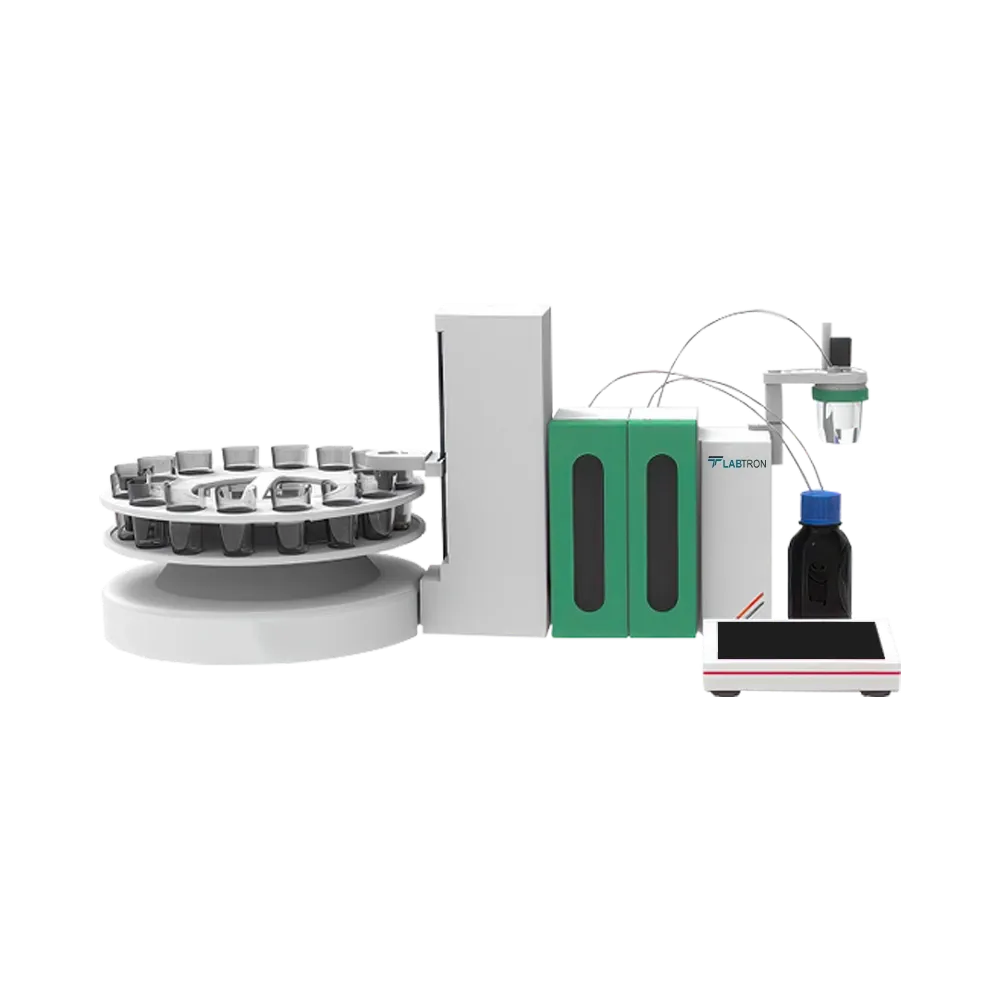


Labtron’s automatic potentiometric titrator LPTT-B11 ensures compliance with regulations like GLP, GMP, and 21 CFR due to its traceable and reproducible performance. It automates data logging, user authentication, and audit trail creation. The instrument supports secure method validation and electronic signatures. In pharmaceutical, food, and environmental testing industries, accuracy and documentation are critical. The automatic potentiometric titrator simplifies method standardization across labs, ensuring uniformity. Its integration with quality control systems reduces manual data entry errors. Routine calibration and system suitability checks ensure regulatory compliance. The automated and validated process builds trust in analytical results.
. Labtron’s Automatic potentiometric titrators LPTT- B11 routinely perform a baseline drift check by recording the potential over a set period before titration and applying software-based auto-zero adjustments to the signal. The instruments use internal algorithms to interpolate any slow potential drift and subtract it from the titration curve in real time. Prior to each run, an initial calibration step against a standard buffer or reference solution is executed to reset the baseline. Many systems also recommend conditioning the electrode in a mid-range buffer (e.g., pH 7.00) for 20–30 minutes between analyses to improve repeatability. Additionally, advanced models incorporate an agitation check to confirm stable mixing, which minimizes potential fluctuations due to sample inhomogeneity. Periodic automated cleaning cycles help remove buildup on the glass membrane or junction, preventing long-term drift. Users can view real-time drift data graphically to assess performance before critical measurements. Comprehensive GLP documentation captures all drift corrections for audit trails
Labtron’s automatic potentiometric titrator LPTT-B11operates by measuring the electrical potential (mV) between a reference and an indicator electrode as titrant is added to a solution. This method eliminates visual endpoint detection and instead relies on detecting inflection points in voltage. The automatic potentiometric titrator conducts real-time analysis and automatically determines the titration endpoint with high precision. It uses advanced algorithms to interpret titration curves and deliver accurate results. Ideal for redox, acid-base, precipitation, and complexometric titrations, this instrument enhances repeatability and consistency. It ensures operator-independent performance, minimizing human error. The system is widely used in pharmaceuticals, chemicals, food, and environmental testing labs
. Labtron’s automatic potentiometric titrator LPTT-B11 improves accuracy by automating titrant addition, electrode potential measurement, and endpoint detection. Unlike manual titrations, it eliminates parallax errors and subjective color change judgments. This automation ensures that each titration is carried out with identical parameters, improving repeatability. Sophisticated microprocessors in the automatic potentiometric titrator analyze titration curves and calculate exact concentrations. Temperature compensation and calibration protocols further ensure analytical precision. The closed system prevents contamination and minimizes sample exposure. Built-in data logging also allows traceability and validation of results. This makes it suitable for critical applications requiring stringent quality control.
Regular maintenance and calibration are crucial for the optimal performance of automatic potentiometric titrators LPTT-B11. Electrodes should be cleaned, stored properly, and calibrated using standard solutions to maintain accuracy. The burette and dosing system require periodic checks for leaks or blockages, ensuring precise titrant delivery. Software updates and system diagnostics help identify and rectify potential issues promptly. Routine calibration using certified reference materials validates the instrument's accuracy. Environmental factors, such as temperature and humidity, should be monitored, as they can affect measurements. Documentation of maintenance and calibration activities supports compliance with quality assurance protocols. Adhering to a regular maintenance schedule prolongs the instrument's lifespan and ensures consistent analytical results.
Post your question?
Our experts are here to help!
Labtron Equipment Ltd., Quatro House, Lyon Way, Camberley, Surrey GU16 7ER United Kingdom
Email: info@labtron.com Whatsapp: +44 73 4441 2688 Phone: +44 2080 043608