 info@labtron.com

| Temperature Range | Ambient to 100℃ |
| Temperature Accuracy | ±0.01℃ |
| Sample Capacity | 4 |
| Bath Construction | Φ300×300mm glass vessel enclosed in Acrylic housing |
| Bath Volume | 18L |
| Motor-stirrer | Stirrer motor 40W, impeller Φ50mm, stirring speed: 1250rpm |
| Included Pinkevitch Viscometers | 8 different sizes Pinkevitch viscometers conforming to ASTM D446, ISO 3105, GB/T 30514, and SH/T 0173 |
| Heating Power | 1600W |
| Operating Conditions | 5 to 35°C, 35%-95% relative humidity |
| Power Supply | 220V±10%, 50Hz±1Hz |
| Dimensions (W × D × H) | 580mm × 400mm × 482mm |
| Weight | 15Kg |
Our Kinematic Viscometer LKV-A20 measures fluid viscosity in petrochemicals, pharmaceuticals, food and beverages, cosmetics, lubricants, and paints. It ensures quality control, and optimal performance in diverse applications.
Download catalog for
Kinematic Viscometer LKV-A20 Catalog
Available Range :
Kinematic Viscometer LKV-A17 : -60℃ to 140℃ Low Temperature Kinematic Viscosity Tester LKV-A14 : -65 ℃ to Room Temperature Automated Kinematic Viscometer LKV-A18 : 20℃ to 100℃ (external chiller required for ambient temperatures; high-temperature option up to 150°C available) Automated Kinematic Viscometer LKV-A19 : 20℃ to 100℃ (for temperatures around ambient, an external chiller is required) Kinematic Viscometer LKV-A22 : Ambient temperature to 200℃ (Immersion cooler required for temperatures below room temperature) Kinematic Viscometer LKV-A10 : Ambient to 100°C Kinematic Viscometer LKV-A20 : Ambient to 100℃ Kinematic Viscometer LKV-A21 : Room temperature to 110°CLabtron Kinematic Viscometer is specialized to measure dynamic viscosity to fluid density, providing insight into flow behavior under gravity. Their design includes calibrated capillary tube for accurate liquid movement measurement. They feature digital readouts for quick and clear visibility of viscosity results during testing. Their motorized system ensures smooth and uniform rotation for reliable viscosity results. Our Kinematic Viscometer is suitable for crude and refine oil, food and beverages and for pharmaceuticals.


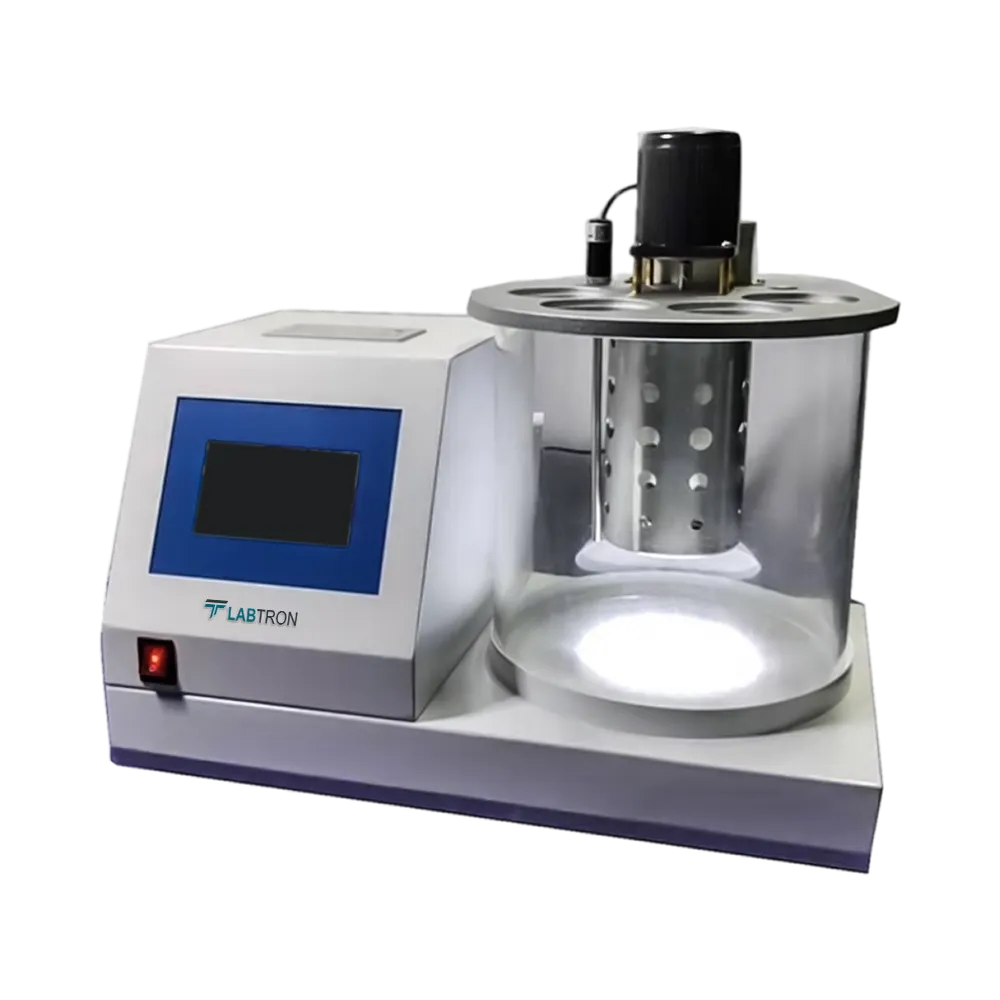


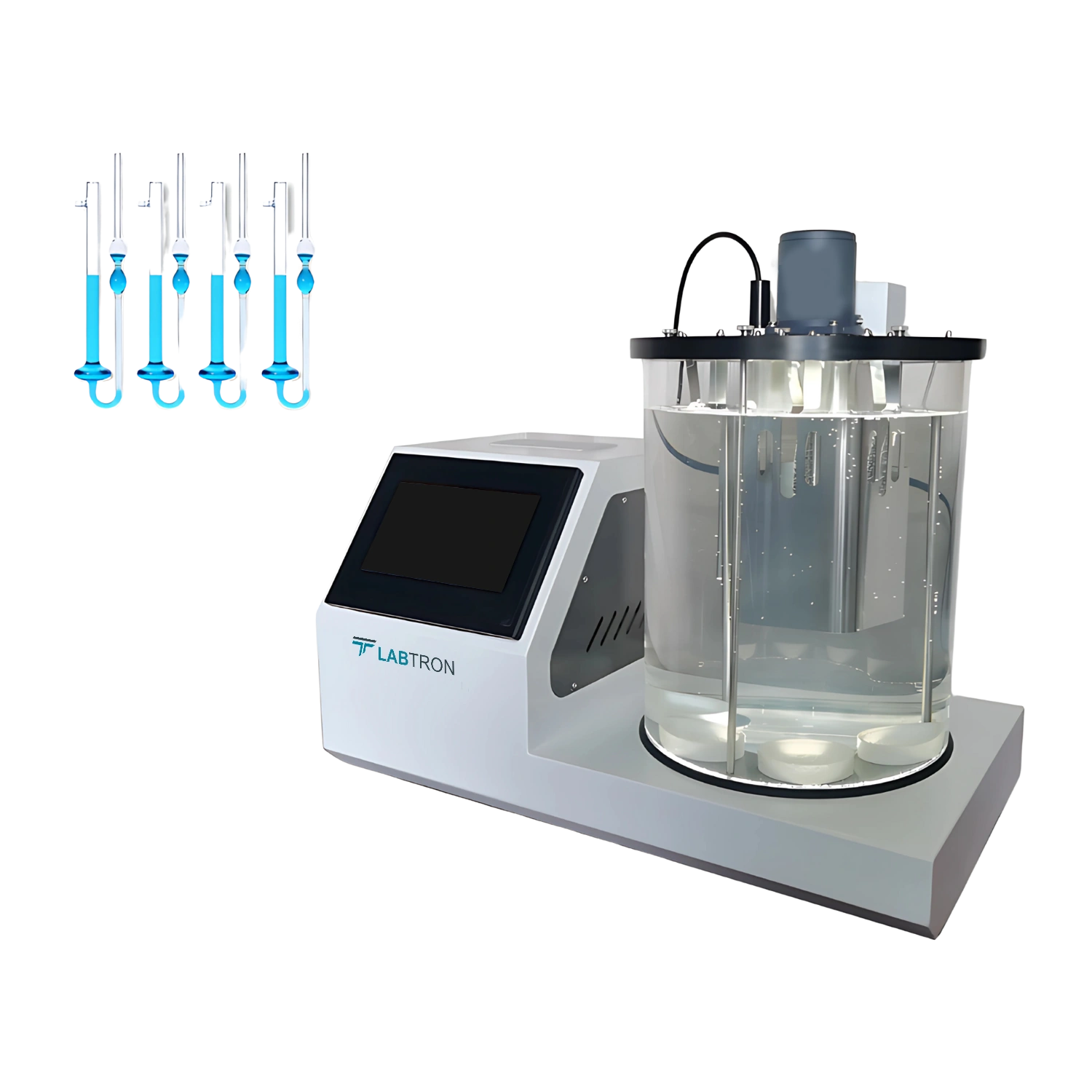


Labtron’s Kinematic Viscometer LKV-A20 is designed to measure kinematic viscosity, which shows how a fluid flows under gravity. Kinematic viscosity is given in centistokes (cSt), while dynamic viscosity, measured in centipoise (cP), shows how a fluid resists flow when force is applied. It is best for fluids that flow on their own through a capillary tube, like oils and fuels. Dynamic viscosity can be found by multiplying kinematic viscosity by the fluid’s density. Our device is widely used in oil and fuel labs because these industries often prefer kinematic viscosity testing.
The Kinematic Viscometer LKV-A20 requires proper sample preparation to get accurate viscosity readings. The sample should not have bubbles, solid particles, or moisture, as these can affect how the liquid flows through the viscometer tube. It works best when the sample is pre-filtered and brought to room temperature before placing it in the bath. Use clean and dry pipettes or syringes to fill the tubes to avoid contamination. Our recommendation is to always use the same amount of sample and follow the same steps every time to get repeatable and accurate results.
Our Kinematic Viscometer LKV-A20 uses separate viscometer tubes for each sample, which helps avoid cross-contamination. The open bath design of the viscometer makes it easy to place and remove the tubes without them touching each other. The clear bath allows users to see if there are air bubbles, dirt, or leftover fluids before starting the test. It is important to follow regular cleaning steps, flush with proper solvents, and use specific tubes for each type of sample. For important tests, our advice is to use separate tubes for each sample to avoid mixing results.
Labtron’s Kinematic Viscometer LKV-A20 uses Pinkevitch viscometer tubes that must be cleaned immediately after each use to maintain measurement accuracy. A suitable solvent such as acetone, hexane, or a lab-approved cleaning agent should be flushed through the tubes using a vacuum system or pressure bulb. It benefits from proper drying using warm, filtered air or by air-drying in a dust-free cabinet. Periodic inspection is essential to detect internal residue, scratches, or any physical damage that may impact test results. Our system requires users to avoid abrasive tools or brushes, as these can damage the precision interior surface of the tubes.
The Kinematic Viscometer LKV-A20 may show inconsistent results due to temperature instability, improper tube cleaning, incorrect sample handling, or damaged equipment. First, confirm that the bath temperature remains stable and accurate within ±0.01°C throughout the test. It relies heavily on clean and dry Pinkevitch tubes any residual moisture or contamination can alter flow times significantly. Ensure tubes are free from scratches and air bubbles and that they are properly aligned within the bath. To reduce user error, our recommendation is that operators follow a consistent timing and observation method, and replace any visibly worn or damaged viscometers.
Post your question?
Our experts are here to help!
Labtron Equipment Ltd., Quatro House, Lyon Way, Camberley, Surrey GU16 7ER United Kingdom
Email: info@labtron.com Whatsapp: +44 73 4441 2688 Phone: +44 2080 043608