 info@labtron.com


| Maximum Measuring Range | 1KN |
| Control Method | Full computer control mode, powerful software |
| Unit of Force | N, kN, gf, kgf, lbf, kP, tf(SI), tf (long)... |
| Unit of Length | Mm, cm, Inch, m, km, um.. |
| Force Resolution | 1/1,000,000 |
| Accuracy | ±0.1% |
| Stroke Resolution | 1/1,000,000mm |
| Effective Stroke | 450mm |
| Speed Range | 0.01~500mm/min; (Customizable) |
| Test Space | Diameter Φ115mm |
| Shutdown Mode | Overload stop, emergency stop key, automatic stop for test piece destruction, automatic stop for upper and lower limit setting |
| Machine Power | Servo motor drive |
| Dimensions | 40 × 37 × 95cm |
| Machine Net Weight | 28KG |
| Power | 100W |
| Power Supply | 220V 50~60HZ |
| Machine Accessories | 1 USB communication cable, 1 software |
| Optional Accessories | Tensile jig, compression jig, etc.; (according to different test standards to buy different jigs) |
Large scalability
Computer connection compatible
Flexible Data output unit
Highly efficient
User-friendly
Our Vertical Tensile Tester LVTT-C10 is built for the ability to test the tensile strength of various materials like metal, rubber, plastic, leather, paper, composite materials, etc. Our tensile tester mainly measures the tensile, compression, adhesion, peeling, tearing, etc.
Download catalog for
Vertical Tensile Tester LVTT-C10 Catalog
Labtron Paper Testing Instruments requires air supply for automatic clamping, ensuring smooth and secure operation. These provide real-time pressure curve displays, allowing users to monitor pressure changes instantly. Their over-range reset function protects the sensor by automatically adjusting it in case of excessive readings. They measure ink absorption values, useful for quality control in printing processes. Our paper testing instruments measure WH Hunter whiteness, YI yellowness, and CIE whiteness for precise color and whiteness evaluations for various applications.


.webp "Mullen Burst Tester LMBT-A11")


.webp "Standard strip cutter TP-G10")
.webp "Paper and cardboard thickness meter TP-E20")
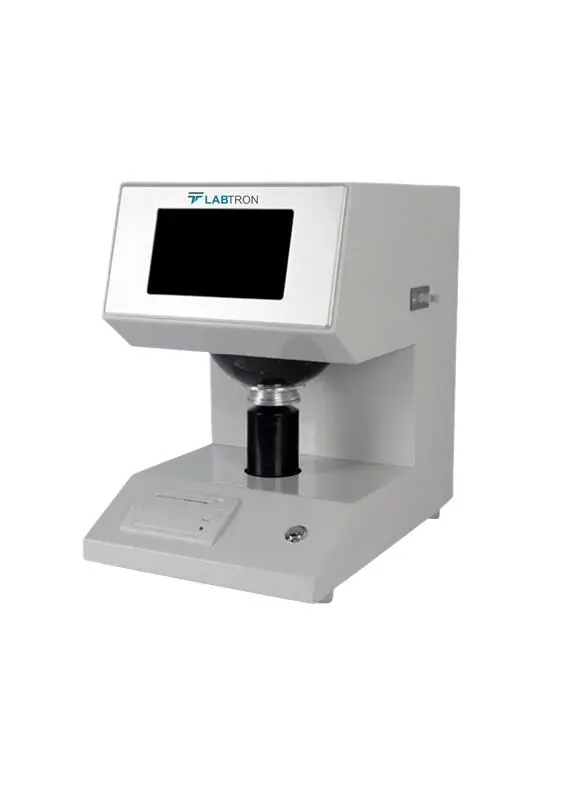
The maximum load capacity of a Vertical Tensile Tester varies by model, but typically ranges between 500 N to 50 kN. It’s essential to confirm the capacity before testing, as exceeding the load limit can damage the machine or result in inaccurate readings. Always refer to the machine’s user manual or nameplate for exact load specifications. For testing higher loads, choose a model specifically designed for such capacities.
The tester should be calibrated at least once a year or after 1,000 test cycles, whichever comes first. However, if it is used in critical quality control applications, more frequent calibrations may be necessary. Calibration ensures measurement accuracy and compliance with testing standards such as ASTM or ISO. Use certified weights and follow procedures provided in the user manual or contact the manufacturer’s authorized service team for calibration support.
Yes, many Vertical Tensile Testers are dual-purpose and can perform both tensile and compression tests with appropriate fixtures. However, you need to confirm the compatibility with your model. Some testers are designed exclusively for tensile testing and may require optional accessories or software upgrades for compression testing. Ensure the machine's load cell and grip system support both modes before proceeding.
Vertical Tensile Testers are versatile and can test a wide range of materials including plastics, textiles, rubber, paper, films, wires, and metal foils. The key is to select the appropriate grips and settings for each material type to prevent slippage or sample damage. For rigid or brittle materials, special fixtures may be required. Refer to the manufacturer’s recommendations for material-specific testing guidelines.
The force measurement accuracy of a standard Vertical Tensile Tester is typically ±0.5% of the reading or better. Some high-precision models may offer ± 0.2% accuracy. Accuracy is influenced by proper calibration, load cell condition, and environmental factors like temperature and humidity. For critical measurements, always verify that the tester is calibrated and that the specimen is aligned properly before testing.
Post your question?
Our experts are here to help!
Labtron Equipment Ltd., Quatro House, Lyon Way, Camberley, Surrey GU16 7ER United Kingdom
Email: info@labtron.com Whatsapp: +44 73 4441 2688 Phone: +44 2080 043608