info@labtron.com

| Glass Plate Dimensions | 216 × 110 mm |
| Gel Dimensions | 186 × 95 mm |
| Gel Thickness | 1.0 mm |
| Number of Gels | 1 to 2 pcs |
| Maximum Buffer Volume | 1800 ml |
| Sample Throughput | 25 to 104 |
| Dimension (L × W × H) | 290 × 170 × 155 mm |
| Weight | 4.1 kg |
Auto Lid Switch-Off
Stable pH with Cooling
Safe Lid Button Design
Multi-Gel Modular Design
Quick Glass Plate Installation
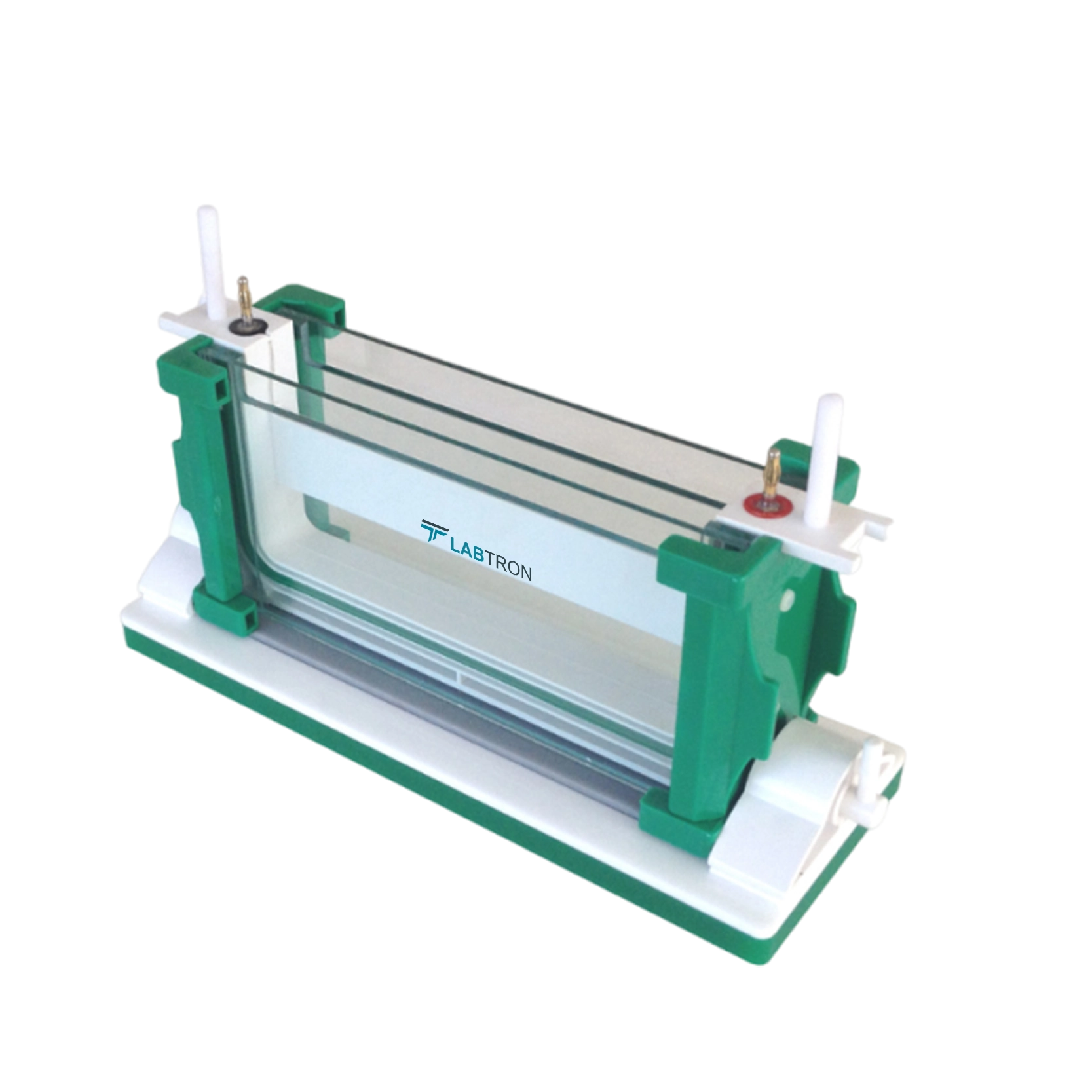
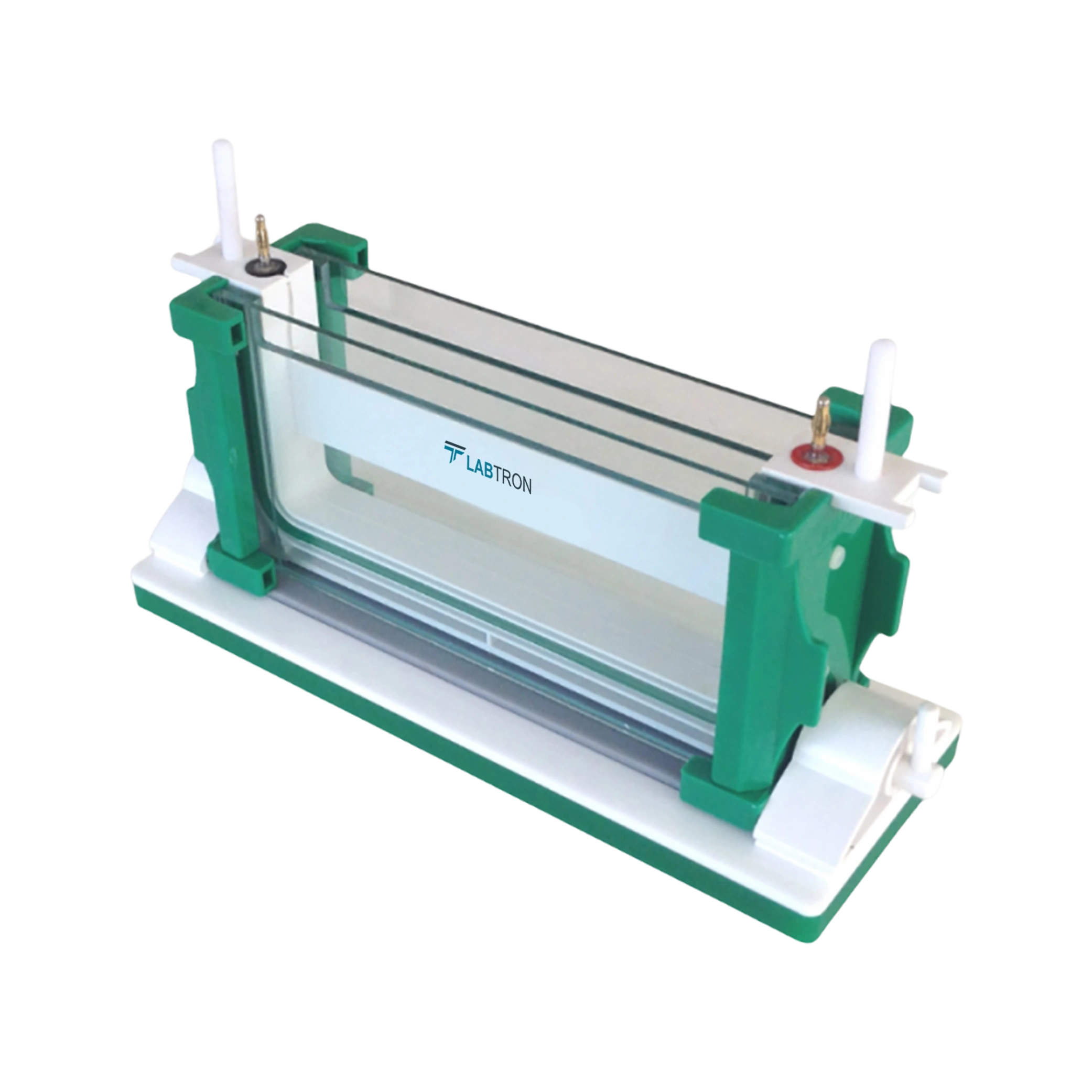
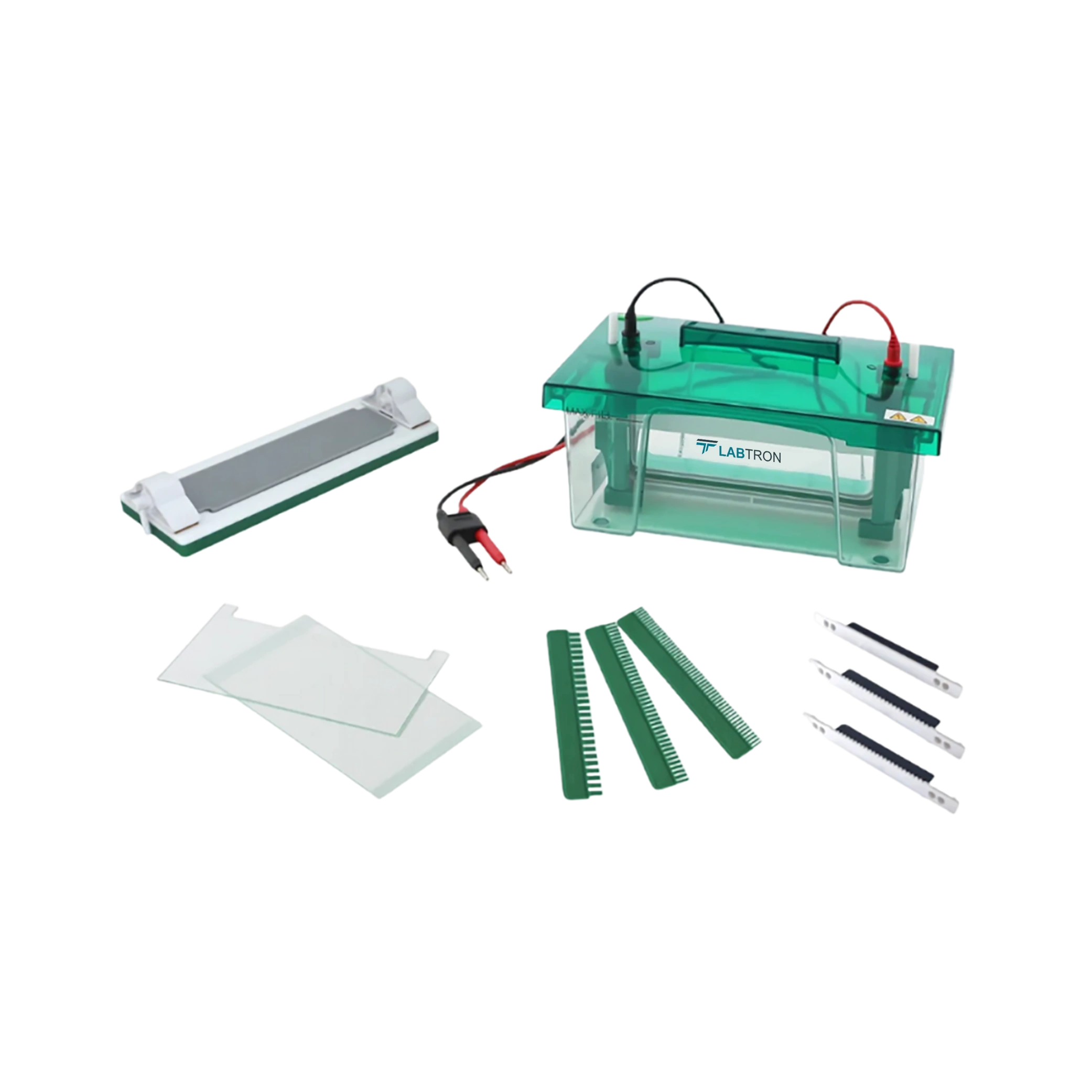
Vertical Electrophoresis System LVES-B10 is used to separate proteins or nucleic acids based on their size and charge through a vertical gel matrix. It is used in molecular biology, and clinical research for protein analysis, DNA/RNA separation, and genetic studies.
Download catalog for
Vertical Electrophoresis System LVES-B10 Catalog
Labtron Vertical Electrophoresis System integrates advanced cooling system for optimal separation of large number of samples. Their buffer tanks maintain pH and conductivity essential for efficient procedure. They feature combs that create wells for sample loading in gel matrix. Their temperature control mechanisms prevent overheating during prolonged runs. Our Vertical Electrophoresis System is preferred for protein separation, western blotting and genetic fingerprinting.

.webp "Vertical Electrophoresis System LVES-A10")


The key difference lies in the gel orientation and separation applications. Labtron’s Vertical Electrophoresis System is commonly used for polyacrylamide gels, ideal for protein separation in applications like SDS-PAGE and Western blotting, whereas horizontal systems use agarose gels primarily for DNA and RNA separation. In a vertical system, the gel is sandwiched between two glass plates and placed vertically, offering better resolution for protein samples.
Labtron’s Vertical Electrophoresis System supports polyacrylamide gels (PAGE) for separating proteins and other biomolecules and native gels for studying protein complexes and nucleic acids. Both hand-cast and commercially available pre-cast gels can be used with Labtron’s system, allowing flexibility in experimental protocols. Hand-cast gels allow users to customize the gel composition and thickness, whereas pre-cast gels provide convenience and consistency.
Labtron’s Vertical Electrophoresis System is highly versatile and can handle multiple sample configurations in a single run, typically supporting 10 to 15 wells per gel, depending on the comb size and format. Labtron’s dual-gel compatibility allows for simultaneous processing of two gels, doubling throughput without compromising performance. This feature is especially useful for high-throughput research applications where multiple samples need to be analyzed concurrently.
Labtron recommends using Tris-Glycine, Tris-Tricine, and Bis-Tris buffer systems based on the specific application. Tris-Glycine buffers are commonly used for SDS-PAGE and native PAGE, while Tris-Tricine buffers are suitable for the separation of low molecular weight proteins. Bis-Tris buffers offer superior separation of proteins with narrow molecular weight ranges. Labtron provides detailed buffer preparation protocols to ensure consistent ion strength and pH, which are essential for achieving reproducible and high-resolution results in electrophoresis runs.
Temperature control is critical for preventing overheating and distortion of the gel. Labtron’s Vertical Electrophoresis System is equipped with effective heat dissipation mechanisms, including a heat-resistant design and a cooling system that maintains stable running temperatures. For high-voltage or extended runs, Labtron recommends using an external cooling system or an ice bath to regulate the buffer temperature and prevent the gel from overheating. This ensures that samples migrate consistently, maintaining the integrity of the separation process.
Labtron’s Vertical Electrophoresis System is equipped with leak-proof gel cassettes and buffer chambers that prevent leakage during electrophoresis runs. The system features a robust sealing mechanism with durable gaskets and clamping plates that maintain a tight seal throughout the process. This design helps maintain buffer consistency, minimizes ion depletion, and ensures optimal gel performance, reducing variability in results.
Yes, Labtron’s Vertical Electrophoresis System is fully compatible with Western blot transfer protocols. After electrophoresis, proteins can be transferred onto nitrocellulose or PVDF membranes using Labtron’s compatible blotting systems. Labtron ensures efficient and uniform transfer, preserving protein integrity for downstream immunodetection and analysis. The system’s design supports both wet and semi-dry transfer methods, allowing researchers to choose the most suitable protocol for their application.
Post your question?
Our experts are here to help!
Labtron Equipment Ltd., Quatro House, Lyon Way, Camberley, Surrey GU16 7ER United Kingdom
Email: info@labtron.com Whatsapp: +44 73 4441 2688 Phone: +44 2080 043608