info@labtron.com

| Glass Plate Dimensions | 101 × 82 mm |
| Gel Dimensions | 81 × 73 mm |
| Gel Thickness | 1.0 mm |
| Number of Gels | 1 to 4 pcs |
| Maximum Buffer Volume | 1200 ml |
| Sample Throughput | 11 to 16 |
| Dimension (L × W × H) | 175 × 175 × 100 mm |
| Net Weight | 2.5 kg |
| Gross weight | 3.9 kg |
Error-Free Electrode Connection
Time-Saving Gel Setup
Minimal Heat Generation
Flexible Gel Size Options
Smooth Lid Removal Mechanism
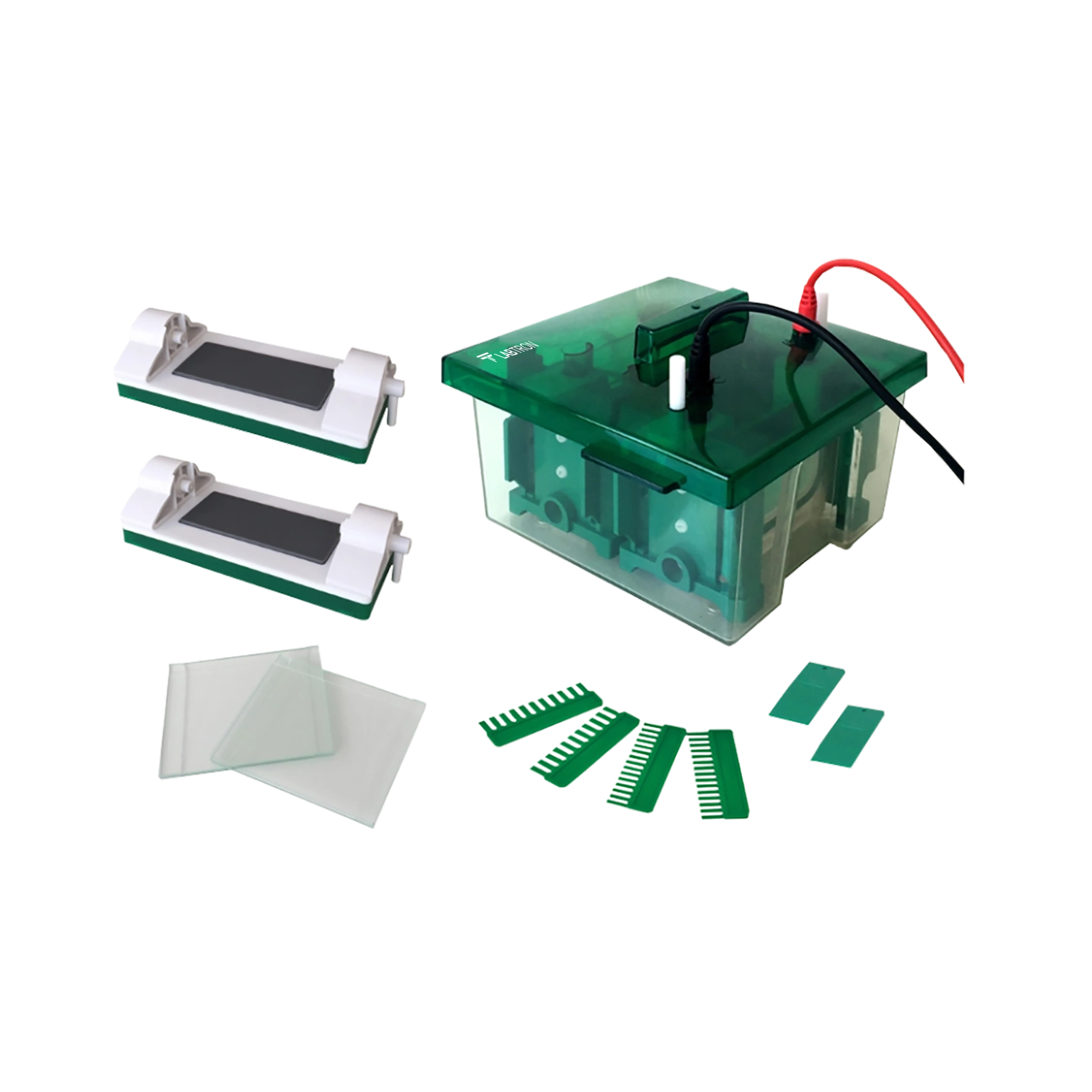
Vertical Electrophoresis System LVES-B15 is used to separate proteins or nucleic acids based on their size and charge through a vertical gel matrix. It is used in molecular biology, and clinical research for protein analysis, DNA/RNA separation, and genetic studies.
Download catalog for
Vertical Electrophoresis System LVES-B15 Catalog
Labtron Vertical Electrophoresis System integrates advanced cooling system for optimal separation of large number of samples. Their buffer tanks maintain pH and conductivity essential for efficient procedure. They feature combs that create wells for sample loading in gel matrix. Their temperature control mechanisms prevent overheating during prolonged runs. Our Vertical Electrophoresis System is preferred for protein separation, western blotting and genetic fingerprinting.


Yes, Labtron’s Vertical Electrophoresis System is compatible with various buffer systems, including Tris-Glycine, Tris-Tricine, and MOPS-SDS buffers, depending on the type of electrophoresis being performed. The system allows flexibility in choosing the appropriate buffer to achieve optimal separation of proteins or nucleic acids. Labtron provides detailed protocols and recommendations for buffer preparation, ensuring that users can select the right buffer system for their specific applications without compromising the quality of the results.
Yes, Labtron’s Vertical Electrophoresis System is designed to be compatible with both self-cast and pre-cast gels, offering researchers greater flexibility based on their experimental needs. Pre-cast gels save time and provide consistent polymerization, making them ideal for routine applications. Labtron provides detailed instructions on properly aligning and loading pre-cast gels to ensure they fit securely within the system’s plate holders, preventing leakage and ensuring smooth migration of samples.
When running samples containing hazardous materials, it is crucial to follow proper cleaning and disinfection protocols. Labtron recommends thoroughly rinsing the system with deionized water to remove residual buffer and gel particles. For disinfection, a mild detergent or ethanol solution can be used to clean the electrodes, gel plates, and spacers. Labtron advises against using harsh chemicals that could damage the components and provides comprehensive guidelines for ensuring that the system remains contamination-free and operational.
Yes, Labtron’s Vertical Electrophoresis System allows the use of custom combs and well configurations to meet specific experimental requirements. Researchers can order combs with varying well numbers and sizes to match their sample volume and resolution needs. Labtron’s system ensures that custom combs align perfectly with the gel plates, preventing leakage and ensuring uniform well formation. Guidelines on ordering and integrating custom combs are provided by Labtron for seamless compatibility.
Labtron’s Vertical Electrophoresis System is designed to handle high sample loads without compromising performance. Depending on the gel size and comb configuration, the system can process multiple samples simultaneously. Labtron’s power supply supports consistent voltage and current delivery, ensuring stable operation even when running high-density gels. The system is equipped with overload protection, preventing electrical surges that could affect sample migration or damage the system.
Yes, Labtron’s Vertical Electrophoresis System is equipped with transparent and UV-compatible gel plates, allowing researchers to monitor the progression of bands in real time. For applications requiring continuous observation, Labtron offers optional visualization systems that can be integrated with the electrophoresis unit. This feature allows researchers to track migration and stop the run at the optimal point, ensuring accurate and reproducible results.
The ionic strength of the buffer used in Labtron’s Vertical Electrophoresis System directly affects the resolution and speed of electrophoresis. Low ionic strength can lead to poor conductivity and slower migration, while high ionic strength may cause excessive heat buildup and distort results. Labtron provides buffer preparation guidelines to ensure that the ionic strength is maintained within the recommended range for optimal performance, preventing overheating and ensuring consistent sample separation.
Post your question?
Our experts are here to help!
Labtron Equipment Ltd., Quatro House, Lyon Way, Camberley, Surrey GU16 7ER United Kingdom
Email: info@labtron.com Whatsapp: +44 73 4441 2688 Phone: +44 2080 043608