info@labtron.com

| Glass Plate Dimensions | 100 × 100 mm |
| Gel Dimensions | 82 × 88 mm |
| Gel Thickness | 0.75 mm, 1.0 mm, 1.5 mm |
| Number of Gels | 1 to 2 pcs |
| Maximum Buffer Volume | 750 ml |
| Sample Throughput | 11 to 30 |
| Dimension (L × W × H) | 150 × 120 × 115 mm |
| Weight | 1.5 kg |
Precise Voltage Control
Stable Gel Migration
Seamless Lid Locking
Compact Laboratory Footprint
Easy Post-Run Cleanup
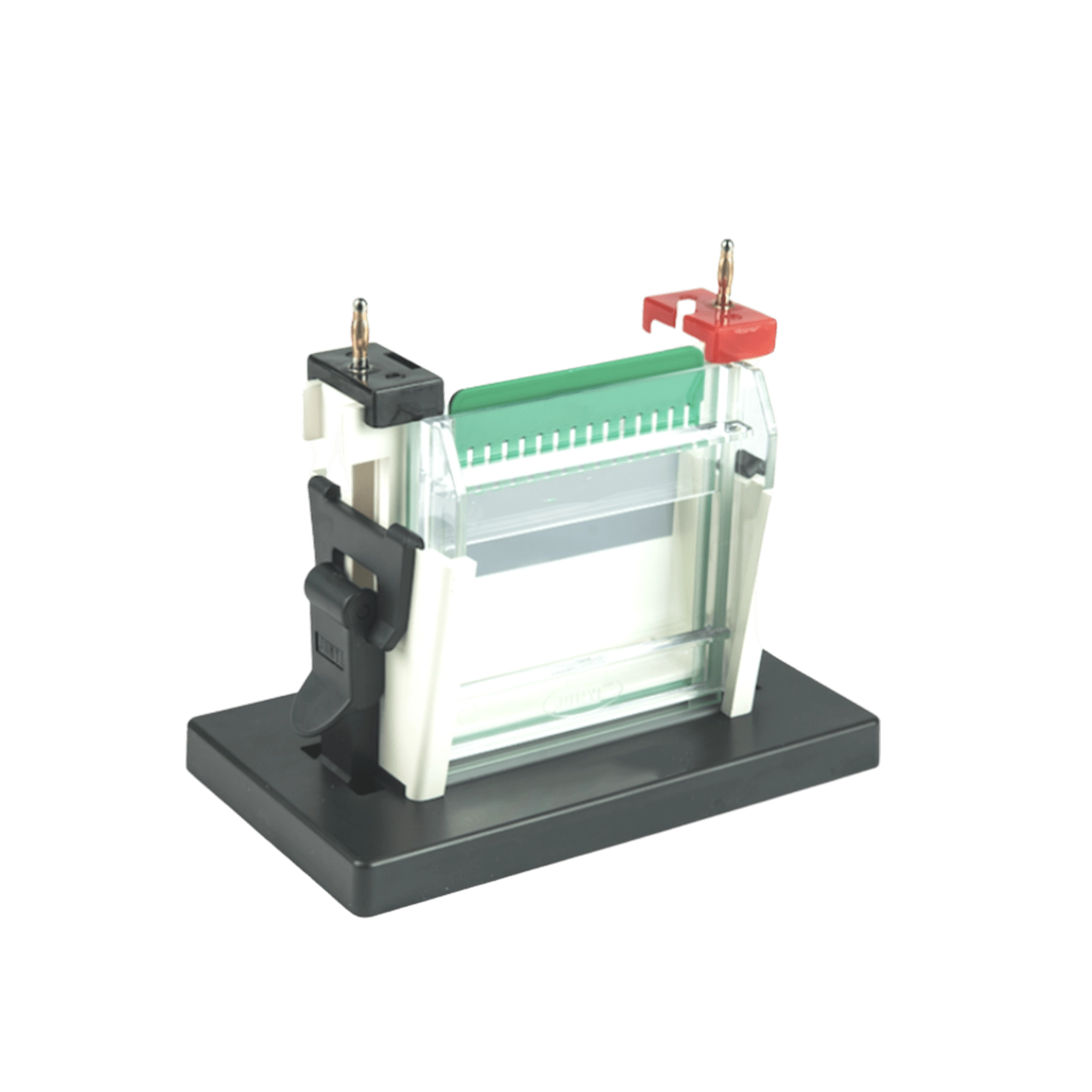
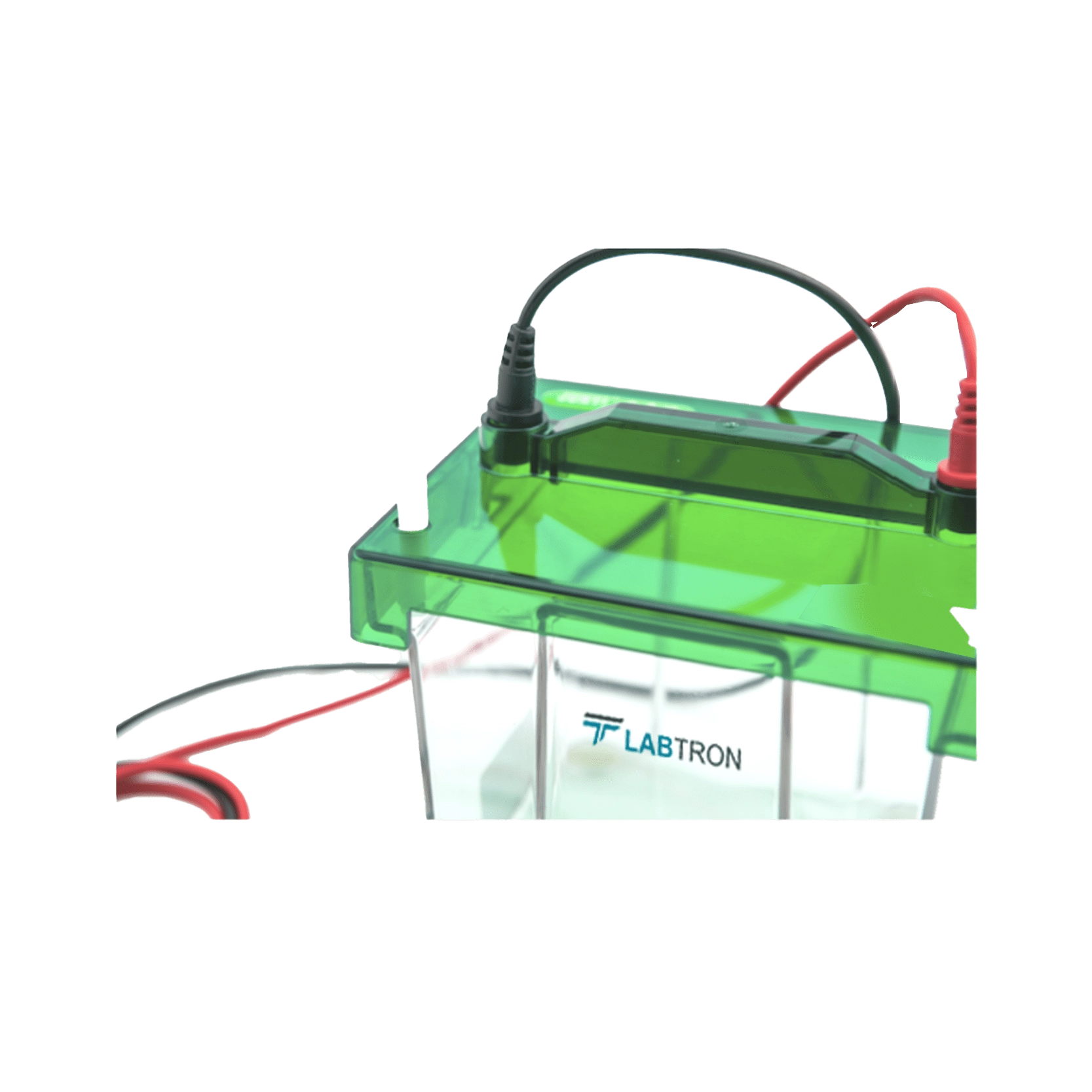
Vertical Electrophoresis System LVES-B17 is used to separate proteins or nucleic acids based on their size and charge through a vertical gel matrix. It is used in molecular biology, and clinical research for protein analysis, DNA/RNA separation, and genetic studies.
Download catalog for
Vertical Electrophoresis System LVES-B17 Catalog
Labtron Vertical Electrophoresis System integrates advanced cooling system for optimal separation of large number of samples. Their buffer tanks maintain pH and conductivity essential for efficient procedure. They feature combs that create wells for sample loading in gel matrix. Their temperature control mechanisms prevent overheating during prolonged runs. Our Vertical Electrophoresis System is preferred for protein separation, western blotting and genetic fingerprinting.


Gel thickness is a critical parameter that directly influences the resolution and separation efficiency in electrophoresis. Thicker gels allow for higher sample capacity but may slow down the migration and reduce band sharpness due to increased resistance. On the other hand, thinner gels provide better resolution by allowing faster migration and sharper band separation but may limit the sample volume that can be loaded. Labtron’s Vertical Electrophoresis System is designed to support multiple gel thickness options, enabling researchers to select the ideal thickness depending on the molecular size and type of analysis.
Yes, the gel plates and combs in Labtron’s Vertical Electrophoresis System are built from high-quality, durable materials that allow for multiple uses with appropriate care. To ensure longevity and consistent performance, Labtron recommends cleaning the plates and combs immediately after each run using mild detergent and deionized water. Any residual buffer, gel fragments, or contaminants should be carefully removed to prevent interference with subsequent runs. Labtron advises against using harsh chemicals that may damage the surfaces and recommends periodically inspecting the plates and combs for cracks or warping.
Yes, gel equilibration is an important step that ensures uniform migration and prevents inconsistencies in separation. Before running the gel, Labtron recommends equilibrating it in the running buffer for at least 15–30 minutes to balance the ionic environment and remove any unpolymerized acrylamide or polymer residues. This process also stabilizes the gel matrix and helps to maintain an even electric field across the gel. Skipping equilibration can lead to uneven band migration and poor resolution. Labtron’s detailed operating manual highlights the importance of proper equilibration procedures to achieve optimal and reproducible results.
Labtron’s Vertical Electrophoresis System includes built-in heat dissipation mechanisms that protect the gel from overheating during prolonged electrophoresis runs. Heat buildup can affect sample integrity, leading to distorted band patterns or smearing. Labtron’s system promotes buffer recirculation to maintain consistent temperature levels. For high-voltage applications or extended runs, Labtron recommends using an external cooling system or reducing the voltage slightly to prevent excessive heat generation.
The buffer volume in Labtron’s Vertical Electrophoresis System should be adjusted according to the gel size to ensure uniform migration and prevent buffer depletion during the run. Larger gels may require a higher buffer volume to maintain consistent ionic strength, while smaller gels can run efficiently with less buffer. Labtron recommends filling the upper and lower reservoirs adequately to ensure that the electrodes remain fully submerged and the electric field remains stable. Insufficient buffer levels can result in uneven migration, while excessive buffer may dilute the ionic strength, impacting resolution. Labtron’s user manual provides buffer volume recommendations tailored for different gel sizes and applications.
Air bubbles trapped in the wells or between the plates can interfere with sample migration and lead to distorted or irregular bands. To minimize bubble formation, Labtron recommends degassing the gel solution before pouring to remove dissolved gases that may cause bubbles during polymerization. Additionally, inserting the combs gently at a slight angle while pouring the gel helps prevent air entrapment. Labtron’s precision-molded combs and plates further reduce the risk of air bubbles by ensuring uniform gel formation. Careful handling and proper preparation techniques ensure smooth sample loading and consistent results.
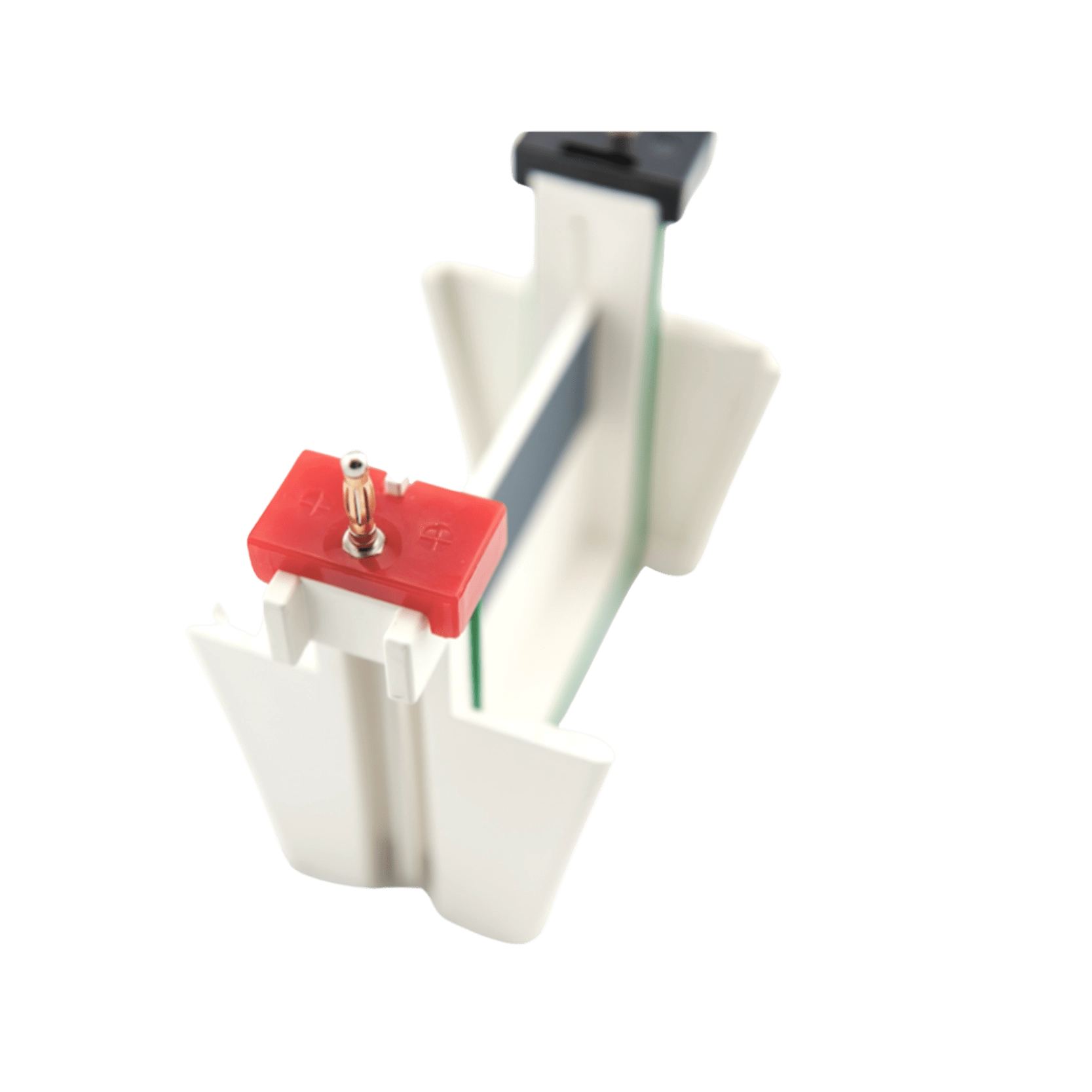
Proper alignment of gel plates is essential to prevent buffer leakage and ensure an even electric field during electrophoresis. Labtron’s Vertical Electrophoresis System features precision-molded spacers and clamps that hold the plates securely in place, preventing misalignment. During assembly, Labtron advises ensuring that the plates are parallel and properly tightened to avoid any gaps that could result in buffer leakage. Misalignment can lead to uneven migration and inconsistent band patterns, but Labtron’s detailed instructions guide users through the correct plate assembly process to achieve optimal results.
Post your question?
Our experts are here to help!
Labtron Equipment Ltd., Quatro House, Lyon Way, Camberley, Surrey GU16 7ER United Kingdom
Email: info@labtron.com Whatsapp: +44 73 4441 2688 Phone: +44 2080 043608