 info@labtron.com

| Measuring Range | ±1,999 mV, 0.00 to14.00 pH |
| Measuring Resolution | 0.1mV, 0.01pH |
| Titration Volume Accuracy | 0.01ml |
| Titration Tube Infusion / Rehydration Speed | 10 sec |
| Titration Tube Resolution | 1/20000 |
| Temperature Range | -5 to -105℃ |
| Temperature Resolution | 0.1℃ |
| Possible Error | ±0.2 ℃ |
| Titration Cup Capacity | 250 ml |
| Temperature Compensation | Optional |
| 15 mL Burette Capacity Tolerance | ±0.025 ml |
| 25 mL Burette Capacity Tolerance | ±0.035 ml |
| Titration Mode | Acid-base titration, redox titration precipitation, complexation, non-water titration |
| Micro detection of Electrodes | Domestic brand |
| Microinjection Pump | Domestic brand |
| Repeatability of the Titration Analysis | 0.2% |
| Largest Possible Error | 0.2 mV, 0.02 pH |
| For Mixing Sample | Not equipped |
| Method of Stirring | Magnetic stir |
| Video Display | 7-inch Touch-color TFT display |
| Power Supply | 110 to240V / 60Hz |
| Weight | 8 kg |
Imported Solenoid Valve
Electromagnetic Stirring System
Accurate Volume Measurement
Micro-Detection Electrodes
Automatic Pipeline Cleaning
Automatic Potentiometric Titrator LPTT-B12 calculates concentration endpoint with high reproducibility. It plays a key role in food and beverages, metal, plating, lubricants and petroleum for measuring acidity or alkalinity in different materials.
Accessories Name | Quantity |
mV/ pH measurement electrode interface | 1 pc |
Reference Electrode Interface | 1 pc |
PT1000 Temperature Electrode Interface | 1 pc |
Host USB Interface | 1 pc |
Stirrer Interface | 1 pc |
Power Interface | 1 pc |
Printer Interface | 1 pc |
Download catalog for
Automatic Potentiometric Titrator LPTT-B12 Catalog
Available Range :
Automatic Potentiometric Titrator LPTT-A16 : -2000.0 to +2000.0 mV,Labtron Automatic Potentiometric Titrator are designed for precise potential measurement in the range of -1800.0 mV to +2000.0 mV. They ensure rapid filling and accurate burette volume control for efficient operation. Their linear motor transmission offers precise and controlled titrant delivery. They facilitate the storage of numerous titration results and allow easy customizations. Our table-top Automatic Potentiometric Titrator provide high-precision and cost-effective analysis in less time.
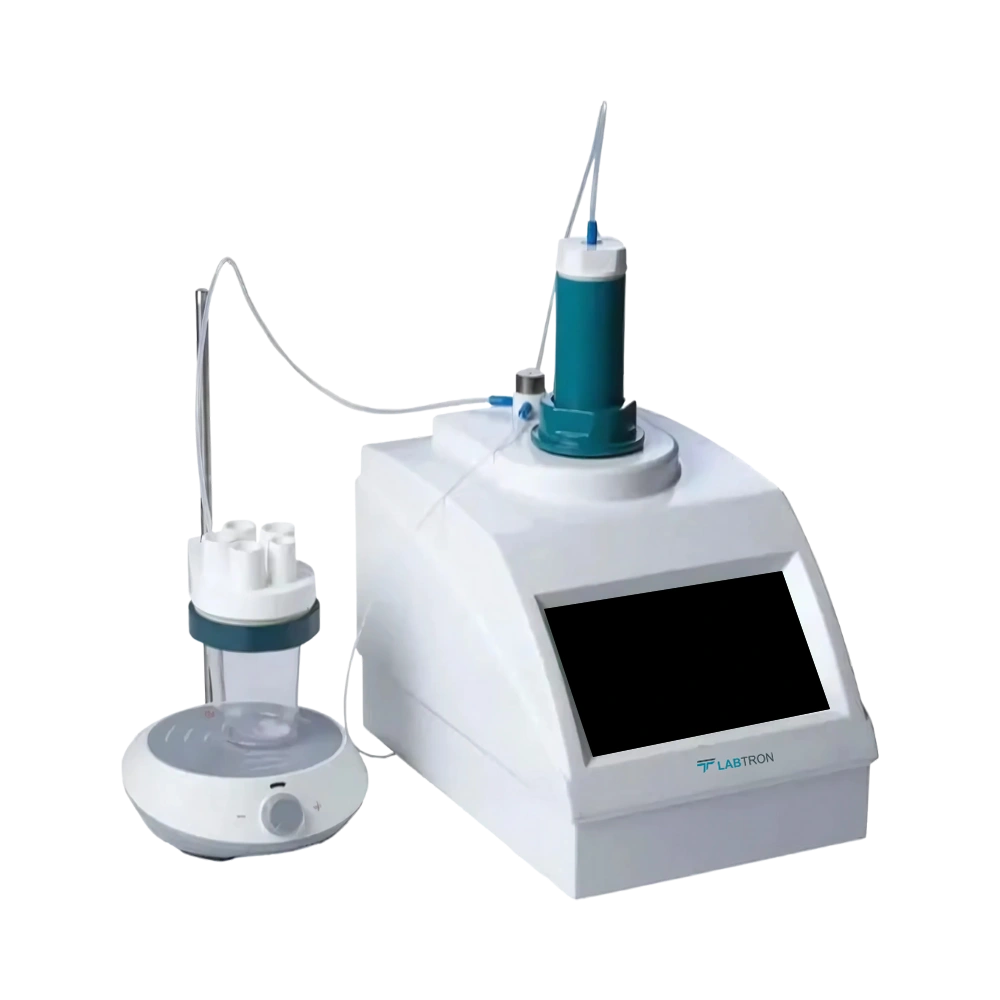


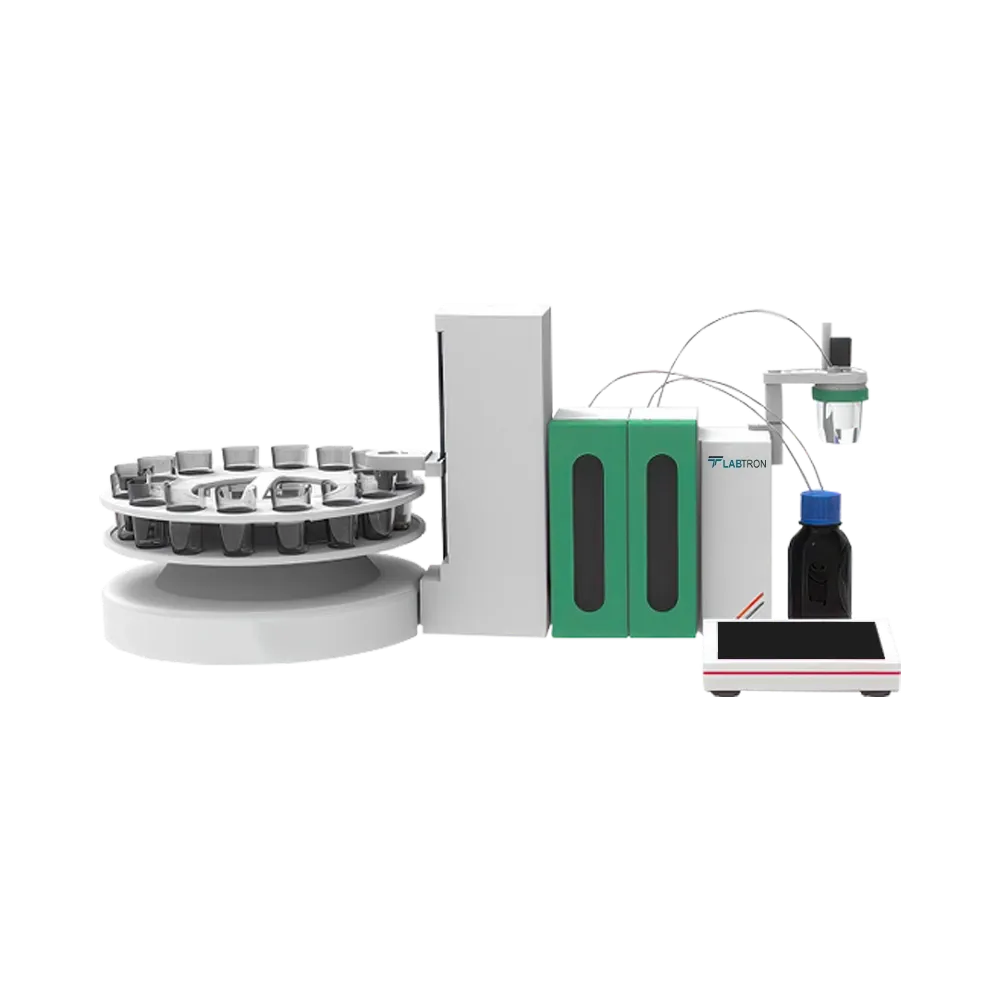
To optimize performance, ensure proper electrode maintenance, regular calibration, and appropriate titrant standardization. Sample preparation must be consistent, with stable temperature and pH conditions. The automatic potentiometric titrator should be operated in a clean, vibration-free environment. Choosing the right electrode type and titration method for your application improves accuracy. The software settings should be fine-tuned to optimize titrant delivery rate and endpoint sensitivity. Periodic performance verification using known standards ensures continued accuracy. Training operators on standard operating procedures prevents misuse. Proper optimization extends equipment life and improves analytical reliability.
Labtron’s automatic potentiometric titrator LPTT-B12 improves accuracy by automating titrant addition, electrode potential measurement, and endpoint detection. Unlike manual titrations, it eliminates parallax errors and subjective color change judgments. This automation ensures that each titration is carried out with identical parameters, improving repeatability. Sophisticated microprocessors in the automatic potentiometric titrator analyze titration curves and calculate exact concentrations. Temperature compensation and calibration protocols further ensure analytical precision. The closed system prevents contamination and minimizes sample exposure. Built-in data logging also allows traceability and validation of results. This makes it suitable for critical applications requiring stringent quality control
Titrants must be standardized gravimetrically against primary standards—such as potassium hydrogen phthalate for acid titrants—using analytical balances with 0.1 mg readability. Automated titrators often include a “titrant check” routine, which titrates a known concentration to verify molarity and adjusts the calculation parameters accordingly Freshly prepared titrants should be degassed or sonicated to remove dissolved gases that cause volume inaccuracies Record the standardization curve and slope in the device’s method settings to apply batch-specific corrections. For non-aqueous titrations, ensure the titrant solvent is dried over molecular sieves to reduce water content variability. Use volumetric flasks calibrated at the laboratory’s operating temperature to minimize thermal expansion errors. Replace titrant solutions monthly or per your lab’s stability study to avoid degradation. Ensure that burette assemblies are free of air bubbles by priming with titrant before each standardization cycle
Temperature variations alter electrode response and titrant density, leading to endpoint shifts if uncorrected. Most titrators include a built-in thermometer or RTD probe to monitor sample temperature throughout the run. The software applies Nernstian compensation to pH measurements, adjusting the slope factor based on the measured temperature. For volumetric dosing, the pump calibration accounts for titrant viscosity changes with temperature, maintaining delivery accuracy. Users can enable automatic temperature compensation (ATC) in the method parameters to correct both potential and volume errors. It is recommended to allow the titrant and sample to equilibrate to lab temperature (±2 °C) prior to analysis Some systems log temperature profiles alongside titration curves for post-run quality checks. In highly controlled environments, an external water bath can be integrated for tighter thermal regulation.
Labtron’s automatic potentiometric titrator LPIT-B12 supports a wide variety of titrations, including acid-base, redox, precipitation, and complexometric titrations. It can also be used for non-aqueous titrations, especially in pharmaceutical and petrochemical analysis. For redox titrations, it monitors potential shifts due to electron transfer reactions. In acid-base titrations, it detects sharp voltage changes around the equivalence point. The automatic potentiometric titrator is also compatible with ion-selective electrodes for specific ions. Its flexible programming allows multi-step titrations and derivative curve analysis. Each titration type benefits from the instrument’s high sensitivity and automated control. This versatility makes it an essential lab asset.
Post your question?
Our experts are here to help!
Labtron Equipment Ltd., Quatro House, Lyon Way, Camberley, Surrey GU16 7ER United Kingdom
Email: info@labtron.com Whatsapp: +44 73 4441 2688 Phone: +44 2080 043608