info@labtron.com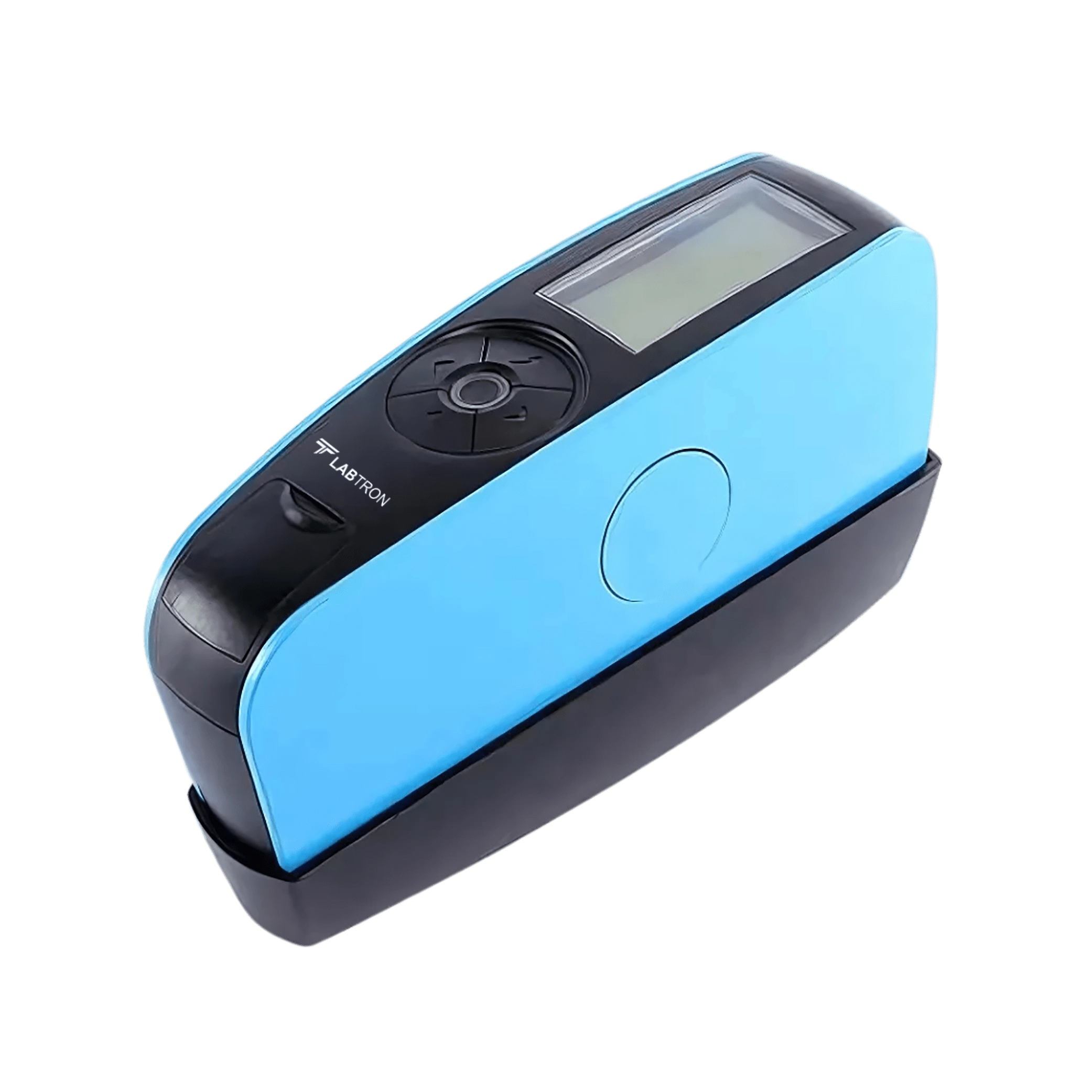

| Test Angle | 45° and 75° |
| Test Range | 45°: 0 to 800 GU 75°: 0 to 150GU |
| Resolution | 0 to 100 GU: 0.1 GU 100 to 800 GU: 1 GU |
| Test Modes | Basic Mode |
| Repeatability | 0 to 100 GU: ±0.2GU 100 to 800GU: ±0.2%GU |
| Test Time | 0.5 s / Per Angle |
| Auto Power- off Time | 30 to 120 s |
| Working Temperature | 0°C to 40°C |
| Storage Temperature | -20°C to 50°C |
| Working Humidity Range | < 85 % RH |
| Power Supply | 1 pc Dry-Cell Battery |
| Dimensions (L× W× H) | 160× 52 × 84mm |
| Weight | 300g |
Adjustable Measurement Settings
Remote Monitoring Feature
Integrated Reporting System
High Contrast Display
Advanced Light Sensitivity
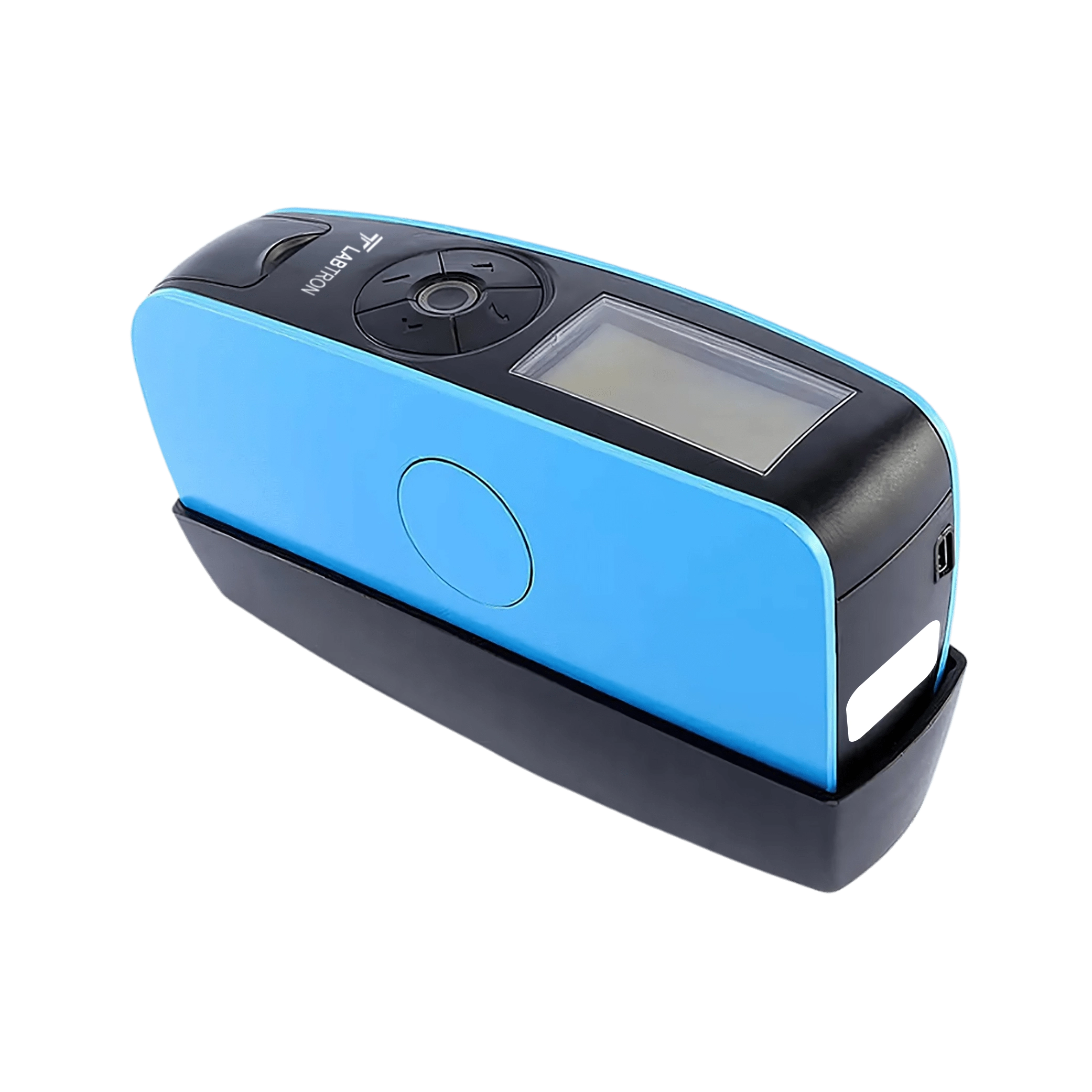
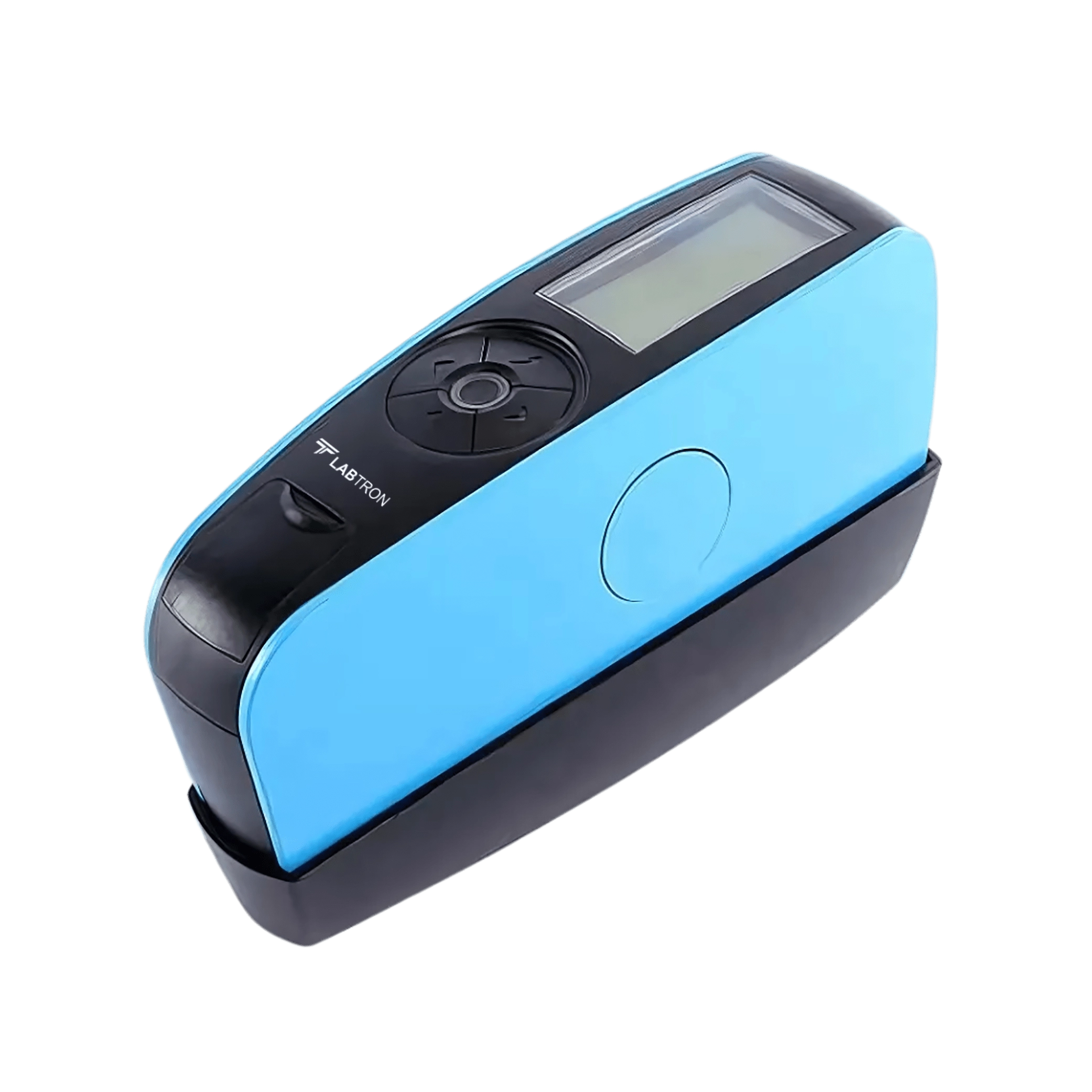
Benchtop Gloss Meter LGBM-A14 is a stationary gloss testing instrument that provides consistent and repeatable measurements for surface analysis. It is used in electroplating and hardware for monitoring gloss levels on metal parts and hardware.
Accessories Name | Quantity |
Calibration Plate | 1 |
Download catalog for
Benchtop Gloss Meter LBGM-A14 Catalog
Available Range :
Benchtop Gloss Meter LBGM-B10 : 20° / 60° / 85° Benchtop Gloss Meter LBGM-A11 : 20° 60° 85° Benchtop Gloss Meter LBGM-A10 : 20°, 60°, 85° Benchtop Gloss Meter LBGM-A15 : 45° Benchtop Gloss Meter LBGM-A14 : 45° and 75° Benchtop gloss meter TBGM-A10 : 60° Benchtop Gloss Meter LBGM-A16 : 75°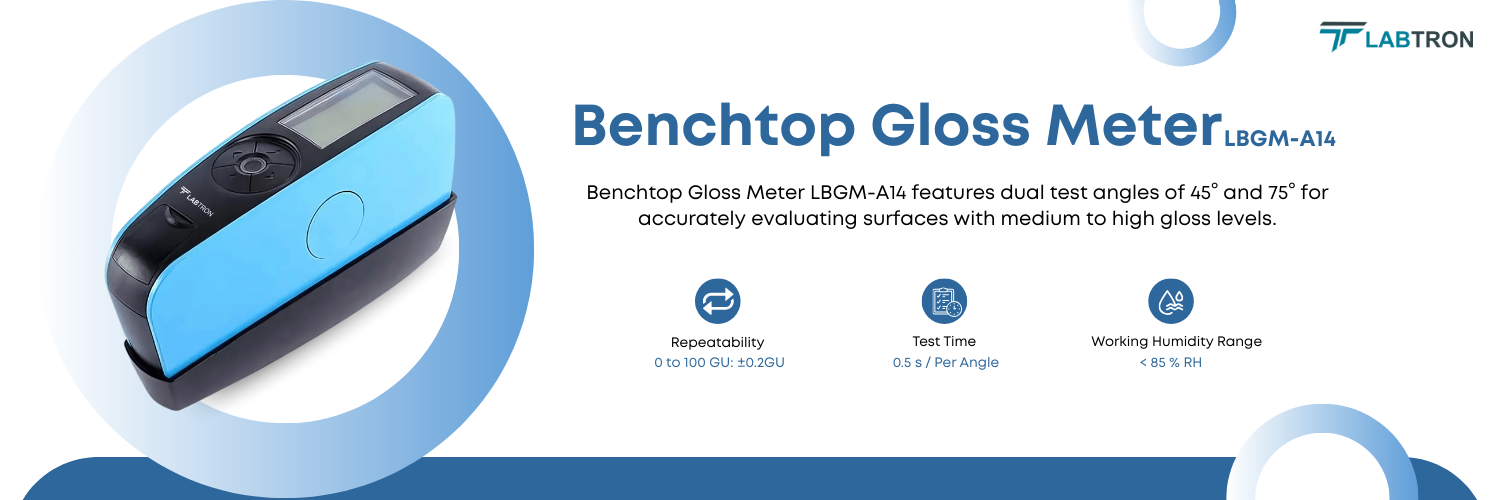

Labtron Gloss Meter measures gloss at different angles for a wide measurement range. They provide precise gloss readings on various surfaces. Their compact design features a user-friendly interface and a high-resolution display. They include built-in memory with USB or Bluetooth data transfer. These meters come with calibration standards for accuracy and consistency. Our gloss meters are ideal for industries like automotive, paint, plastics, and coatings.


Labtron’s benchtop gloss meters are primarily designed for flat, smooth surfaces, and measuring curved samples can introduce angular errors. This is because the geometry of curved surfaces causes light to reflect at varying angles, leading to inconsistent readings or underestimation of gloss. To mitigate this, samples should be cut, flattened, or positioned carefully with custom jigs if curvature cannot be avoided. In some cases, handheld gloss meters with spot-size flexibility or portable goniophotometers are better suited for non-flat geometries. For precise quality control, it is important to standardize the orientation and position of curved samples. Gloss readings from curved surfaces should be interpreted with caution, as they may not be directly comparable to flat reference standards.
Labtron supplies advanced benchtop gloss meter. Gloss measurement is essential in the automotive industry to ensure a uniform and appealing surface finish across vehicle panels. Consistent gloss values help verify that paint has been applied evenly, cured correctly, and meets the manufacturer's aesthetic and quality standards. Variations in gloss can indicate issues like poor surface preparation, contamination, or incorrect curing parameters. Using benchtop gloss meters in the lab and along the production line allows manufacturers to maintain brand consistency across models and production facilities. This data also supports warranty claims and ensures compliance with OEM appearance specifications. It also helps differentiate between different trim levels or finishes where gloss is intentionally varied. Continuous gloss monitoring contributes to improved process control and reduced rework costs.
Yes, Labtron’s benchtop gloss meters can serve as early indicators of surface contamination or degradation such as oxidation, dust buildup, or chemical exposure. A sudden drop or inconsistency in gloss readings may signal that the surface has been compromised, even if it still appears clean to the naked eye. This is particularly helpful in industries with stringent hygiene or durability standards, like food packaging or electronics. Regular gloss checks help maintain visual standards, identify wear trends, and plan timely maintenance or cleaning. It also minimizes the risk of customer rejection due to unnoticed surface defects. Some instruments log gloss data over time, allowing trend analysis to predict when cleaning or re-coating is needed. This predictive maintenance can reduce operational downtime and extend equipment life.
Labtron’s benchtop gloss meter needs proper maintenance which is key to ensuring the long-term reliability and accuracy of a gloss meter. This includes regular calibration using certified gloss standards, cleaning the measurement aperture to prevent dust or residue buildup, and storing the device in a clean, stable environment. It’s important to avoid touching the optical port and to use lint-free cloths with non-abrasive cleaning agents. For benchtop models, periodic inspection of internal components and environmental sensors is also recommended. Some models come with self-diagnostic features that alert users to calibration drift or hardware issues. Documenting maintenance activities supports traceability and compliance with ISO or QA audits.
Labtron manufactures advance models of benchtop gloss meter. Angle selection is crucial because different gloss levels are better evaluated at different geometries. A 20° angle is used for high-gloss surfaces, 60° for medium-gloss, and 85° for matte finishes. Using the wrong angle can lead to inaccurate readings or poor differentiation between samples. For instance, very glossy surfaces measured at 60° might all return similar values, making it hard to detect variations. Choosing the appropriate angle ensures maximum sensitivity and accuracy in assessing a specific surface type. Many benchtop models allow multi-angle measurement, offering flexibility and detailed gloss profiles for complex surfaces.
Post your question?
Our experts are here to help!
Labtron Equipment Ltd., Quatro House, Lyon Way, Camberley, Surrey GU16 7ER United Kingdom
Email: info@labtron.com Whatsapp: +44 73 4441 2688 Phone: +44 2080 043608