info@labtron.com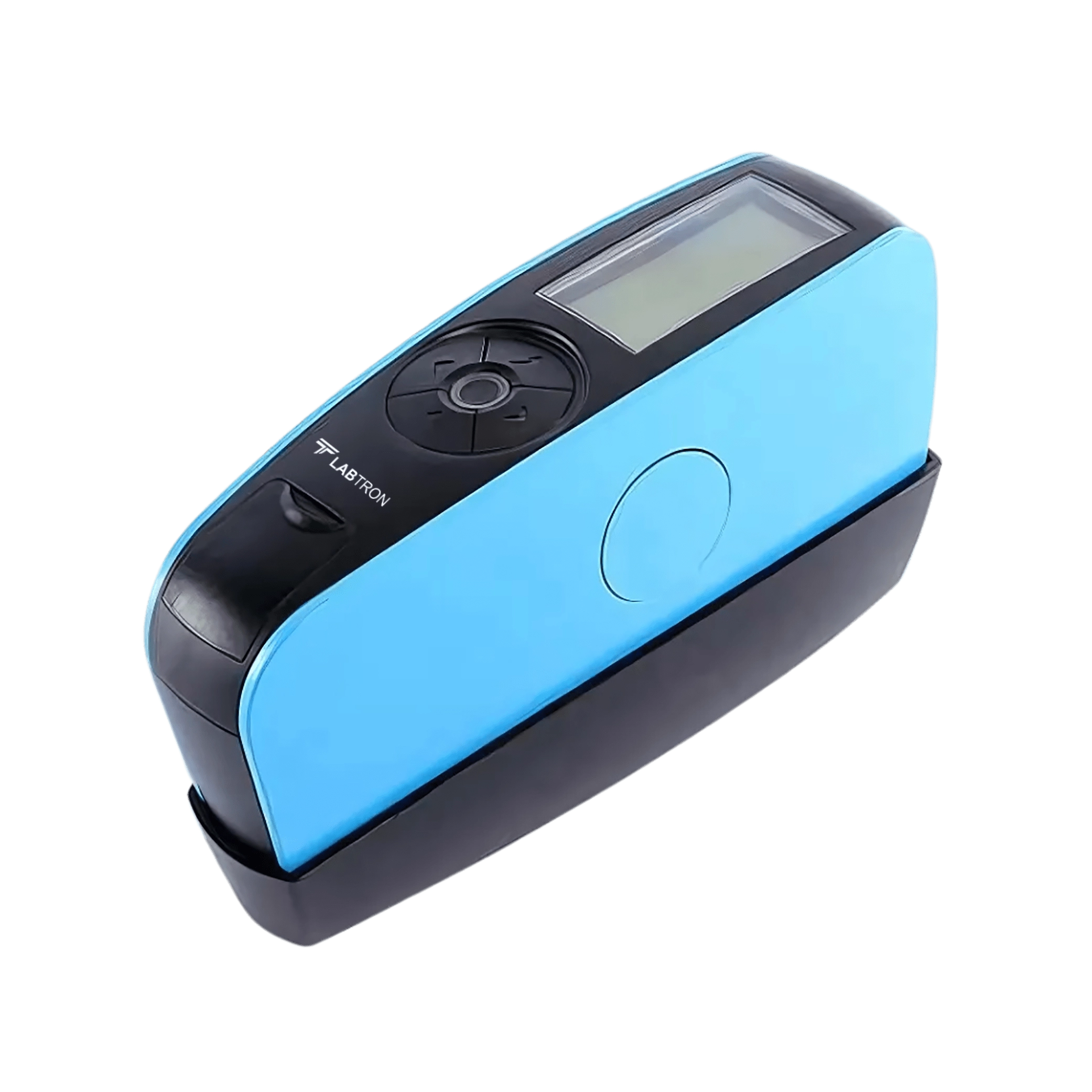

| Resolution | 0 to 150 GU: 0.1 GU 100 to 150 GU: 1 GU |
| Test Angle | 75° |
| Testing Spot | 75°: 4 × 6 |
| Test Range | 75°: 0 to 150 GU |
| Test Modes | Basic Mode, Statistical Mode, Continuous Mode, Quality Control Mode |
| Repeatability | 0 to 100 GU: ±0.2GU 100 to 150GU: ±0.2%GU |
| Test Time | 0.5 s |
| Data Storage | 35000 (15000 in Basic and Continuous Mode, 10000 in Quality Control Mode, 10000 in Statistical Mode) |
| Working Temperature | 0°C to 40°C |
| Storage Temperature | -20°C to 50°C |
| Working Humidity Range | < 85 % RH |
| Power Supply | 1 AA Alkaline Battery or NiMH Rechargeable Battery |
| Dimensions (L× W× H) | 160× 52 × 84mm |
| Weight | 300g |
Auto Calibration Mode
Gloss Gradient Analysis
Integrated Humidity Sensors
Reflectance Angle Variation
Photometric Range Adjustment
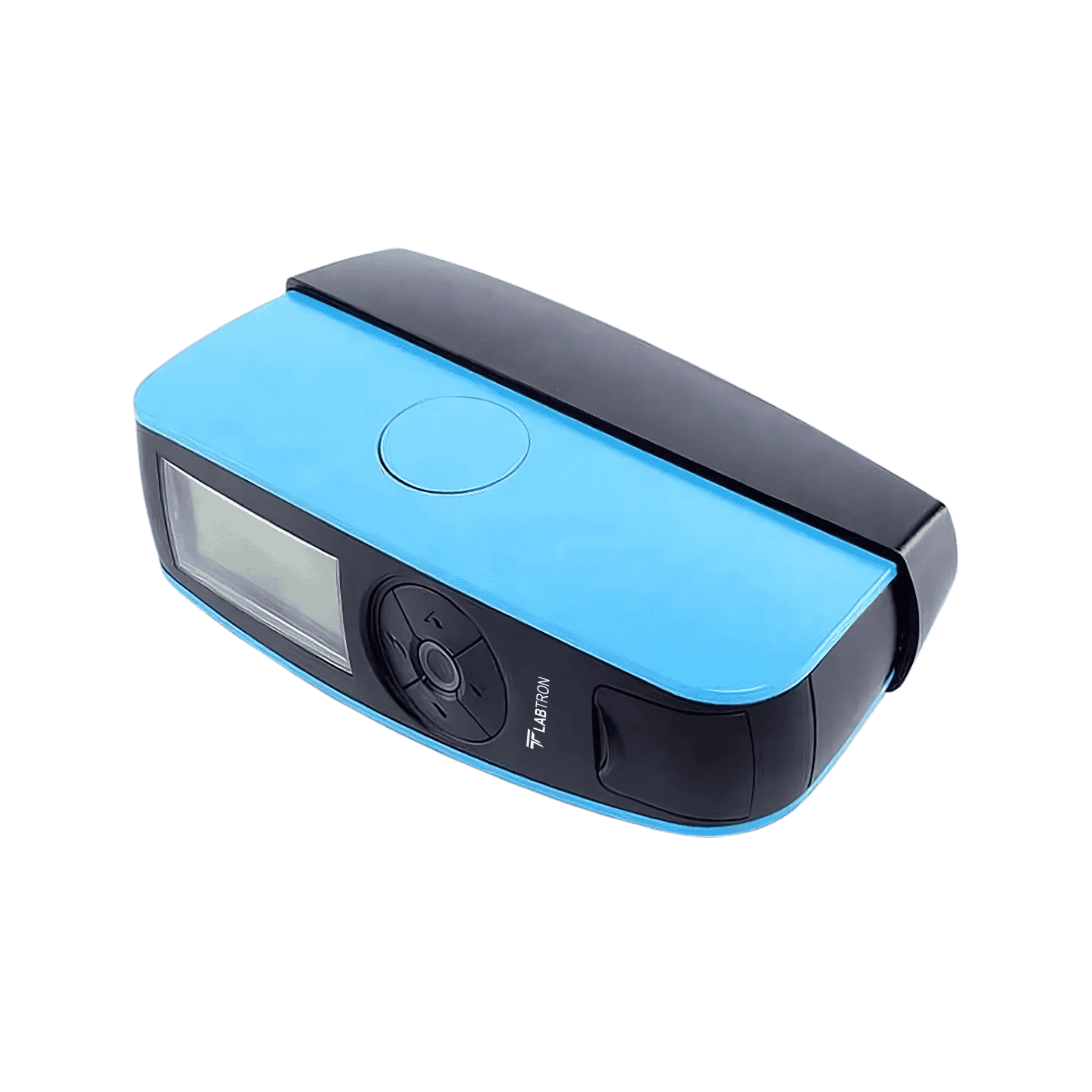
Benchtop Gloss Meter LBGM-A16 provides standardized gloss readings by directing light onto a surface and capturing its reflection. It is applied in ink, furniture, plastics, hardware and marble industries for gloss measurement and gloss data transmission.
Accessories Name | Quantity |
Calibration Plate | 1 |
Download catalog for
Benchtop Gloss Meter LBGM-A16 Catalog
Available Range :
Benchtop Gloss Meter LBGM-A14 : 0 to 100 GU: 0.1 GU

Labtron Gloss Meter measures gloss at different angles for a wide measurement range. They provide precise gloss readings on various surfaces. Their compact design features a user-friendly interface and a high-resolution display. They include built-in memory with USB or Bluetooth data transfer. These meters come with calibration standards for accuracy and consistency. Our gloss meters are ideal for industries like automotive, paint, plastics, and coatings.


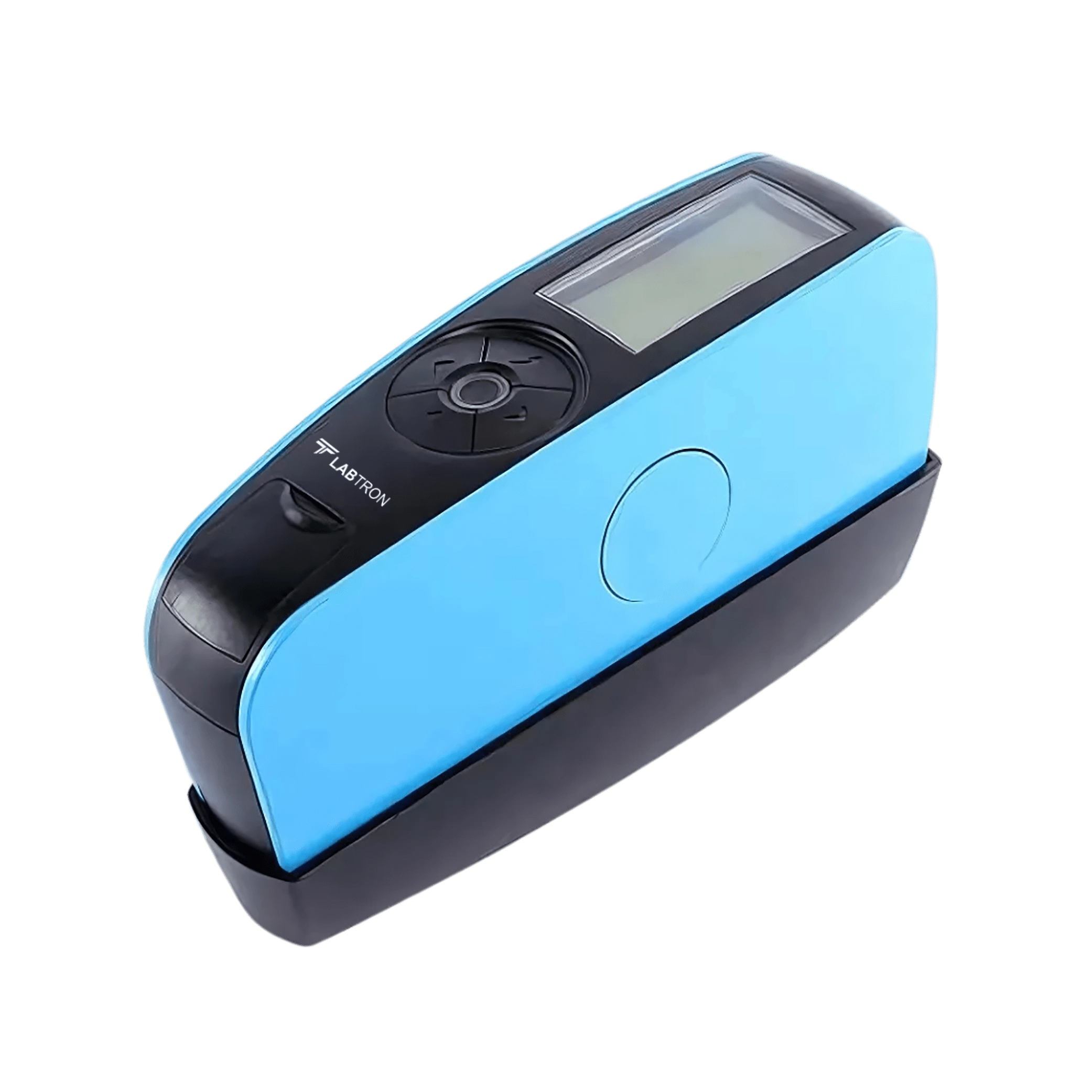

Labtron’s benchtop gloss meter have advanced features. The environmental factors such as temperature, humidity, and lighting can impact gloss meter readings if not controlled. Extreme temperatures or humidity can alter the material's surface properties, causing shifts in gloss measurements. For example, high humidity can lead to condensation, affecting the reflectivity of the surface being measured. Dust, dirt, or uneven lighting can also distort readings. To ensure accurate gloss measurements, it is essential to measure in a controlled environment, ideally with constant temperature and humidity. Many high-quality benchtop gloss meters are designed to operate in a wide range of environmental conditions, but consistent environmental control helps ensure maximum measurement accuracy and consistency.
Labtron’s benchtop gloss meters are essential tools for maintaining product consistency across multiple production runs, especially when the same product or material is being manufactured in large quantities. By providing precise, repeatable gloss measurements, these meters allow manufacturers to monitor and control the gloss level of coatings or finishes throughout production. Consistent gloss ensures that every product in a batch meets visual standards, enhancing product quality and reducing the chances of defects or rejections. When used in quality control, gloss meters help to detect any variations in the production process that could impact the appearance, allowing corrective action to be taken quickly.
Yes, benchtop gloss meters are useful for detecting defects in painted surfaces, such as uneven coating, imperfections, or areas with insufficient paint coverage. Gloss readings can highlight subtle discrepancies like low spots, brush strokes, or areas where the paint has been applied too thick or too thin. By monitoring gloss consistency across a painted surface, manufacturers can identify defects early in the production process. The precision of benchtop gloss meters ensures that even small variations in gloss are detected, which might not be visible to the naked eye. This proactive approach allows for corrective measures to be taken before the product reaches the final stage, reducing defects and enhancing overall quality.
Yes, Labtron’s benchtop gloss meter can be effectively used in conjunction with other surface analysis instruments to gain a more comprehensive understanding of a surface’s characteristics. For instance, gloss measurements can be combined with surface roughness measurements, color spectrophotometry, or texture analysis to provide a full profile of a material’s finish. By combining these data points, manufacturers can optimize production processes, ensure better-quality control, and make informed decisions about coating formulations, surface treatments, or finishing techniques. This integrated approach allows for a more detailed analysis of surface properties, which is especially valuable in industries like automotive, electronics, and high-end manufacturing.
Yes, benchtop gloss meters are highly effective for monitoring the aging of coatings. Over time, coatings can degrade due to environmental factors such as UV exposure, moisture, and temperature changes, leading to a loss of gloss. By periodically measuring the gloss of coated surfaces, manufacturers can track how the finish changes over time and assess the performance and durability of the coating. This helps to identify when a coating may need to be reapplied or when maintenance is required. Gloss meters are particularly valuable in industries where long-lasting aesthetic and protective finishes are crucial, such as automotive, architectural coatings, and outdoor furniture.
Post your question?
Our experts are here to help!
Labtron Equipment Ltd., Quatro House, Lyon Way, Camberley, Surrey GU16 7ER United Kingdom
Email: info@labtron.com Whatsapp: +44 73 4441 2688 Phone: +44 2080 043608