info@labtron.com

| Test Angle | 20° / 60° / 85° |
| Test Area | 20°: 10 × 10mm 60°: 9 × 15 mm 85°: 5 × 36mm |
| Test Range | 20°: 0 to 2000 GU 60°: 0 to 1000 GU 85°: 0 to 160 GU |
| Resolution | 0.1 GU |
| Measurement Range | 0 to 10 GU, 10 to 100 GU, 100 to 2000 GU |
| Test Modes | Basic Mode, Static Mode, Continuous Mode, QC Mode |
| Repeatability | ±0.1 GU, ±0.2GU, ±0.2%GU |
| Reproducibility | ±0.2GU, ±0.5GU, ±0.5%GU |
| Test Time | 1.5 s |
| Errors | ±1.2, ±1.2% |
| Data Storage | Basic Mode: 1000, Statistical Mode: 5000, Continuous Mode: 5000 |
| Working Temperature | 0 to 40°C |
| Storage Temperature | -20 to 50°C |
| Working Humidity Range | < 85 % RH |
| PC Software | GQC6 QC Software |
| Power Supply | 3200 mAh Li-ion Battery, > 10000 times |
| Dimensions (L× W× H) | 160× 75× 90mm |
| Weight | 350g |
Wide Measuring Range
Rechargeable Lithium-Ion Battery
Manual Gloss Input
Noise Reduction Technology
Temperature Tolerance Range
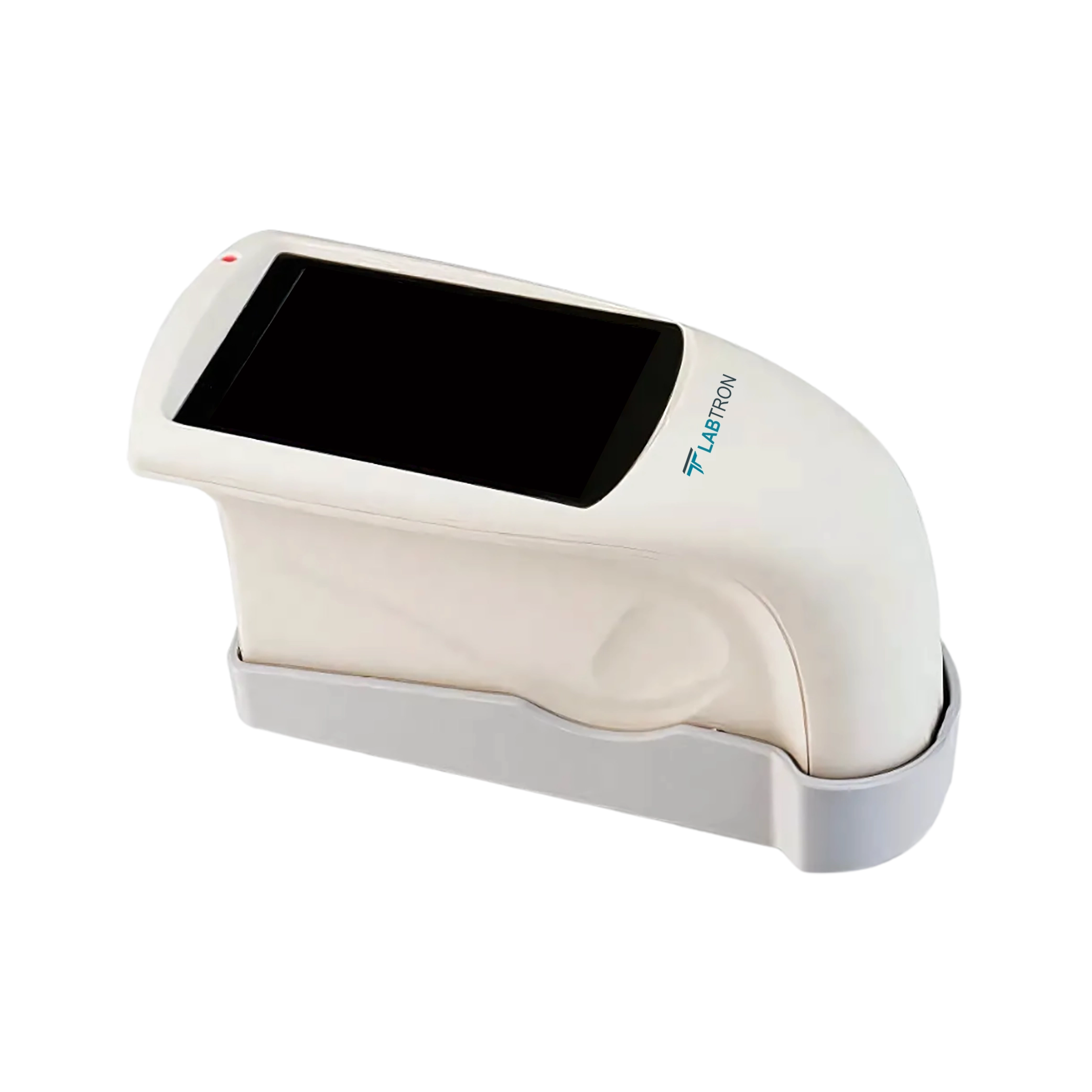
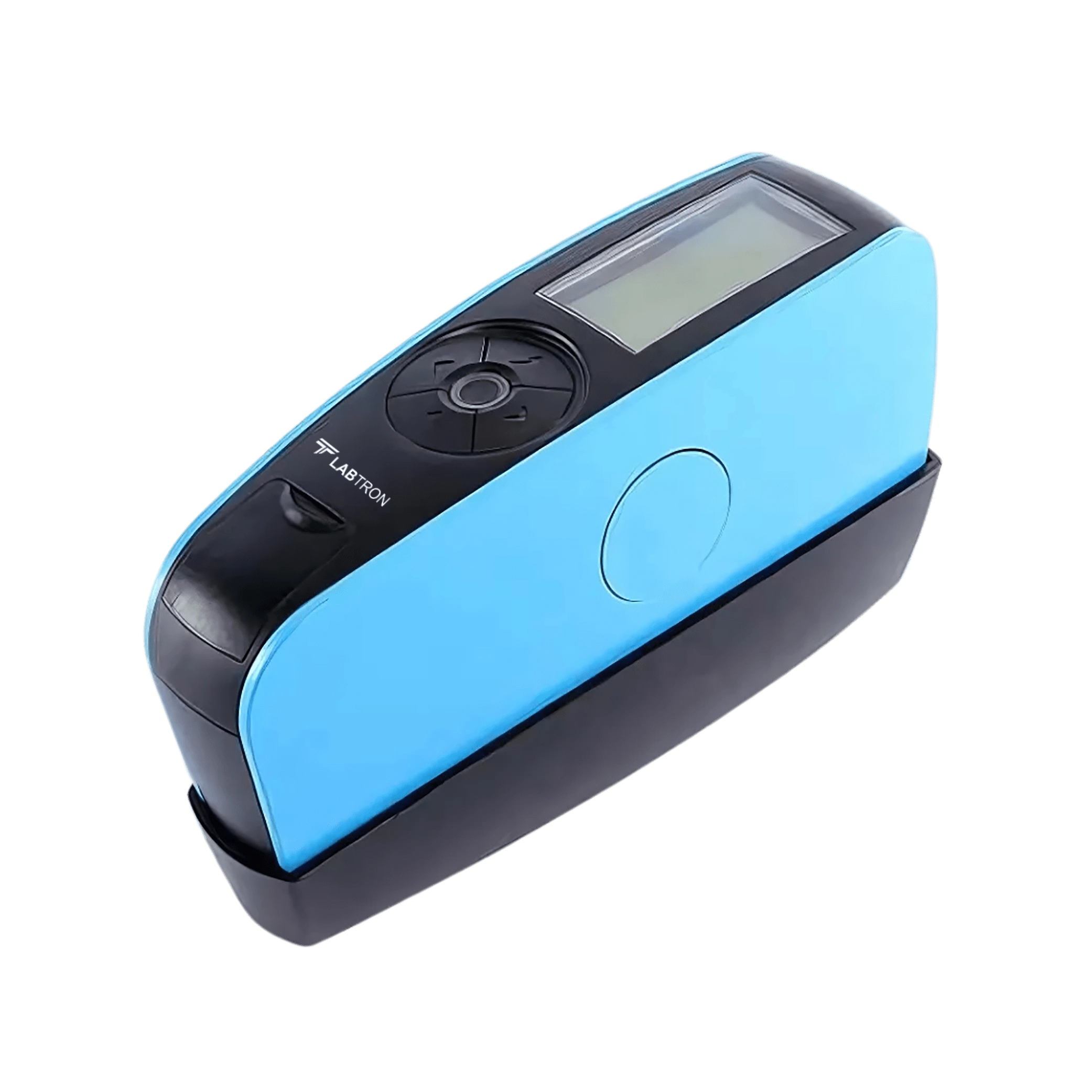
Benchtop Gloss Meter LBGM-B10 is an analytical instrument designed to determine the gloss of a surface. It plays a key role in automotive and paint industry for ensuring the gloss level across vehicle panel and monitoring the quality control.
Accessories Name | Quantity |
Calibration Plate | 1 |
Download catalog for
Benchtop Gloss Meter LBGM-B10 Catalog
Available Range :
Benchtop Gloss Meter LBGM-B10 : 20° / 60° / 85° Benchtop Gloss Meter LBGM-A11 : 20° 60° 85° Benchtop Gloss Meter LBGM-A10 : 20°, 60°, 85° Benchtop Gloss Meter LBGM-A15 : 45° Benchtop Gloss Meter LBGM-A14 : 45° and 75° Benchtop gloss meter TBGM-A10 : 60° Benchtop Gloss Meter LBGM-A16 : 75°
Labtron Gloss Meter measures gloss at different angles for a wide measurement range. They provide precise gloss readings on various surfaces. Their compact design features a user-friendly interface and a high-resolution display. They include built-in memory with USB or Bluetooth data transfer. These meters come with calibration standards for accuracy and consistency. Our gloss meters are ideal for industries like automotive, paint, plastics, and coatings.




Labtron’s benchtop gloss meters are versatile instruments capable of measuring gloss on a wide variety of materials, including metals, plastics, wood, ceramics, composites, glass, paper, and coated surfaces. As long as the surface is solid and not highly porous or transparent, it can typically be assessed with a gloss meter. Industries from automotive to packaging use gloss meters to maintain appearance standards across these materials. When measuring transparent or translucent materials, users must ensure the substrate doesn’t affect the reading. For soft materials like leather or fabrics, special adapters may be required to ensure proper contact and accuracy.
Yes, Labtron’s benchtop gloss meter is an effective tool for detecting gloss degradation caused by UV exposure, moisture, or environmental aging. Over time, surfaces exposed to sunlight or harsh weather conditions may lose their shine and develop a duller appearance. Regular gloss measurements allow manufacturers to track this degradation and evaluate the durability of coatings or finishes. Gloss data can be used to compare treated versus untreated samples or to assess different materials under accelerated weathering tests. This helps in product development and quality assurance by confirming how well a material retains its visual appeal over time.
Yes, Labtron’s benchtop gloss meter measurement differs significantly between flat and textured surfaces due to how light reflects off them. Flat surfaces reflect light uniformly, resulting in precise and repeatable gloss values. Textured surfaces, however, scatter light in multiple directions, which reduces the amount reflected back to the detector, often giving lower gloss readings. Special consideration must be given when comparing such surfaces, measurements may not reflect perceived gloss accurately. In these cases, gloss readings should be supplemented with visual inspection.
Labtron supplies premium benchtop gloss meters which can evaluate transparent coatings, but with some limitations. Since gloss meters measure the amount of light reflected at a specific angle, they work best when the coating is applied on an opaque substrate. Transparent coatings on glass or clear plastics may cause light to pass through or scatter in unpredictable ways, affecting accuracy. To minimize this, measurements should be taken on a consistent background or with a standardized test panel. In such applications, gloss meters help assess the uniformity and application quality of clear finishes like lacquers or varnishes.
Labtron’s benchtop gloss meter have advanced features. Angle selection is crucial because it determines how sensitive the gloss meter is to different gloss levels. Low angles (20°) are used for high-gloss surfaces to capture fine variations, while higher angles (85°) are better suited for low-gloss or matte surfaces. A standard 60° angle is used for general-purpose measurement and comparison. Choosing the correct angle ensures readings are accurate and relevant to the surface’s finish type. Many benchtop gloss meters allow switching between angles, enabling comprehensive gloss profiling and consistent quality control across a wide range of materials and finishes.
Post your question?
Our experts are here to help!
Labtron Equipment Ltd., Quatro House, Lyon Way, Camberley, Surrey GU16 7ER United Kingdom
Email: info@labtron.com Whatsapp: +44 73 4441 2688 Phone: +44 2080 043608