 info@labtron.com

| Resolution | I GU |
| Test Angle | 60° |
| Test Modes | Basic Mode |
| Repeatability | 0 to 100 GU: ±0.5GU 100 to 2000GU: ±0.5%GU |
| Test Time | 30 s |
| Working Temperature | 0°C to 40°C |
| Storage Temperature | -20°C to 50°C |
| Working Humidity Range | < 85 % RH |
| Power Supply | 1 pc Dry-Cell Battery |
| Dimensions (L× W× H) | 160× 52 × 84mm |
| Weight | 300g |
High-Speed Data Processing
AI-Powered Gloss Prediction
Auto Calibration Mode
Improved Surface Mapping
Advanced Optics System
Benchtop Gloss Meter LBGM-A13 is an analytical instrument designed to determine the gloss of a surface. It plays a key role in automotive and paint industry for ensuring the gloss level across vehicle panel and monitoring the quality control.
Accessories Name | Quantity |
Calibration Plate | 1 |
Download catalog for
Benchtop Gloss Meter LBGM-A13 Catalog
Available Range :
Benchtop Gloss Meter LBGM-A14 : 0 to 100 GU: 0.1 GU

Labtron Gloss Meter measures gloss at different angles for a wide measurement range. They provide precise gloss readings on various surfaces. Their compact design features a user-friendly interface and a high-resolution display. They include built-in memory with USB or Bluetooth data transfer. These meters come with calibration standards for accuracy and consistency. Our gloss meters are ideal for industries like automotive, paint, plastics, and coatings.
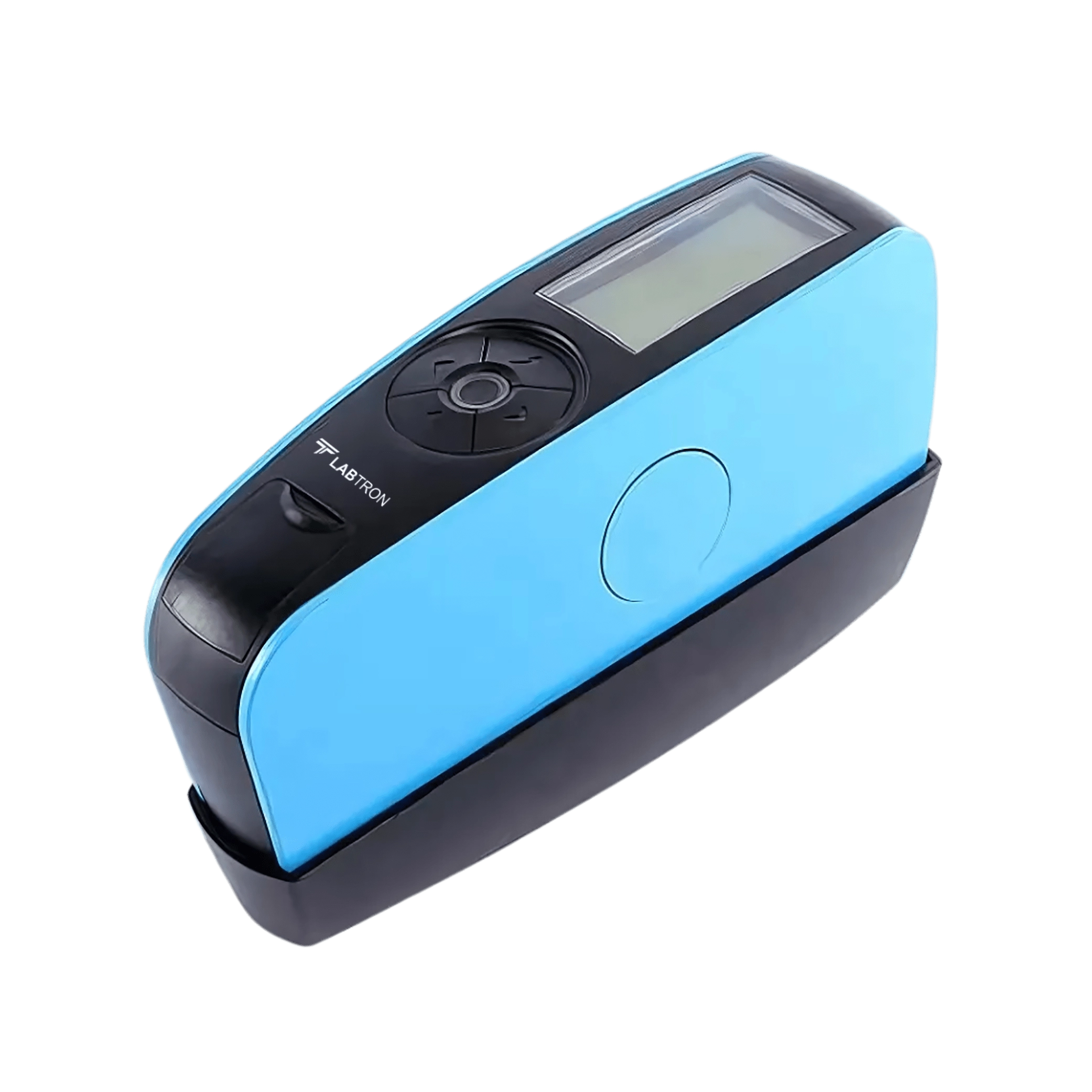
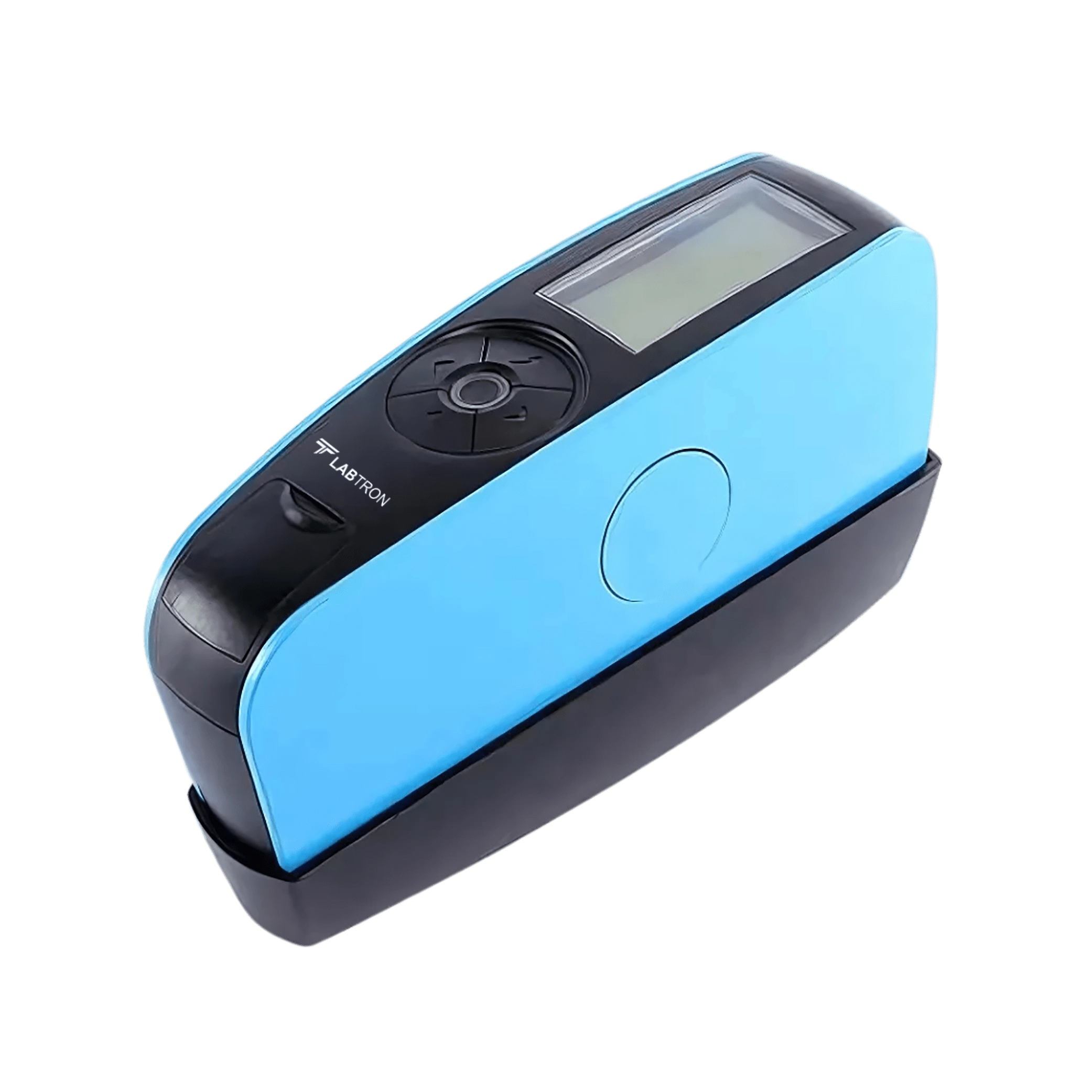


Labtron supplies premium benchtop gloss meters. Several factors can affect the accuracy of gloss measurements, including surface cleanliness, sample alignment, light source stability, and ambient lighting conditions. Contaminants like fingerprints, dust, or moisture on the sample surface can scatter light, leading to erroneous readings. Misalignment of the sample with the gloss meter's measurement aperture can also skew results. The stability of the light source is another critical factor, as fluctuations can lead to inconsistent readings. Ambient lighting should be controlled, as external light sources can interfere with the instrument’s ability to measure the reflected light correctly. Ensuring proper calibration and regular maintenance helps minimize these variables, contributing to more accurate and reliable measurements.
Labtron’s benchtop gloss meters are integral to quality control on production lines, as they provide fast, precise measurements of surface finishes during manufacturing. By incorporating gloss meters into regular inspection routines, manufacturers can detect deviations from the desired gloss level early in the production process, preventing defects from progressing to finished products. This proactive approach helps minimize waste and rework costs, ensuring that products consistently meet visual and performance specifications. For instance, variations in gloss may indicate problems such as improper curing, incorrect coating application, or contamination, which can be immediately addressed to maintain production efficiency and product quality.
Labtron supplies advance model of benchtop gloss meter. Multi-angle gloss measurement involves assessing how a surface reflects light at various angles, which is especially relevant for complex finishes like metallic paints or pearlescent coatings. Some benchtop gloss meters support interchangeable angle heads or dual/tri-angle measurement capability, enabling the evaluation of gloss at multiple incident angles (e.g., 20°, 60°, and 85°) in a single reading cycle. This helps capture how gloss changes with viewing angles, a critical parameter in industries like automotive, where coatings must look uniform under different lighting and angles. Multi-angle gloss data provides deeper insight into surface characteristics, supporting advanced R&D and production control.
Labtron’s benchtop gloss meter have advance features. The precision of a benchtop gloss meter heavily depends on the quality and alignment of its internal optical components, including the light source, lenses, filters, and detector. High-quality optics ensure the light beam is focused accurately and that reflected light is captured consistently at the specified geometry. Any misalignment or degradation in these components (e.g., from aging or contamination) can lead to incorrect gloss values. Premium models use long-life, temperature-stable LEDs and precisely engineered optics to maintain consistent performance over time. Maintenance protocols may also include optical diagnostics or self-check routines to verify measurement integrity.
Yes, many benchtop gloss meters offer customization options to meet the unique needs of specific industries such as automotive, plastics, wood finishes, and printed packaging. Customizations may include interchangeable angle modules, specialized sample holders, advanced software features for statistical analysis, or integration with production systems. Some manufacturers provide industry-specific calibration standards or gloss scales that align with customer specifications. These tailored configurations help ensure the gloss meter delivers relevant and precise data for the particular materials, geometries, or finishes encountered in a specific production or R&D setting.
Post your question?
Our experts are here to help!
Labtron Equipment Ltd., Quatro House, Lyon Way, Camberley, Surrey GU16 7ER United Kingdom
Email: info@labtron.com Whatsapp: +44 73 4441 2688 Phone: +44 2080 043608

