info@labtron.com

| Test Angle | 60° |
| Test Area | 2 × 4 mm |
| Test Range | 0 to 1000 GU |
| Resolution | 0.1 GU |
| Measurement Range | 0 to 10 GU, 10 to 100 GU, 100 to 1000 GU |
| Repeatability | ±0.1 GU, ±0.2GU, ±0.2%GU |
| Reproducibility | ±0.2GU, ±0.5GU, ±0.5%GU |
| Test Time | 0.5 s |
| Errors | ±1.2, ±1.2% |
| Data Storage | Basic Mode: 1000, Statistical Mode: 5000, Continuous Mode: 5000 |
| Working Temperature | 0 to 40°C |
| Storage Temperature | -20 to 50°C |
| Working Humidity Range | < 85 % RH |
| PC Software | GQC6 QC Software |
| Power Supply | 3200 mAh Li-ion Battery, > 10000 times |
| Dimensions (L× W× H) | 160× 75× 90mm |
| Weight | 350g |
Multi Angle Measurement
Quality Control Software
Adjustable Measurement Interval
Overload Safety Mechanism
Firmware Version Control
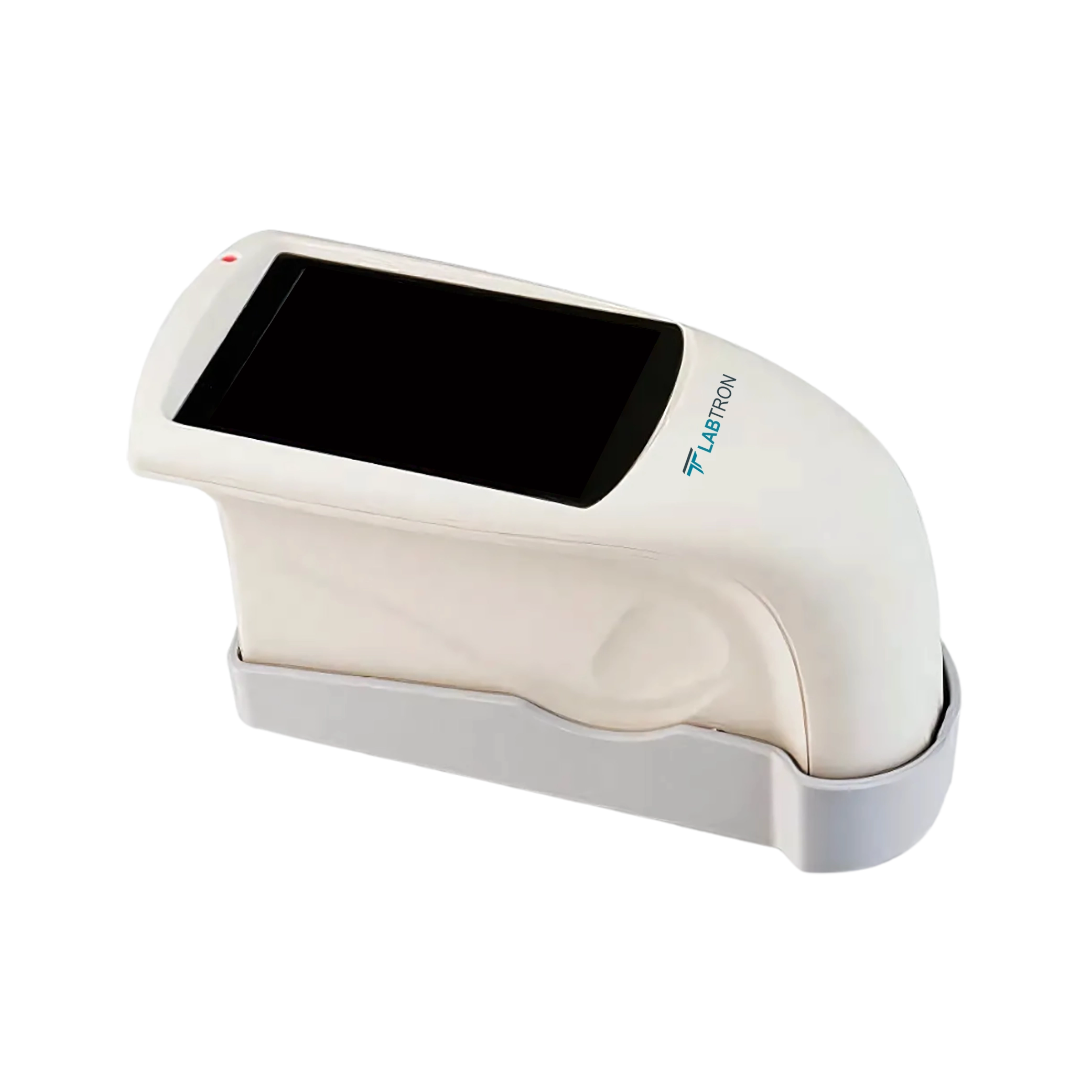
Benchtop Gloss Meter LBGM-B12 is a laboratory instrument that quantifies the glossiness of surfaces by measuring the specular reflection of light. It is widely used in ceramics and tiles for ensuring glaze quality, verifying the uniformity and in quality control.
Accessories Name | Quantity |
Calibration Plate | 1 |
Download catalog for
Benchtop Gloss Meter LBGM-B12 Catalog
Download manual for
Benchtop Gloss Meter LBGM-B12 Manual
Available Range :
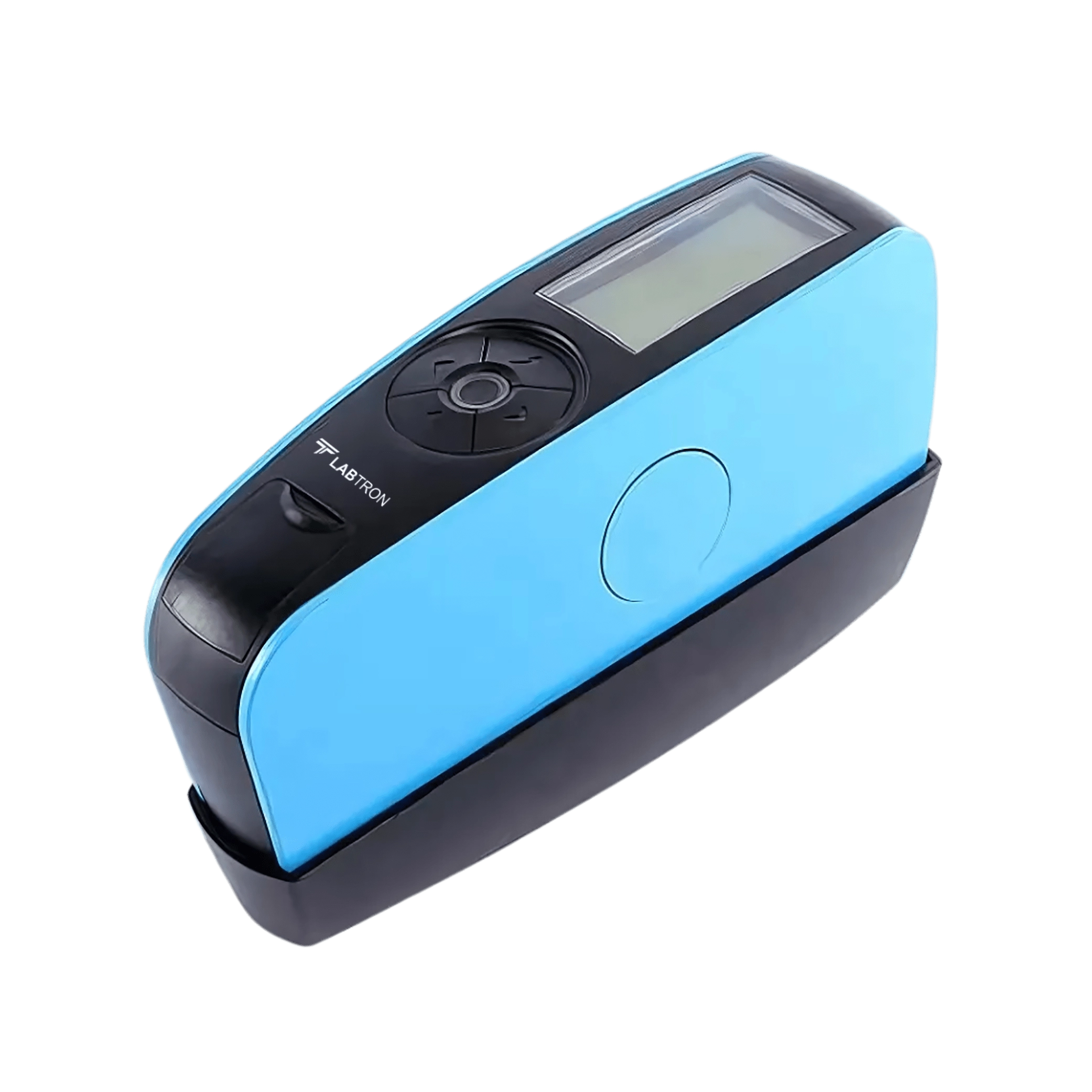
Benchtop Gloss Meter LBGM-B10 : 20° / 60° / 85° Benchtop Gloss Meter LBGM-A11 : 20° 60° 85° Benchtop Gloss Meter LBGM-A10 : 20°, 60°, 85° Benchtop Gloss Meter LBGM-A15 : 45° Benchtop Gloss Meter LBGM-A14 : 45° and 75° Benchtop gloss meter TBGM-A10 : 60° Benchtop Gloss Meter LBGM-A16 : 75°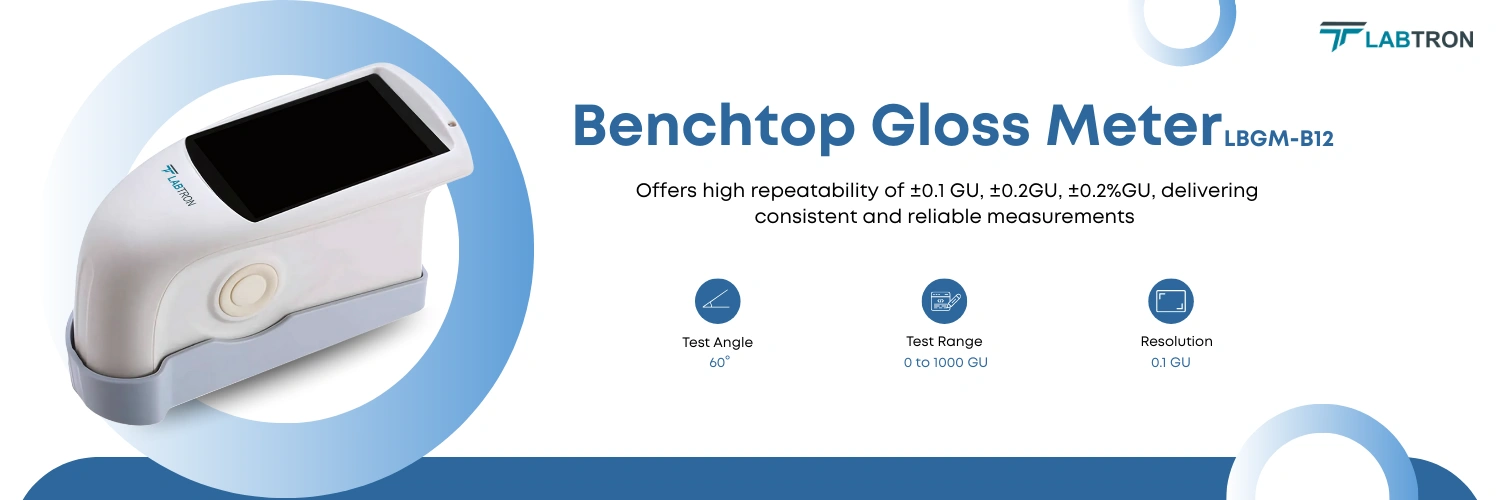
Labtron Gloss Meter measures gloss at different angles for a wide measurement range. They provide precise gloss readings on various surfaces. Their compact design features a user-friendly interface and a high-resolution display. They include built-in memory with USB or Bluetooth data transfer. These meters come with calibration standards for accuracy and consistency. Our gloss meters are ideal for industries like automotive, paint, plastics, and coatings.



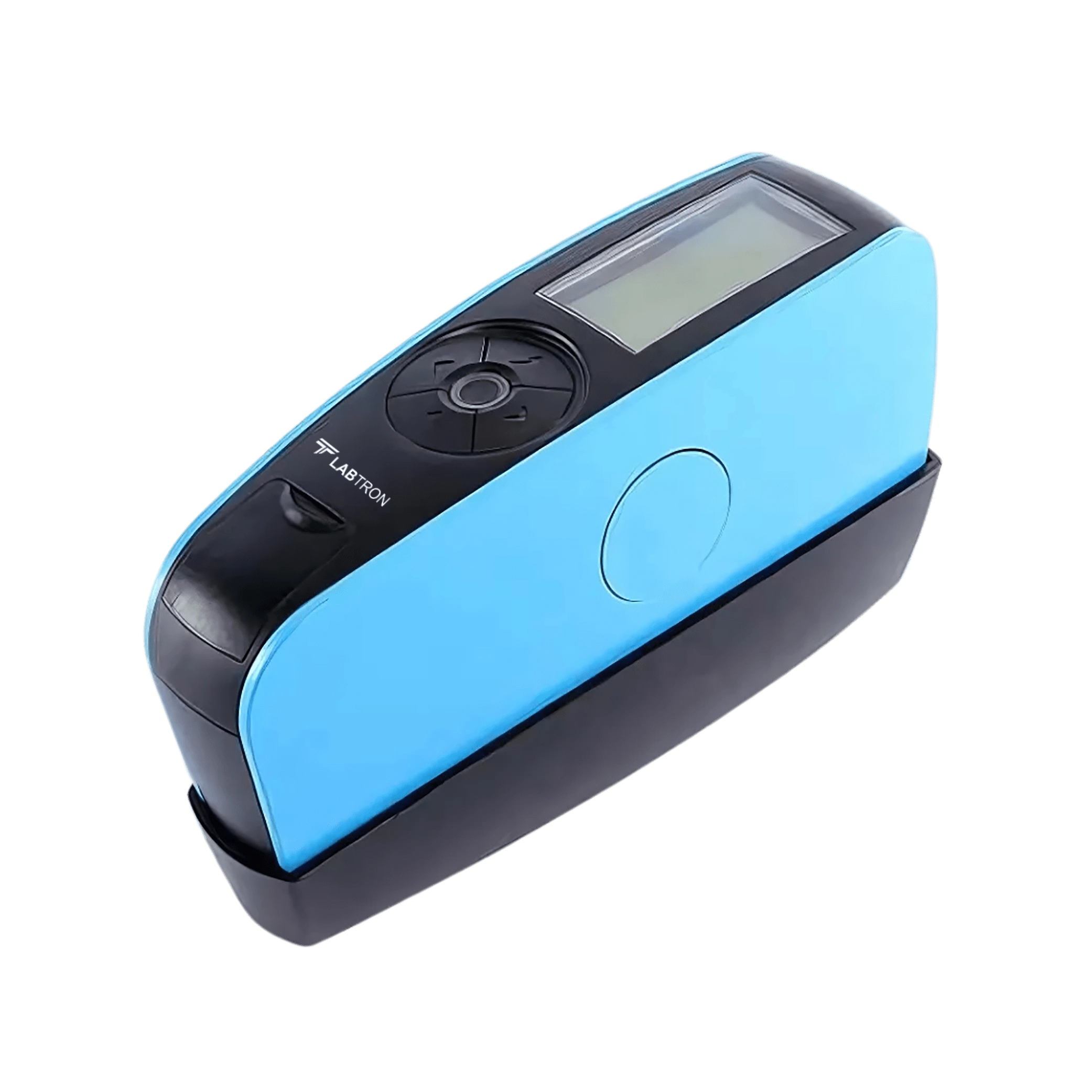


Yes, benchtop gloss meters are highly effective for measuring gloss on coated surfaces, including metals and plastics. These surfaces often have protective coatings or finish that require precise gloss measurement to ensure uniformity and quality. A gloss meter measures how light is reflected from the surface, providing valuable data on the gloss level of the coating. Whether it's a metal part with a paint finish or a plastic component with a glossy coating, a gloss meter ensures that the finish meets the desired aesthetic or performance specifications. This makes gloss meters essential in industries where coating quality directly affects the final product's appearance and functionality.
Labtron’s Benchtop Gloss Meter has ambient lighting which can interfere with gloss measurements by introducing stray light that disrupts the controlled reflection being measured by the sensor. Benchtop gloss meters are designed to minimize this impact using enclosed optical paths, filters, or shielding. However, excessive ambient light especially from reflective or variable sources like windows can still affect readings if the environment isn’t controlled. For best results, measurements should be taken in a consistent lighting environment or under controlled lab conditions. Some advanced models include auto-compensation features to reduce ambient influence. Proper sample placement and avoiding direct light sources are essential. A consistent testing setup enhances reliability and accuracy.
Labtron’s benchtop gloss meter have advanced features. The environmental factors such as temperature, humidity, and lighting can impact gloss meter readings if not controlled. Extreme temperatures or humidity can alter the material's surface properties, causing shifts in gloss measurements. For example, high humidity can lead to condensation, affecting the reflectivity of the surface being measured. Dust, dirt, or uneven lighting can also distort readings. To ensure accurate gloss measurements, it is essential to measure in a controlled environment, ideally with constant temperature and humidity. Many high-quality benchtop gloss meters are designed to operate in a wide range of environmental conditions, but consistent environmental control helps ensure maximum measurement accuracy and consistency.
Yes, Labtron’s benchtop gloss meter can be effectively used in conjunction with other surface analysis instruments to gain a more comprehensive understanding of a surface’s characteristics. For instance, gloss measurements can be combined with surface roughness measurements, color spectrophotometry, or texture analysis to provide a full profile of a material’s finish. By combining these data points, manufacturers can optimize production processes, ensure better-quality control, and make informed decisions about coating formulations, surface treatments, or finishing techniques. This integrated approach allows for a more detailed analysis of surface properties, which is especially valuable in industries like automotive, electronics, and high-end manufacturing.
Labtron’s benchtop gloss meter have advanced features. Measuring extremely high-gloss or mirror-like surfaces requires special attention, as they can produce intense reflections that may overwhelm or skew the sensor. It’s important to ensure the measurement area is free from contaminants like dust or smudges, which can cause inconsistent readings. Additionally, the sample should be perfectly aligned to avoid angular discrepancies, as even slight misalignment can have a significant impact on highly reflective surfaces. Some gloss meters include high-gloss calibration modes or filters that adjust for these conditions. Consistent lighting and minimal ambient interference also contribute to reliable readings. In such cases, using a clean environment and stabilizing fixtures is recommended to achieve precise results.
Post your question?
Our experts are here to help!
Labtron Equipment Ltd., Quatro House, Lyon Way, Camberley, Surrey GU16 7ER United Kingdom
Email: info@labtron.com Whatsapp: +44 73 4441 2688 Phone: +44 2080 043608