 info@labtron.com

| Ambient temperature | 5 °C to 35 ℃ |
| Relative humidity | ≤ 85 % |
| Cubage of buffer vessel | 1000 ml |
| Max. Residual pressure | ≤ 2 mm Hg |
| Temperature controlling accuracy | ± 1 ℃ |
| Temperature range air bath | Ambient temperature ~ 100 ℃ adjustable |
| Heating power for distillation flask | 1000 W |
| Heating power for receiving flask | 350 W |
| Power supply | AC 220 V, 50 Hz |
Used to determine high boiling point petroleum products, such as paraffin oil, lubricating oil, and others at reduced pressure.
Download catalog for
Vacuum Distillation Tester LDT-A13 Catalog
Available Range :
Distillation Tester LDT-A10 : (-10) °C ~ 35 °C Benzene Distillation Tester (Low Temperature) LDT-A11 : -10°C to 35°C Vacuum Distillation Tester LDT-A13 : 5 °C to 35 ℃ Distillation Tester Front Type LDT-A14 : Room temperature to 35°C Distillation Tester LDT-A17 : ≤ 30 °C Distillation Tester Dual Units LDT-A15 : ≤ 35 °C
Labtron Distillation Tester determine boiling point characteristics for analyzing purity and composition of substance. Their high-quality glass components ensure visibility while withstanding rigors of use. They utilize energy-efficient heating elements to minimize power consumption during lengthy processing. Their innovative design minimizes cross-contamination risks between different fractions, ensuring purity. Our Distillation Tester is suitable for oil and gas industry to assess crude oil fractions and in pharmaceuticals to check solvent purity.


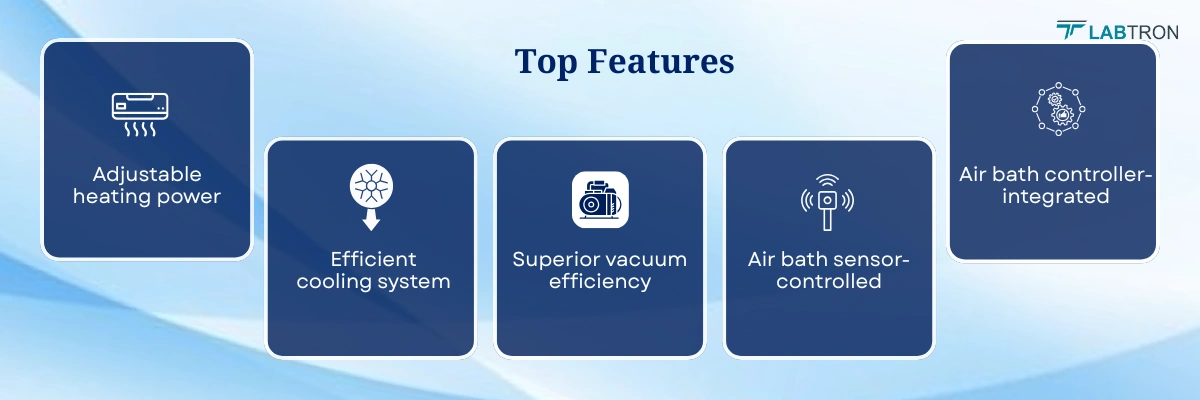
Labtron’s Vacuum Distillation Tester LDT-A13 features an air-bath system that minimizes the risks associated with conventional oil or metal baths, such as contamination, overheating, and uneven heat distribution. This air-bath uses forced convection to deliver consistent and uniform heat to the distillation flask, preventing hot spots and thermal shock. The system enhances operator safety while maintaining highly accurate temperature control throughout the distillation process. Additionally, it offers easier cleaning, longer lifespan, and avoids the environmental and fire hazards commonly linked to oil-based baths.
The Vacuum Distillation Tester LDT-A13 enables operators to detect sample degradation through signs such as darkening of the distillate, unusual odors, foaming in the flask, or abnormal distillation curve patterns. If the system shows rising temperatures without a corresponding distillate recovery or leaves behind a charred or sticky residue, it may indicate thermal cracking. These issues can result from overheating, inadequate vacuum pressure, or inappropriate sample composition. Our system supports early detection by allowing precise monitoring of distillation rate and behavior.
Our Vacuum Distillation Tester LDT-A13 should always be operated with thorough safety checks, including regular inspection of glass components for microfractures that could lead to vacuum implosion. The system must be placed in a well-ventilated area, properly grounded, and used with a stable AC power source. Operators should wear safety gear like gloves and eye protection and must ensure the sample does not contain volatile or reactive substances that could behave unpredictably under vacuum. The system design incorporates built-in safety elements to support reliable and hazard-free operation.
The Vacuum Distillation Tester LDT-A13 should be paused immediately if excessive foaming occurs, as this can lead to contamination of the condenser or vapor path. The sample must be checked for the presence of surfactants, impurities, or components unsuitable for vacuum distillation. We recommend to gently preheat the sample under low vacuum or using an approved anti-foaming agent to reduce foaming behavior. The system’s adjustable heating controls allow users to manage temperature increases carefully, helping to prevent foam formation and maintain process stability.
Our Vacuum Distillation Tester LDT-A13 can be affected by factors such as vacuum leaks, incorrect temperature settings, or contamination in the glass components, which may impact distillation accuracy. To address these issues, users should inspect all seals, joints, and glassware to ensure they are clean and properly fitted. Regular calibration of the temperature sensors and confirmation of uniform heating in the air-bath are crucial for maintaining consistent performance. We also recommend using well-prepared, filtered, and moisture-free samples in correct volumes to achieve reliable and accurate distillation curves.
Post your question?
Our experts are here to help!
Labtron Equipment Ltd., Quatro House, Lyon Way, Camberley, Surrey GU16 7ER United Kingdom
Email: info@labtron.com Whatsapp: +44 73 4441 2688 Phone: +44 2080 043608