info@labtron.com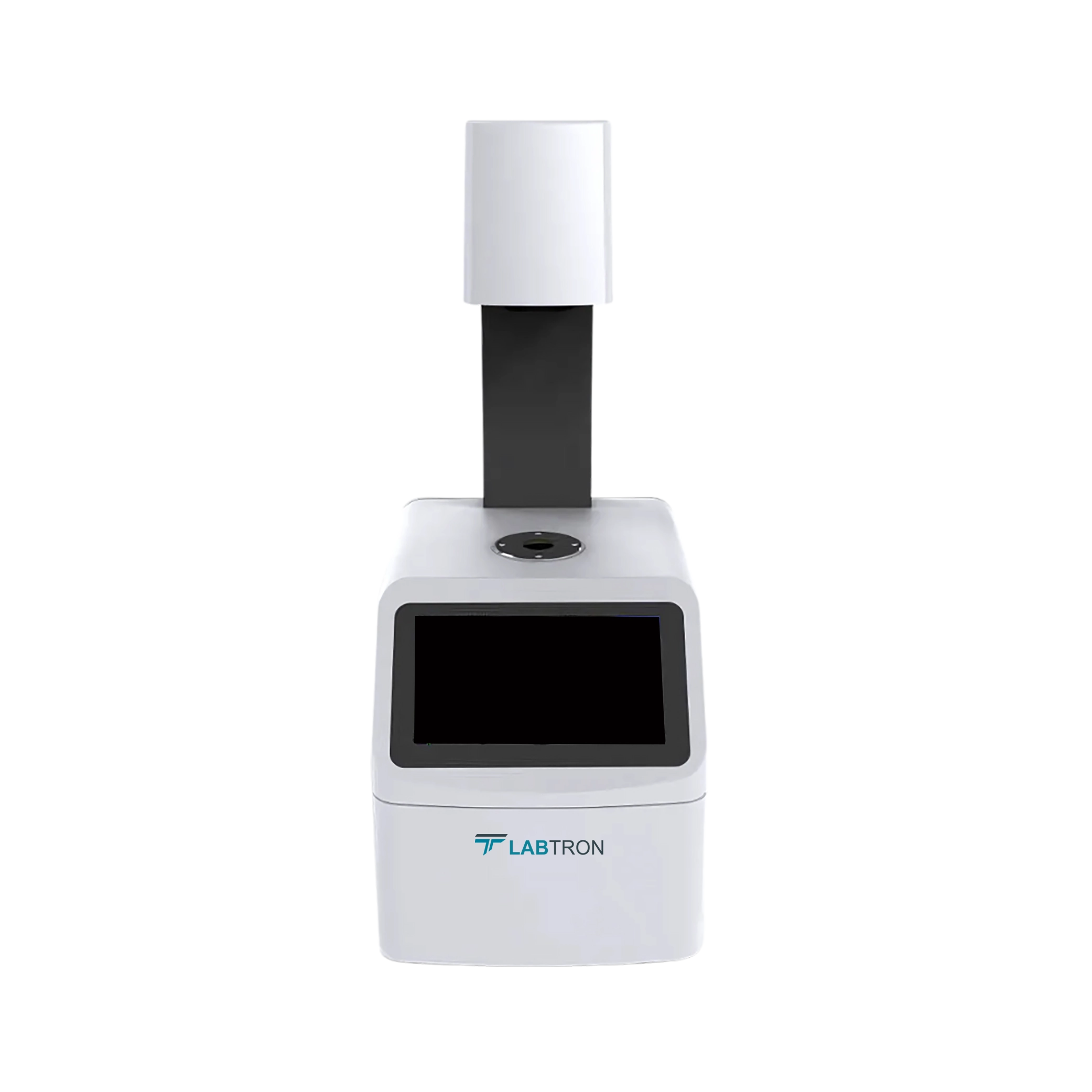

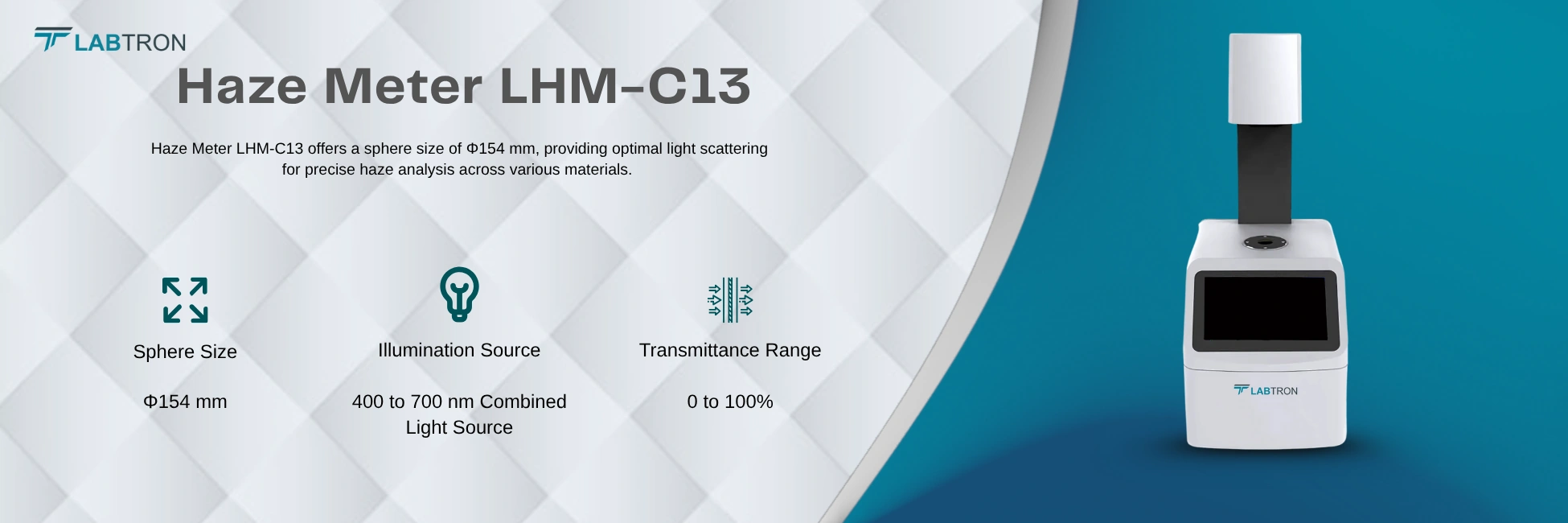
| Sphere Size | Φ154 mm |
| Optical Geometry | Transmittance: 0/D (Parallel Light Illumination, Diffuse Viewing) |
| Illumination Source | 400 to 700 nm Combined Light Source |
| Inductor | PD Array Detector CIE (λ) 2 Degree Visual Response |
| Transmittance Range | 0 to 100% |
| Measurement Aperture | Φ20mm / Φ 8mm (Dual Aperture) |
| Other Indices | Haze (ASTM D1003/1044, ISO 13468), Transmittance T (ASTM) |
| Viewing Angle | 2° |
| Illuminants | D 65, A, C |
| Measurement Time | 1.5 s |
| Haze Resolution | 0.01 unit |
| Haze Repeatability | Φ20 mm within 0.05 |
| Inter- Instrument Error | Φ20 mm within 0.4 |
| Data Storage | Standard: 1000, Sample: 20000 |
| Operating Temperature | 0°C to 40°C |
| Storage Temperature | -20°C to -50°C |
| Power Consumption | 24 V DC, 3A Power Adapter |
| Dimensions (L× W× H) | 290× 211 × 511 mm |
| Weight | 7.6 kg |
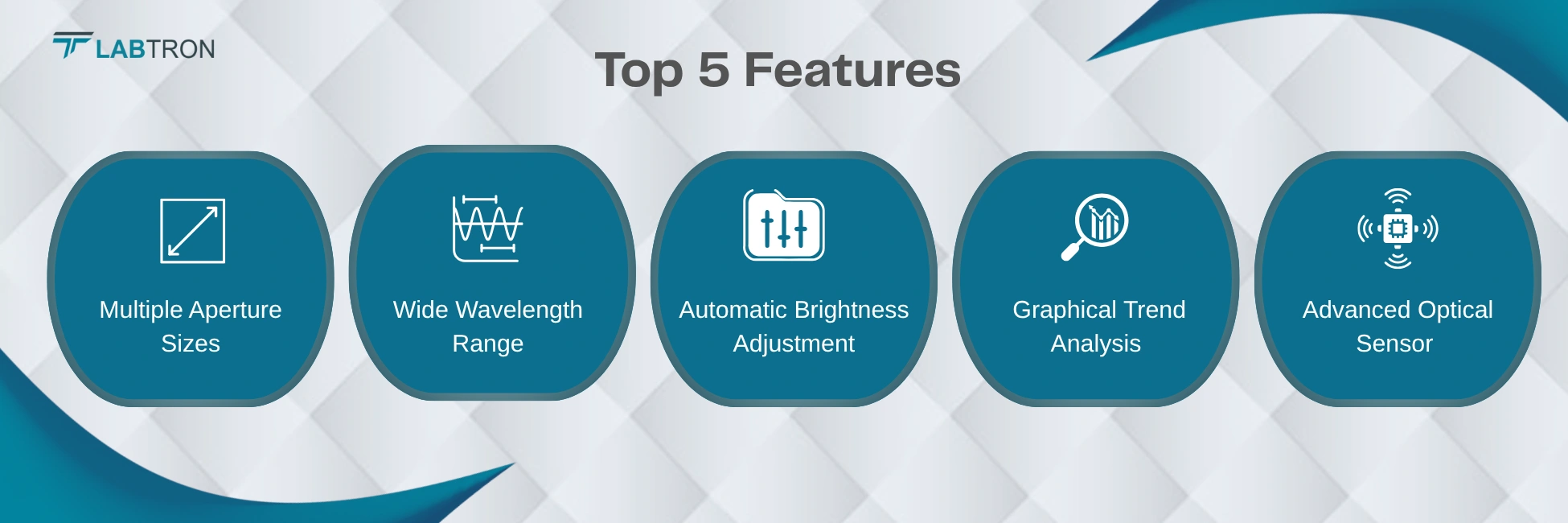
Multiple Aperture Sizes
Wide Wavelength Range
Automatic Brightness Adjustment
Graphical Trend Analysis
Advanced Optical Sensor
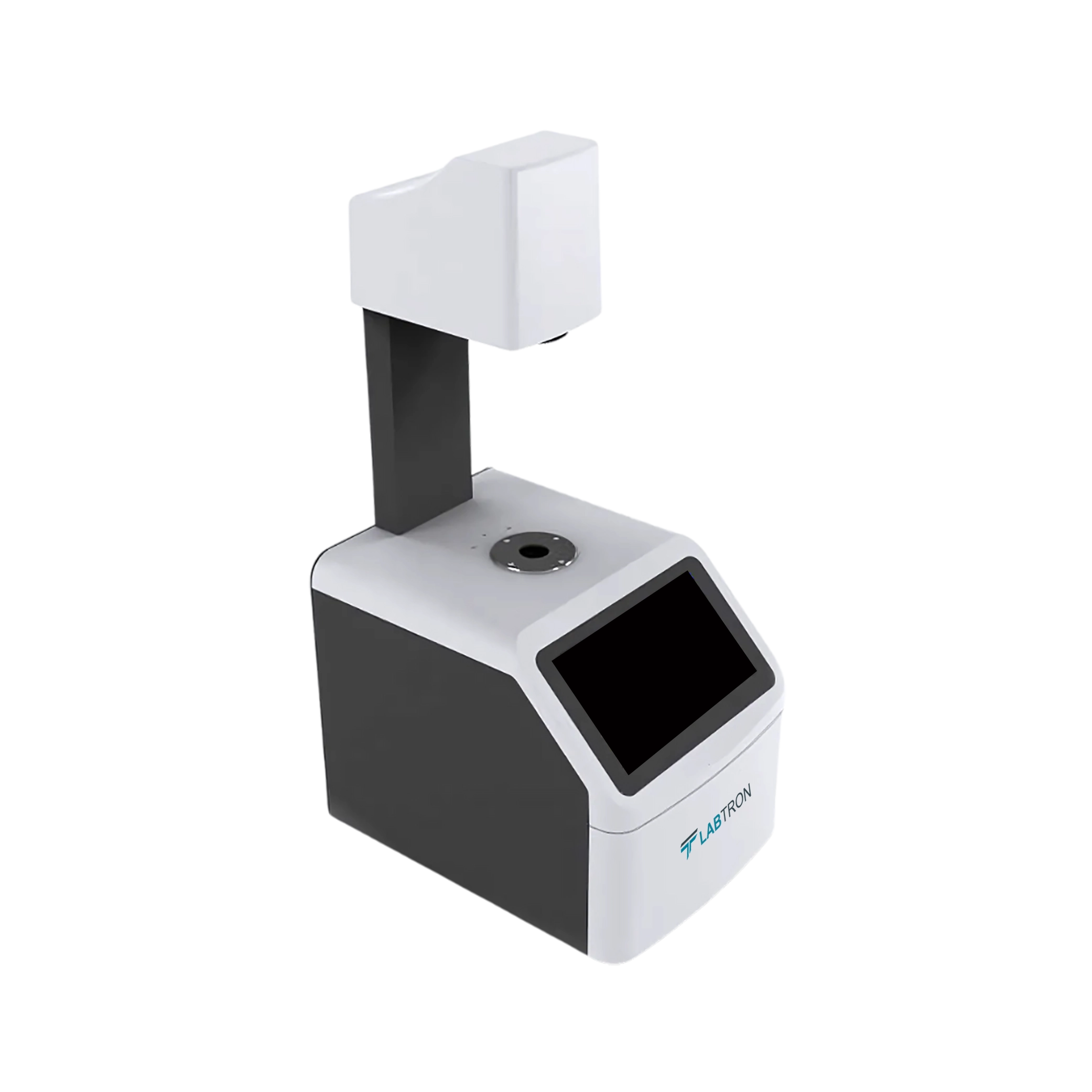
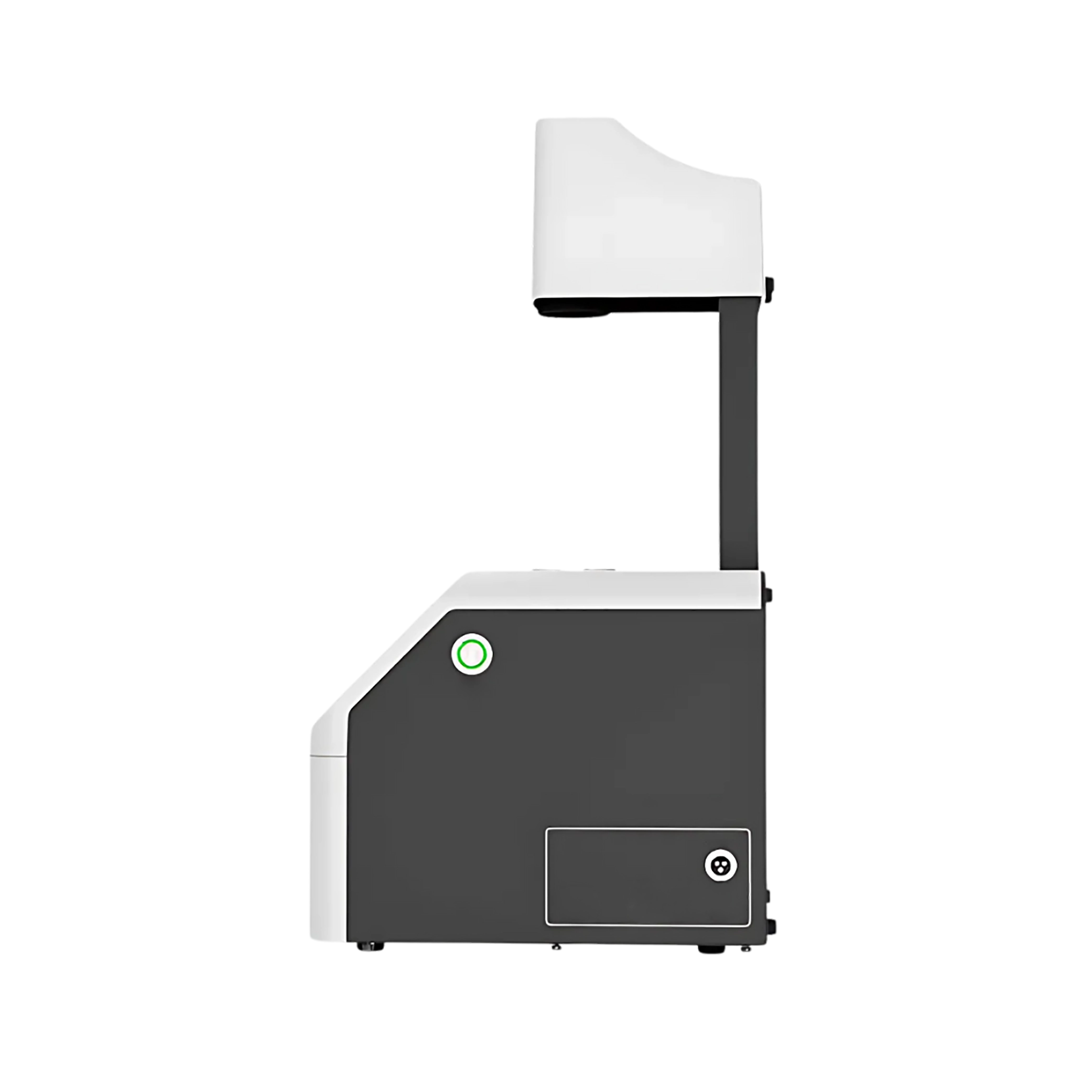
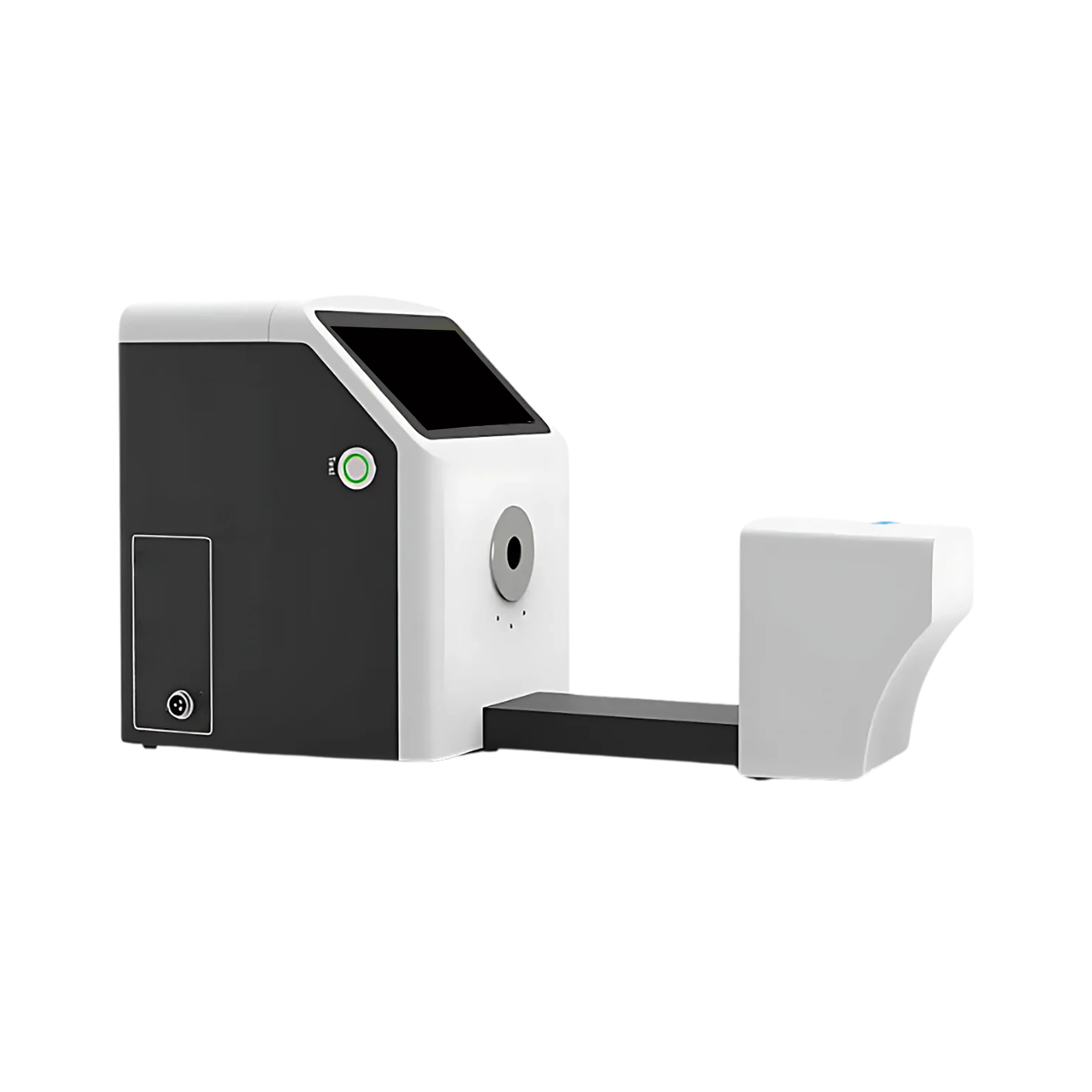
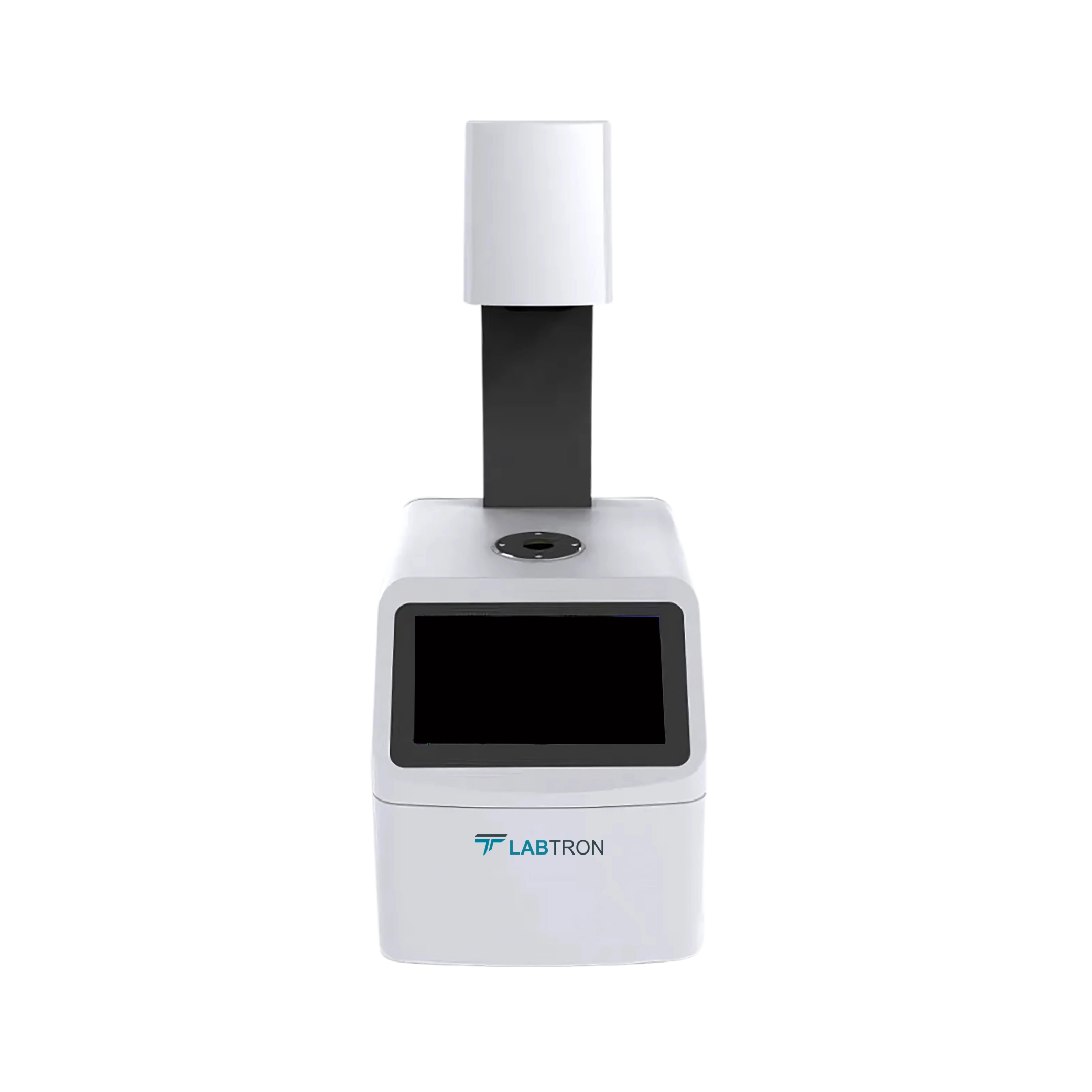
Haze Meter LHM-C13 measures the transparency and cloudiness of a material to assess its visual quality and light transmission. It is applied in automotive industry for assessing the transparency and haze levels in headlights, windshield and other components.
Accessories Name | Quantity |
0 % Calibration Box | 1 |
Measuring Caliber | 1 |
Aperture | 1 |
Download catalog for
Haze Meter LHM-C13 Catalog
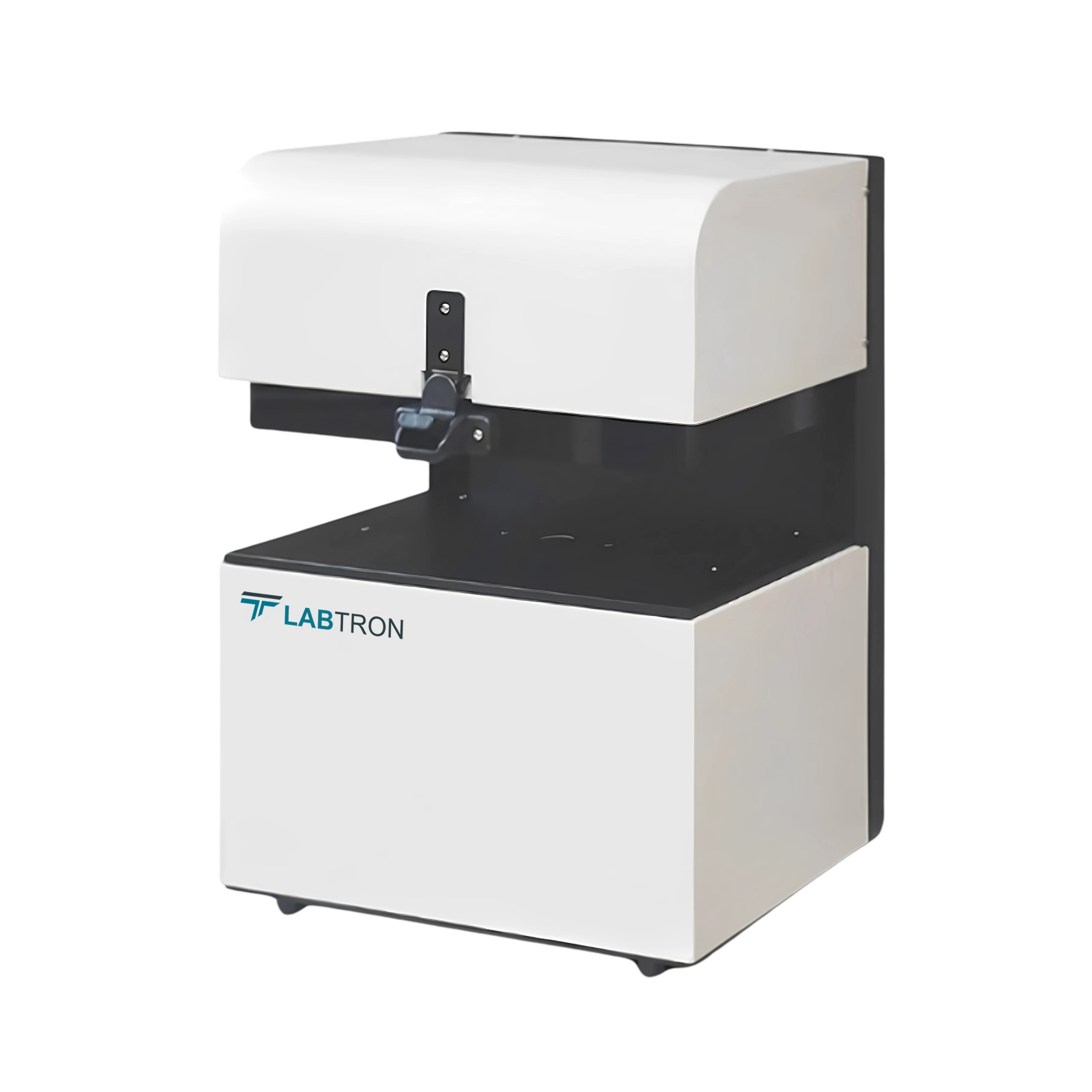
Labtron Haze Meters offer unmatched accuracy and effectiveness for assessing transparency in a variety of items. They have intuitive software, touch screens that are easy to operate, and streamlined procedures. Their diverse light sources provide versatility, and their open measuring surfaces may handle a range of sample sizes. These include extensive color analysis and adaptable fixtures to improve quality control. Our haze meters are crucial for accurate transmittance and clarity testing because of their enormous storage capacity.



Labtron supplies advanced haze meters. The integrating spheres in some models to collect scattered light more uniformly and accurately. The integrating sphere captures all scattered light at multiple angles, creating a diffuse and complete representation of haze rather than a narrow-angle sample. This is especially useful when dealing with materials that scatter in multiple directions or have textured surfaces. Labtron uses highly reflective inner coatings in these spheres to minimize absorption and maximize uniformity. Integrating spheres allow measurements that align with ISO and ASTM standards requiring full-angle haze capture. This design is critical for high-fidelity haze assessments.
Labtron haze meters rely on highly linear photodetectors to ensure that changes in light intensity produce proportionate changes in output readings. Linearity is crucial because haze is a ratio-based measurement comparing scattered to total transmitted light. If the detector response is non-linear, small intensity changes may be exaggerated or muted, skewing results. Labtron calibrates and tests detectors for linearity across the operating light range and temperature spectrum. This stability is reinforced by signal processing algorithms that correct minor deviations. The result is consistent, trustworthy haze measurements even under varying sample opacity or light conditions.
Labtron haze meters utilize several methods to minimize measurement noise, including optical filtering, digital averaging, temperature compensation, and signal isolation. Ambient light interference is reduced by using enclosed sample chambers and wavelength-selective filters that block stray light. We also implement high signal-to-noise ratio detectors and real-time signal averaging to smooth out transient fluctuations. In environments with electrical noise, built-in shielding and differential measurement circuits enhance stability. Combined, these features ensure accurate haze readings even at very low scatter levels. These techniques are particularly critical for applications demanding haze resolution.
Labtron haze meters cannot directly isolate surface scatter from bulk scatter but can offer indirect insights when used alongside complementary techniques. Surface scattering usually results from texture, abrasion, or coatings, while bulk scattering is due to internal inclusions or crystallinity. Labtron haze meters measure total forward scatter, but by preparing samples with controlled surface finishes or varying thicknesses, users can infer the dominant source. For more precise distinction. We recommend combining haze testing with microscopic inspection or laser scatterometry. In materials research, such combined analysis enhances understanding of optical performance and defect origin.
Labtron supplies premium haze meters which are engineered with optical systems calibrated to minimize the influence of varying refractive indices among transparent materials. When light passes through substances like glass, acrylic, or PET, their refractive index determines how much light bends or scatters. Our models use collimated light and standardized detection angles to ensure that measurement results are not significantly biased by these intrinsic material differences. However, extreme refractive variations can still affect boundary scatter, which the haze meter will detect. Labtron accounts for this by offering user-selectable reference modes and compensation settings. This ensures meaningful comparisons across a wide range of transparent materials.
Post your question?
Our experts are here to help!
Labtron Equipment Ltd., Quatro House, Lyon Way, Camberley, Surrey GU16 7ER United Kingdom
Email: info@labtron.com Whatsapp: +44 73 4441 2688 Phone: +44 2080 043608