info@labtron.com

| Optical Geometry | Transmittance: 0/D (Parallel Light Illumination, Diffuse Viewing) |
| Sphere Size | Φ154 mm |
| Illumination Source | 400 to 700 nm, Combined Light Source |
| Inductor | PD Array Detector CIE (λ) 2 Degree Visual Response |
| Transmittance Range | 0 to 100% |
| Measurement Aperture | Φ20mm / Φ15mm / Φ 8mm / Φ4mm |
| Sample Size | Thickness <170mm |
| Other Indices | Haze (ASTM D1003/1044, ISO 13468), Transmittance T ASTM |
| Viewing Angle | 2° |
| Illuminants | D 65, A, C |
| Measurement Time | 1.5 s |
| Haze Resolution | 0.01 unit |
| Haze Repeatability | Φ20 mm, within 0.15 |
| Inter- Instrument Error | Φ20 mm, with 0.4 |
| Data Storage | Standard: 1000, Sample: 10000 |
| Operating Temperature | 0°C to 40°C |
| Storage Temperature | -20°C to -50°C |
| Power Consumption | 24 V DC, 3A Power Adapter |
| Dimensions (L× W× H) | 290× 211 × 511 mm |
| Weight | 7.6 kg |
Integrated Light Sensor
Graphical Tool Display
Quick Measurement Time
Automatic Brightness Adjustment
Integrated Humidity Sensors
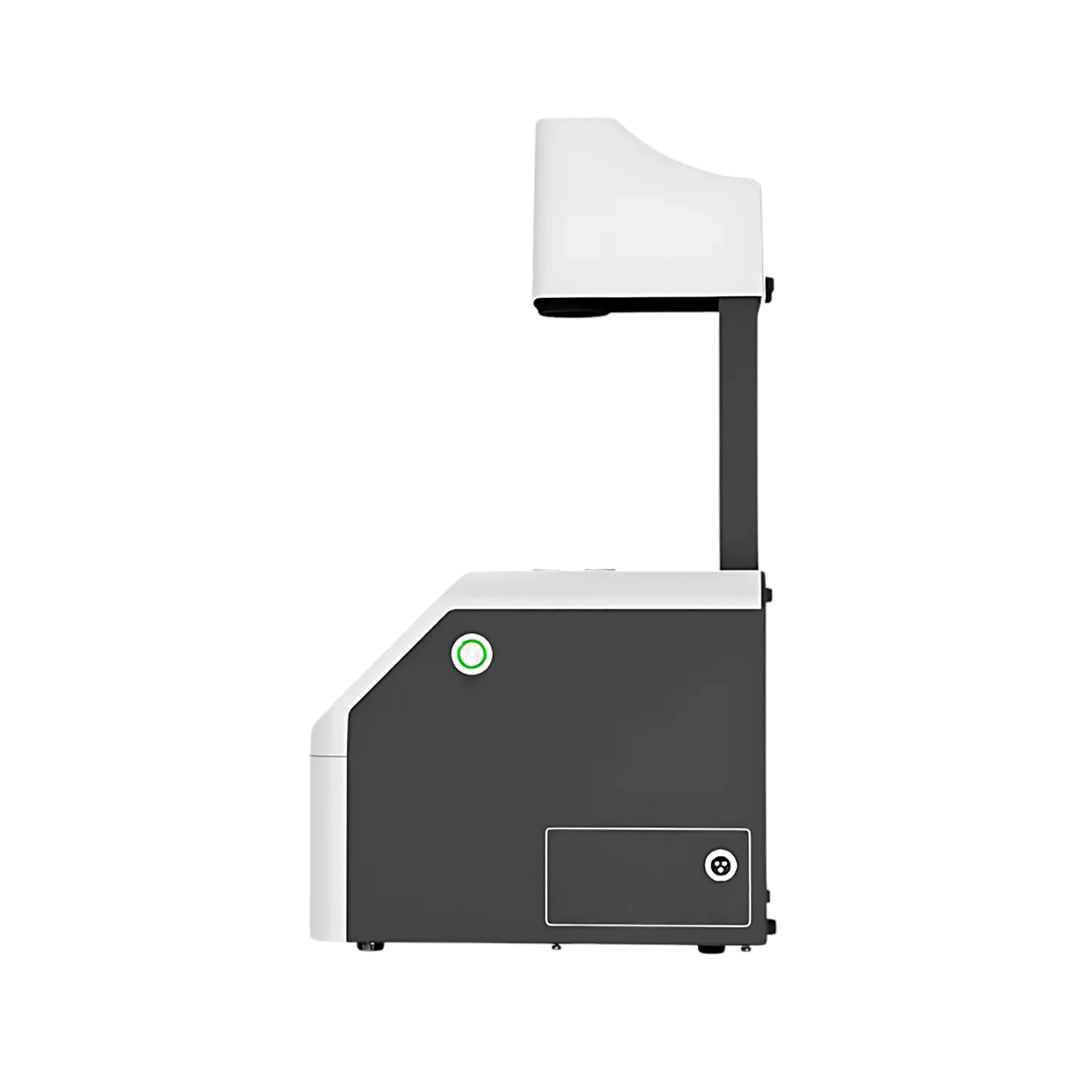
Haze Meter C-14 quantifies the amount of diffuse light transmitted through a sample, reflecting its optical clarity. It plays a key role in film, display screen processing for lamination verification, measuring screen cover clarity, and material comparison.
Accessories Name | Quantity |
0 % Calibration Box | 1 |
Measuring Caliber | 1 |
Download catalog for
Haze Meter LHM-C14 Catalog
Labtron Haze Meters offer unmatched accuracy and effectiveness for assessing transparency in a variety of items. They have intuitive software, touch screens that are easy to operate, and streamlined procedures. Their diverse light sources provide versatility, and their open measuring surfaces may handle a range of sample sizes. These include extensive color analysis and adaptable fixtures to improve quality control. Our haze meters are crucial for accurate transmittance and clarity testing because of their enormous storage capacity.


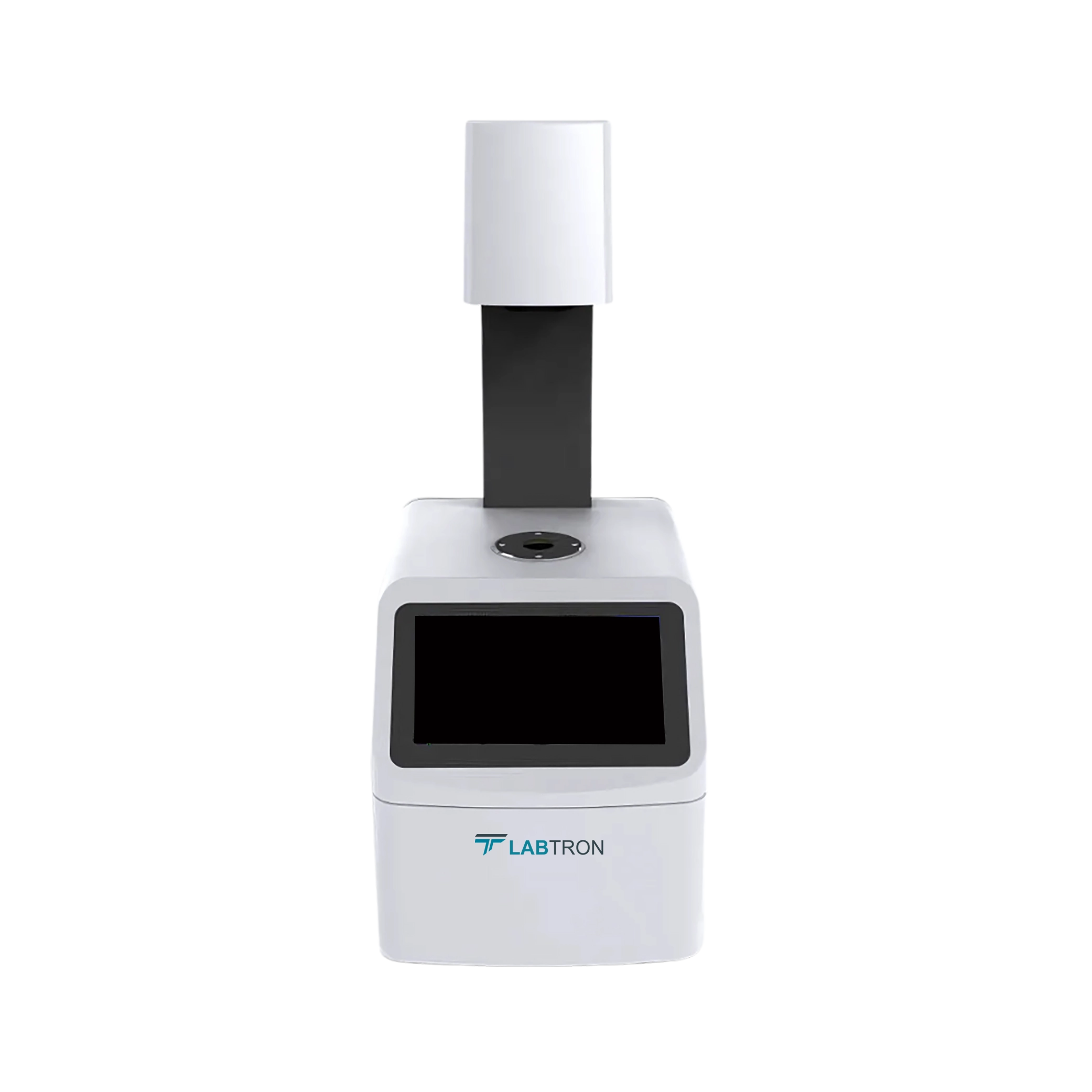

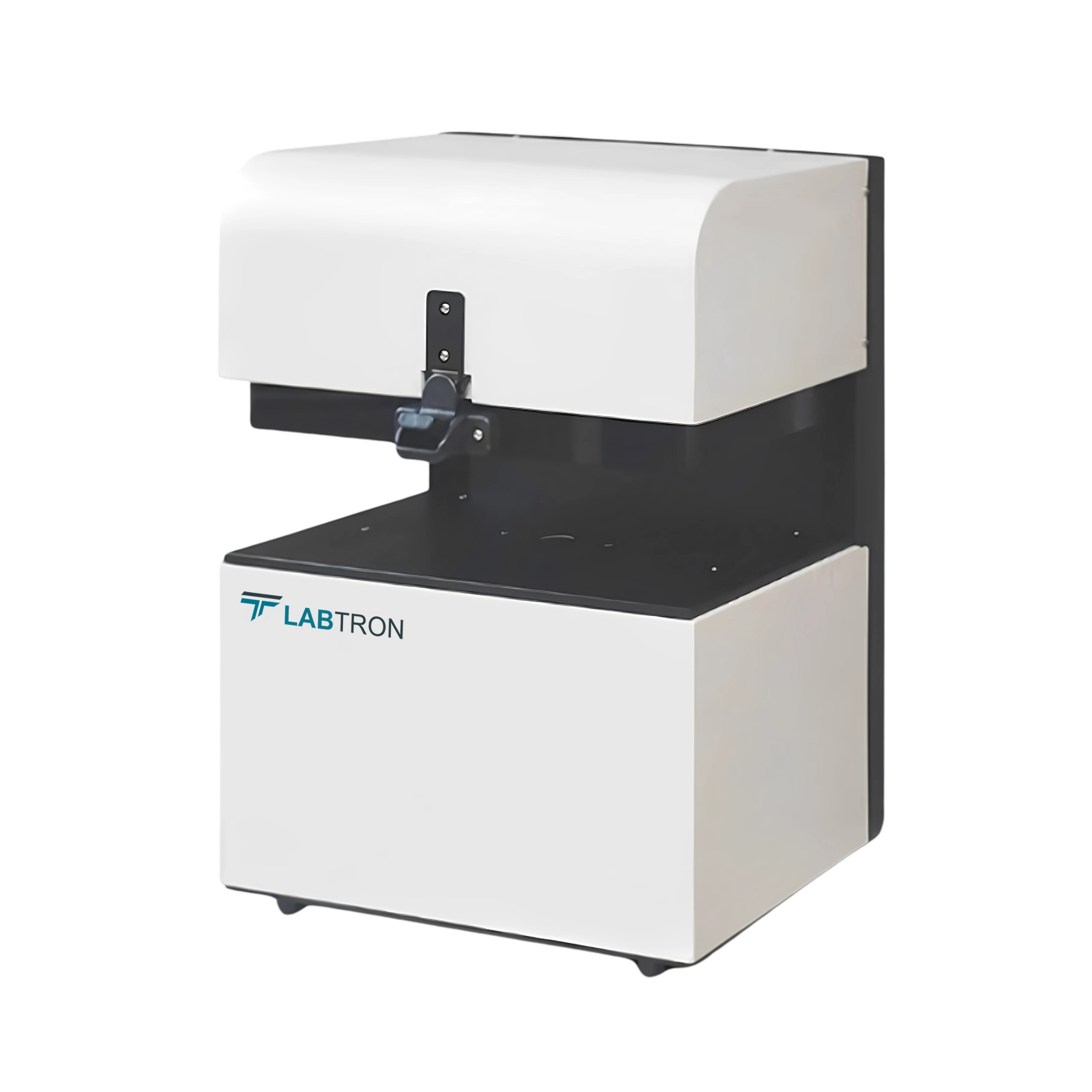


Labtron supplies advanced haze meter. An integration sphere is a reflective spherical surface used in haze meters to provide uniform illumination around the test specimen. This ensures consistent light intensity from all angles, which is crucial for accurate reflectance or transmission measurements. Not all haze meters require an integration sphere; its necessity depends on whether measurements from all directions are needed. Incorporating an integration sphere can improve measurement precision, especially when evaluating materials with complex light-scattering properties. This feature is particularly beneficial for applications requiring high accuracy in optical property assessments. By standardizing light distribution, the integration sphere helps minimize measurement variability caused by uneven illumination.
Yes, Labtron’s haze meters are employed in medical applications to assess the transparency and optical quality of materials used in healthcare products. For instance, they are used to measure the clarity of syringes, medical packaging, and optical lenses, ensuring that these products meet stringent quality standards. In the pharmaceutical industry, maintaining the clarity of packaging materials is essential for product integrity and patient safety. Haze meters help in quality control processes by providing precise measurements of light scattering, which can indicate the presence of impurities or inconsistencies in materials. By utilizing haze meters, manufacturers can ensure that their products are safe, effective, and compliant with regulatory requirements. Therefore, haze meters play a vital role in the medical field, contributing to the overall quality assurance of healthcare products.
Labtron Haze meters play a pivotal role in quality control by providing precise measurements of light scattering in materials. This allows manufacturers to assess the transparency and optical clarity of their products, ensuring they meet specified standards. By regularly monitoring haze levels, inconsistencies or defects in materials can be detected early, leading to improved product quality and reduced waste. Industries such as plastics, packaging, and automotive rely on haze meters to maintain the desired aesthetic and functional properties of their products. Implementing haze measurement in the production process helps in adhering to regulatory requirements and customer expectations. Overall, haze meters are essential tools for maintaining consistency and excellence in manufacturing processes.
Labtron supplies advanced haze meter. Sample thickness can influence haze readings, especially for materials with high haze values. Thicker samples may scatter light differently, leading to variations in haze measurements. It's essential to ensure that the sample thickness falls within the instrument's specified range to obtain accurate readings. Some advanced haze meters are designed to accommodate a wide range of sample thicknesses, providing flexibility for various applications. When measuring thicker samples, it's advisable to use appropriate sample holders or fixtures to maintain consistent positioning and alignment. Additionally, ensuring uniformity in sample thickness across measurements helps in achieving reproducible results. Understanding the relationship between sample thickness and haze readings is crucial for accurate assessment and quality control.
Yes, many modern haze meters are capable of measuring both haze and clarity, providing a comprehensive assessment of a material's optical properties. Clarity refers to the transparency of a material, indicating how clearly objects behind it can be seen. While haze measures the scattering of light, clarity assesses the degree of transparency. Some haze meters offer simultaneous measurement of both parameters, streamlining the testing process and ensuring consistency. It's important to select a haze meter that aligns with the specific standards and requirements of your application, such as ASTM D1003. By evaluating both haze and clarity, manufacturers can ensure that their products meet the desired optical performance criteria. This dual measurement capability is particularly beneficial in industries like packaging, automotive, and electronics, where optical clarity is critical.
Post your question?
Our experts are here to help!
Labtron Equipment Ltd., Quatro House, Lyon Way, Camberley, Surrey GU16 7ER United Kingdom
Email: info@labtron.com Whatsapp: +44 73 4441 2688 Phone: +44 2080 043608