 info@labtron.com

| Optical Geometry | Transmittance: 0/D (Parallel Light Illumination, Diffuse Viewing) |
| Sphere Size | Φ154 mm |
| Illumination Source | 400 to 700 nm Combined Light Source |
| Inductor | 256 Pixel Dual Array CMOS Image Sensor |
| Wavelength Range | 400 to 700 nm |
| Wavelength Interval | 10nm |
| Hald Bandwidth | 10nm |
| Transmittance Range | 0 to 100% |
| Measurement Aperture | Φ20mm / Φ 15mm / Φ 8mm / Φ4mm (Select Single Aperture) |
| Sample Size | Thickness <105 mm |
| Color Space | CIE LAB, XYZ, Yxy, LCh, s-RGB, βxy |
| Chromaticity Formula | ΔE × ab, ΔE × 94, ΔE × cmc (2:1), ΔE × cmc (1:1), ΔE × 00 |
| Other Indices | Haze (ASTM D1003/1044, ISO 13468), Transmittance T (ISO), Transmittance T (ASTM), Clarity Test, WI (ASTM E313, CIE / ISO, AATCC, Hunter), YI (ASTM D1925, ASTM 313), Absorbance, Cobalt Platinum Index, Gardner Index |
| Viewing Angle | 2° / 10° |
| Illuminants | D 65, A, C, D50, D55, D75, F1, F2, F3, F4, F5, F6, F7, F8, F9, F10, F11, F12, CWF, DLF, TL83, TL84, TPL5, U30 |
| Measurement Time | 1.5 s |
| Resolution | 0.01 unit |
| Repeatability | Φ20 mm aperture, less than 0.08 |
| Inter- Instrument Error | Φ20 mm aperture, less than 0.4 |
| Data Storage | Standard: 5000, Sample: 20000 |
| Operating Temperature | 0°C to 40°C |
| Storage Temperature | -20°C to -50°C |
| Power Consumption | 24 V DC, 3A Power Adapter |
| Dimensions (L× W× H) | 487 × 260 × 298 mm |
| Weight | 8.0 kg |
Graphical Tool Display
Backlit Display Panel
Multiple Observation Light Sources
Quality Management Software
Automatic Brightness Adjustment
Haze Meter LHM-D11 evaluates the transparency of materials by determining the percentage of light diffused and transmitted through the surface. It offers a key role in the packaging industry and liquid analysis, assessing the purity of products and maintaining optical quality.
Accessories Name | Quantity |
0 % Calibration Box | 1 |
Aperture | 1 |
Download catalog for
Haze Meter LHM-D11 Catalog


Labtron Haze Meters offer unmatched accuracy and effectiveness for assessing transparency in a variety of items. They have intuitive software, touch screens that are easy to operate, and streamlined procedures. Their diverse light sources provide versatility, and their open measuring surfaces may handle a range of sample sizes. These include extensive color analysis and adaptable fixtures to improve quality control. Our haze meters are crucial for accurate transmittance and clarity testing because of their enormous storage capacity.
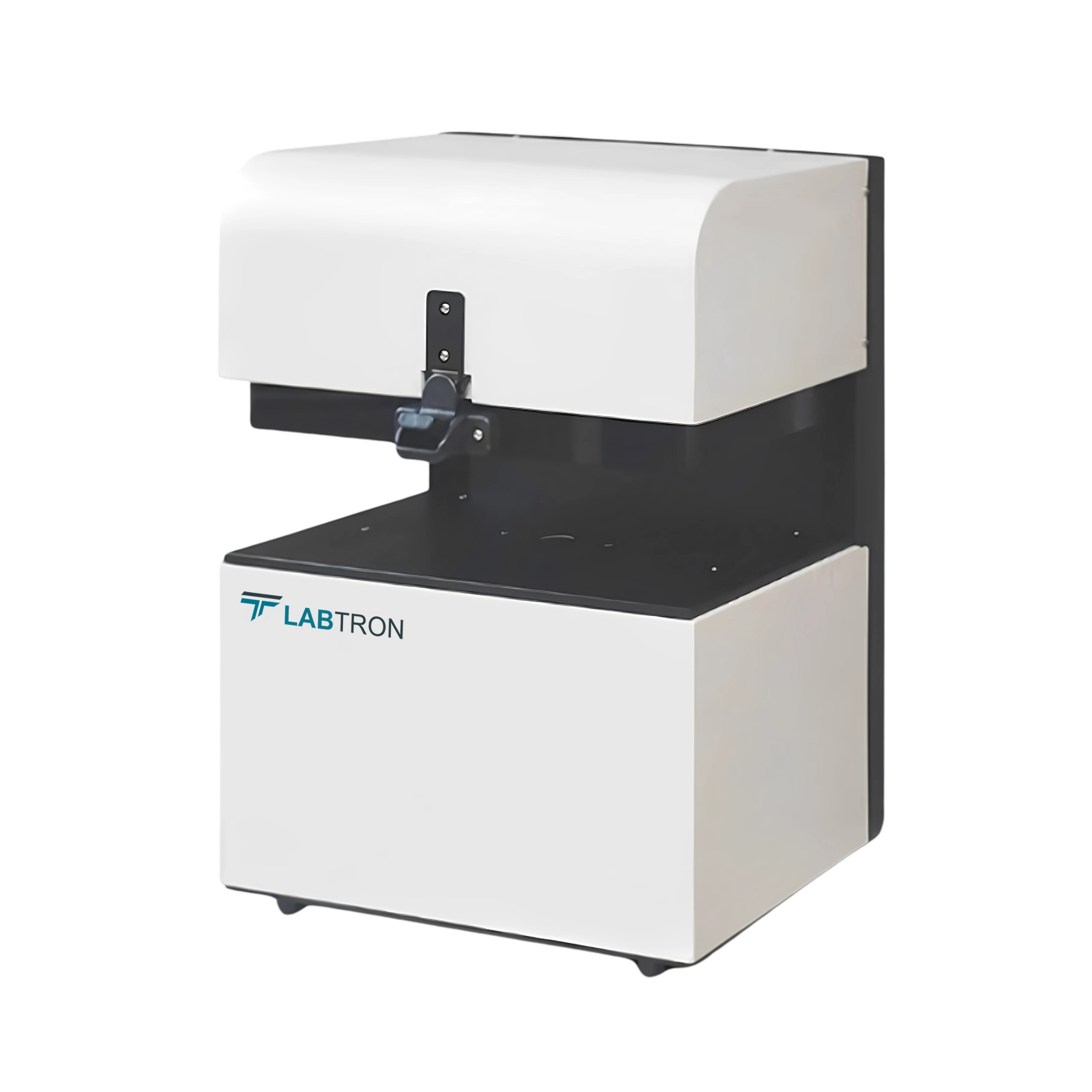


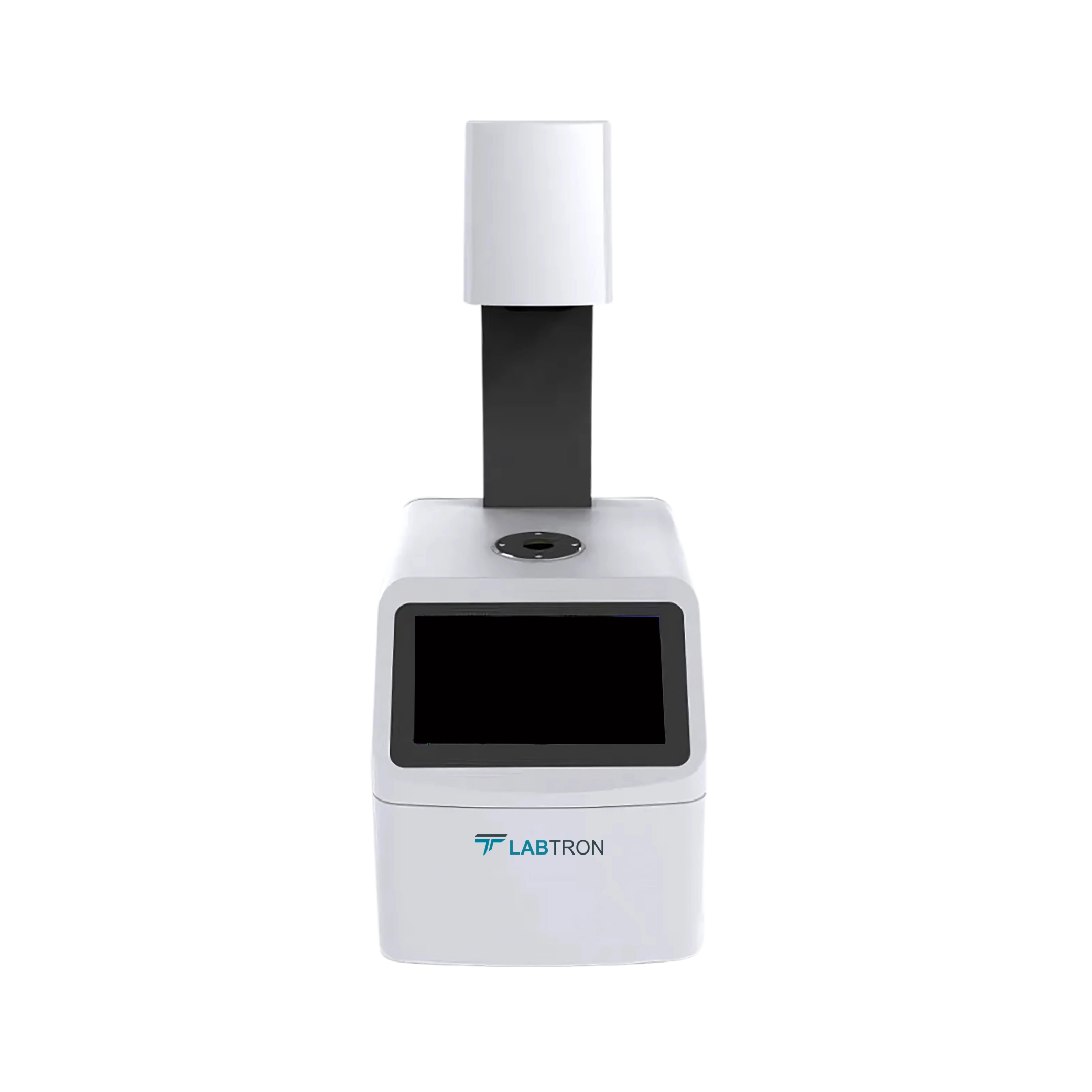


Labtron supplies premium haze meter. Environmental conditions such as humidity, temperature fluctuations, dust, and ambient light can affect the accuracy and stability of haze meter readings. High humidity can cause condensation on optical components or samples, leading to light scattering that mimics haze. Temperature changes may impact the material properties or electronics within the instrument, potentially causing drift or variation in readings. Dust or particles in the testing area can interfere with the optical path, while ambient light can affect detection if the instrument is not well-shielded. To mitigate these factors, haze meters should be operated in clean, temperature-controlled environments, and regular calibration should be performed. Advanced models often include built-in safeguards, such as sealed chambers and temperature compensation, to minimize these environmental influences.
Yes, Labtron’s haze meters can be used for tinted or colored transparent materials, but the measurement must account for the material’s absorption properties. Since haze is defined by light scattering rather than absorption, a colored sample with high transmittance can still be measured accurately if it allows sufficient light through. However, the specific wavelength range of the haze meter (typically 400–700 nm) affects how well it handles certain colors, especially if the material heavily filters parts of the visible spectrum. For such cases, it’s important to use a meter that includes spectral correction or allows wavelength selection to avoid skewed results. In industries like automotive glass, sunglasses, or decorative films, haze meters are valuable tools for ensuring that tinting does not compromise optical clarity or visibility.
Labtron supplies premium haze meter. Common user errors in haze meter operation include improper sample placement, using scratched or dirty samples, neglecting regular calibration, and not following consistent orientation. Misalignment of the sample can lead to scattered readings or reduced repeatability. Surface contamination-like fingerprints or dust can falsely elevate haze values, while damaged samples may scatter light irregularly. Skipping calibration routines or using expired reference standards can lead to gradual drift and loss of accuracy. Additionally, using the wrong aperture size for the sample may result in edge effects or incomplete coverage. Consistent training, following standard operating procedures, and routine maintenance help minimize these errors and ensure reliable results.
Labtron’s haze meter have wide range of industries benefit from haze meter technology due to its ability to evaluate material transparency and clarity. Key industries include plastics, glass, automotive, electronics, films, food and beverage packaging, and pharmaceuticals. In automotive, haze meters help assess windshield clarity and headlamp lens quality. In display manufacturing, they are critical for evaluating screen films, covers, and diffusers. Packaging companies use haze meters to ensure clear presentation and product visibility. In the pharmaceutical and beverage industries, haze meters are used to monitor the clarity of liquids and containers. Their role in quality control, R&D, and regulatory compliance makes haze meters essential in both product development and mass production.
Labtron’s haze meters are generally safe to operate, following proper safety practices ensures longevity and accurate performance. Users should avoid touching optical surfaces with bare hands and must handle calibration standards with clean gloves. Electrical safety must be observed, only use approved power supplies and avoid operating in damp environments. Keep the device away from direct sunlight and volatile chemicals that could degrade components or affect sample conditions. When testing fragile or hazardous samples (like glass), protective eyewear and gloves are recommended. Always power down the unit before cleaning or servicing. Reading the manufacturer’s safety guidelines and user manual is essential to avoid damage and ensure safe, consistent operation.
Post your question?
Our experts are here to help!
Labtron Equipment Ltd., Quatro House, Lyon Way, Camberley, Surrey GU16 7ER United Kingdom
Email: info@labtron.com Whatsapp: +44 73 4441 2688 Phone: +44 2080 043608


