info@labtron.com

| Glass Vessel Volume | 3 L Cylindrical |
| Glass Vessel Lid Diameter | Φ 205 mm |
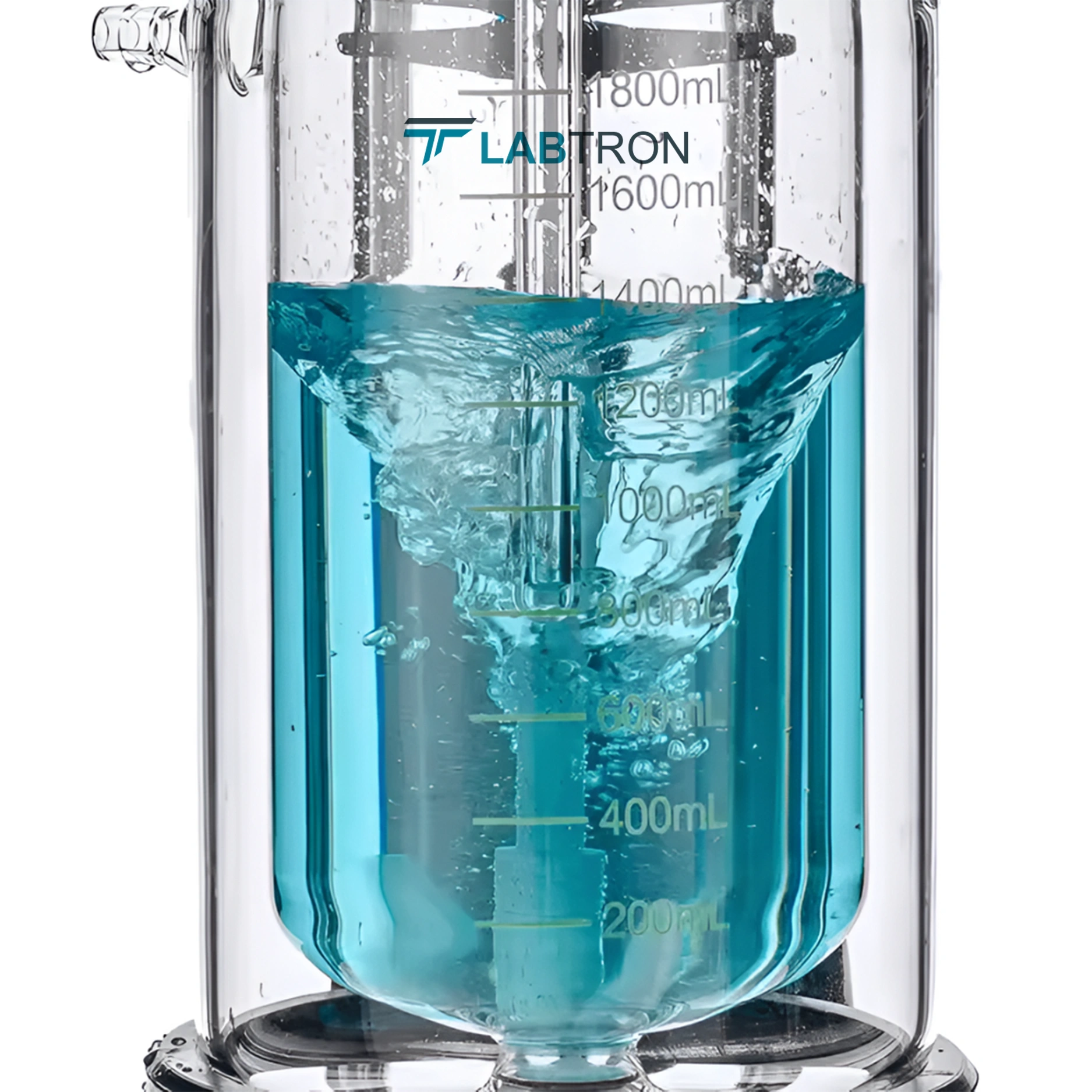
| Jacketed Volume | 600 ml |
| Dropping Funnel | 500 ml |
| Temperature Range | -80℃ to 250 ℃ |
| Temperature Measurement Accuracy | +/-1℃ |
| Stirring Speed | 0 to 450 rpm |
| Vacuum Degree | 0.0098 Mpa |
| Power Consumption | 90 W |
| Power Supply | 220V/50Hz |
| Condenser Dimension (D×H) | 60×450 mm |
| Dimensions (W×D×H) | 330×410×1450 mm |
| Weight | 26 kg |
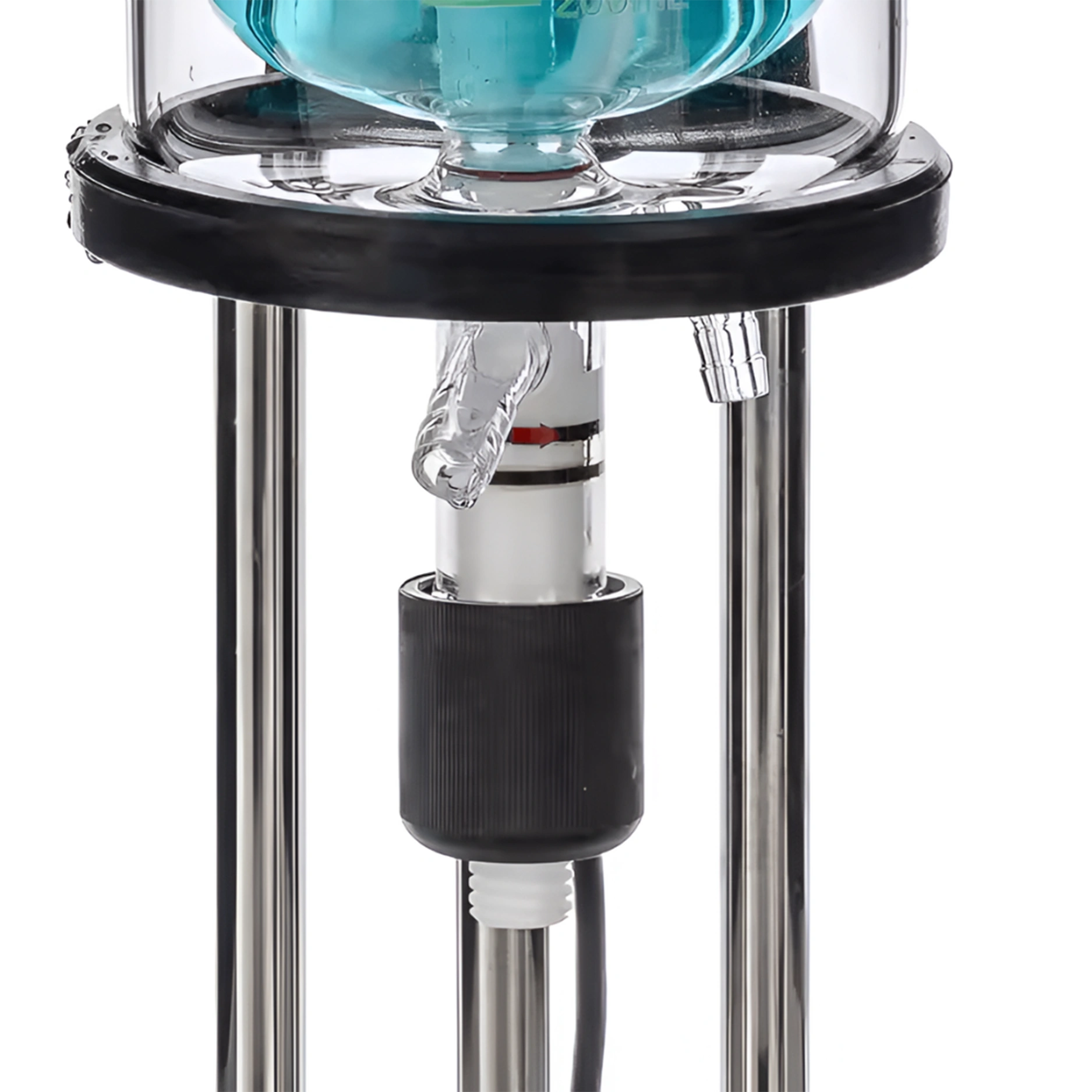
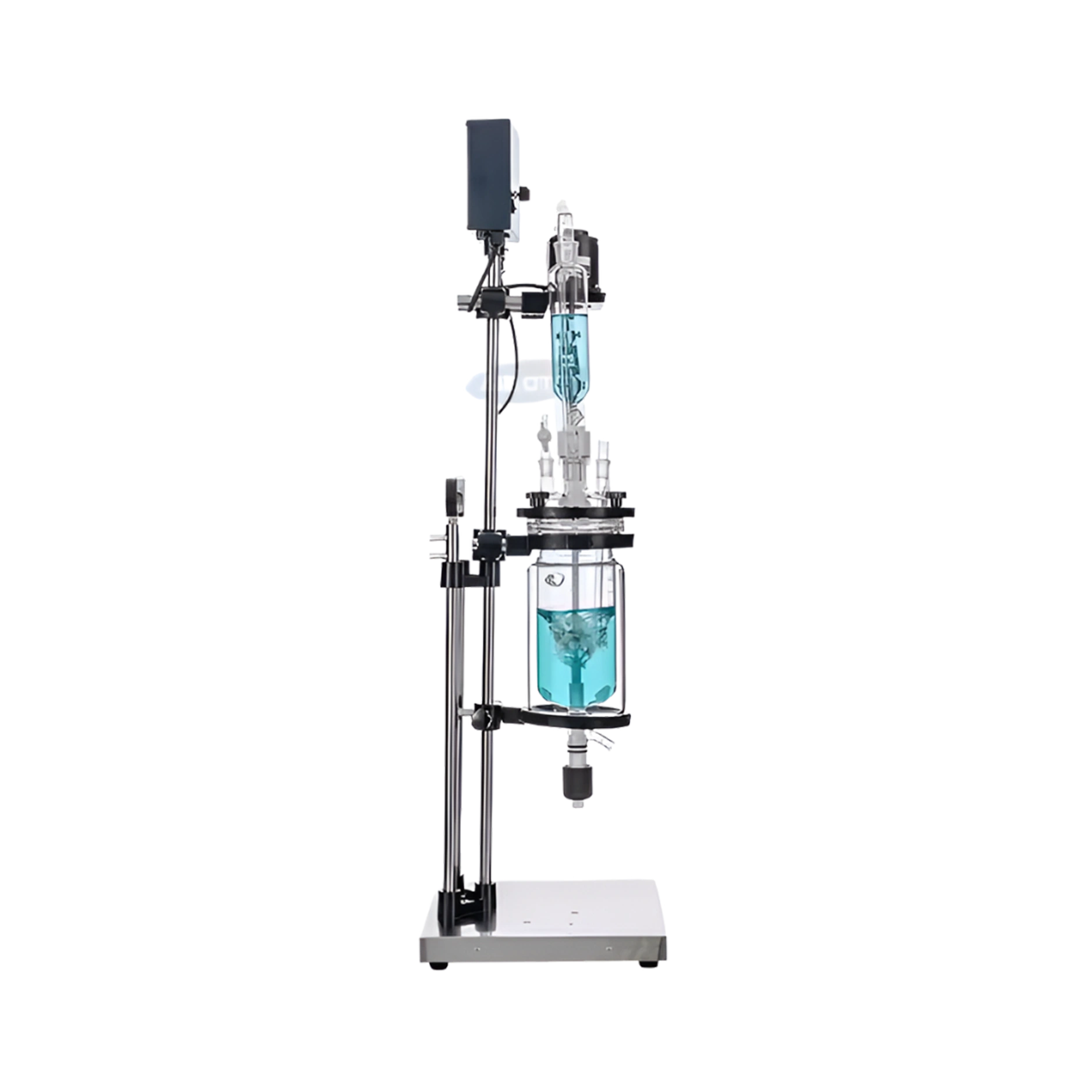
Jacketed Glass Reactor LJGR-A16 is built for chemical synthesis, distillation, and concentration in lab and industrial settings. Its dual-layer design enables thermal fluid circulation, supporting use in research, pharmaceuticals, metallurgy, healthcare, and aerospace.
Download catalog for
Jacketed Glass Reactor LJGR-A16 Catalog
Available Range :
Jacketed Glass Reactor LJGR-A10 : 1 L Cylindrical Jacketed Glass Reactor LJGR-B21 : 10 L Jacketed Glass Reactor LJGR-A22 : 10 L Cylindrical Jacketed Glass Reactor LJGR-B24 : 100 L Jacketed Glass Reactor LJGR-A26 : 100 L Cylindrical Jacketed Glass Reactor LJGR-B26 : 100L Jacketed Glass Reactor LJGR-A27 : 150 L Cylindrical Jacketed Glass Reactor LJGR-A11 : 2 L Cylindrical Jacketed Glass Reactor LJGR-B22 : 20 L Jacketed Glass Reactor LJGR-A23 : 20 L Cylindrical Jacketed Glass Reactor LJGR-B25 : 200 L Jacketed Glass Reactor LJGR-A28 : 200 L Cylindrical Jacketed Glass Reactor LJGR-A12 : 3 L Cylindrical Jacketed Glass Reactor LJGR-A24 : 30 L Cylindrical Jacketed Glass Reactor LJGR-B20 : 5 L Jacketed Glass Reactor LJGR-A50 : 5 L (Cylindrical) Jacketed Glass Reactor LJGR-A17 : 5 L Cylindrical Jacketed Glass Reactor LJGR-A13 : 5 L, Cylindrical Jacketed Glass Reactor LJGR-B23 : 50 L Jacketed Glass Reactor LJGR-A25 : 50 L CylindricalJacketed Glass Reactor supports controlled mixing with adjustable stirring speed, ensuring consistent reaction dynamics in varied experiments. They maintain thermal stability using a jacketed layer for fluid circulation without exposing the medium. Their borosilicate glass build withstands thermal stress and chemical exposure over time. These systems include a display panel for monitoring key parameters during operation. Our glass reactor is suited for synthesis, distillation, extraction, crystallization, and pharmaceutical development.

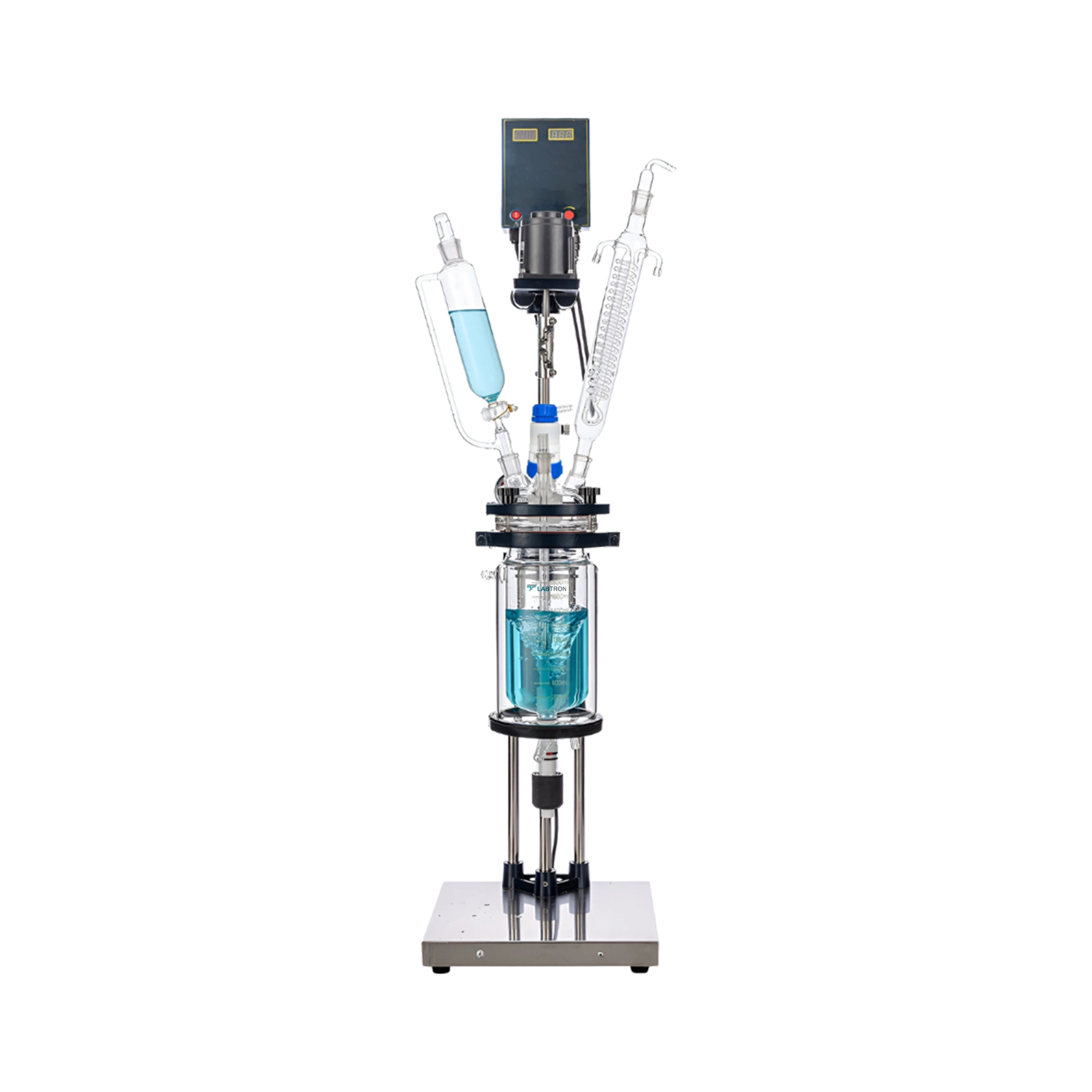
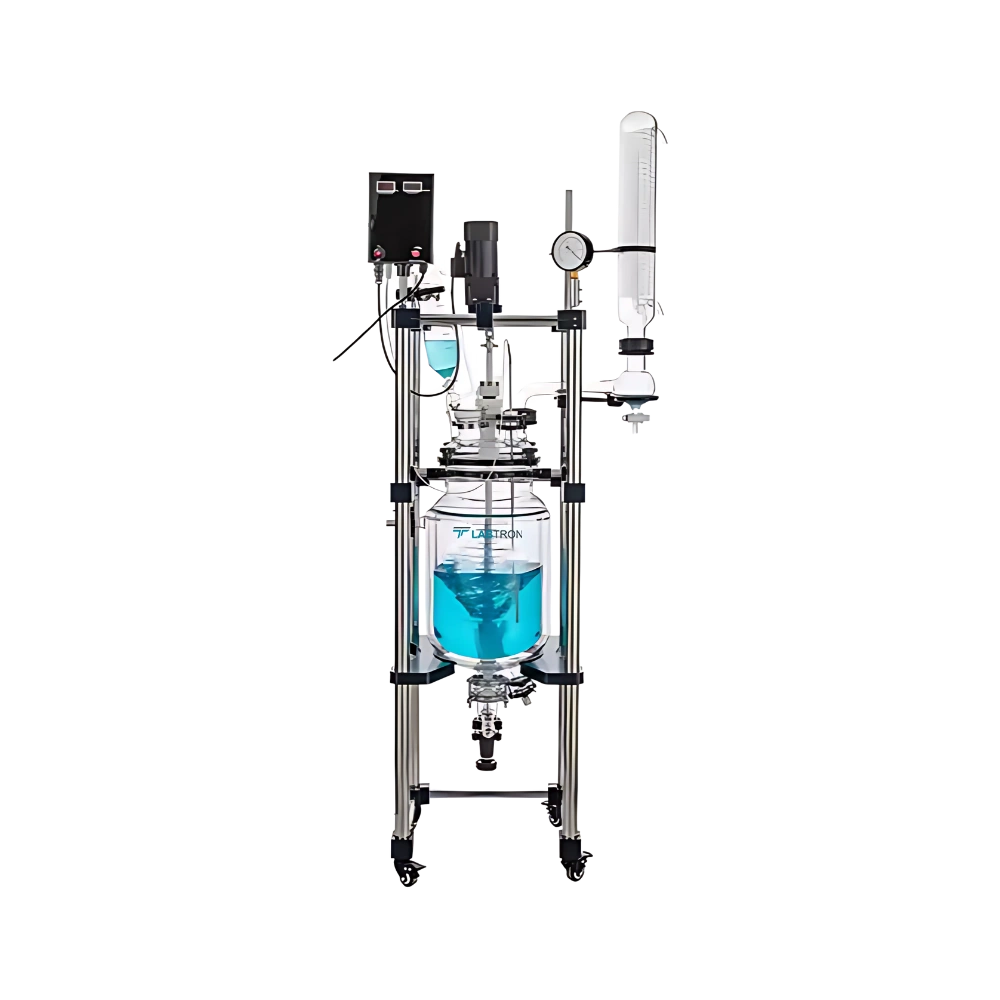

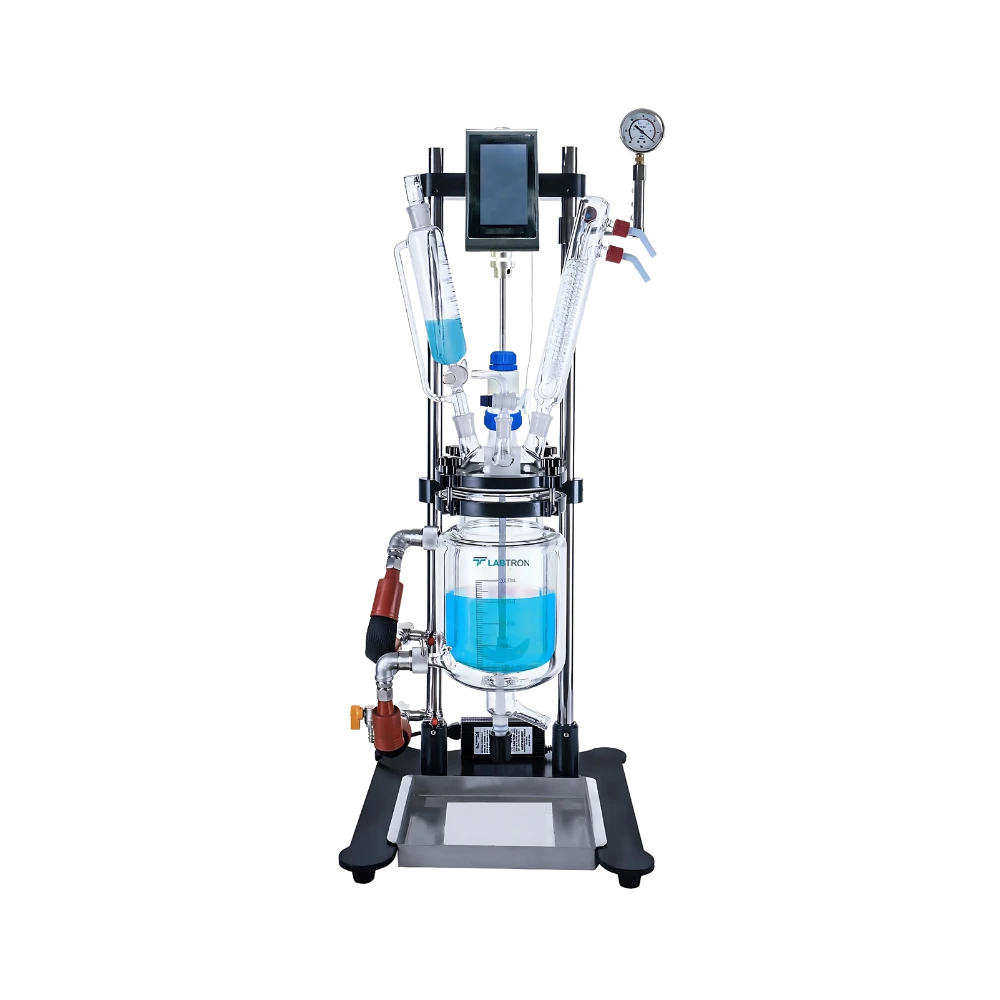


Our Jacketed Glass Reactor is designed with multi-port access that enables material addition without interrupting stirring. This design allows researchers to maintain reaction conditions during gradual reagent introduction. The inclusion of a top lid with various openings ensures flexibility in experimental workflows. Stirring continues uninterrupted while additions are made, maintaining homogeneity. There is no need to pause or reconfigure setup between steps. This flexibility enhances reproducibility and reduces reaction time. The ports can be sealed individually when not in use. Researchers benefit from uninterrupted thermal and mixing conditions throughout processes.
The Jacketed Glass Reactor is engineered with materials that resist reactive and corrosive substances commonly found in chemical and pharmaceutical research. Its construction minimizes interaction between contents and reactor surfaces. The non-metallic contact components provide an inert pathway, making it suitable for unstable or sensitive mixtures. This minimizes contamination or degradation risks during extended use. Leak-resistant connections further protect operators and prevent escape of harmful vapors. These attributes make it suitable for volatile and temperature-sensitive research materials. Its design focuses on operational integrity under demanding laboratory tasks. Researchers handling complex compounds gain peace of mind with this setup.
Labtron’s Jacketed Glass Reactor supports connectivity with external monitoring equipment for data acquisition. The embedded sensor ports allow real-time tracking of temperature and reaction parameters. Users can integrate data logging systems through available channels without altering core operations. This integration helps in mapping reaction profiles and optimizing research outcomes. The compatibility is helpful in regulated or academic labs where documentation is critical. Such setups also aid in long-term stability tests. Each parameter can be monitored externally without manual intervention. With this, researchers can maintain continuous observation throughout reaction cycles.
The Jacketed Glass Reactor is built with accessible components that can be dismantled and cleaned without specialist tools. This modularity supports quick disassembly, especially during residue-sensitive experiments. Its detachable condenser and easy-release clamp system minimize downtime between test runs. Parts in contact with chemicals are constructed to resist buildup and staining. This makes maintenance schedules easier to manage and more reliable. The joints and seals are reinforced to handle repeat assembly cycles. Every user benefits from simplified upkeep, especially in multi-user environments. Long-term use does not compromise the reactor's reliability or cleanliness.
The Jacketed Glass Reactor incorporates layered safety through pressure-resistant joints and fixed-loop buffering. The framework is reinforced to support the glass under stress without shifting. Clamp fittings secure the vessel firmly while stirring occurs. Safety is enhanced by an overflow pathway that prevents jacket fluid leakage. Its structural layout separates electrical units from heated areas, limiting short-circuit risks. Reagent handling ports are designed to reduce backflow or splashing. This makes the reactor safer for repetitive procedures involving heat and vacuum. The unit is developed with operational safety as a core function.
Jacketed Glass Reactor employs a vertically mounted condenser to handle vapor effectively over extended durations. The design promotes fluid channeling and prevents blockage in long operations. Its dimensioning supports surface area contact with vapor, aiding collection. This enables uninterrupted use without compromising recovery. Condensate drains through defined paths, lowering the chance of reflux overspill. Its vertical format allows gravity-assisted flow back into the vessel or external container. This ensures minimal loss and more effective material use. Extended reactions requiring moisture control benefit from its stable condensation management.
Post your question?
Our experts are here to help!
Labtron Equipment Ltd., Quatro House, Lyon Way, Camberley, Surrey GU16 7ER United Kingdom
Email: info@labtron.com Whatsapp: +44 73 4441 2688 Phone: +44 2080 043608