 info@labtron.com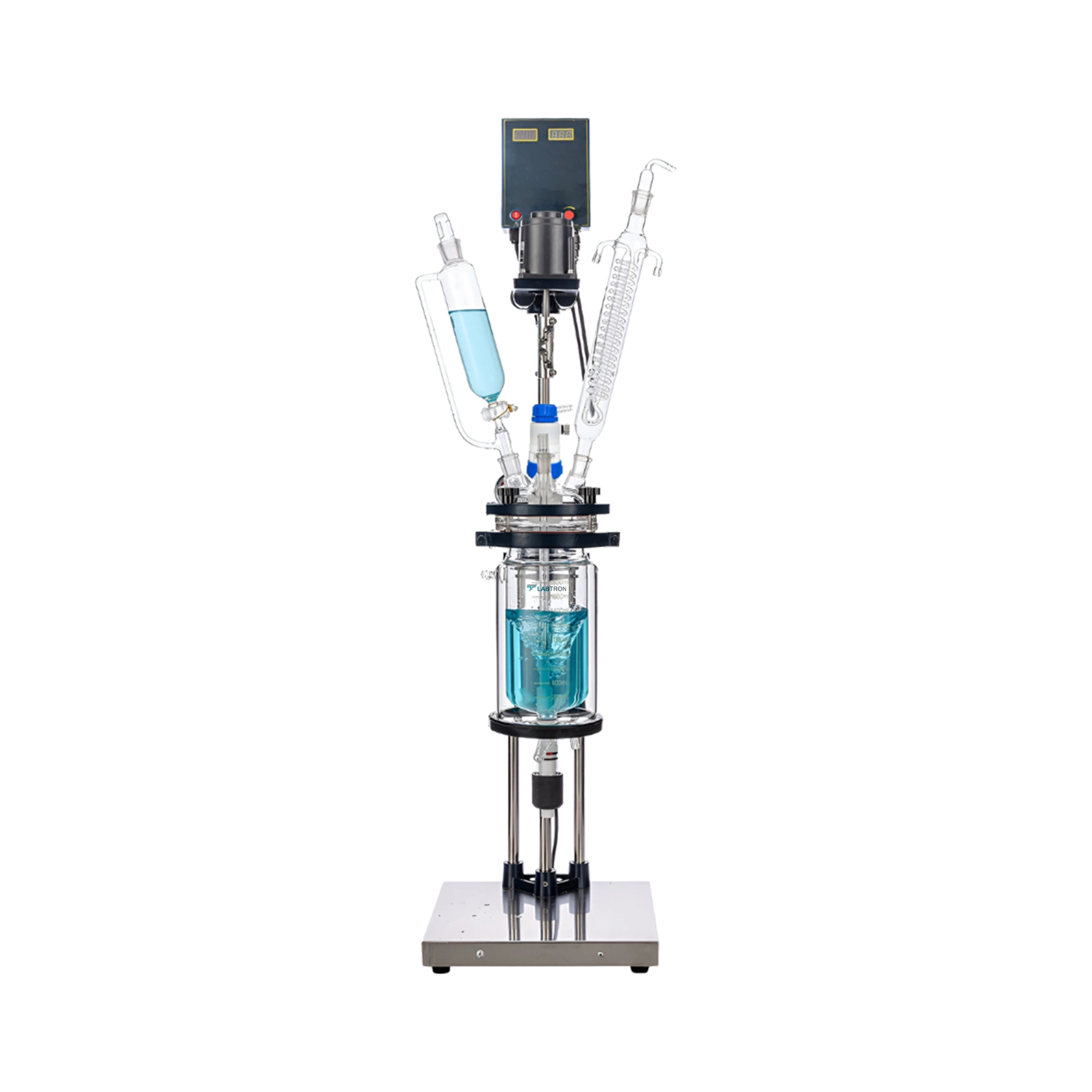

| Glass Vessel Volume | 1 L Cylindrical |
| Glass Vessel Lid Diameter | Φ 150 mm |
| Jacketed Volume | 200 ml |
| Dropping Funnel | 250 ml |
| Temperature Range | -80℃ to 250 ℃ |
| Temperature Measurement Accuracy | +/-1℃ |
| Stirring Speed | 0 to 1400 rpm |
| Vacuum Degree | 0.0098 Mpa |
| Power Consumption | 40 W |
| Power Supply | 220V/50Hz |
| Condenser Dimension (D×H) | 40×350 mm |
| Dimensions (W×D×H) | 330×350×1220 mm |
| Weight | 22 kg |
Tool-free component assembly
Anti-corrosive joint connectors
PTFE valve integration system
Leak-resistant insulated jacket
Stable wide-base design
Jacketed Glass Reactor LJGR-A18 supports controlled procedures such as synthesis, distillation, and temperature-sensitive reactions. It is widely applied in research institutes, chemical processing units, pharmaceutical development, and materials science laboratories.
Download catalog for
Jacketed Glass Reactor LJGR-A18 Catalog
Available Range :
Jacketed Glass Reactor LJGR-A10 : 1 L Cylindrical Jacketed Glass Reactor LJGR-B21 : 10 L Jacketed Glass Reactor LJGR-A22 : 10 L Cylindrical Jacketed Glass Reactor LJGR-B24 : 100 L Jacketed Glass Reactor LJGR-A26 : 100 L Cylindrical Jacketed Glass Reactor LJGR-B26 : 100L Jacketed Glass Reactor LJGR-A27 : 150 L Cylindrical Jacketed Glass Reactor LJGR-A11 : 2 L Cylindrical Jacketed Glass Reactor LJGR-B22 : 20 L Jacketed Glass Reactor LJGR-A23 : 20 L Cylindrical Jacketed Glass Reactor LJGR-B25 : 200 L Jacketed Glass Reactor LJGR-A28 : 200 L Cylindrical Jacketed Glass Reactor LJGR-A12 : 3 L Cylindrical Jacketed Glass Reactor LJGR-A24 : 30 L Cylindrical Jacketed Glass Reactor LJGR-B20 : 5 L Jacketed Glass Reactor LJGR-A50 : 5 L (Cylindrical) Jacketed Glass Reactor LJGR-A17 : 5 L Cylindrical Jacketed Glass Reactor LJGR-A13 : 5 L, Cylindrical Jacketed Glass Reactor LJGR-B23 : 50 L Jacketed Glass Reactor LJGR-A25 : 50 L CylindricalJacketed Glass Reactor supports controlled mixing with adjustable stirring speed, ensuring consistent reaction dynamics in varied experiments. They maintain thermal stability using a jacketed layer for fluid circulation without exposing the medium. Their borosilicate glass build withstands thermal stress and chemical exposure over time. These systems include a display panel for monitoring key parameters during operation. Our glass reactor is suited for synthesis, distillation, extraction, crystallization, and pharmaceutical development.


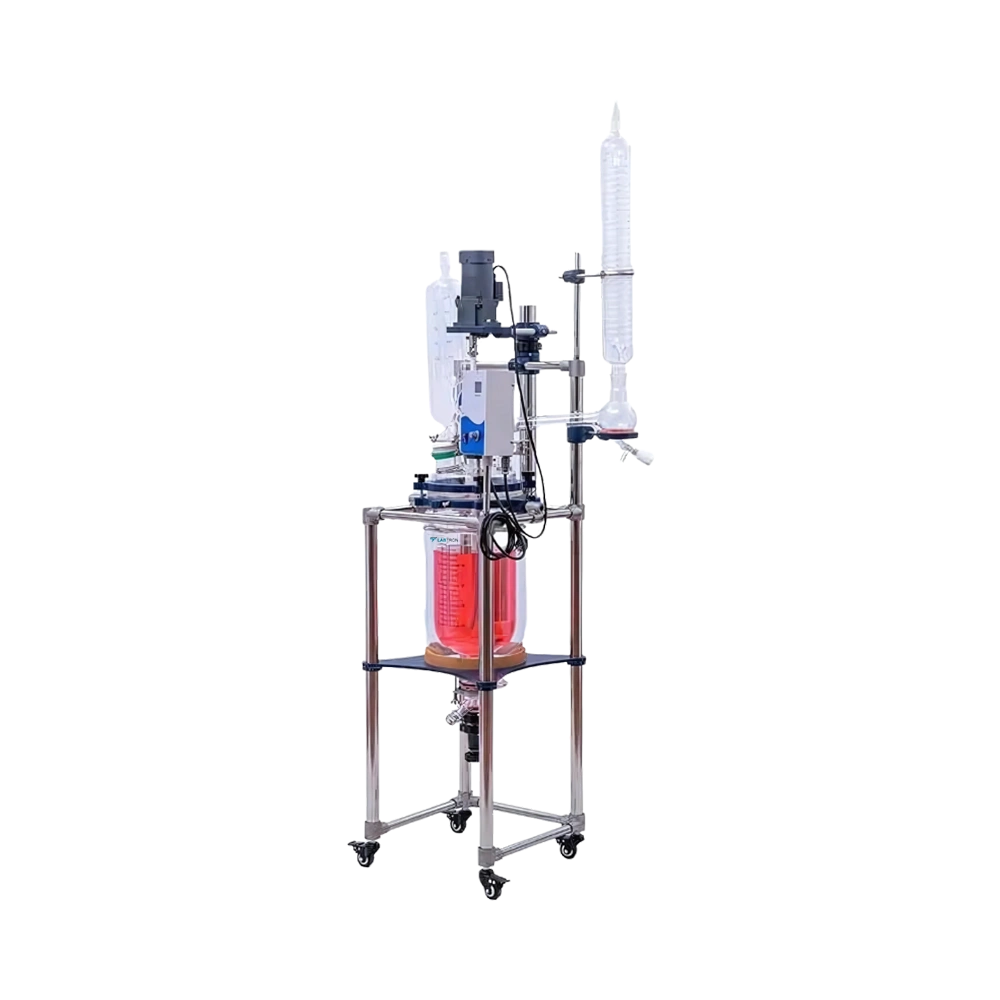


Our Jacketed Glass Reactor uses a sophisticated dual-layer jacket system that allows a temperature-controlled fluid to circulate around the inner vessel. This design ensures an even heat transfer, which prevents hot or cold spots that could compromise the reaction. The constant circulation enables the vessel to maintain a set temperature over prolonged periods, which is critical for reactions sensitive to thermal fluctuations. By stabilizing internal conditions, the reactor supports consistent experimental outcomes, especially in synthesis and concentration processes where accurate thermal control impacts yield and purity. Additionally, this system accommodates a wide temperature range, allowing flexibility for various chemical procedures.
The vacuum integrity of the Jacketed Glass Reactor is secured through the use of a double sealing mechanism combining PTFE and fluororubber materials. This pairing not only enhances chemical resistance but also maintains a reliable seal capable of withstanding low-pressure environments essential for vacuum-assisted reactions. The secure sealing prevents air ingress, reducing the risk of contamination or oxidation that could negatively affect sensitive chemical processes. Maintaining vacuum conditions is also vital for facilitating reactions under reduced pressure, which can lower boiling points and accelerate distillations. This robust sealing system ensures experiment reliability over extended durations.
Labtron has engineered the reactor with high borosilicate glass 3.3, which is renowned for its durability against thermal shocks and chemical corrosion. This glass type withstands aggressive reagents and solvents without reacting or weakening, ensuring that the reactor maintains its structural integrity even in harsh conditions. This resistance allows the reactor to be used safely across a variety of applications, from acidic to basic media, without compromising experimental safety. The glass also tolerates rapid temperature changes without cracking, supporting procedures that require quick heating or cooling cycles. This combination of strength and resilience extends the lifespan of the equipment and reduces downtime due to maintenance.
The stirring mechanism in the Jacketed Glass Reactor is designed to provide adjustable speeds ranging from gentle mixing to high agitation. This versatility is important because it allows users to optimize the mixing process depending on the chemical reaction requirements, ensuring homogeneity throughout the vessel. Efficient stirring helps distribute heat evenly, prevents sedimentation of solids, and promotes better interaction between reactants, which can increase reaction rates and improve product quality. The speed control also supports delicate processes by allowing low-speed mixing to avoid damaging sensitive compounds or catalysts. This flexible stirring system enhances reproducibility and experimental precision.
The integrated dropping funnel facilitates the precise and gradual introduction of reagents into ongoing reactions without exposing the vessel to external air or contaminants. This controlled addition is crucial for processes where reaction kinetics must be carefully managed, such as slow polymerizations or sensitive syntheses, to avoid runaway reactions or undesirable side products. The funnel is constructed from materials resistant to chemical attack, allowing compatibility with a wide range of solvents and reagents. Its design also allows for safe and convenient reagent transfers, reducing the need for vessel opening and minimizing operator exposure to hazardous substances. This feature increases operational safety and experimental control.
Our Jacketed Glass Reactor boasts a compact footprint and lightweight construction, making it easy to install on standard laboratory benches or inside fume hoods without occupying excessive space. Its modular design enables integration with existing laboratory infrastructure, including external temperature controllers and vacuum pumps, ensuring compatibility with diverse workflows. The reactor's electrical specifications are standardized to work with common laboratory power supplies, simplifying setup and operation. Furthermore, the ergonomic arrangement of ports and attachments supports convenient access and customization depending on the experimental requirements. This adaptability makes it suitable for academic research, industrial R&D, and pilot-scale chemical development.
Post your question?
Our experts are here to help!
Labtron Equipment Ltd., Quatro House, Lyon Way, Camberley, Surrey GU16 7ER United Kingdom
Email: info@labtron.com Whatsapp: +44 73 4441 2688 Phone: +44 2080 043608


