info@labtron.com

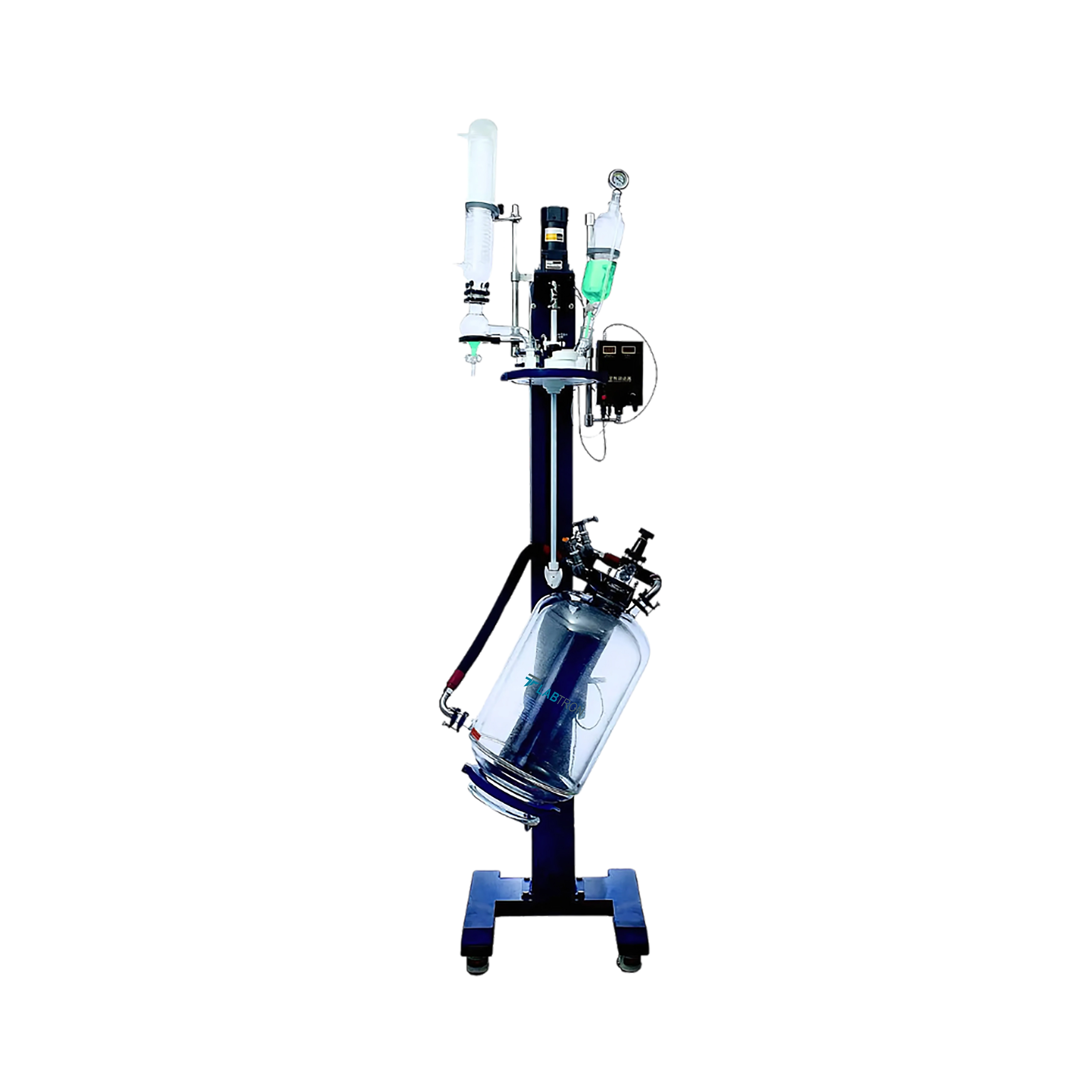
| Glass Vessel Volume | 5 L Cylindrical |
| Glass Vessel Lid Diameter | Φ 205 mm |
| Jacketed Volume | 800 ml |
| Dropping Funnel | 50 ml |
| Lifting Distance | 360 mm |
| Vessel Body Rotation | Hand wheel turns left 150 degrees |
| Temperature Range | -80℃ to 250℃ |
| Temperature Measurement Accuracy | +/-1℃ |
| Stirring Speed | 0 to 450 rpm |
| Vacuum Degree | 0.098 Mpa |
| Stirring Motor Power | 90 W |
| Lifting Motor Power | 20 W |
| Power Consumption | 110 W |
| Power Supply | 220V/50Hz |
| Condenser Dimension (D×H) | Φ60×600 mm |
| Dimensions (W×D×H) | 500×620×2050 mm |
| Weight | 100 kg |
Jacketed Glass Reactor LJGR-A36 is used for chemical synthesis, distillation, and concentration processes across laboratory and pilot research environments. This supports controlled reaction conditions, making it suitable for applications in pharmaceuticals, chemical engineering, and academic research.
Download catalog for
Jacketed Glass Reactor LJGR-A36 Catalog
Available Range :
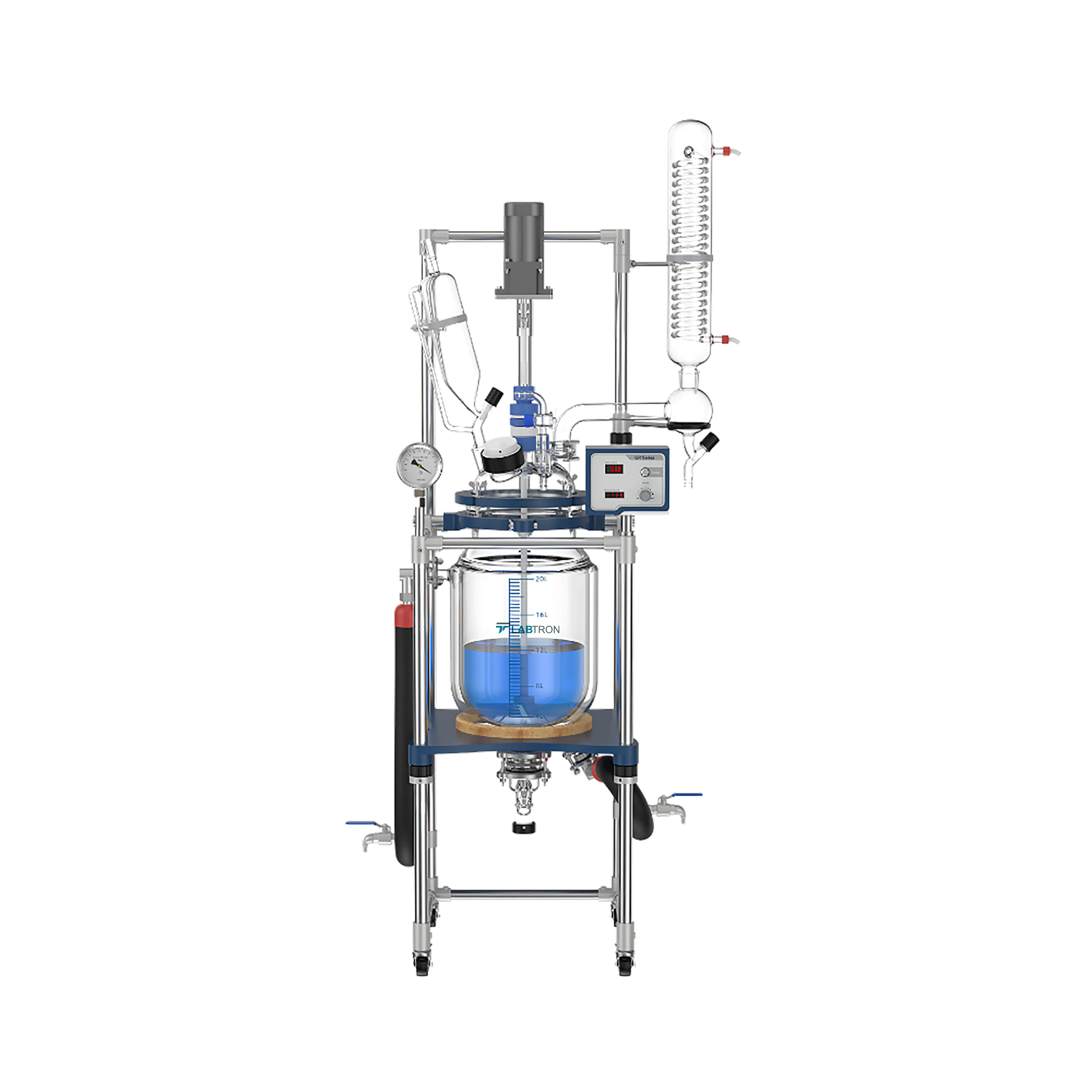
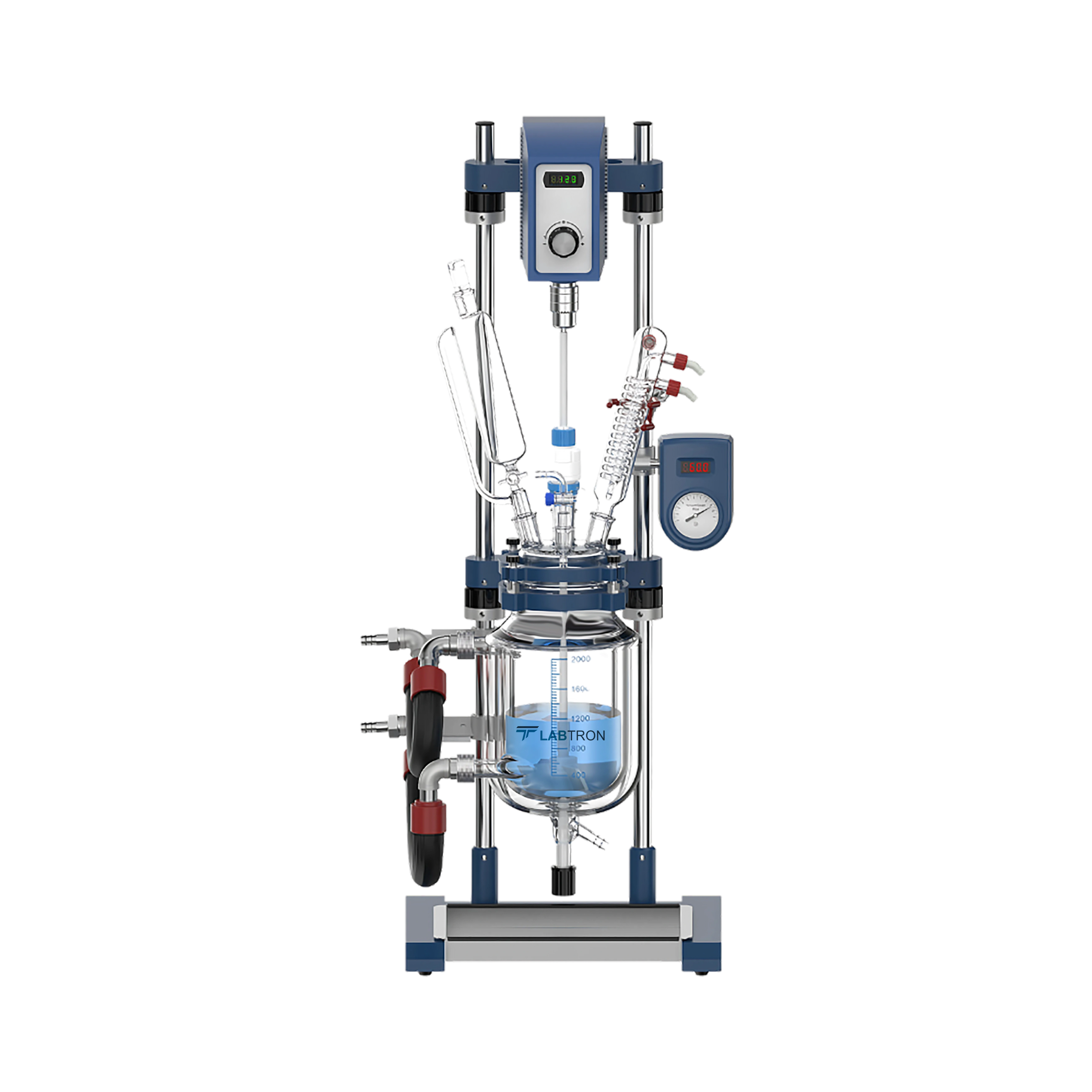
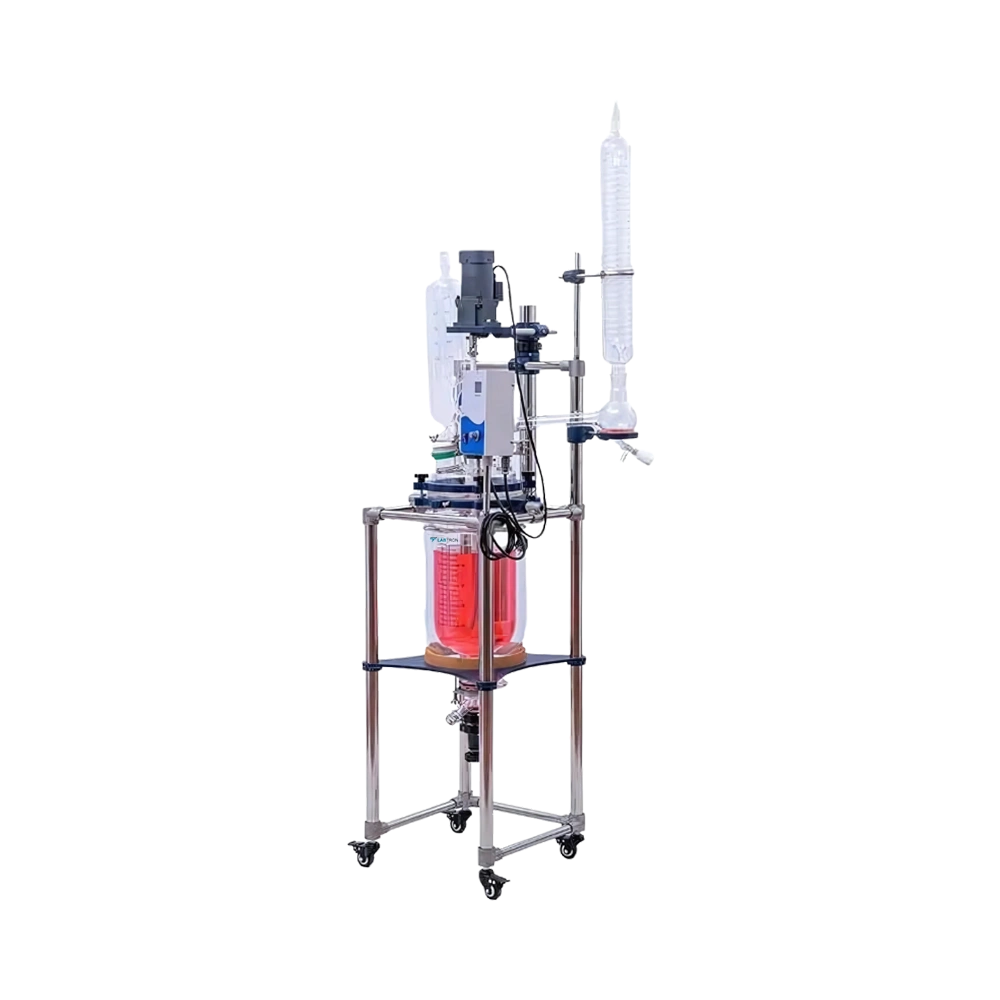
Jacketed Glass Reactor LJGR-A10 : 1 L Cylindrical Jacketed Glass Reactor LJGR-B21 : 10 L Jacketed Glass Reactor LJGR-A22 : 10 L Cylindrical Jacketed Glass Reactor LJGR-B24 : 100 L Jacketed Glass Reactor LJGR-A26 : 100 L Cylindrical Jacketed Glass Reactor LJGR-B26 : 100L Jacketed Glass Reactor LJGR-A27 : 150 L Cylindrical Jacketed Glass Reactor LJGR-A11 : 2 L Cylindrical Jacketed Glass Reactor LJGR-B22 : 20 L Jacketed Glass Reactor LJGR-A23 : 20 L Cylindrical Jacketed Glass Reactor LJGR-B25 : 200 L Jacketed Glass Reactor LJGR-A28 : 200 L Cylindrical Jacketed Glass Reactor LJGR-A12 : 3 L Cylindrical Jacketed Glass Reactor LJGR-A24 : 30 L Cylindrical Jacketed Glass Reactor LJGR-B20 : 5 L Jacketed Glass Reactor LJGR-A50 : 5 L (Cylindrical) Jacketed Glass Reactor LJGR-A17 : 5 L Cylindrical Jacketed Glass Reactor LJGR-A13 : 5 L, Cylindrical Jacketed Glass Reactor LJGR-B23 : 50 L Jacketed Glass Reactor LJGR-A25 : 50 L CylindricalJacketed Glass Reactor supports controlled mixing with adjustable stirring speed, ensuring consistent reaction dynamics in varied experiments. They maintain thermal stability using a jacketed layer for fluid circulation without exposing the medium. Their borosilicate glass build withstands thermal stress and chemical exposure over time. These systems include a display panel for monitoring key parameters during operation. Our glass reactor is suited for synthesis, distillation, extraction, crystallization, and pharmaceutical development.



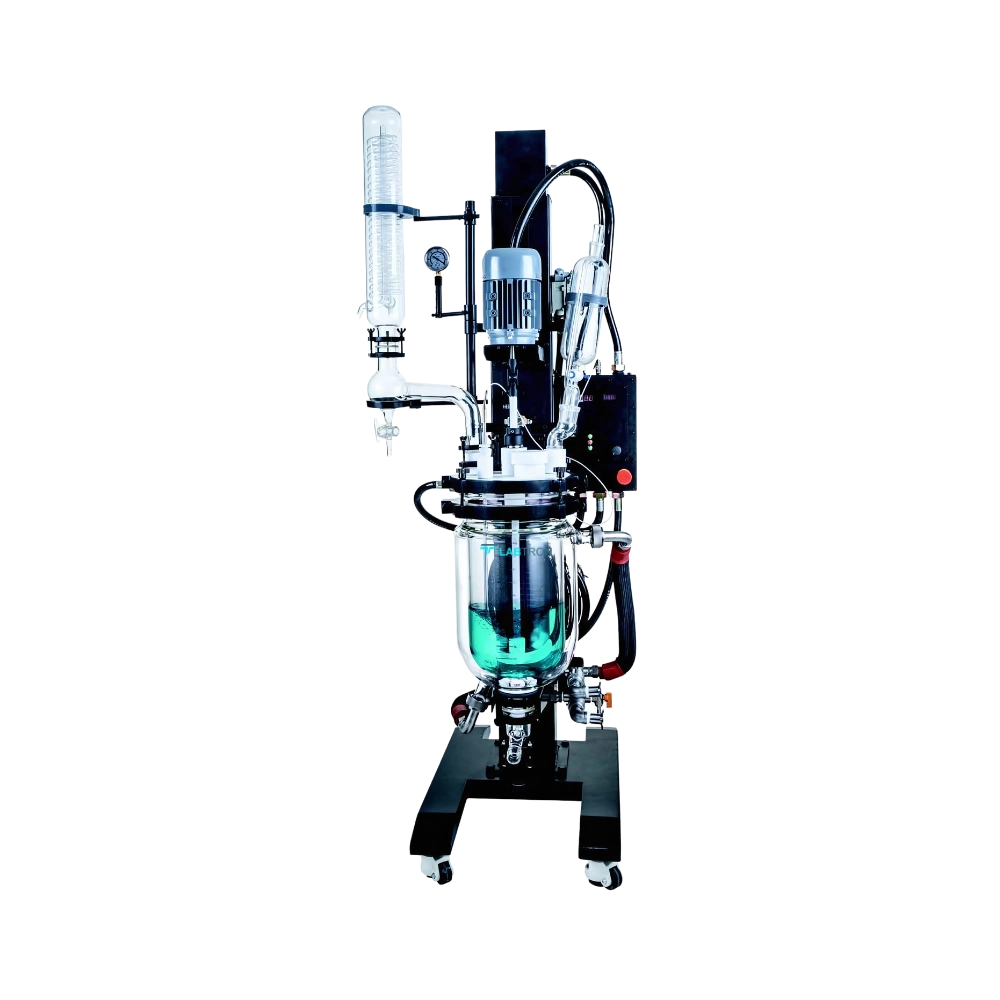
Our Jacketed Glass Reactor LJGR-A36 features a vessel body that can be rotated to the side after raising the top assembly, making it easier to pour out dense or sensitive mixtures without using external tools. This capability is especially useful for users dealing with sticky reactions or compounds that settle at the base. The rotation function eliminates the need to lift the entire vessel or rely on fragile outlets. It ensures that no material is left trapped at the bottom during transfer. With this tilting design, users can clean or drain the contents without dismantling the setup. It’s a major benefit in labs running repetitive synthesis or crystallization steps. Handling post-reaction materials becomes quicker and safer through this feature.
The Jacketed Glass Reactor LJGR-A36 is constructed with a movable upper frame that allows the stirring and condensation units to be lifted as one section. This design is ideal for labs where vessel access, cleaning, or material input changes frequently throughout the day. Instead of detaching individual glass components, the entire top section can be shifted vertically. The lifting mechanism reduces setup fatigue and avoids the risk of glass breakage. Researchers can adjust working height to accommodate different lab tasks without needing to disassemble connections. This system is particularly useful in facilities running alternating procedures with varied equipment clearance needs.
Jacketed Glass Reactor LJGR-A36 is equipped with a PTFE and fluororubber sealing system designed to maintain vacuum integrity across extended reaction durations. This sealing arrangement shields the vessel against leaks, even when dealing with solvent vapors or temperature fluctuations. By combining two robust sealing materials, the reactor ensures that critical vacuum conditions are maintained without requiring frequent adjustments. The system performs well in reactions requiring high-purity environments or volatile compounds. It also supports long experimental runs without sudden pressure loss. This allows for uninterrupted processes in research fields such as drug formulation and specialty material synthesis.
Labtron’s Jacketed Glass Reactor LJGR-A36 uses borosilicate glass with strong resistance to sudden temperature changes, helping to prevent stress cracks during heating or cooling. Labs handling sensitive materials that require rapid cycling between hot and cold phases will benefit from this property. Its jacket allows thermal fluid to circulate evenly around the reaction chamber, minimizing internal shocks. This makes it reliable for operations like freeze–thaw processes or temperature-dependent crystallization. Whether ramping up heat or pulling temperatures down sharply, the reactor remains stable without structural compromise. Researchers can confidently switch between thermal stages without damaging the equipment.
Labtron’s Jacketed Glass Reactor LJGR-A36 is designed with a fixed dropping funnel that allows gradual addition of reagents during active reactions. This setup reduces the need to open the vessel lid, which helps maintain reaction conditions and prevents contamination. Its position directly above the main vessel enables safe, measured dosing for multi-phase reactions. Researchers can carefully control timing and quantity of inputs without interrupting stirring or heat application. This is especially advantageous when handling exothermic stages that require slow reagent flow. It gives precise operational control during complex workflows involving reactive components or unstable intermediates.
The Jacketed Glass Reactor LJGR-A36 includes a stirring system capable of handling challenging materials such as slurries or thick-phase suspensions without localized settling. Its vertical motor mount delivers consistent torque that supports extended operation under strain. For labs developing emulsions, gels, or resin-based mixtures, this feature ensures uniformity throughout the batch. The reactor’s internal geometry complements its stirring function by promoting movement across the entire vessel, avoiding dead zones. This is critical when accurate mixing affects final product quality. Whether blending fine particles or layered compounds, the reactor keeps everything in motion throughout the process.
Post your question?
Our experts are here to help!
Labtron Equipment Ltd., Quatro House, Lyon Way, Camberley, Surrey GU16 7ER United Kingdom
Email: info@labtron.com Whatsapp: +44 73 4441 2688 Phone: +44 2080 043608