 info@labtron.com

| Glass Vessel Volume | 100 L |
| Jacketed Volume | 18 L |
| Flanged out of the oil circulation port | Low feed high outlet |
| Reaction bottle cover | Six port |
| Lifting Distance | 30mm |
| Temperature range | -60 to 200°C |
| Vacuum Degree | 0.098 Mpa |
| Stirring Speed | 0 to 600 rpm |
| Stirring Diameter | 12 mm |
| Reactor Material | High quality borosilicate 3.3glass |
| Frame Material | 304 SUS and coated aluminum |
| Lifting Motor Power | 200 W |
| Power Supply | 220V or110V/50 to 60 Hz |
| Packing size | 1900mm × 700mm × 870mm |
| Dimension | 610mm × 610mm ×2400mm |
| Weight | 92 kg |
Universal Joint Coupling
Anchor-Type Stir Bar
Vacuum Gauge Display
Liquid crystal Digital Mode
Constant- Pressure Funnel
Jacketed Glass Reactor LJGR-B24 allow precise temperature control of the reaction inside without direct contact between the jacket fluid. It plays a key role in chemical, pharmaceuticals, biotechnology, biochemical research, material science and polymer industry.
Download catalog for
Jacketed Glass Reactor LJGR-B24 Catalog
Available Range :
Jacketed Glass Reactor LJGR-A10 : 1 L Cylindrical Jacketed Glass Reactor LJGR-B21 : 10 L Jacketed Glass Reactor LJGR-A22 : 10 L Cylindrical Jacketed Glass Reactor LJGR-B24 : 100 L Jacketed Glass Reactor LJGR-A26 : 100 L Cylindrical Jacketed Glass Reactor LJGR-B26 : 100L Jacketed Glass Reactor LJGR-A27 : 150 L Cylindrical Jacketed Glass Reactor LJGR-A11 : 2 L Cylindrical Jacketed Glass Reactor LJGR-B22 : 20 L Jacketed Glass Reactor LJGR-A23 : 20 L Cylindrical Jacketed Glass Reactor LJGR-B25 : 200 L Jacketed Glass Reactor LJGR-A28 : 200 L Cylindrical Jacketed Glass Reactor LJGR-A12 : 3 L Cylindrical Jacketed Glass Reactor LJGR-A24 : 30 L Cylindrical Jacketed Glass Reactor LJGR-B20 : 5 L Jacketed Glass Reactor LJGR-A50 : 5 L (Cylindrical) Jacketed Glass Reactor LJGR-A17 : 5 L Cylindrical Jacketed Glass Reactor LJGR-A13 : 5 L, Cylindrical Jacketed Glass Reactor LJGR-B23 : 50 L Jacketed Glass Reactor LJGR-A25 : 50 L CylindricalJacketed Glass Reactor supports controlled mixing with adjustable stirring speed, ensuring consistent reaction dynamics in varied experiments. They maintain thermal stability using a jacketed layer for fluid circulation without exposing the medium. Their borosilicate glass build withstands thermal stress and chemical exposure over time. These systems include a display panel for monitoring key parameters during operation. Our glass reactor is suited for synthesis, distillation, extraction, crystallization, and pharmaceutical development.


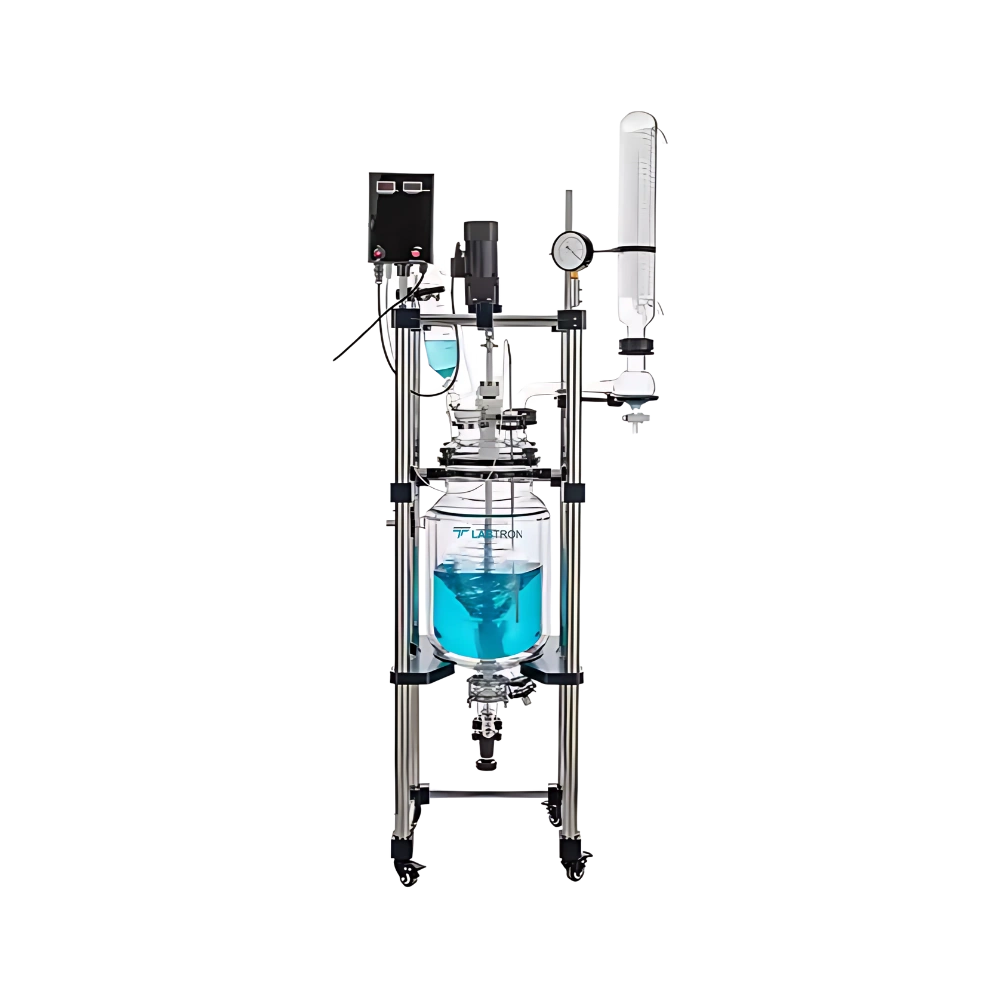
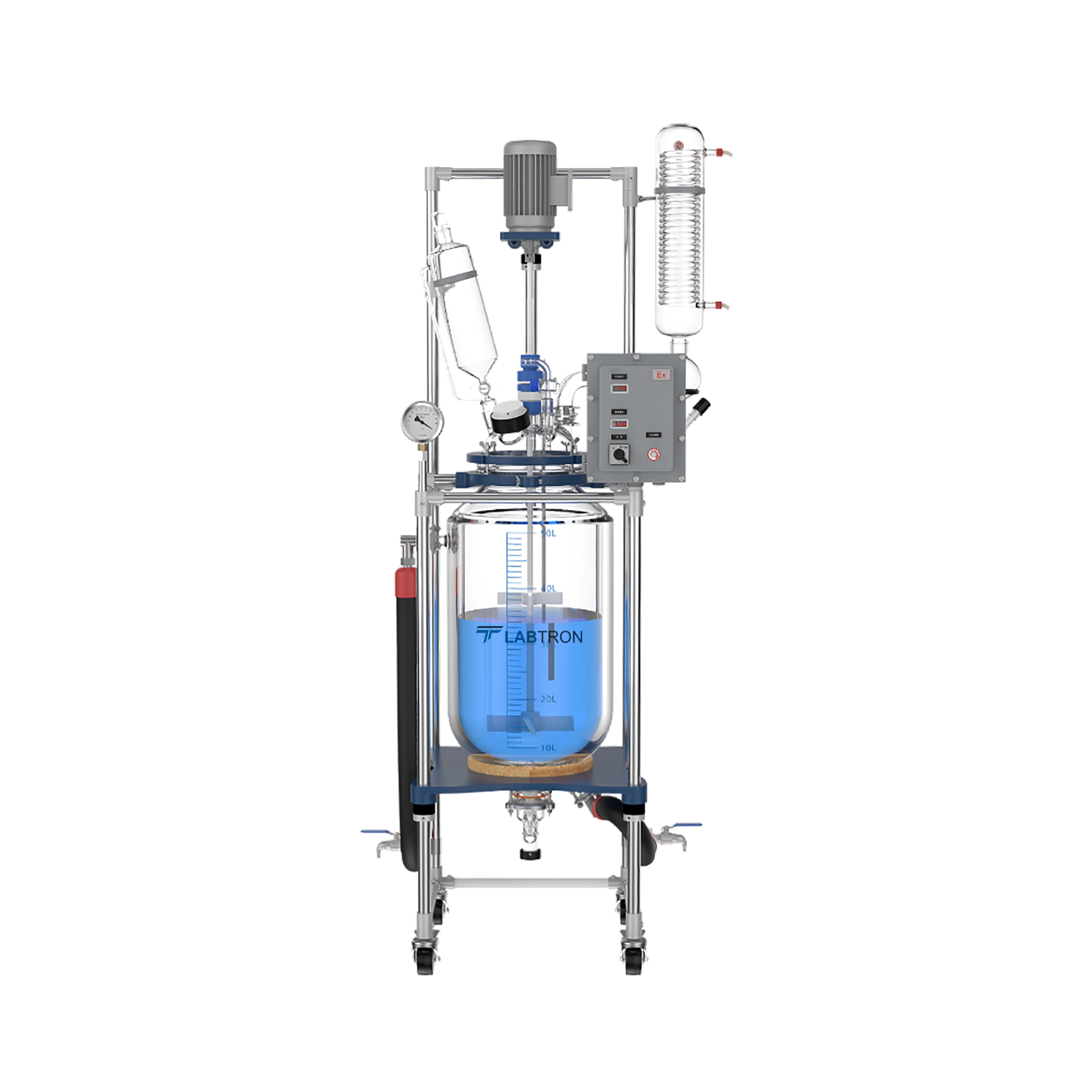

Labtron supplies advanced models like Jacketed Glass Reactor LJGR-B24. Poor heat exchange often results from fouling, air bubbles, or low circulation velocity within the jacket. Insufficient temperature differential or ineffective pump sizing can also impair thermal performance. To resolve this, maintain regular cleaning schedules, use anti-fouling fluids, ensure proper flow rates, replace or upgrade circulation pumps, and consider multi-zone or insulated jacket designs for optimized thermal uniformity. Implementing turbulence via booster pumps can significantly enhance both convection and overall heat-transfer coefficient (U).
Although technically feasible, combining steam, glycol, and water in one jacket often leads to contamination and operational inefficiencies. In practice, separate circuits are safer and more reliable-each optimized for heating or cooling. Shared jacket setups require rigorous flushing protocols between modes, which can be time-consuming, error-prone, and risk system downtime.
Yes. Glass baffles inserted vertically inside the vessel help suppress vortex formation and dead zones during stirring—especially in reactors above 20?L. This leads to more uniform mixing, better heat transfer, and consistent reaction kinetics. Videos and user feedback show that systems with baffles outperform unbaffled counterparts, especially for heterogeneous or high-viscosity reactions.
Labtron supplies premium Labtron supplies advanced models like Jacketed Glass Reactor LJGR-B24. Prior to vacuum use: visually inspect glass components for microcracks, ensure seals and joints are correctly greased and torqued, and follow thermal ramping protocols to avoid shock. Proper grounding of metal parts is essential to prevent static discharge when using conductive or flammable solvents. Relief valves, inert gas purging, and spark testing are strongly recommended for safe operation at scale.
Labtron supplies premium models like Jacketed Glass Reactor LJGR-B24Implement a preventive maintenance plan where seals and gaskets are replaced annually, sensors calibrated monthly, and glass inspections carried out quarterly—especially in high-stress zones like lids and ports. Document cleaning with glass-safe solvents post-use, filter heat transfer fluid regularly, and monitor flow rates and pressure to catch early signs of wear or blockages. Log all maintenance events and adhere to SOPs to maximize reactor longevity and process consistency.
Post your question?
Our experts are here to help!
Labtron Equipment Ltd., Quatro House, Lyon Way, Camberley, Surrey GU16 7ER United Kingdom
Email: info@labtron.com Whatsapp: +44 73 4441 2688 Phone: +44 2080 043608