info@labtron.com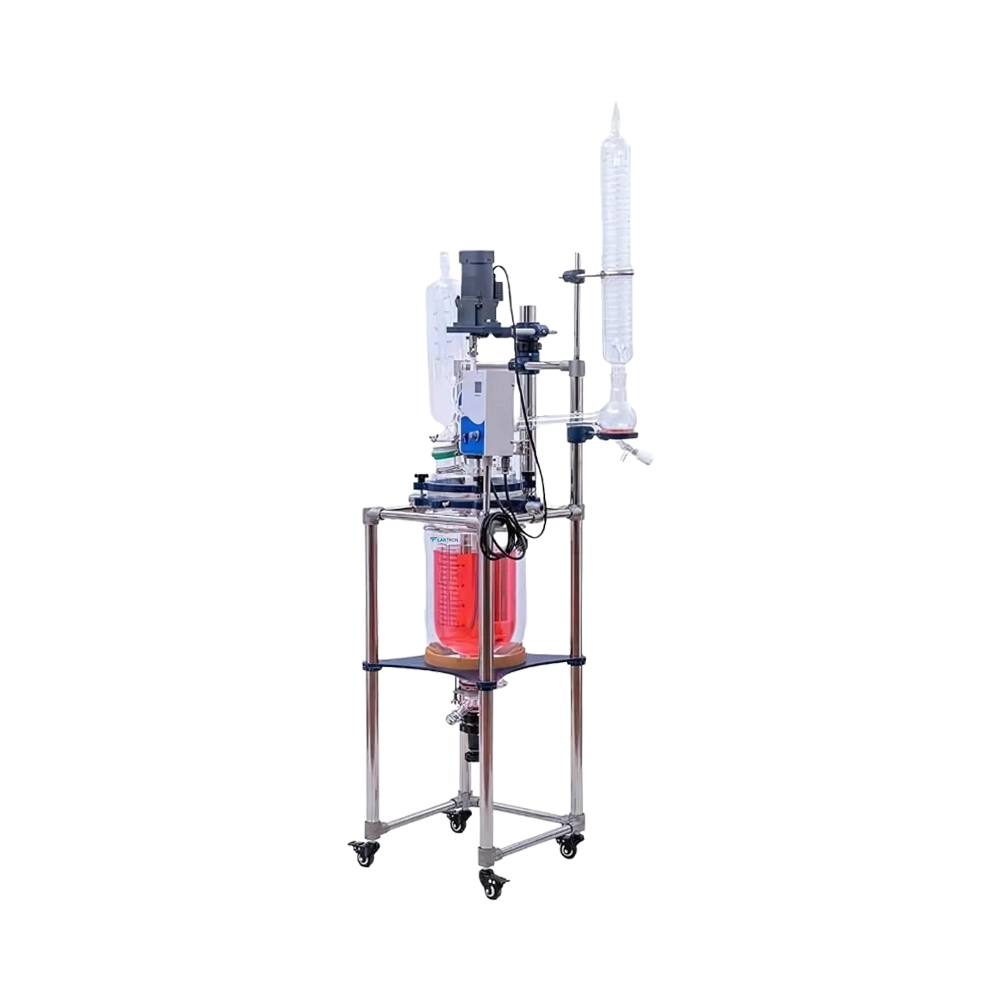

| Glass Vessel Volume | 10 L |
| Jacketed Volume | 6 L |
| Flanged out of the oil circulation port | Low feed high outlet |
| Reaction bottle cover | Six port |
| Lifting Distance | 450 mm |
| Stirring Diameter | 12 mm |
| Temperature range | -80 to -250 ℃ |
| Vacuum Degree | 0.098 MPa |
| Stirring Speed | 0 to 800 rpm |
| Reactor Material | High quality borosilicate 3.3glass |
| Frame Material | 304 SUS and coated aluminum |
| Lifting Motor Power | 90 W |
| Power Supply | 220V or110V/50 to 60 Hz |
| Plate Size | 325 mm × 410 mm |
| Dimension | 520 mm × 520 mm ×2000 mm |
| Weight | 68 kg |
Adjustable Stirring Speed
Low‑Speed High‑Torque
Vacuum Reaction Compatibility
Efficient Condenser Cooling
Inclined PTFE Valve
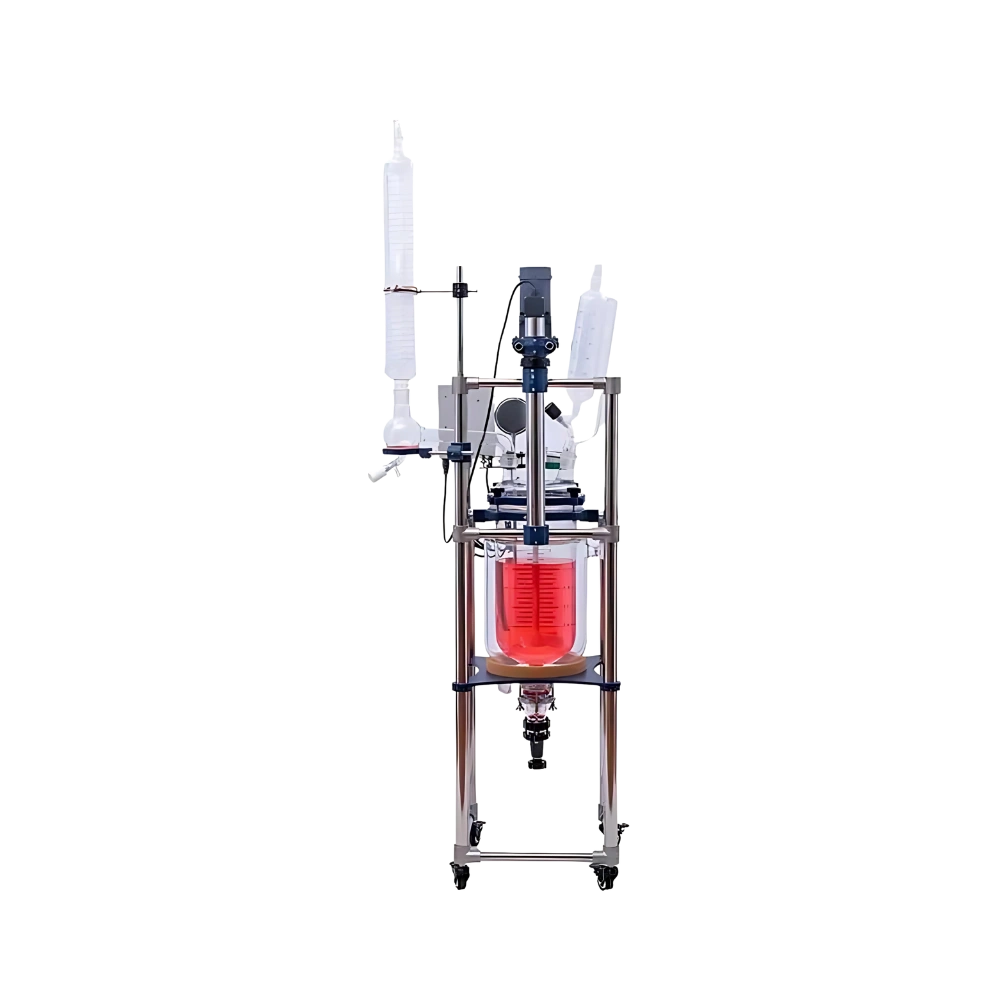
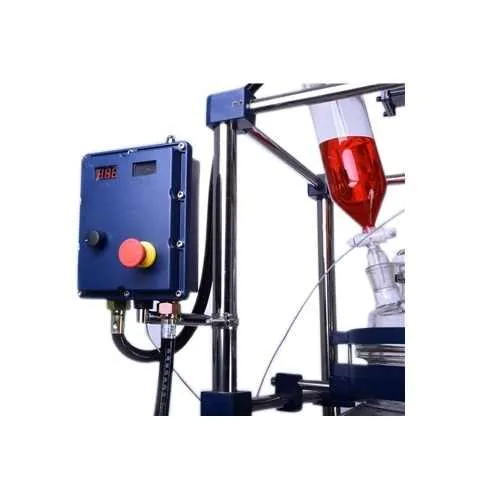
Jacketed Glass Reactor LJGR-B21 is a specialized vessel used in laboratories and industries to conduct chemical reactions under controlled temperature conditions. It plays a key role in food, biotechnology, biofuel, environmental research, chemicals and process development.
Download catalog for
Jacketed Glass Reactor LJGR-B21 Catalog
Available Range :
Jacketed Glass Reactor LJGR-A10 : 1 L Cylindrical Jacketed Glass Reactor LJGR-B21 : 10 L Jacketed Glass Reactor LJGR-A22 : 10 L Cylindrical Jacketed Glass Reactor LJGR-B24 : 100 L Jacketed Glass Reactor LJGR-A26 : 100 L Cylindrical Jacketed Glass Reactor LJGR-B26 : 100L Jacketed Glass Reactor LJGR-A27 : 150 L Cylindrical Jacketed Glass Reactor LJGR-A11 : 2 L Cylindrical Jacketed Glass Reactor LJGR-B22 : 20 L Jacketed Glass Reactor LJGR-A23 : 20 L Cylindrical Jacketed Glass Reactor LJGR-B25 : 200 L Jacketed Glass Reactor LJGR-A28 : 200 L Cylindrical Jacketed Glass Reactor LJGR-A12 : 3 L Cylindrical Jacketed Glass Reactor LJGR-A24 : 30 L Cylindrical Jacketed Glass Reactor LJGR-B20 : 5 L Jacketed Glass Reactor LJGR-A50 : 5 L (Cylindrical) Jacketed Glass Reactor LJGR-A17 : 5 L Cylindrical Jacketed Glass Reactor LJGR-A13 : 5 L, Cylindrical Jacketed Glass Reactor LJGR-B23 : 50 L Jacketed Glass Reactor LJGR-A25 : 50 L CylindricalJacketed Glass Reactor supports controlled mixing with adjustable stirring speed, ensuring consistent reaction dynamics in varied experiments. They maintain thermal stability using a jacketed layer for fluid circulation without exposing the medium. Their borosilicate glass build withstands thermal stress and chemical exposure over time. These systems include a display panel for monitoring key parameters during operation. Our glass reactor is suited for synthesis, distillation, extraction, crystallization, and pharmaceutical development.

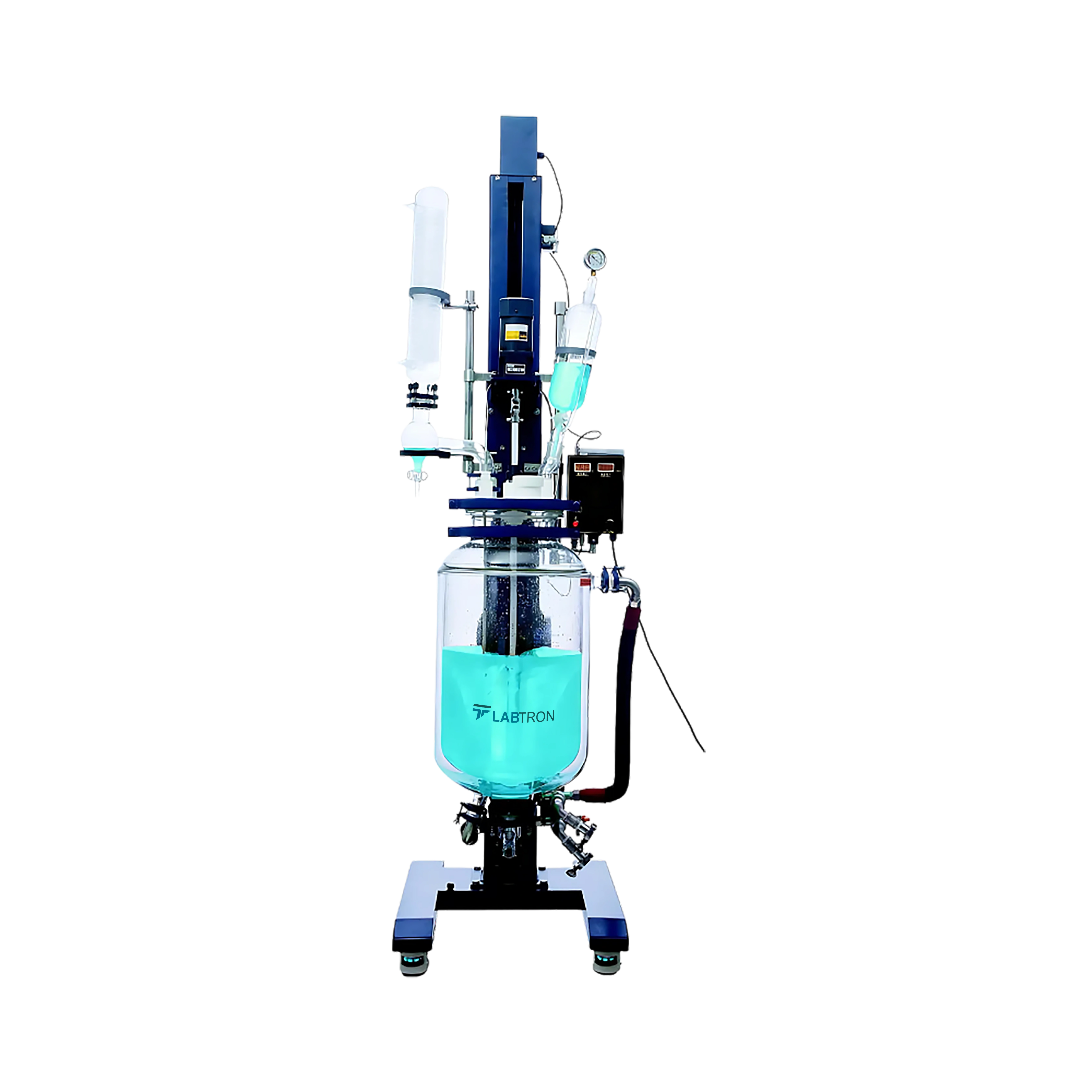
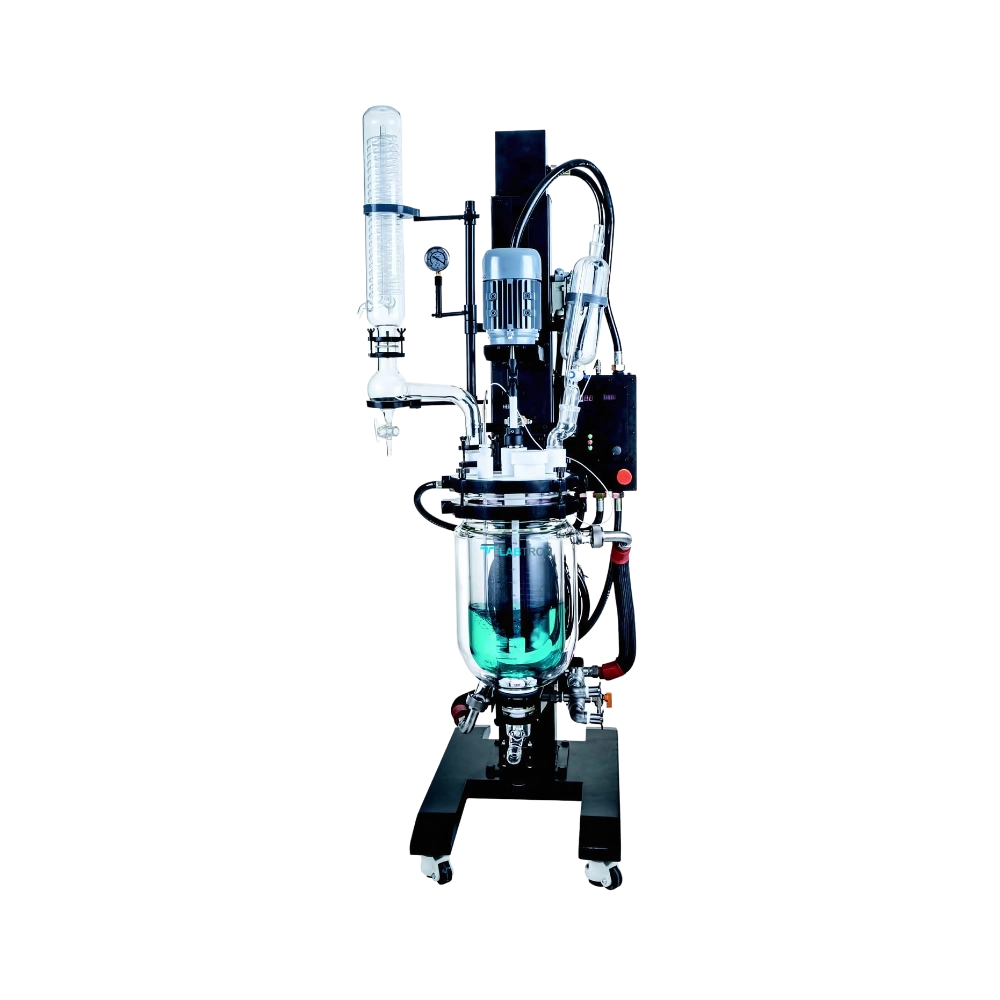
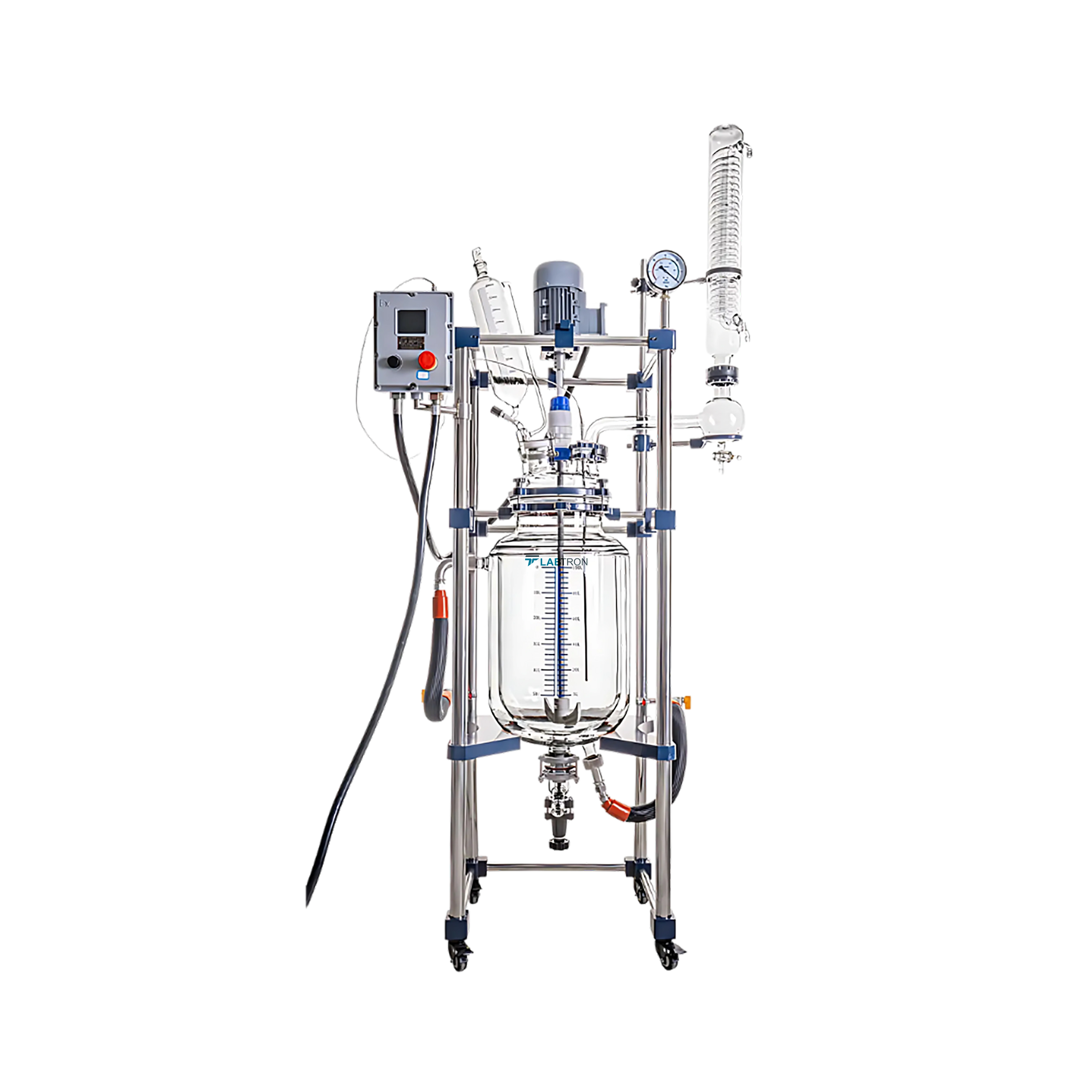

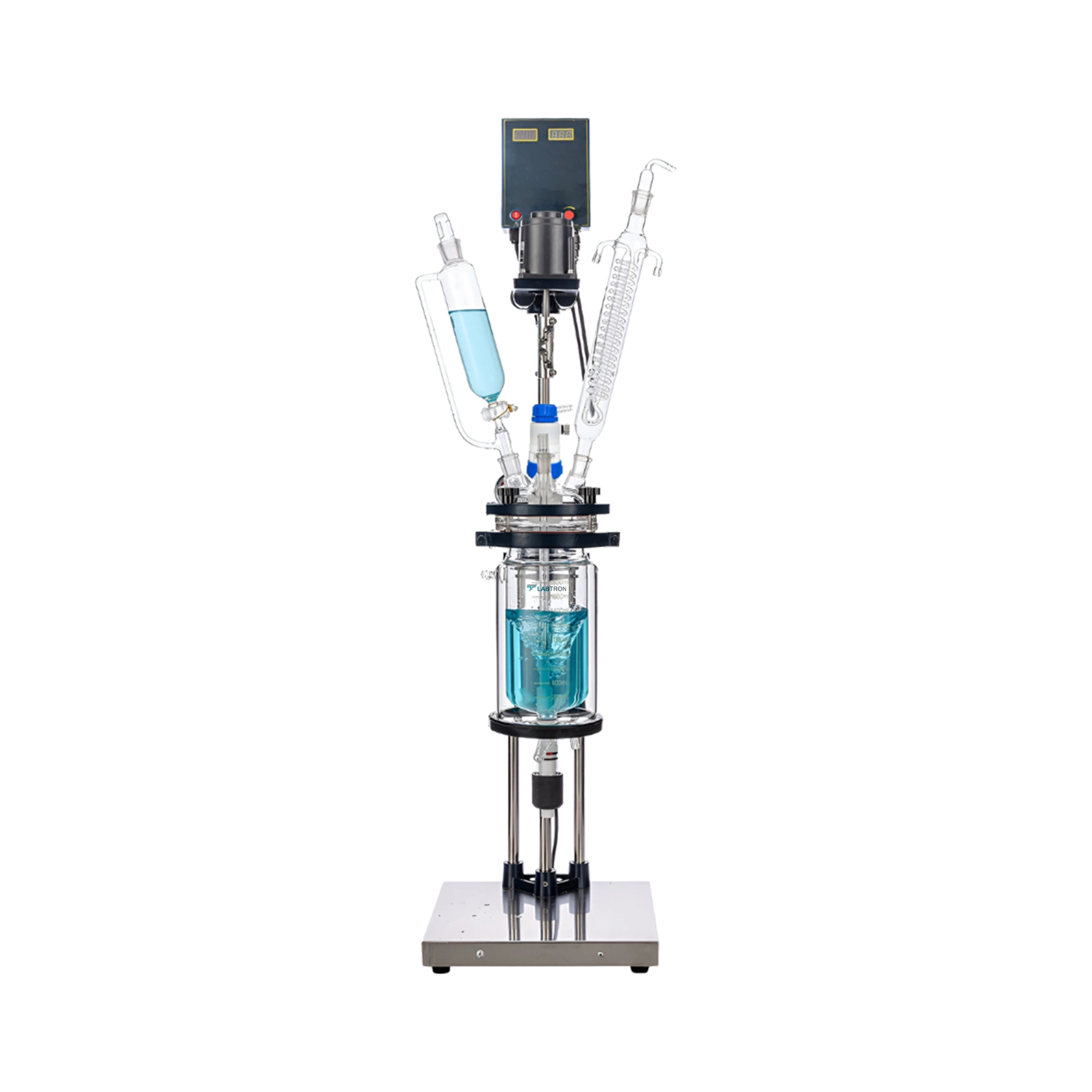


Labtron supplies advanced models of jacketed glass reactor LJGR-B21.Poor thermal efficiency often results from using low-performance heat transfer fluids or insufficient temperature differential between the jacket and reactor contents. To remedy this, switch to higher conductivity fluids (e.g. glycol or diathermic oils), ensure good jacket circulation and sufficient temperature gradient, or consider an insulated (double-jacketed) design to minimize losses. Proper insulation and optimized inlet/outlet flow improve responsiveness.
Mixing steam, water, and glycol in the same jacket risks cross-contamination and operational complexity. Industry practitioners often prefer separate circuits: one for heating (e.g., steam or oil), another for cooling (glycol/water). Shared use requires stringent flushing protocols, which are rarely reliable in high-frequency batch operations. Separate setups minimize downtime and contamination risk.
Yes. Adding glass baffles inside the vessel in jacketed glass reactor LJGR-B21 significantly reduces vortex formation during stirring, improving mixing and heat transfer uniformity- especially in tall or larger reactors. Baffles can also aid cleaning by enhancing solvent contact with interior surfaces.
Labtron supplies advanced models of jacketed glass reactor LJGR-B21.Prior to operation, visually inspect all glass components and ground-joint fittings for chips, microcracks, or crazing. Ensure all joints are properly greased or sealed, and device grounding is complete if using conductive or flammable solvents. Avoid thermal shock by ramping temperatures gradually, and always operate within manufacturer-specified pressure limits. Install relief valves or gas bubblers when inert gases are used.
Labtron supplies advanced models of jacketed glass reactor LJGR-B21.A quarterly inspection schedule is recommended, including checks of glass thickness, seal condition, and joint greasing. Clean the vessel immediately after use with non-abrasive solvents and rinse with ultrapure water. Consider full professional servicing annually or after prolonged usage periods exceeding one year to prevent leaks or mechanical wear. Adherence to detailed SOPs in cleaning, component replacement, and storage greatly extends reactor lifespan.
Post your question?
Our experts are here to help!
Labtron Equipment Ltd., Quatro House, Lyon Way, Camberley, Surrey GU16 7ER United Kingdom
Email: info@labtron.com Whatsapp: +44 73 4441 2688 Phone: +44 2080 043608