info@labtron.com

| Glass Vessel Volume | 3 L Cylindrical |
| Glass Vessel Lid Diameter | Φ 205 mm |
| Jacketed Volume | 600 ml |
| Dropping Funnel | 500 ml |
| Temperature Range | -80℃ to 250℃ |
| Temperature Measurement Accuracy | +/-1℃ |
| Stirring Speed | 0 to 1400 rpm |
| Vacuum Degree | 0.0098 Mpa |
| Power Consumption | 90 W |
| Power Supply | 220V/50Hz |
| Condenser Dimension (D×H) | 60×450 mm |
| Dimensions (W×D×H) | 330×410×1450 mm |
| Weight | 30.5 kg |
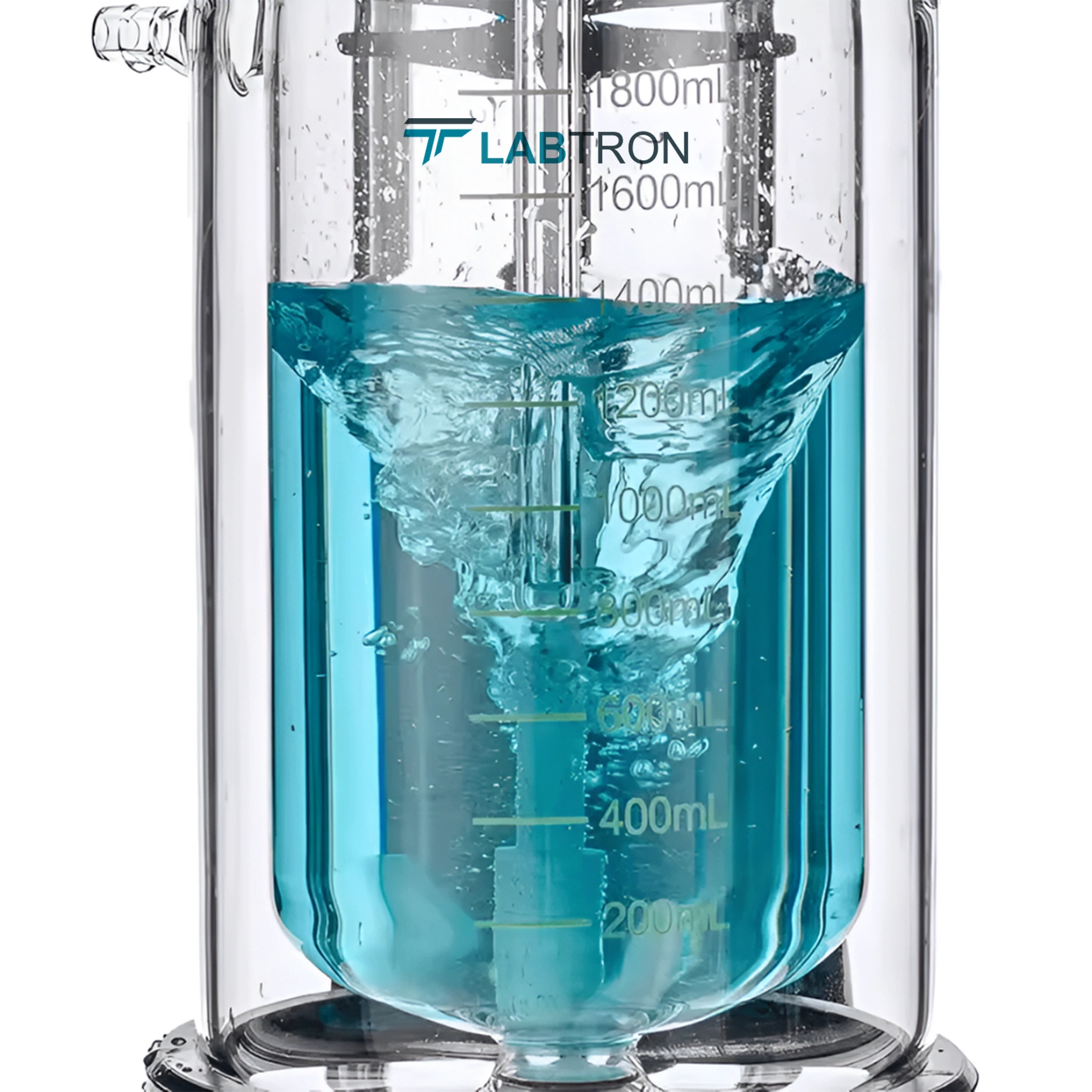
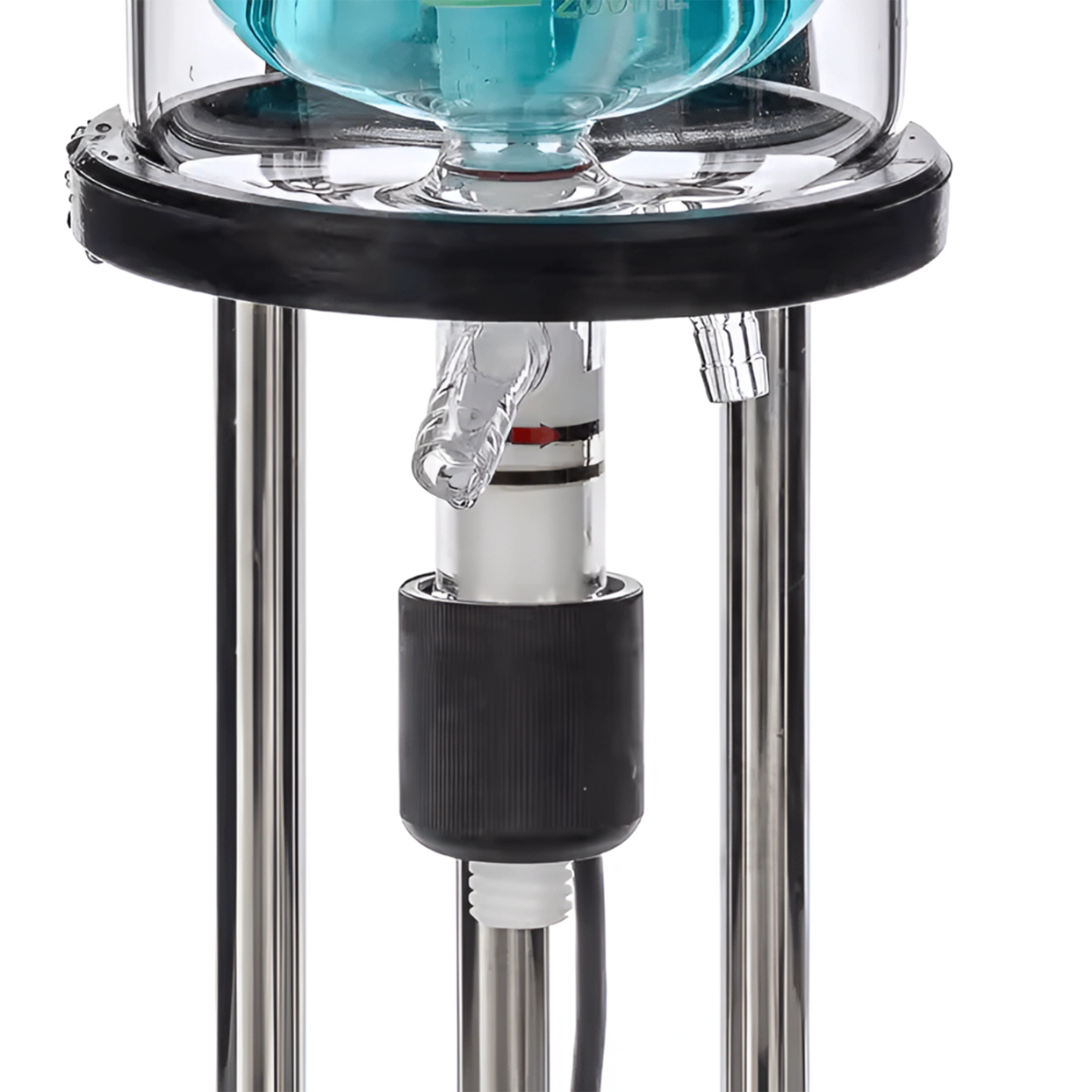
Optimized thermal fluid circulation
Safety pressure release valve
High-strength glass construction
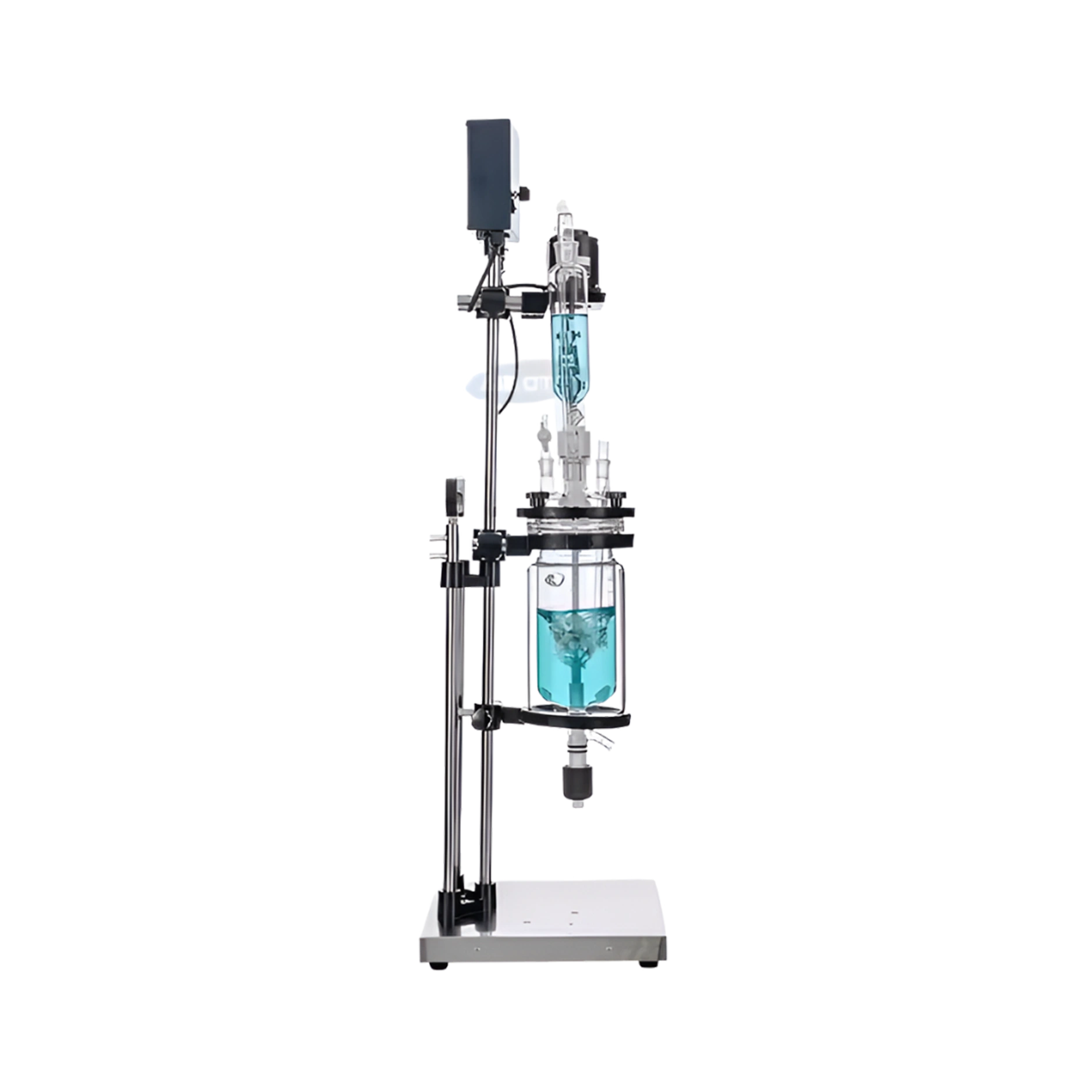
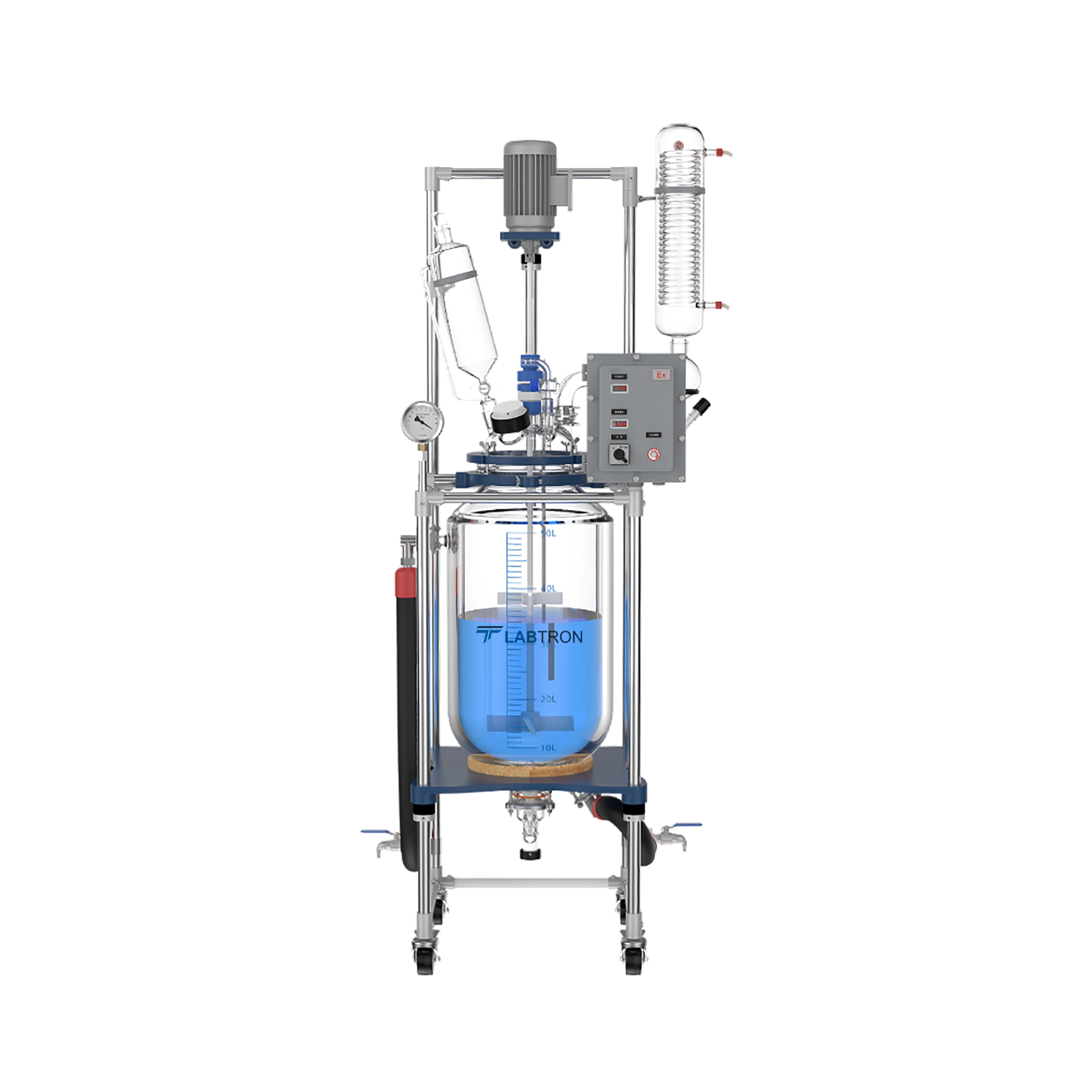
Jacketed Glass Reactor LJGR-A20 is designed for versatile laboratory use in chemical and pharmaceutical research. This reactor facilitates precise control of temperature and reaction conditions, supporting processes such as material synthesis, distillation, and concentration.
Download catalog for
Jacketed Glass Reactor LJGR-A20 Catalog
Available Range :
Jacketed Glass Reactor LJGR-A10 : 1 L Cylindrical Jacketed Glass Reactor LJGR-B21 : 10 L Jacketed Glass Reactor LJGR-A22 : 10 L Cylindrical Jacketed Glass Reactor LJGR-B24 : 100 L Jacketed Glass Reactor LJGR-A26 : 100 L Cylindrical Jacketed Glass Reactor LJGR-B26 : 100L Jacketed Glass Reactor LJGR-A27 : 150 L Cylindrical Jacketed Glass Reactor LJGR-A11 : 2 L Cylindrical Jacketed Glass Reactor LJGR-B22 : 20 L Jacketed Glass Reactor LJGR-A23 : 20 L Cylindrical Jacketed Glass Reactor LJGR-B25 : 200 L Jacketed Glass Reactor LJGR-A28 : 200 L Cylindrical Jacketed Glass Reactor LJGR-A12 : 3 L Cylindrical Jacketed Glass Reactor LJGR-A24 : 30 L Cylindrical Jacketed Glass Reactor LJGR-B20 : 5 L Jacketed Glass Reactor LJGR-A50 : 5 L (Cylindrical) Jacketed Glass Reactor LJGR-A17 : 5 L Cylindrical Jacketed Glass Reactor LJGR-A13 : 5 L, Cylindrical Jacketed Glass Reactor LJGR-B23 : 50 L Jacketed Glass Reactor LJGR-A25 : 50 L CylindricalJacketed Glass Reactor supports controlled mixing with adjustable stirring speed, ensuring consistent reaction dynamics in varied experiments. They maintain thermal stability using a jacketed layer for fluid circulation without exposing the medium. Their borosilicate glass build withstands thermal stress and chemical exposure over time. These systems include a display panel for monitoring key parameters during operation. Our glass reactor is suited for synthesis, distillation, extraction, crystallization, and pharmaceutical development.



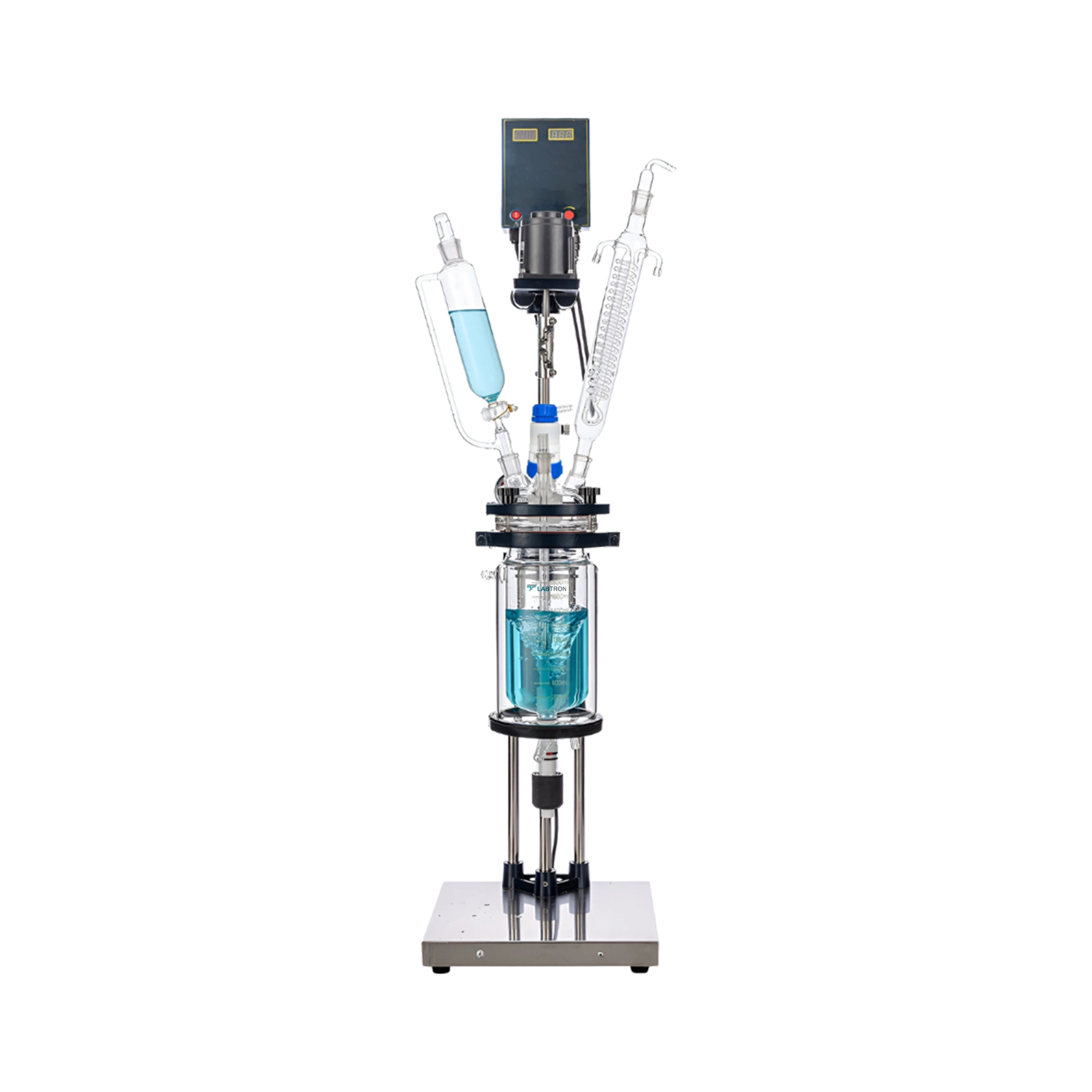
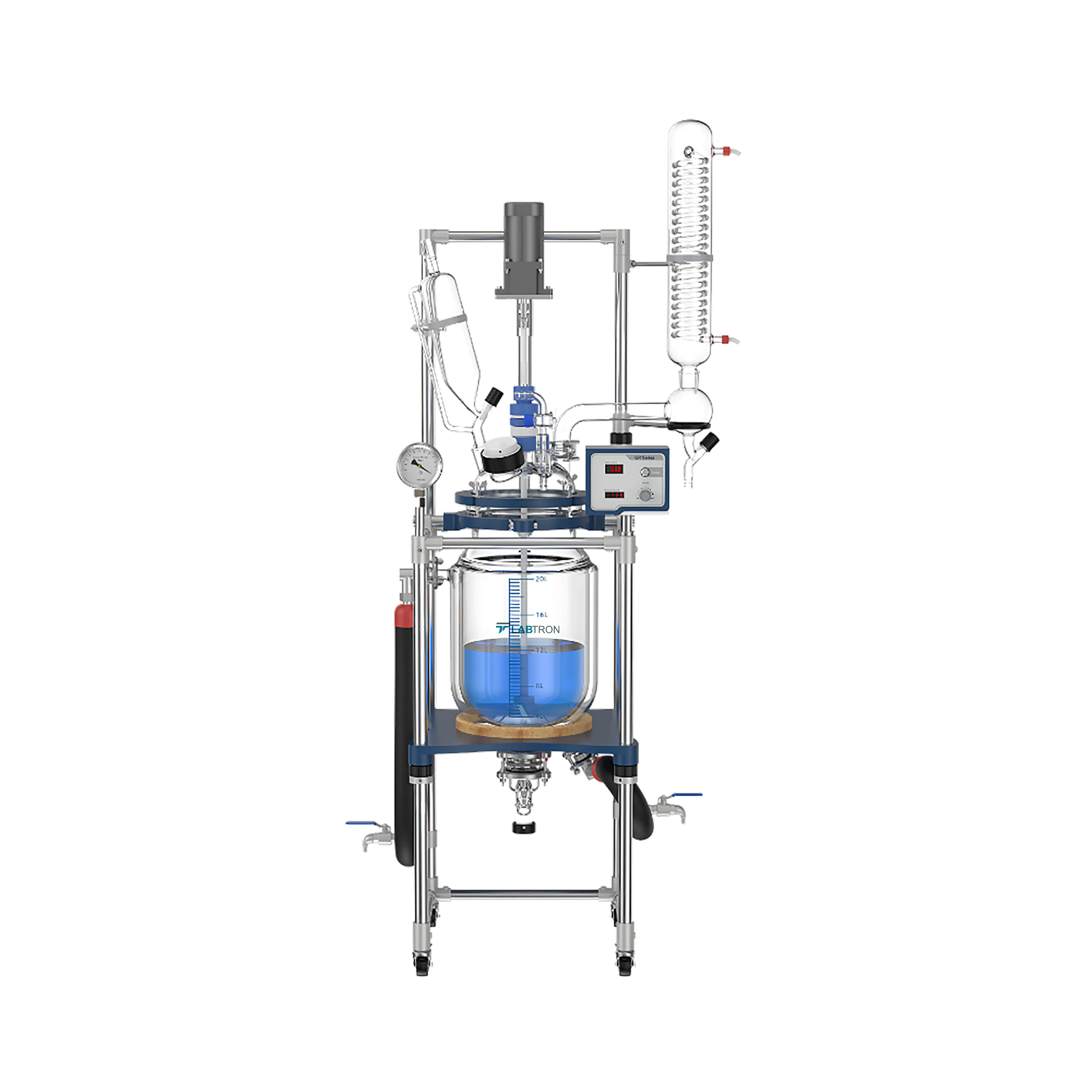


The Jacketed Glass Reactor is designed to keep a consistent environment by circulating thermal fluid through its double-layered jacket. This circulation prevents temperature fluctuations that can affect reaction outcomes. Its structure supports uniform heat transfer, which is crucial for temperature-sensitive reactions. The controlled thermal environment helps preserve sample quality throughout extended runs. The vessel's jacket system works in tandem with the stirring mechanism to evenly distribute heat. Together, these features ensure that the reactor sustains the set temperature without sudden changes. This stability is key for processes like distillation and concentration. Ultimately, the reactor enhances experimental reliability through temperature management.
The Jacketed Glass Reactor uses a PTFE and fluororubber double sealing system that maintains a secure vacuum environment inside the vessel. This dual-layer sealing approach significantly reduces the risk of air leaks during vacuum operations. Vacuum integrity is essential for processes that require reduced pressure, such as drying or distillation. The sealing materials are chemically resistant, ensuring longevity even under harsh conditions. This feature also helps maintain reaction purity by preventing contamination from the external atmosphere. The secure vacuum system allows for safe and efficient experimental conditions. This capability makes the reactor suitable for pharmaceutical and chemical applications. Reliable vacuum performance supports a broad range of laboratory needs.
The design of the Jacketed Glass Reactor includes materials that resist chemical degradation to accommodate harsh reagents. Its construction incorporates components that can withstand acidic or basic substances without compromising structural integrity. This corrosion resistance is vital for researchers working with aggressive chemicals in synthesis or analysis. The reactor’s glass vessel and sealing materials contribute to this durability. These features reduce maintenance frequency and extend the operational lifespan. Researchers benefit from consistent performance even when working with demanding substances. This resistance also minimizes the risk of contamination between batches. It ensures safe handling of diverse chemicals during experiments.
The stirring function of the Jacketed Glass Reactor offers a wide speed range that supports proper mixing of reactants. Efficient stirring promotes uniform distribution of temperature and reagents within the vessel. This mixing reduces localized concentration differences and thermal gradients. Such uniformity is critical for reproducible chemical reactions and synthesis outcomes. The reactor’s stirring system also helps prevent sedimentation or buildup of solid materials. It can adapt to varying viscosity levels, accommodating different types of experimental mixtures. This feature supports complex reactions requiring constant agitation. As a result, the product enhances reaction control and process consistency.
The Jacketed Glass Reactor is equipped with several built-in safety elements to protect users and samples. Its robust construction withstands mechanical stresses and high temperatures without compromising vessel integrity. The fixed external loop buffer stabilizes connections, reducing the risk of accidental detachment during use. Additionally, the materials selected for seals and glass are resistant to chemical damage and pressure changes. These safety features minimize potential leaks or failures during operation. The design also facilitates secure assembly and disassembly to prevent user injury. By prioritizing durability and secure sealing, the reactor offers a safer working environment. This makes it a reliable choice for sensitive and demanding laboratory applications.
The design of the Jacketed Glass Reactor takes maintenance into account by incorporating durable materials and modular components. Its glass vessel is resistant to common lab chemicals, reducing the likelihood of damage during cleaning. The double seal system can be inspected and replaced without complex procedures, minimizing downtime. The fixed external loop buffer also contributes by securing connections to prevent wear. These aspects simplify routine servicing and prolong the reactor’s lifespan. The accessible design allows users to perform inspections and cleaning with minimal disruption. Such ease of maintenance supports continuous laboratory workflows. Users can trust the reactor to remain functional through repeated use.
Post your question?
Our experts are here to help!
Labtron Equipment Ltd., Quatro House, Lyon Way, Camberley, Surrey GU16 7ER United Kingdom
Email: info@labtron.com Whatsapp: +44 73 4441 2688 Phone: +44 2080 043608