 info@labtron.com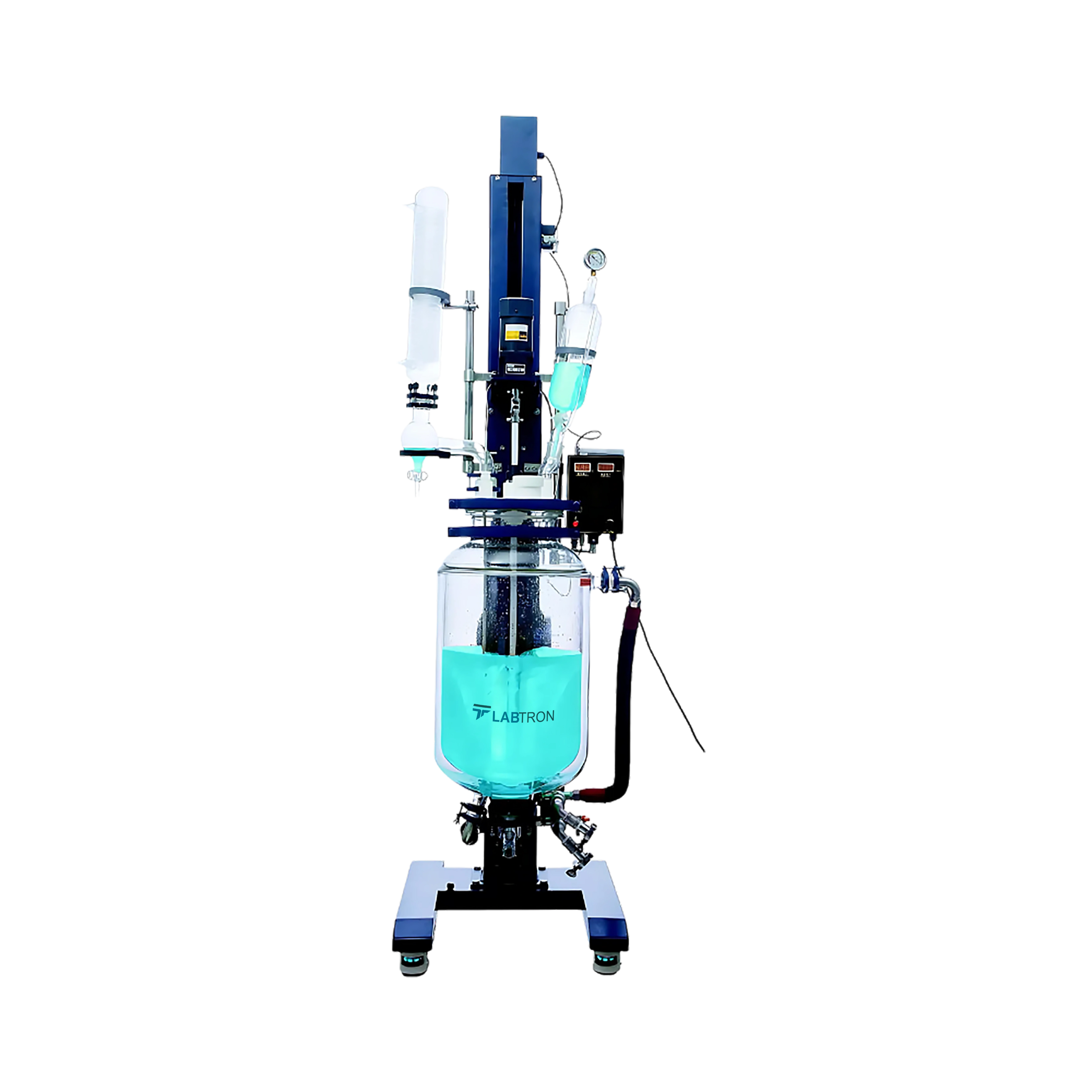

| Glass Vessel Volume | 50 L Cylindrical |
| Glass Vessel Lid Diameter | Φ 265 mm |
| Jacketed Volume | 16000 ml |
| Dropping Funnel | 2000 ml |
| Lifting Distance | 740 mm |
| Vessel Body Rotation | Hand wheel turns left 150 degrees |
| Temperature Range | -80℃ to 250℃ |
| Temperature Measurement Accuracy | +/-1℃ |
| Stirring Speed | 0 to 1400 rpm |
| Vacuum Degree | 0.098 Mpa |
| Stirring Motor Power | 120 W |
| Lifting Motor Power | 40 W |
| Power Consumption | 160 W |
| Power Supply | 220V/50Hz |
| Condenser Dimension (D×H) | Φ120×600 mm |
| Dimensions (W×D×H) | 750×950×2950 mm |
| Weight | 148 kg |
Jacketed Glass Reactor LJGR-A44 is used for conducting controlled chemical reactions, thermal treatments, and solution processing in laboratory environments. This reactor supports synthesis, distillation, and concentration by enabling temperature control and safe material handling.
Download catalog for
Jacketed Glass Reactor LJGR-A44 Catalog
Available Range :
Jacketed Glass Reactor LJGR-A10 : 1 L Cylindrical Jacketed Glass Reactor LJGR-B21 : 10 L Jacketed Glass Reactor LJGR-A22 : 10 L Cylindrical Jacketed Glass Reactor LJGR-B24 : 100 L Jacketed Glass Reactor LJGR-A26 : 100 L Cylindrical Jacketed Glass Reactor LJGR-B26 : 100L Jacketed Glass Reactor LJGR-A27 : 150 L Cylindrical Jacketed Glass Reactor LJGR-A11 : 2 L Cylindrical Jacketed Glass Reactor LJGR-B22 : 20 L Jacketed Glass Reactor LJGR-A23 : 20 L Cylindrical Jacketed Glass Reactor LJGR-B25 : 200 L Jacketed Glass Reactor LJGR-A28 : 200 L Cylindrical Jacketed Glass Reactor LJGR-A12 : 3 L Cylindrical Jacketed Glass Reactor LJGR-A24 : 30 L Cylindrical Jacketed Glass Reactor LJGR-B20 : 5 L Jacketed Glass Reactor LJGR-A50 : 5 L (Cylindrical) Jacketed Glass Reactor LJGR-A17 : 5 L Cylindrical Jacketed Glass Reactor LJGR-A13 : 5 L, Cylindrical Jacketed Glass Reactor LJGR-B23 : 50 L Jacketed Glass Reactor LJGR-A25 : 50 L CylindricalJacketed Glass Reactor supports controlled mixing with adjustable stirring speed, ensuring consistent reaction dynamics in varied experiments. They maintain thermal stability using a jacketed layer for fluid circulation without exposing the medium. Their borosilicate glass build withstands thermal stress and chemical exposure over time. These systems include a display panel for monitoring key parameters during operation. Our glass reactor is suited for synthesis, distillation, extraction, crystallization, and pharmaceutical development.
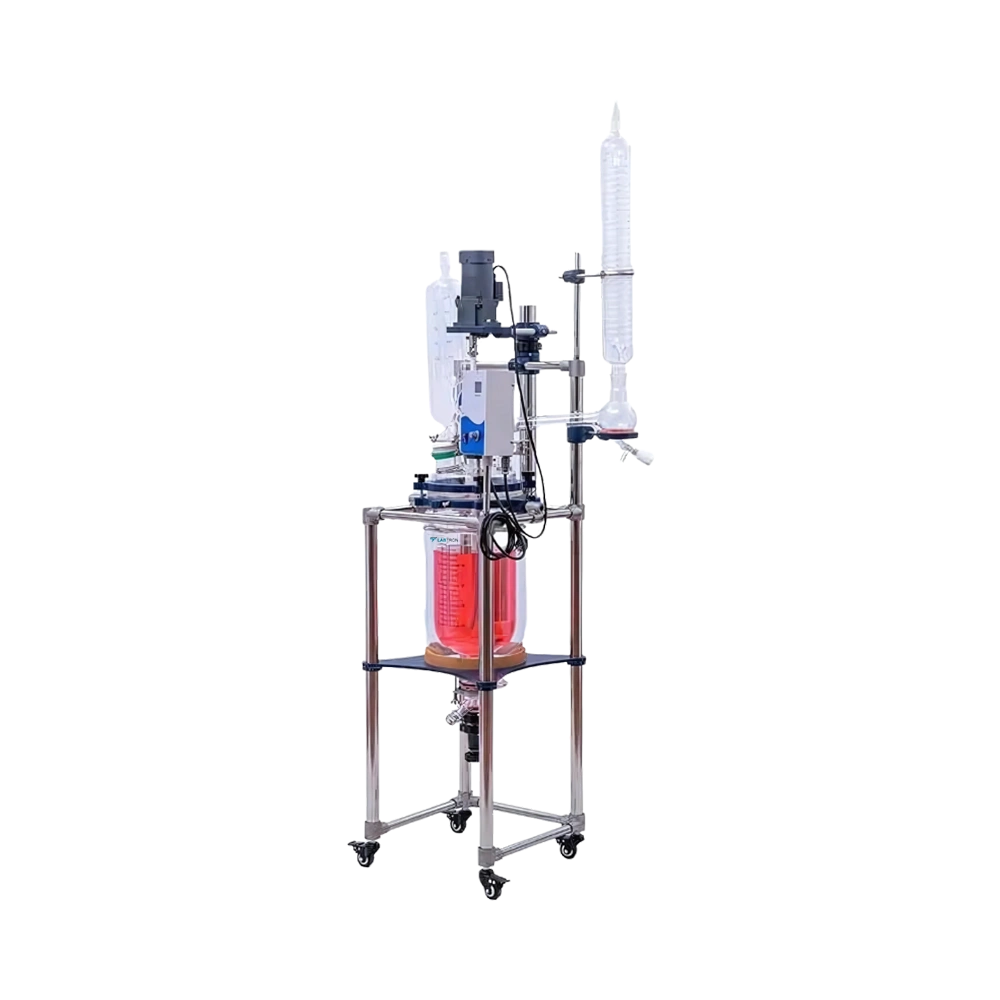


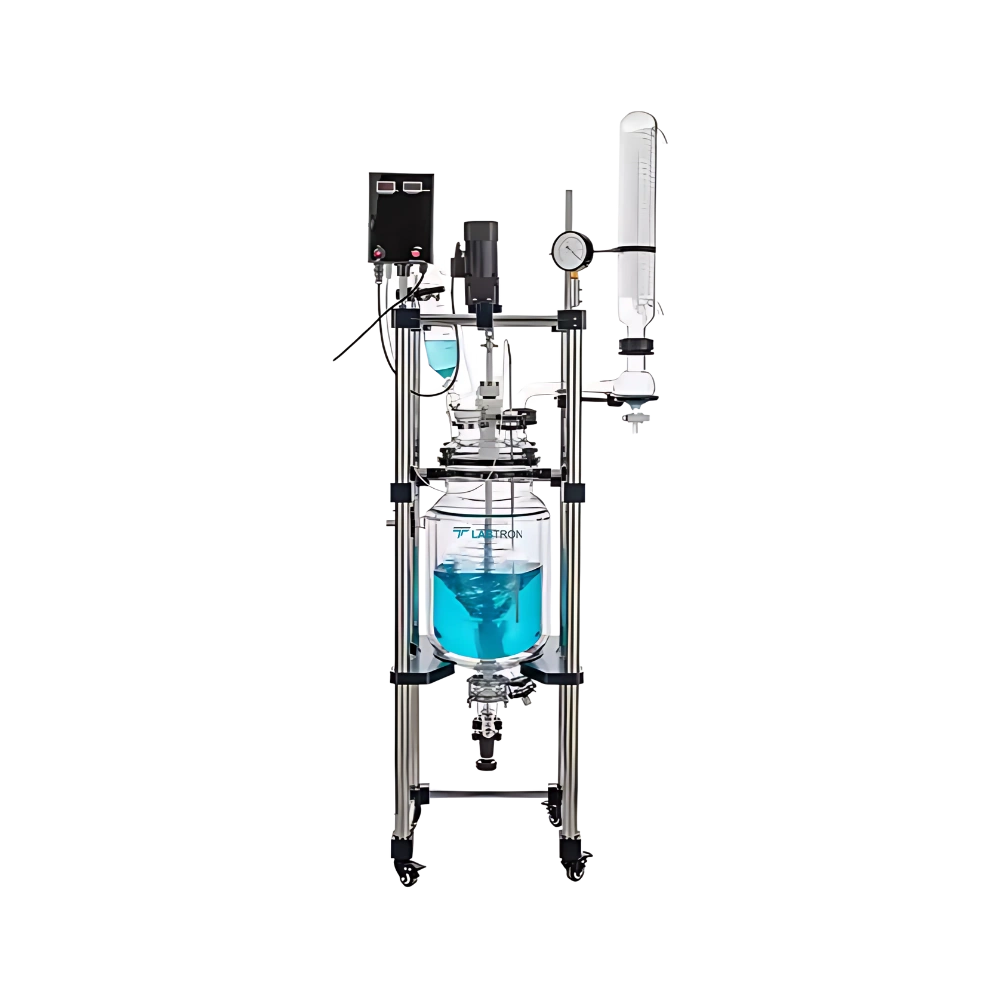
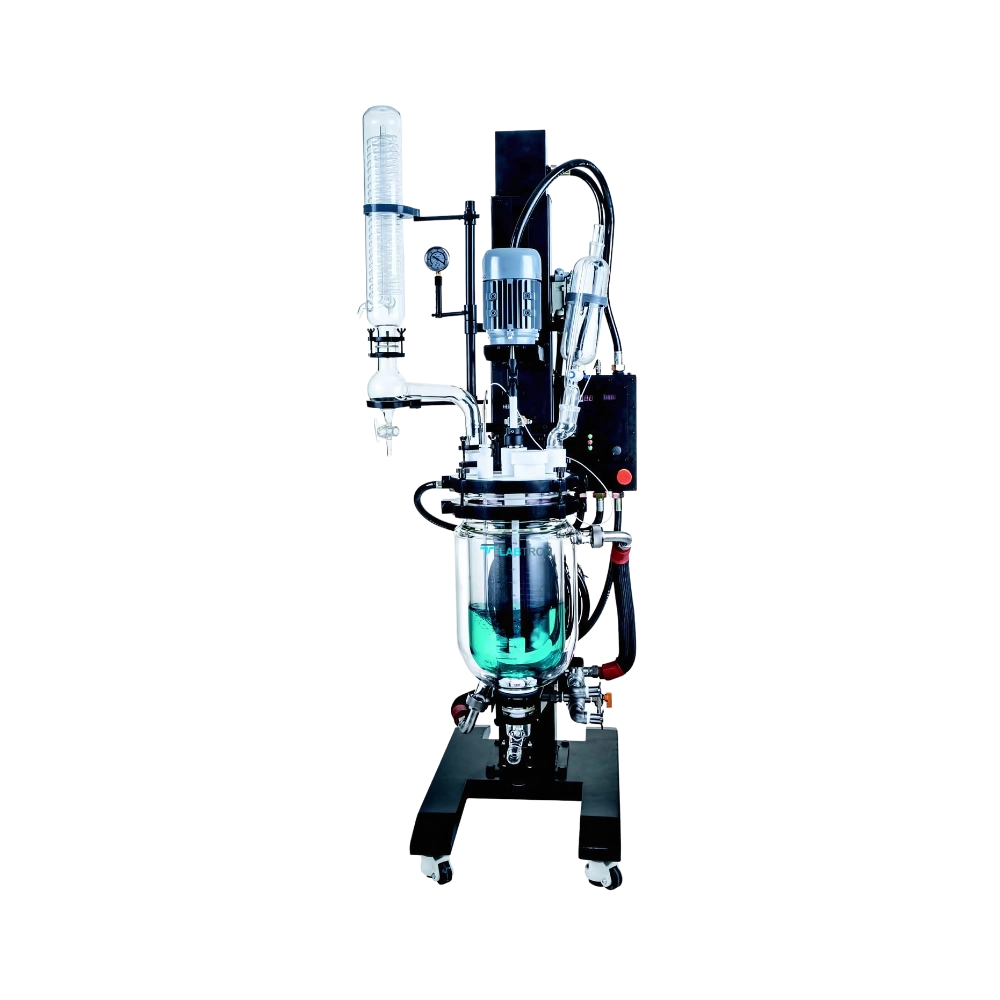
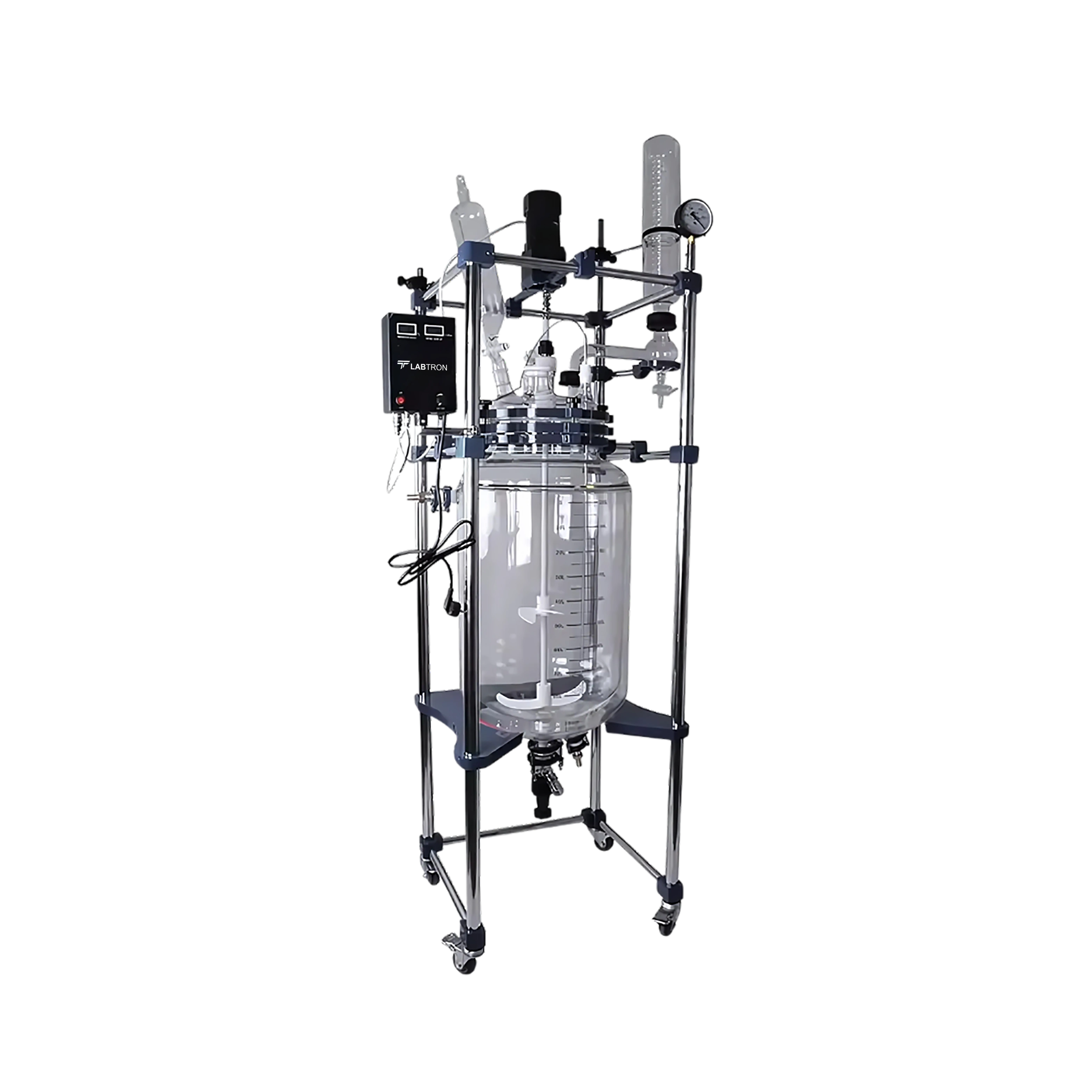
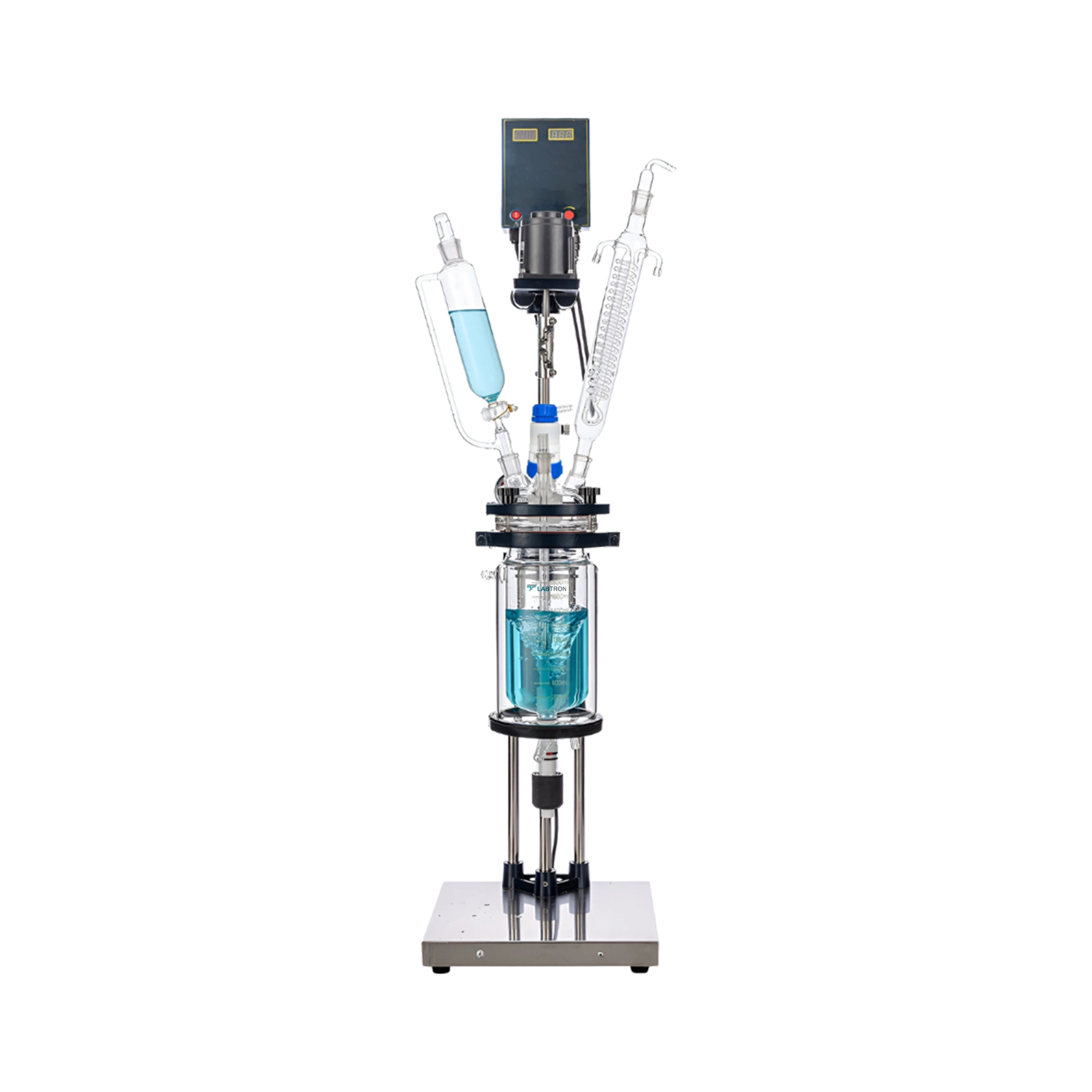
Our Jacketed Glass Reactor LJGR-A44 includes a vessel body that rotates to the left, making it easier to discharge materials directly into collection containers without heavy lifting. This movement simplifies post-process cleaning by giving better access to the interior, especially after working with sticky or viscous substances. The feature minimizes residue buildup and saves time during batch transitions. It’s particularly helpful in avoiding the need for disassembly between experiments. With fewer tools required, operators can handle the system independently. The combination of tilting and vertical lift enhances operational fluidity. It also supports safer disposal of hot or reactive contents. Overall, this adds flexibility to both routine and complex lab work.
Labtron’s Jacketed Glass Reactor LJGR-A44 supports flexible laboratory configurations by offering multiple joint ports and a modular lid arrangement. These access points are suitable for connecting condensers, sensors, feeding tubes, or vacuum gauges as required by your process. Each port is lined with durable sealing to maintain internal conditions even when accessories are swapped. This modular layout is helpful for labs handling diverse protocols across departments. Researchers can update or rearrange their setup without changing the vessel structure. The system is built to allow easy expansion in advanced applications. Its adaptability reduces downtime during reconfiguration. This makes it reliable in multi-purpose laboratory environments.
The Jacketed Glass Reactor LJGR-A44 includes an adjustable condenser mounted on a lifting mechanism, allowing users to raise it without disturbing the main vessel. This is particularly valuable when inspecting vapor flow, cleaning the tube surface, or accessing the reaction chamber mid-process. Operators don’t have to stop the entire experiment for small adjustments. The vertical design improves safety during distillation or reflux procedures. It also helps manage condensation when processing volatile mixtures. The stable alignment of the condenser remains consistent through repeated lifting. This function improves maintenance convenience during long operations. It enables clear visibility and functional access without system disruption.
The Jacketed Glass Reactor LJGR-A44 uses high-grade borosilicate glass that resists chemical corrosion from acidic, basic, and reactive organic compounds. This ensures the vessel does not degrade when exposed to diverse reagents or temperature changes. It is suitable for materials ranging from aggressive oxidizers to biochemical samples. The inner glass surface does not absorb or react with most lab chemicals. Researchers can confidently perform purification, synthesis, and formulation procedures. The reactor supports both heating and cooling cycles without structural compromise. Its compatibility makes it ideal for pharmaceutical, chemical, and academic experiments. The system remains reliable across varying compound classes.
Our Jacketed Glass Reactor LJGR-A44 is equipped with a center-mounted stirring mechanism that handles thick or high-resistance mixtures without mechanical strain. This ensures that denser fluids like emulsions, gels, or concentrated suspensions are mixed evenly throughout the reaction process. Its balanced design avoids shaking or instability even under heavier workloads. Uniform agitation helps maintain sample consistency across long durations. This is especially useful for pilot runs and formulation testing. The impeller maintains constant movement without creating air bubbles or splashing. Its construction minimizes the chances of sedimentation or localized heating. The stirring unit supports a wide viscosity range in controlled environments.
The Jacketed Glass Reactor LJGR-A44 utilizes a dual-seal approach combining PTFE and fluororubber, which helps maintain vacuum levels over extended operations. These seals resist damage from both chemicals and thermal stress, ensuring no compromise during pressure-sensitive procedures. Whether working under full vacuum or partial pressure, the integrity remains consistent throughout the batch. This benefit is crucial when handling solvents with low boiling points or air-sensitive reactants. The system reduces gas infiltration and pressure loss between connected ports. This feature also limits the need for frequent adjustments to external vacuum sources. It enhances operational accuracy across varied experiment durations.
Post your question?
Our experts are here to help!
Labtron Equipment Ltd., Quatro House, Lyon Way, Camberley, Surrey GU16 7ER United Kingdom
Email: info@labtron.com Whatsapp: +44 73 4441 2688 Phone: +44 2080 043608
