 info@labtron.com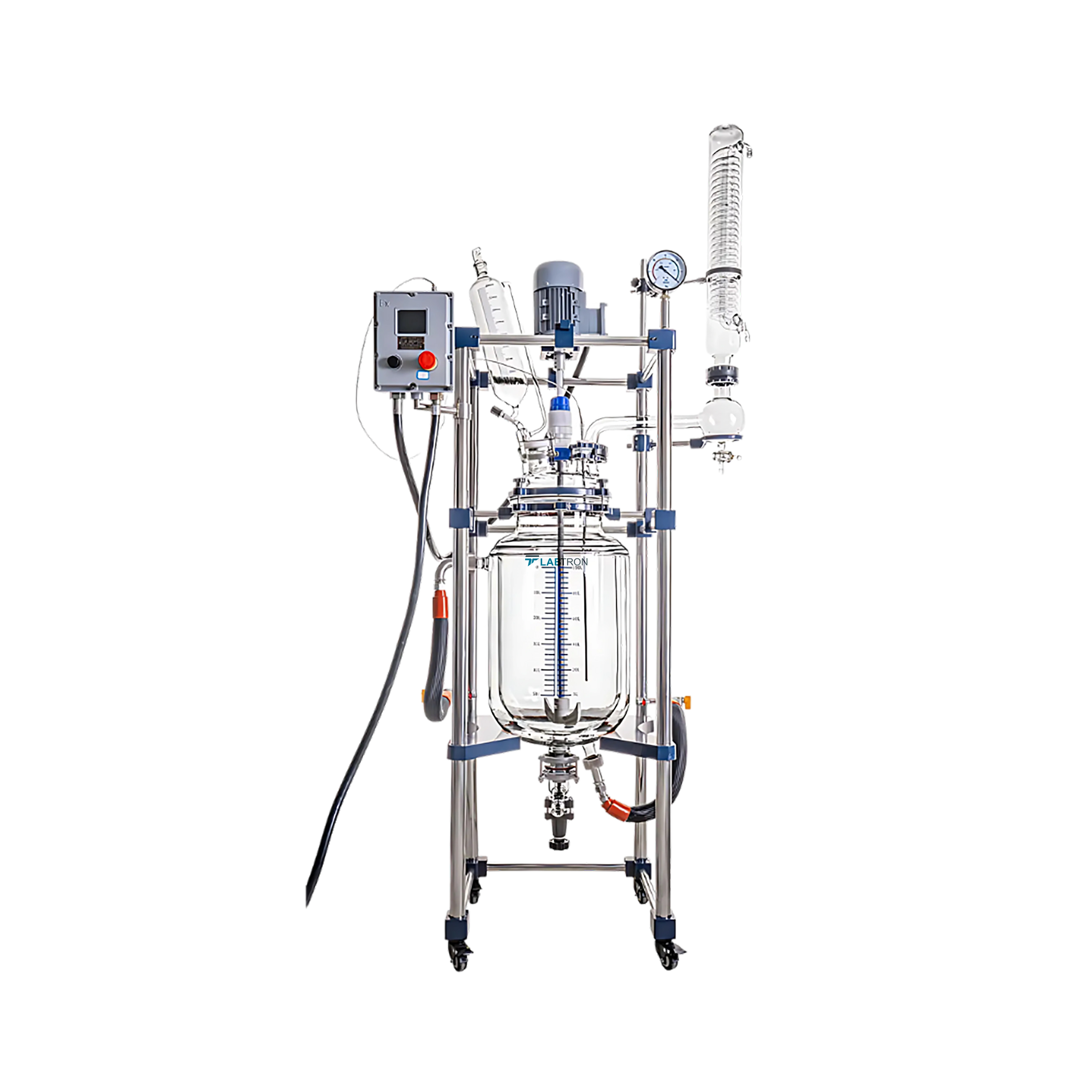

| Glass Vessel Volume | 200 L Cylindrical |
| Receiving Bottle | 10 L |
| Glass Vessel Lid Diameter | Φ 340 mm |
| Jacketed Volume | 40000 ml |
| Dropping Funnel | 5000 ml |
| Temperature Range | -80℃ to 250℃ |
| Temperature Measurement Accuracy | +/-1℃ |
| Stirring Speed | 0 to 1400 rpm |
| Vacuum Degree | 0.098 Mpa |
| Power Consumption | 200 W |
| Power Supply | 220V/50Hz |
| Dimensions (W×D×H) | 1280×930×2800 mm |
| Weight | 180 kg |
Elevated observation glass points
Tangle-free stirrer wiring port
Optimized spillage control ridge
Steam-resistant surface coating
Wide-base stability frame
Jacketed Glass Reactor LJGR-A35 is used for carrying out large-volume chemical reactions under controlled temperature and vacuum conditions. This supports applications such as synthesis, distillation, crystallization, and extraction across pharmaceutical, petrochemical, and academic research fields.
Download catalog for
Jacketed Glass Reactor LJGR-A35 Catalog
Available Range :
Jacketed Glass Reactor LJGR-A10 : 1 L Cylindrical Jacketed Glass Reactor LJGR-B21 : 10 L Jacketed Glass Reactor LJGR-A22 : 10 L Cylindrical Jacketed Glass Reactor LJGR-B24 : 100 L Jacketed Glass Reactor LJGR-A26 : 100 L Cylindrical Jacketed Glass Reactor LJGR-B26 : 100L Jacketed Glass Reactor LJGR-A27 : 150 L Cylindrical Jacketed Glass Reactor LJGR-A11 : 2 L Cylindrical Jacketed Glass Reactor LJGR-B22 : 20 L Jacketed Glass Reactor LJGR-A23 : 20 L Cylindrical Jacketed Glass Reactor LJGR-B25 : 200 L Jacketed Glass Reactor LJGR-A28 : 200 L Cylindrical Jacketed Glass Reactor LJGR-A12 : 3 L Cylindrical Jacketed Glass Reactor LJGR-A24 : 30 L Cylindrical Jacketed Glass Reactor LJGR-B20 : 5 L Jacketed Glass Reactor LJGR-A50 : 5 L (Cylindrical) Jacketed Glass Reactor LJGR-A17 : 5 L Cylindrical Jacketed Glass Reactor LJGR-A13 : 5 L, Cylindrical Jacketed Glass Reactor LJGR-B23 : 50 L Jacketed Glass Reactor LJGR-A25 : 50 L CylindricalJacketed Glass Reactor supports controlled mixing with adjustable stirring speed, ensuring consistent reaction dynamics in varied experiments. They maintain thermal stability using a jacketed layer for fluid circulation without exposing the medium. Their borosilicate glass build withstands thermal stress and chemical exposure over time. These systems include a display panel for monitoring key parameters during operation. Our glass reactor is suited for synthesis, distillation, extraction, crystallization, and pharmaceutical development.


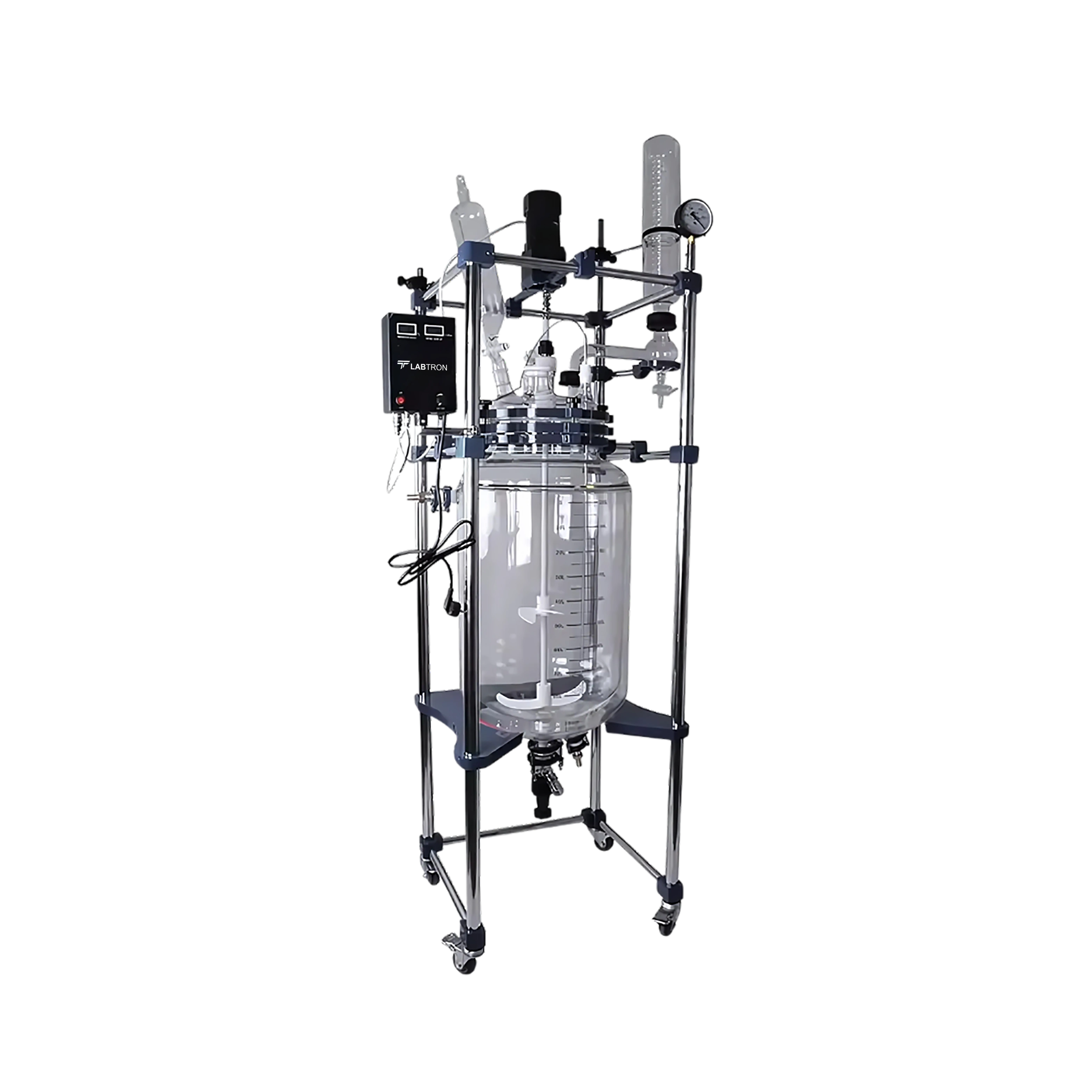
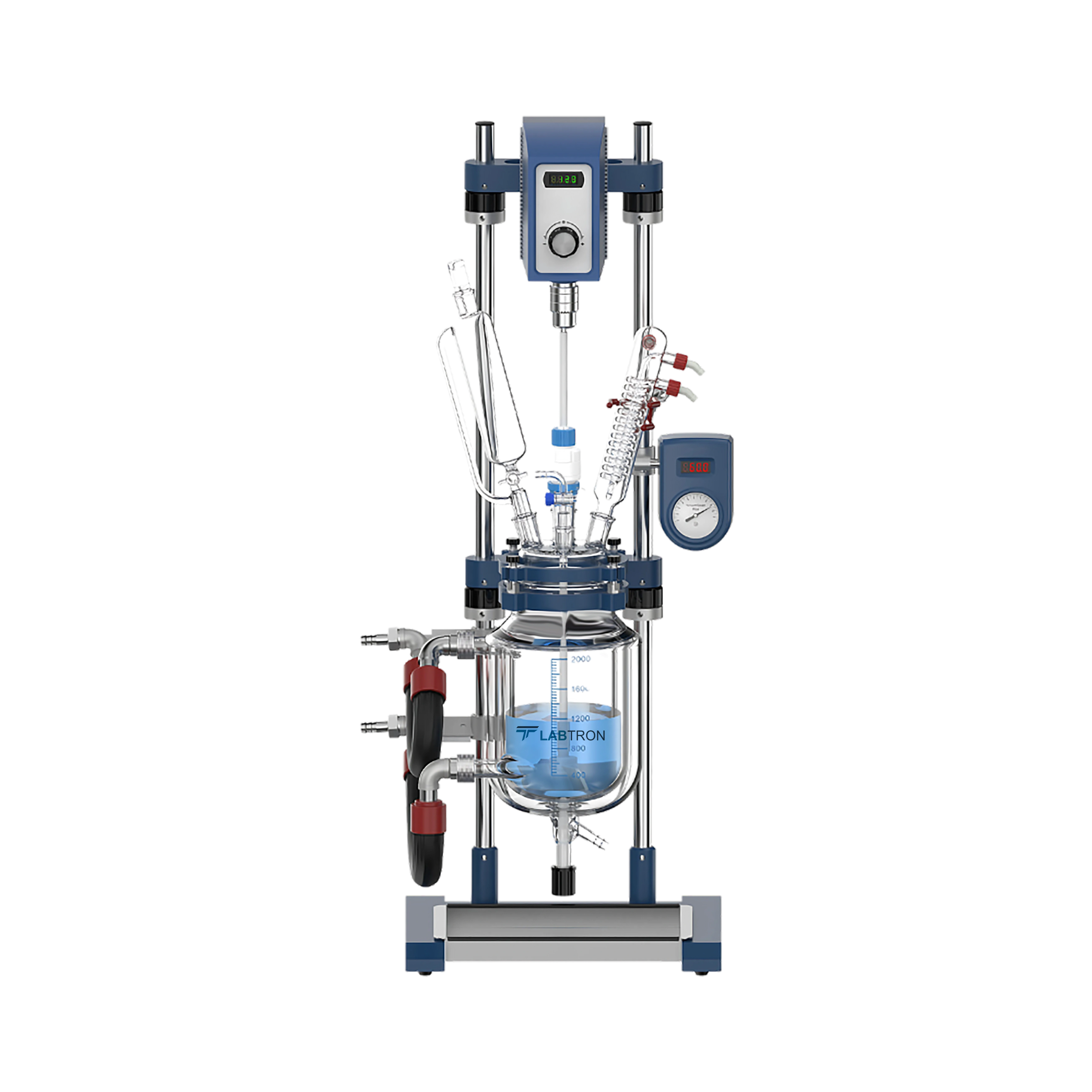
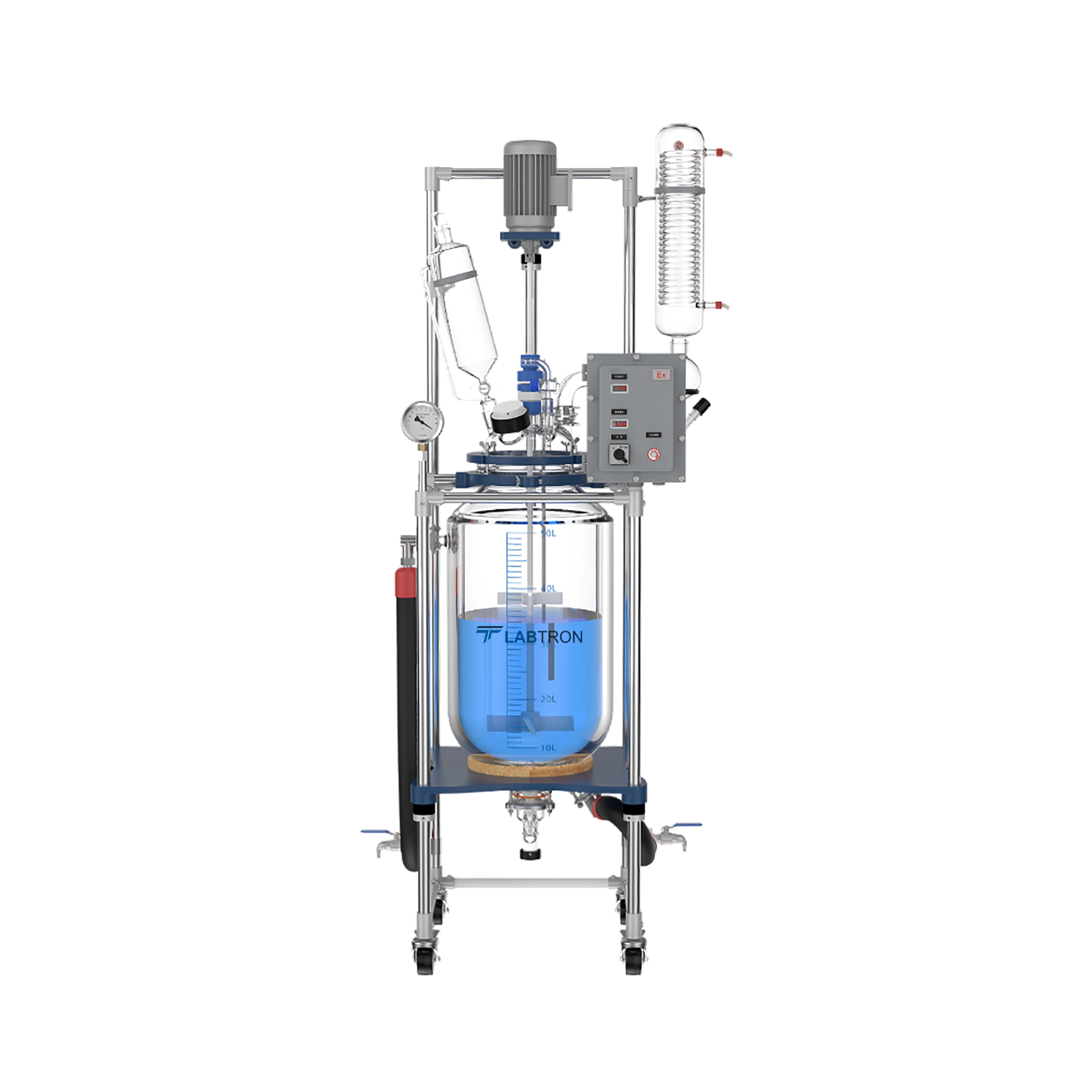


Labtron’s Jacketed Glass Reactor LJGR-A35 maintains thermal consistency through its dual-layer jacket and fluid circulation system. The system supports stable heat distribution without unexpected temperature spikes. Temperature probes feed continuous data to the control unit to maintain accuracy over long durations. Insulation throughout the structure reduces energy loss and improves efficiency. Reactants are protected from direct contact with heating surfaces, preserving sample quality. Temperature settings can be adjusted while the experiment is in progress. The system’s feedback response helps prevent overheating or undershooting target conditions. A wide operational range makes it suitable for both high and low-temperature experiments.
Labtron’s Jacketed Glass Reactor LJGR-A35 features a PTFE and fluororubber double seal that preserves internal vacuum conditions. The sealing components resist leaks even during prolonged runs or under pressure variation. Their chemical resistance helps maintain performance in the presence of strong solvents. A stable vacuum enhances the reliability of pressure-sensitive procedures. Continuous vacuum hold limits the need for system recalibration. The sealed chamber reduces the risk of external contamination. This design contributes to lower maintenance and longer operational life. The sealing system is also compatible with a wide range of reagents and chemical types.
The Jacketed Glass Reactor LJGR-A35 includes a 10 L receiving bottle for continuous collection during distillation or synthesis. The bottle supports vacuum operation, allowing withdrawal without compromising pressure. Closed transfer pathways reduce exposure to air, which is important for handling sensitive compounds. It minimizes the need to interrupt the process to collect samples or products. Collection can proceed while heating or stirring continues without interference. The container supports scale-up by offering sufficient capacity for extended runs. The system reduces handling time and improves overall process efficiency. A compatible design ensures integration with other lab infrastructure.
The Jacketed Glass Reactor LJGR-A35 uses a fixed external loop buffer to secure fluid connections between dynamic and stationary parts. This component absorbs mechanical stress caused by thermal expansion or pressure changes. By stabilizing connection points, it prevents damage to delicate glass joints. Circulating fluids move consistently without being affected by sudden shifts or vibrations. The buffer reduces leakage risk and preserves the integrity of the jacketed flow. The design contributes to safer long-term operation during demanding experiments. Durability is improved by reducing strain on tubing and seals. Setup is cleaner and easier due to the maintained layout.
The Jacketed Glass Reactor LJGR-A35 features chemical-resistant materials and vacuum compatibility tailored for biopharma use. Its borosilicate glass body does not interact with biological samples, preserving their original structure. Inert surfaces reduce contamination risk in sterile conditions. Agitation and temperature can be finely tuned for sensitive processes such as fermentation or compound extraction. It supports both small-batch development and pilot-scale testing. The vacuum system retains volatile components critical to biological work. The reactor structure enables thorough cleaning between uses. Stability and repeatability make it suitable for regulated laboratory environments.
The Jacketed Glass Reactor LJGR-A35 includes a 5000 ml dropping funnel for controlled reagent addition. The funnel enables gradual dosing without exposing the contents to ambient air. Reagents can be introduced while the system remains closed and under vacuum. Even distribution supports reaction uniformity in multi-step processes. The funnel reduces the chance of reaction surges by slowing the addition rate. Operators can modulate flow to meet experimental demands. It allows for the handling of reactive or flammable inputs more safely. The setup improves repeatability by maintaining consistent dosing throughout the run.
Post your question?
Our experts are here to help!
Labtron Equipment Ltd., Quatro House, Lyon Way, Camberley, Surrey GU16 7ER United Kingdom
Email: info@labtron.com Whatsapp: +44 73 4441 2688 Phone: +44 2080 043608