info@labtron.com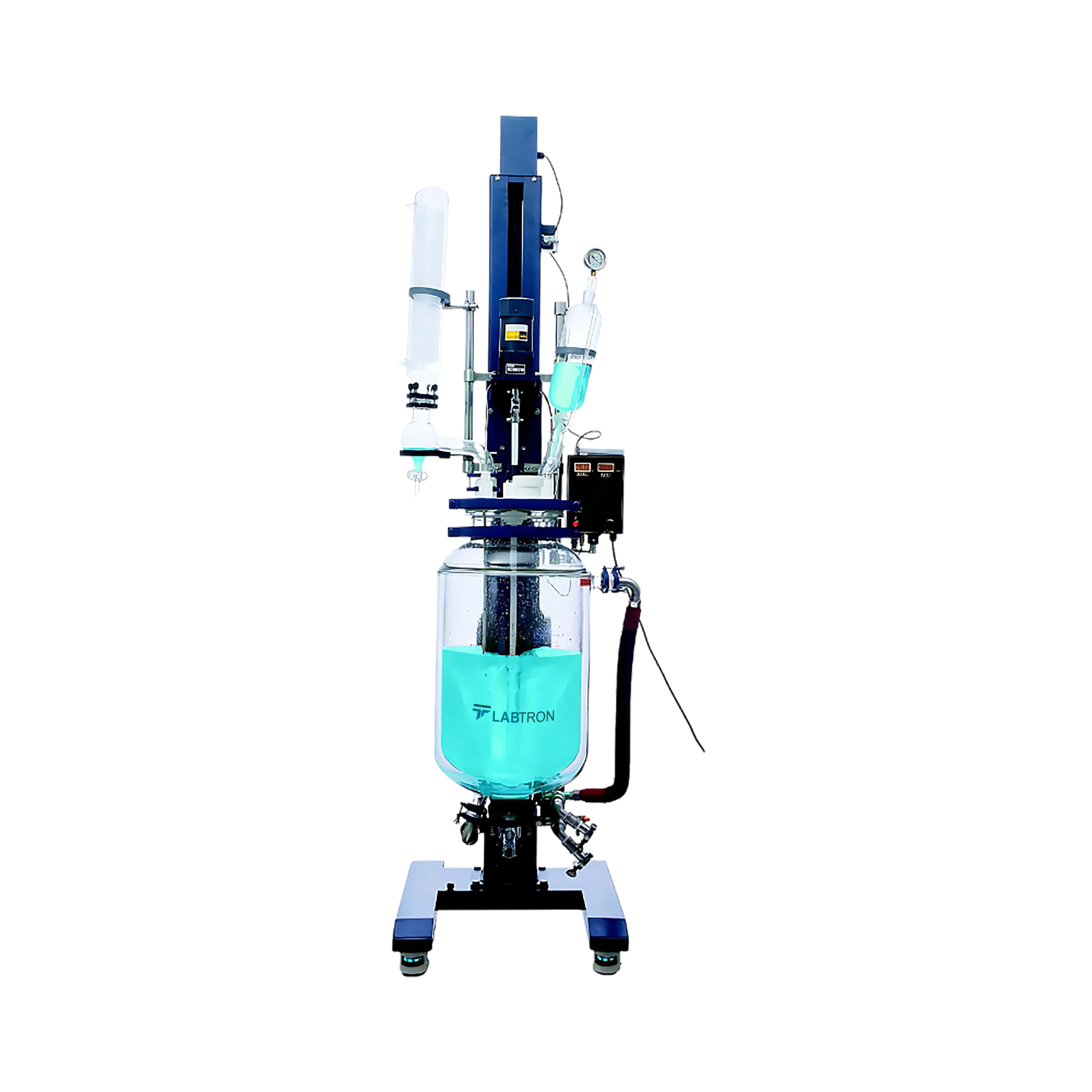

| Glass Vessel Volume | 10 L Cylindrical |
| Glass Vessel Lid Diameter | Φ 265 mm |
| Jacketed Volume | 5000 ml |
| Dropping Funnel | 1000 ml |
| Lifting Distance | 500 mm |
| Vessel Body Rotation | Hand wheel turns left 150 degrees |
| Temperature Range | -80℃ to 250℃ |
| Temperature Measurement Accuracy | +/-1℃ |
| Stirring Speed | 0 to 450 rpm |
| Vacuum Degree | 0.098 Mpa |
| Stirring Motor Power | 120 W |
| Lifting Motor Power | 40 W |
| Power Consumption | 130 W |
| Power Supply | 220V/50Hz |
| Condenser Dimension (D×H) | Φ100×600 mm |
| Dimensions (W×D×H) | 700×850×2250 mm |
| Weight | 120 kg |
Jacketed Glass Reactor LJGR-A37 supports controlled thermal and chemical reactions within a sealed, dual-layer vessel, ideal for pilot-scale research and compound development. This setup supports synthesis, distillation, and crystallization in pharmaceutical, chemical, and academic labs.
Download catalog for
Jacketed Glass Reactor LJGR-A37 Catalog
Available Range :
Jacketed Glass Reactor LJGR-A10 : 1 L Cylindrical Jacketed Glass Reactor LJGR-B21 : 10 L Jacketed Glass Reactor LJGR-A22 : 10 L Cylindrical Jacketed Glass Reactor LJGR-B24 : 100 L Jacketed Glass Reactor LJGR-A26 : 100 L Cylindrical Jacketed Glass Reactor LJGR-B26 : 100L Jacketed Glass Reactor LJGR-A27 : 150 L Cylindrical Jacketed Glass Reactor LJGR-A11 : 2 L Cylindrical Jacketed Glass Reactor LJGR-B22 : 20 L Jacketed Glass Reactor LJGR-A23 : 20 L Cylindrical Jacketed Glass Reactor LJGR-B25 : 200 L Jacketed Glass Reactor LJGR-A28 : 200 L Cylindrical Jacketed Glass Reactor LJGR-A12 : 3 L Cylindrical Jacketed Glass Reactor LJGR-A24 : 30 L Cylindrical Jacketed Glass Reactor LJGR-B20 : 5 L Jacketed Glass Reactor LJGR-A50 : 5 L (Cylindrical) Jacketed Glass Reactor LJGR-A17 : 5 L Cylindrical Jacketed Glass Reactor LJGR-A13 : 5 L, Cylindrical Jacketed Glass Reactor LJGR-B23 : 50 L Jacketed Glass Reactor LJGR-A25 : 50 L CylindricalJacketed Glass Reactor supports controlled mixing with adjustable stirring speed, ensuring consistent reaction dynamics in varied experiments. They maintain thermal stability using a jacketed layer for fluid circulation without exposing the medium. Their borosilicate glass build withstands thermal stress and chemical exposure over time. These systems include a display panel for monitoring key parameters during operation. Our glass reactor is suited for synthesis, distillation, extraction, crystallization, and pharmaceutical development.



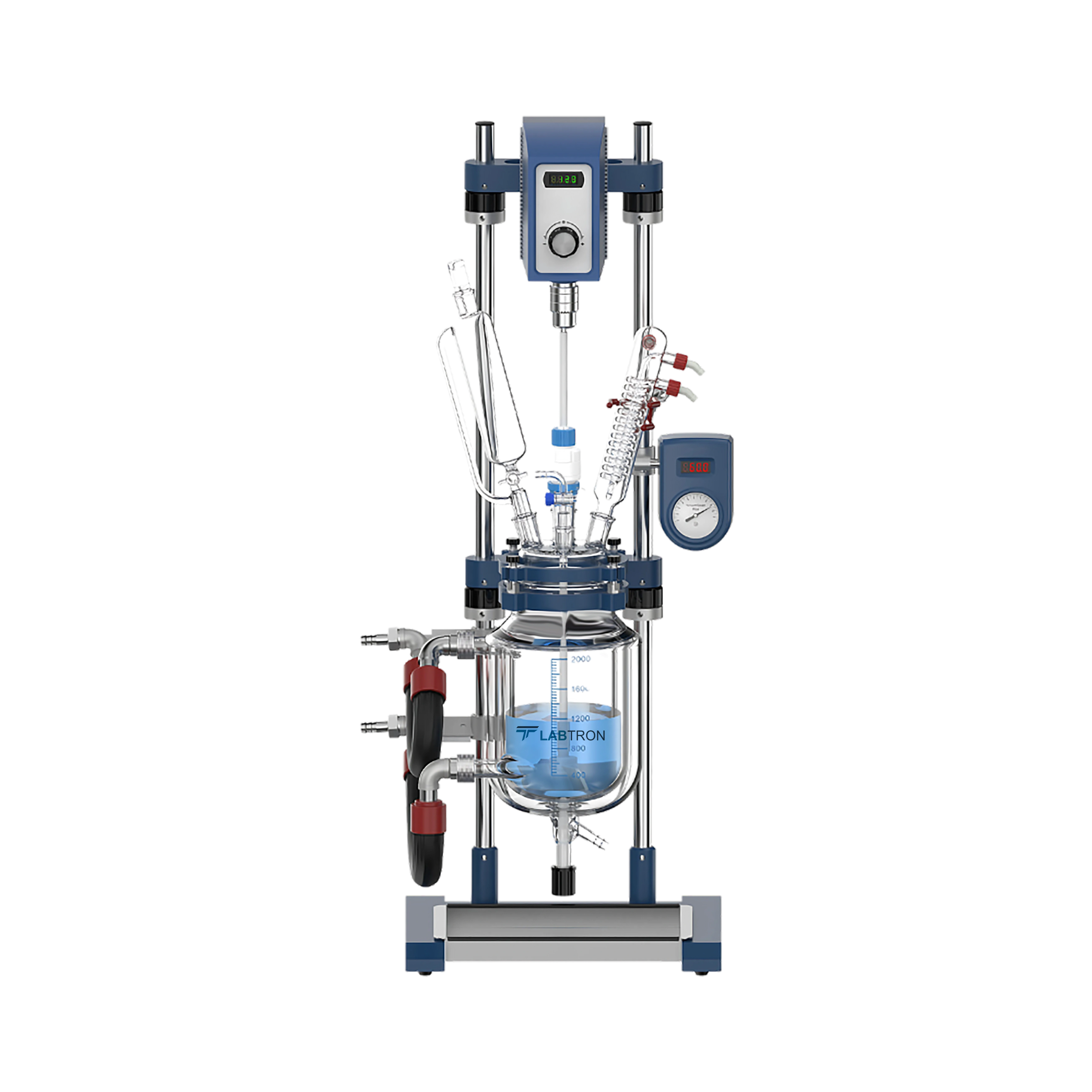


The Jacketed Glass Reactor LJGR-A37 is designed to accommodate sensitive and volatile materials by maintaining a controlled and closed reaction environment. Its double-sealed system minimizes the risk of leaks and prevents exposure to air or contaminants, which is critical for maintaining the integrity of delicate substances. The robust vacuum-tight connections ensure that the vessel can be operated under reduced pressure conditions, helping to stabilize reactive compounds. Additionally, the carefully selected materials resist corrosion and degradation even when working with aggressive chemicals. The lifting motor and large lid diameter make adding or removing samples safer and easier without disturbing the reaction setup. This design supports safe handling during all stages of the reaction, from initiation to completion. Furthermore, the jacketed vessel’s temperature control capabilities provide a stable thermal environment, which reduces the risk of unwanted side reactions. This feature makes the reactor suitable for a broad range of experimental needs involving unstable chemicals.
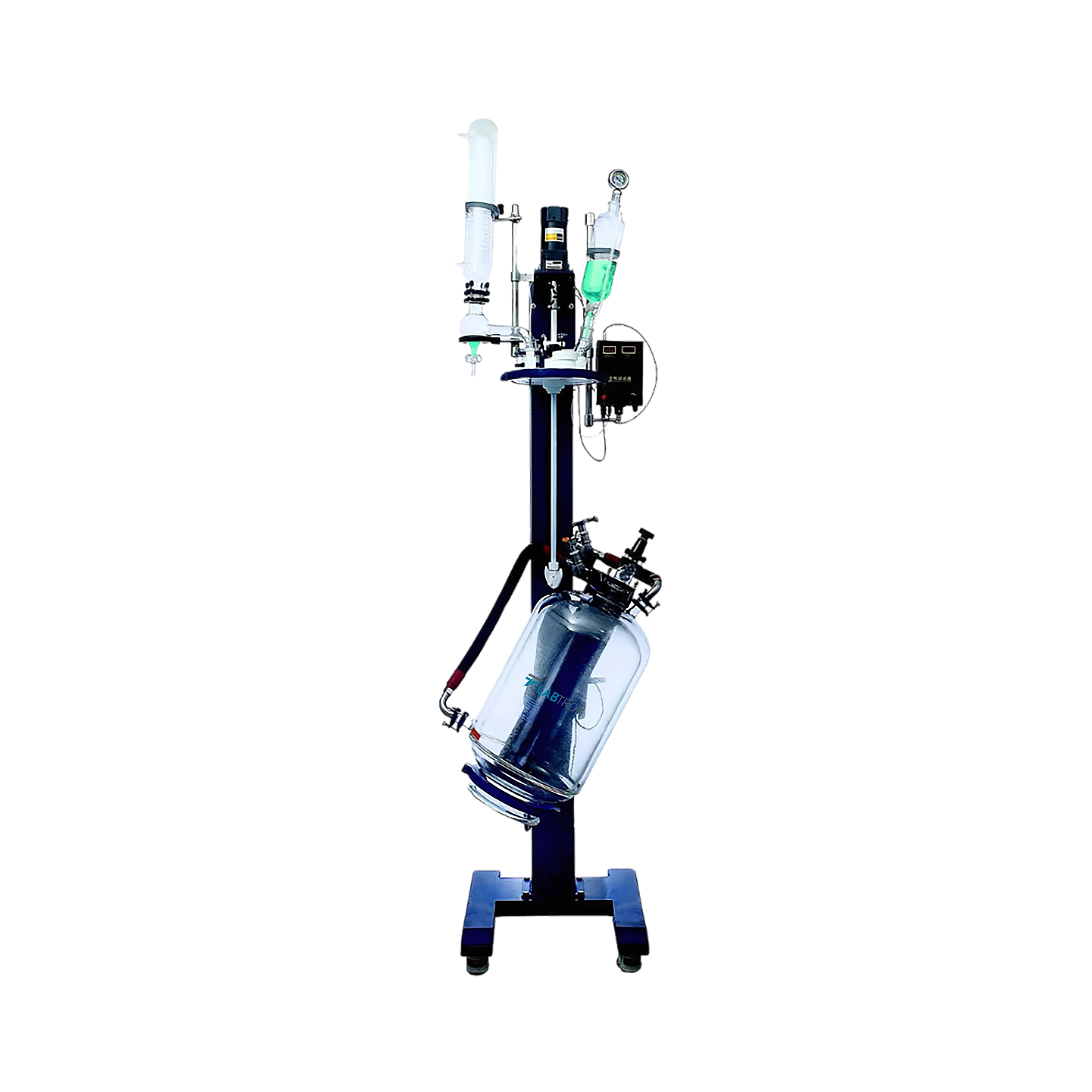
The tilting mechanism on the Jacketed Glass Reactor LJGR-A37 enhances operational flexibility by allowing the vessel to rotate leftwards manually. This rotation simplifies the process of draining liquids or removing reaction products, which can often be cumbersome in fixed reactors. Lab technicians can pour out contents with reduced risk of spills or the need for transferring to additional containers, helping maintain a cleaner workspace. The ability to tilt also aids in cleaning hard-to-reach areas inside the vessel, especially after processes involving viscous or sticky substances. During high-temperature reactions, where residues can harden or stick, this feature reduces the time and effort required to prepare the reactor for the next run. The tilt function also improves visual inspection of residual contents without complete disassembly. This contributes to safer handling by reducing direct contact with hot or hazardous materials. Overall, the tilting design is a practical addition that supports efficiency and user convenience during reaction cycles.
The Jacketed Glass Reactor LJGR-A37 is designed with a spacious lid diameter that enables the convenient installation of various laboratory accessories such as temperature probes, gas inlets, or sampling ports. This wide opening facilitates integration of custom or standard devices needed for monitoring and controlling reaction parameters without interrupting ongoing processes. The ample space allows easy insertion and removal of equipment, enabling adjustments during different phases of the experiment. This flexibility is valuable for research environments where reactions need to be closely monitored or modified on the fly. It also supports adding reagents or catalysts mid-reaction, enhancing experimental control. The lid’s design ensures that accessories fit securely, maintaining the vessel’s sealed environment and preventing leaks. Moreover, this accessibility supports multi-functional operation and better adaptability to evolving research needs. The ability to accommodate a variety of attachments without compromising system integrity is a key benefit for experimental versatility.
The Jacketed Glass Reactor LJGR-A37 ensures internal stability throughout extended reaction runs by employing a combination of sturdy frame construction and vibration damping techniques. This robust support minimizes movement and prevents mechanical disturbances that could affect reaction uniformity. The base and mounting components are engineered to absorb and distribute stress, reducing the likelihood of shifting or wobbling even during high-speed stirring operations. The secure mounting of the vessel and stirring motor helps maintain consistent alignment between the stirring elements and vessel interior, which is essential for even mixing. The reactor’s design also takes into account thermal expansion, ensuring that all components remain firmly in place despite temperature fluctuations. This structural integrity allows researchers to trust that long-duration experiments proceed without unexpected interruptions or mechanical failures. Consistency in stirring and vessel positioning contributes to reliable, repeatable outcomes, which is especially important for processes requiring precise control over time. The overall stability reduces maintenance needs and extends equipment lifespan.
The Jacketed Glass Reactor LJGR-A37 is engineered to facilitate efficient material recovery after chemical reactions by incorporating design features that allow complete and clean draining of processed substances. The vessel’s tilt capability combined with a smooth internal surface minimizes residual buildup, making it easier to pour out viscous or semi-solid products without leaving significant traces behind. This is particularly beneficial for applications where recovering every bit of product is critical for yield optimization or cost efficiency. The wide outlet and clear path for flow reduce the chance of blockages during transfer. The reactor’s components are corrosion-resistant, which prevents degradation or contamination during product recovery. Cleaning between batches is simplified, allowing faster turnaround times for sequential experiments. This efficiency supports the needs of laboratories and pilot plants focused on iterative development. Additionally, the design reduces waste and minimizes the risk of cross-contamination between different reaction cycles, ensuring higher product purity.
The Jacketed Glass Reactor LJGR-A37 features a transparent glass vessel body that permits direct visual observation of the reaction process at any stage. This clear construction allows operators to monitor changes in color, phase transitions, bubbling, or crystallization without interrupting the experiment or opening the vessel. This visibility helps detect any unexpected developments or irregularities early, allowing prompt adjustments to reaction parameters. The reactor’s design accommodates supplemental optical devices such as cameras or microscopes to enhance monitoring capabilities further. In addition to visual tracking, the wide lid opening supports the use of probes or sensors that provide real-time data while maintaining a sealed environment. The ability to observe reactions closely without physical interference improves experiment control and increases the likelihood of successful outcomes. Visual accessibility also aids training and supervision in academic or industrial settings, providing an educational advantage. This feature supports better documentation and reporting for research reproducibility.
Post your question?
Our experts are here to help!
Labtron Equipment Ltd., Quatro House, Lyon Way, Camberley, Surrey GU16 7ER United Kingdom
Email: info@labtron.com Whatsapp: +44 73 4441 2688 Phone: +44 2080 043608