info@labtron.com

| Glass Vessel Volume | 3 L Cylindrical |
| Dropping Funnel Volume | 200 ml |
| Dropping Funnel Interface | 24/29 |
| Glass Vessel Flange | Φ 105 mm |
| Glass Vessel Opening OD | Φ 150 mm |
| Glass Material | 3.3 Borosilicate |
| Support Parts of Stirrer | PTFE, PEED and Glass |
| Bottom Valve ID | Φ 10mm |
| Jacket interface | 25 mm |
| Jacket Interface Pressure Limit | Less than or equal to 0.03 Mpa |
| Circulation Hose Connection Port | Rc1/2 and Rc3/4 |
| Glass Vessel Lid Openings | 5 |
| Center Opening of Lid | 24/40 |
| Side Opening of Lid | 24/40×3, 19/26 |
| Seal Ring on Vessel Lid | Φ148×Φ105×3 |
| Drain Port Ground Clearence | 100 mm |
| Stirring Speed | 40 to 500 rpm |
| Condenser Interface | 24/29 |
| Condenser Area | 0.025 m |
| Receiving Bottle | Optional |
| Power Consumption | 50 W |
| Dimensions (W×D×H) | 480×480×1200 mm |
Pivot-secured funnel mount
Multi-line port adaptability
Removable utility catch tray
Low-friction rotation bearings
Shock-absorbing support base
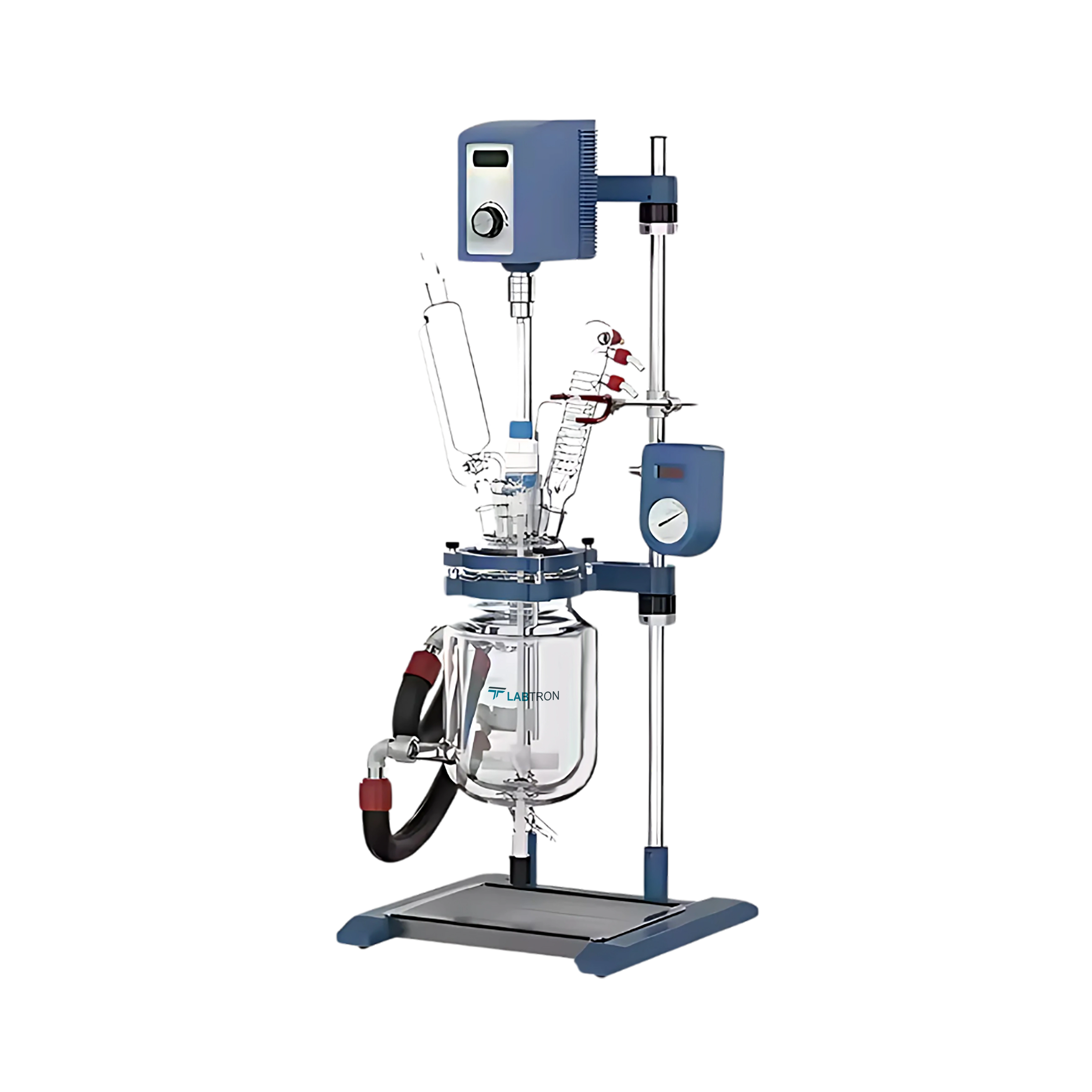
Jacketed Glass Reactor LJGR-A48 facilitates temperature-controlled reactions for synthesis, distillation, and concentration processes. It is widely used in laboratories focused on pharmaceuticals, chemical engineering, and scientific research.
Download catalog for
Jacketed Glass Reactor LJGR-A48 Catalog
Available Range :
Jacketed Glass Reactor LJGR-A10 : 1 L Cylindrical Jacketed Glass Reactor LJGR-B21 : 10 L Jacketed Glass Reactor LJGR-A22 : 10 L Cylindrical Jacketed Glass Reactor LJGR-B24 : 100 L Jacketed Glass Reactor LJGR-A26 : 100 L Cylindrical Jacketed Glass Reactor LJGR-B26 : 100L Jacketed Glass Reactor LJGR-A27 : 150 L Cylindrical Jacketed Glass Reactor LJGR-A11 : 2 L Cylindrical Jacketed Glass Reactor LJGR-B22 : 20 L Jacketed Glass Reactor LJGR-A23 : 20 L Cylindrical Jacketed Glass Reactor LJGR-B25 : 200 L Jacketed Glass Reactor LJGR-A28 : 200 L Cylindrical Jacketed Glass Reactor LJGR-A12 : 3 L Cylindrical Jacketed Glass Reactor LJGR-A24 : 30 L Cylindrical Jacketed Glass Reactor LJGR-B20 : 5 L Jacketed Glass Reactor LJGR-A50 : 5 L (Cylindrical) Jacketed Glass Reactor LJGR-A17 : 5 L Cylindrical Jacketed Glass Reactor LJGR-A13 : 5 L, Cylindrical Jacketed Glass Reactor LJGR-B23 : 50 L Jacketed Glass Reactor LJGR-A25 : 50 L CylindricalJacketed Glass Reactor supports controlled mixing with adjustable stirring speed, ensuring consistent reaction dynamics in varied experiments. They maintain thermal stability using a jacketed layer for fluid circulation without exposing the medium. Their borosilicate glass build withstands thermal stress and chemical exposure over time. These systems include a display panel for monitoring key parameters during operation. Our glass reactor is suited for synthesis, distillation, extraction, crystallization, and pharmaceutical development.


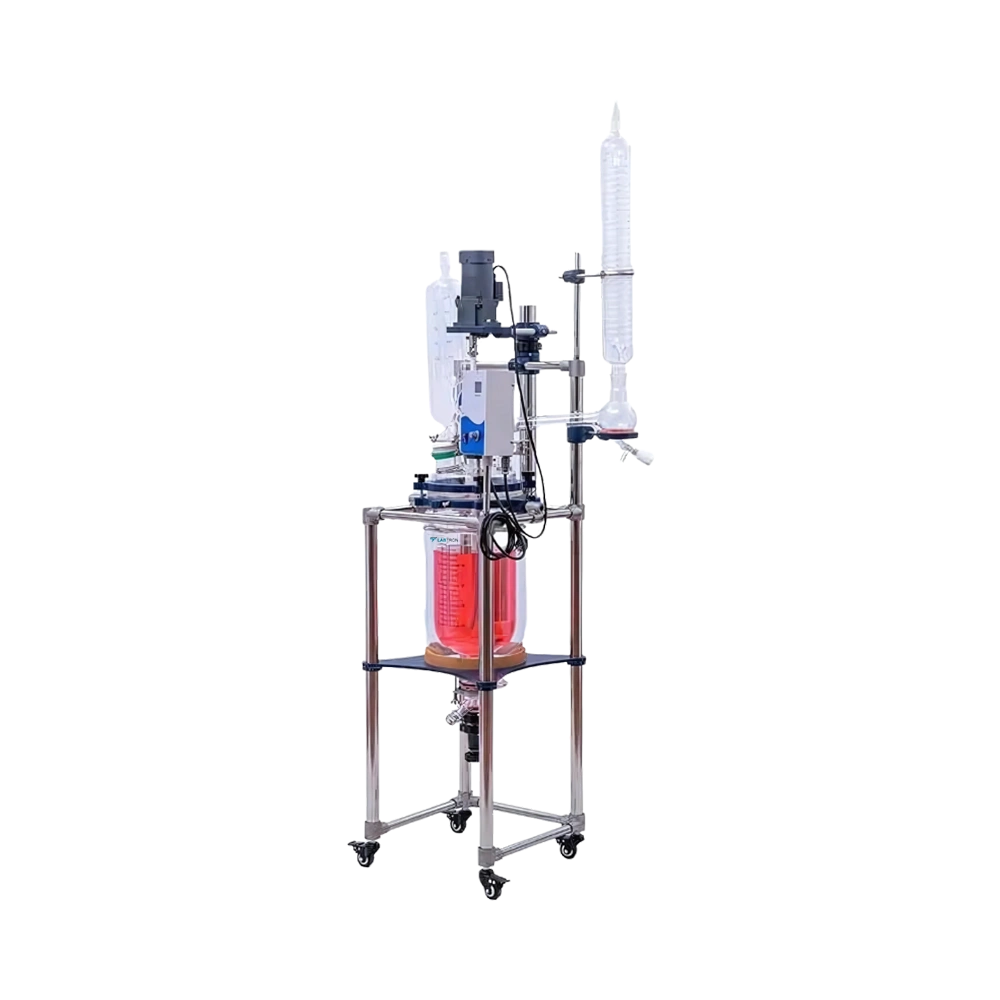


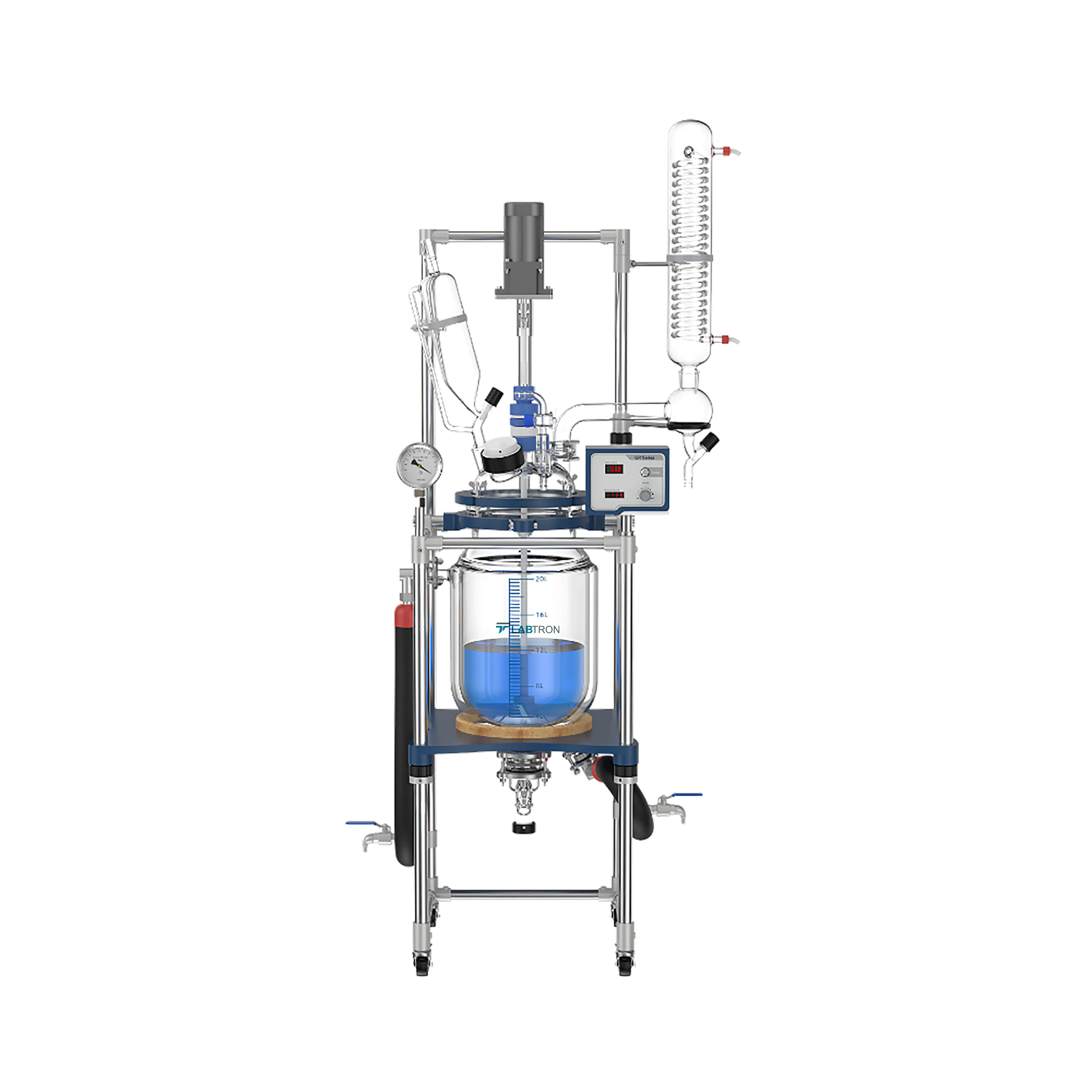

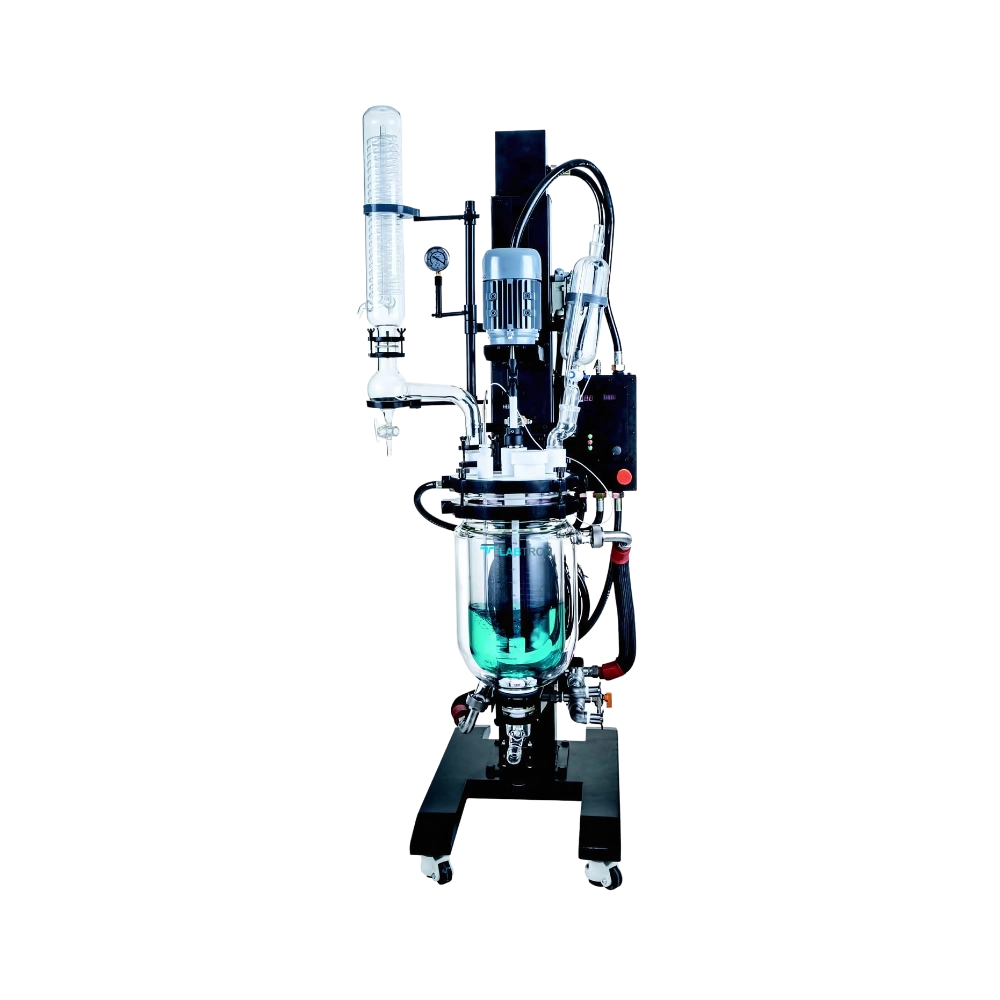
The Jacketed Glass Reactor LJGR-A48 is engineered with a double-layer borosilicate glass jacket that allows precise regulation of temperature through fluid circulation. This design supports both heating and cooling processes, ensuring that experiments requiring strict thermal control can be conducted safely. The glass material used can endure harsh thermal stresses, making it suitable for reactions spanning from elevated to sub-zero temperatures. By maintaining consistent temperatures throughout the vessel, the reactor prevents thermal shock and material degradation. This thermal adaptability ensures reliable performance in diverse chemical syntheses and process optimization tasks. Moreover, the system’s construction minimizes heat loss, increasing energy efficiency during prolonged experiments. The jacketed design also enables quick temperature transitions, which are critical for multi-step reactions. This capability makes the reactor a dependable tool for laboratories handling complex thermal requirements.
The Jacketed Glass Reactor LJGR-A48 integrates high-quality borosilicate glass capable of withstanding negative pressure without compromising its structural integrity. Its design incorporates specialized sealing components to maintain vacuum levels essential for processes like distillation or evaporation. These features reduce the risk of leaks or implosions that could interrupt experiments or pose safety hazards. The reactor’s vacuum compatibility allows it to handle a broad range of chemical reactions that require controlled pressure environments. Additionally, the sturdy base and secure fittings help maintain stability during vacuum operations. The vessel’s construction also facilitates easy inspection for wear or damage, promoting safe long-term use. By ensuring a consistent vacuum seal, the reactor protects sensitive materials from contamination or degradation. These safety measures contribute to reliable performance in rigorous laboratory settings.
The Jacketed Glass Reactor LJGR-A48 is designed with flexibility in mind, offering multiple lid openings and interchangeable accessories to suit a variety of laboratory needs. Users can customize the stirring mechanism, jacket fluid connections, and additional ports based on their process specifications. This adaptability supports applications ranging from chemical synthesis to biological research by accommodating different vessel configurations and sensor placements. The reactor’s modular design facilitates upgrades or changes without requiring replacement of the entire unit, making it cost-effective over time. Custom filter reactors or receiving trays can also be added for specific experimental workflows. This level of customization ensures that the reactor can integrate into diverse laboratory environments efficiently. Its compatibility with standard laboratory equipment enhances its practical value. Overall, this flexibility helps meet evolving research demands while maintaining operational efficiency.
The Jacketed Glass Reactor LJGR-A48 includes insulated and reinforced hoses that cushion mechanical stresses transmitted during fluid circulation. These hoses prevent excessive vibration or tension on the glass connections, which can otherwise lead to cracks or breakage. The protective design extends the life of the reactor by reducing wear on vulnerable components. Additionally, the hoses are designed to maintain optimal thermal transfer while minimizing the risk of thermal shock during connection or disconnection. The reactor’s ports are engineered to fit securely with these hoses, ensuring leak-proof operation during high or low-temperature processes. This thoughtful construction minimizes maintenance downtime and enhances user safety. Operators benefit from reduced risk of costly repairs or replacements associated with glass damage. Such features provide confidence during demanding experimental procedures involving circulating fluids.
The stirring system in the Jacketed Glass Reactor LJGR-A48 offers a variable speed range that allows fine-tuning of mixing intensity to suit different reaction viscosities and volumes. This control over stirring speeds helps ensure uniform distribution of reactants, preventing localized concentration gradients that could affect reaction outcomes. The stirrer’s components, made from durable materials like PTFE and glass, resist corrosion and wear during prolonged operation. Smooth, low-friction bearings facilitate stable stirring without introducing mechanical noise or fluctuations. By maintaining homogeneity in the reaction mixture, the reactor supports reproducibility in experimental results and process scaling. The stirring setup can accommodate multiple shaft lengths or impeller types to suit specialized applications. This adaptability makes the reactor suitable for handling delicate or sensitive reactions that require precise mixing. Ultimately, the stirring system enhances process reliability and product consistency.
The Jacketed Glass Reactor LJGR-A48 features multiple standardized lid openings that enable simultaneous integration of various laboratory accessories such as condensers, sensors, and feeding funnels. These ports are designed to accommodate commonly used glass joint sizes, simplifying compatibility with existing equipment. This design reduces setup complexity and saves valuable lab time by eliminating the need for adapters or modifications. The configuration allows for flexible arrangement of apparatus based on the experiment’s specific needs, supporting workflows that require continuous monitoring or reagent addition. The reactor’s flange and joint construction ensures airtight connections, which is critical for maintaining reaction conditions. Its ergonomic layout also facilitates quick assembly and disassembly for cleaning or modifications. This ease of connection encourages efficient multitasking in research and development labs. Consequently, the reactor serves as a versatile core for complex chemical or biological experimental setups.
Post your question?
Our experts are here to help!
Labtron Equipment Ltd., Quatro House, Lyon Way, Camberley, Surrey GU16 7ER United Kingdom
Email: info@labtron.com Whatsapp: +44 73 4441 2688 Phone: +44 2080 043608